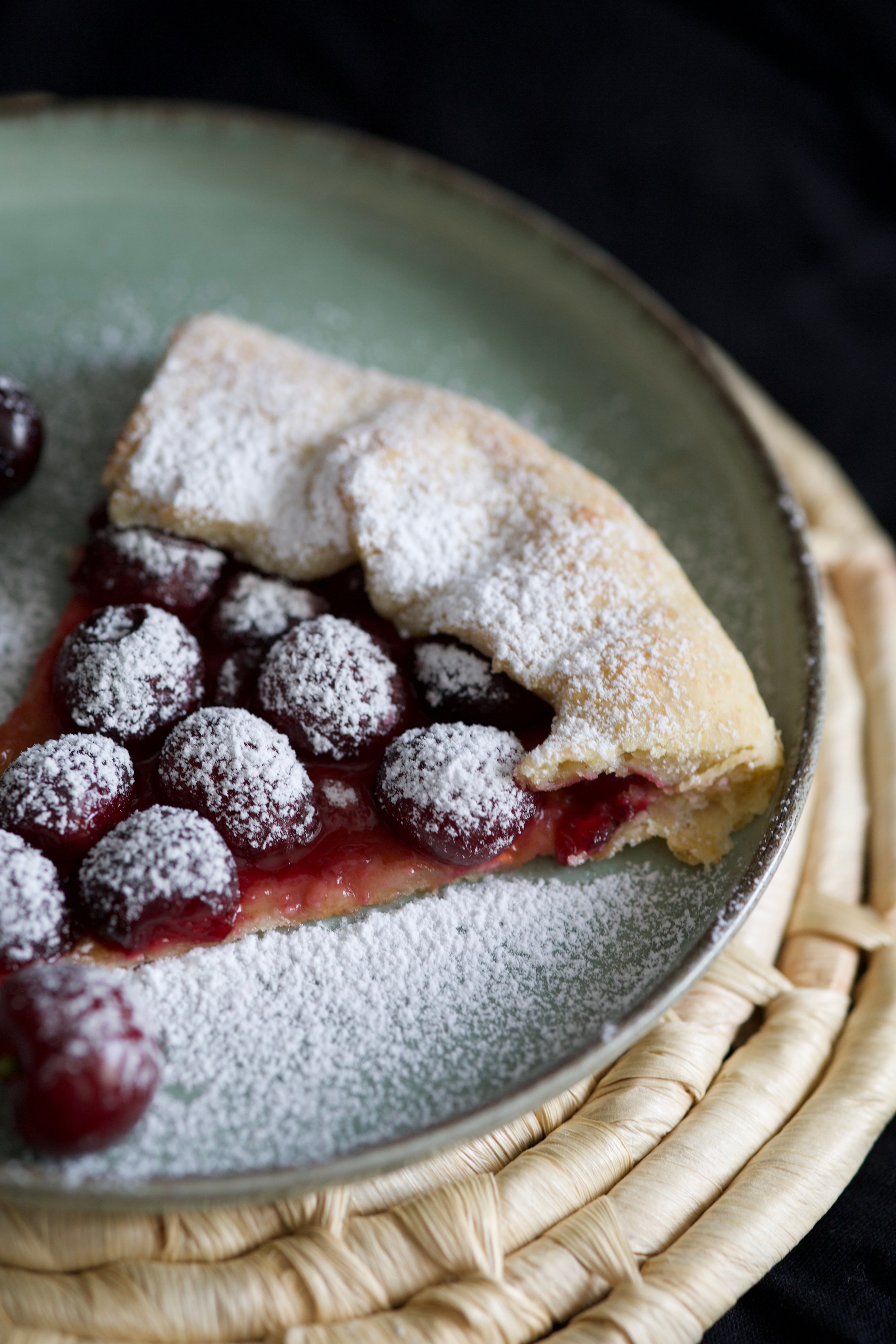
Photo: Alena Evseenko / Pexels
American
Cherry Pie
The diets react (see scores below)
Common Ingredients
- pie crust
- cherries
- sugar
- cornstarch
- lemon juice
- butter
- salt
- vanilla extract
Specific recipes may vary.
Incompatible with 11 of 11 diets
Diet Ratings
Cherry pie is fundamentally incompatible with a ketogenic diet. It contains multiple high-carb, keto-banned ingredients: a traditional pie crust made from wheat flour (grains are strictly off-limits), a sugar-sweetened cherry filling with added cornstarch as a thickener. A single slice easily delivers 50-70g of net carbs, which alone exceeds or meets the entire daily carb ceiling for ketosis. Cherries themselves are a moderate-to-high sugar fruit, and combined with added sugar and cornstarch, this dessert is a glycemic spike in pie form. There is virtually no redeeming keto quality here — the fat content from butter is negligible relative to the carb load.
Cherry pie as listed contains butter, an animal-derived dairy product, making it non-vegan. The pie crust also typically contains butter or lard in traditional recipes. While the cherries, sugar, cornstarch, lemon juice, salt, and vanilla extract are all plant-based, the presence of butter is a clear disqualifier under vegan rules. A vegan version of cherry pie is easily achievable by substituting plant-based butter (e.g., Earth Balance) and using a vegan pie crust, but the dish as described with butter listed as an ingredient does not qualify.
Cherry Pie contains multiple paleo-incompatible ingredients that disqualify it entirely. The pie crust is made from wheat flour, a grain that is strictly excluded from the paleo diet. Sugar is a refined sweetener with no place in paleo eating. Cornstarch is derived from corn, a grain, making it doubly non-compliant. Salt (added) is also discouraged. While cherries, lemon juice, butter (debated), and vanilla extract are more compatible ingredients, the foundational components — pie crust, refined sugar, and cornstarch — make this dish clearly off-limits. There is no meaningful paleo adaptation possible without completely reconstructing the dish.
Cherry pie is a heavily processed American dessert that contradicts core Mediterranean diet principles. The refined pie crust is made from refined flour and butter (saturated fat), the filling is laden with added sugar, and the dish as a whole is high in refined carbohydrates, added sugars, and saturated fat. While cherries themselves are a beneficial fruit rich in antioxidants, they are negated here by the surrounding ingredients. This dish has no place as a regular food in the Mediterranean dietary pattern, which minimizes added sugars and refined grains and uses olive oil rather than butter as the primary fat.
Cherry Pie is entirely incompatible with the carnivore diet. It is composed almost entirely of plant-derived ingredients: pie crust (grain-based flour), cherries (fruit), sugar (plant-derived sweetener), cornstarch (grain derivative), lemon juice (fruit), and vanilla extract (plant-derived). The only marginally animal-derived ingredient is butter, and even that is present in a minor role within a heavily plant-based dish. There is no meaningful animal protein or fat here, and the dish is loaded with carbohydrates, sugar, and plant compounds that are explicitly excluded on carnivore. This would be avoided by every tier of carnivore eating, from the most lenient 'animal-based' approach to the strictest Lion Diet.
Cherry Pie contains multiple excluded ingredients and violates core Whole30 rules. First, it contains added sugar, which is explicitly prohibited on Whole30. Second, pie crust is typically made from wheat flour, making it a grain-based product — excluded. Third, cornstarch is explicitly listed as a banned ingredient on Whole30. Fourth, regular butter is excluded (only ghee/clarified butter is permitted). Finally, even if all ingredients were somehow made compliant, cherry pie falls squarely into the 'no recreating baked goods/junk food' rule — it is literally a baked good/dessert that the program explicitly forbids recreating, even with compliant ingredients.
Cherry pie contains two significant FODMAP concerns that make it problematic during the elimination phase. First, cherries are high in polyols (sorbitol), and Monash University rates cherries as high-FODMAP at a standard serving — the low-FODMAP threshold is just 3 cherries (45g), while a slice of cherry pie would contain far more than this. Second, a standard pie crust is made with wheat flour, which is high in fructans. Even a small serving of pie crust (one slice) typically exceeds the safe fructan threshold. The combination of polyol-rich cherries in quantity plus a wheat-based crust makes a standard slice of cherry pie a double FODMAP hit. The remaining ingredients — sugar, cornstarch, lemon juice, butter, salt, and vanilla extract — are individually low-FODMAP and do not add to the concern.
Some FODMAP practitioners note that sour/tart cherries (Montmorency) have not been as extensively tested as sweet cherries, and there is some clinical debate about whether small portions of pie filling (with diluted cherry content) could be tolerated. Additionally, if a gluten-free pie crust were substituted (e.g., rice flour-based), the fructan issue would be resolved, though the cherry polyol load would remain problematic at standard serving sizes.
Cherry pie is a high-sugar, high-fat dessert that conflicts with core DASH diet principles on multiple fronts. The pie crust contributes significant saturated fat (typically made with butter or shortening) and refined carbohydrates. The filling contains substantial added sugar, which DASH guidelines explicitly limit. Butter adds saturated fat, further disqualifying this dish. While cherries themselves are a DASH-friendly fruit rich in potassium and antioxidants, they are overwhelmed here by the problematic components. DASH guidelines limit sweets to 5 or fewer servings per week, and even a modest slice of cherry pie would likely represent most or all of that weekly allowance in a single serving. As a snack, it provides poor nutritional density relative to its caloric load and added sugar content.
Cherry pie is a poor fit for the Zone Diet across nearly every dimension. The crust is made from refined white flour and butter — high-glycemic carbs with saturated fat, offering no favorable Zone building blocks. The filling adds significant amounts of sugar and cornstarch, both high-glycemic carbohydrates that spike insulin rapidly. While cherries themselves are a relatively low-glycemic fruit that Zone practitioners can use in moderation, they are buried under sugar and starch in this preparation. There is no protein component whatsoever, making it impossible to approach a 40/30/30 ratio without pairing it with substantial lean protein and still struggling to balance the carbohydrate load. As a snack, the Zone expects roughly 1 protein block, 1 carb block, and 1 fat block — cherry pie delivers carbohydrates in abundance (mostly high-glycemic), saturated fat from butter, and zero protein. The processed, sugar-heavy nature of this dish places it firmly in the 'avoid' category. Even a small slice overwhelms Zone macro targets with unfavorable carb sources and provides no compensating nutritional benefit like fiber, polyphenols in meaningful quantity, or lean protein.
Cherry pie presents a challenging profile from an anti-inflammatory perspective. While cherries themselves are genuinely beneficial — they are among the most anti-inflammatory fruits available, rich in anthocyanins, quercetin, and other polyphenols that have been shown in research to reduce CRP and uric acid levels — the surrounding dish largely cancels out those benefits. The pie crust is made from refined white flour, a refined carbohydrate that spikes blood glucose and can drive inflammatory signaling. A substantial amount of added sugar amplifies this glycemic load further. Butter contributes saturated fat, which is categorized as 'limit' in anti-inflammatory frameworks. Cornstarch is another refined carbohydrate with minimal nutritional value. The overall dish is a high-glycemic, high-sugar, refined-carbohydrate dessert with only modest anti-inflammatory content from the cherries, which are diluted by the sugar and processing. As a snack specifically, this represents a poor anti-inflammatory choice — it delivers a large inflammatory load with little offsetting benefit. If cherries are the goal, eating them fresh or frozen is strongly preferred. This is a clear 'avoid' verdict for anyone following anti-inflammatory dietary principles, with high confidence given broad consensus against refined-carb, high-sugar desserts.
Cherry pie is a poor fit for GLP-1 patients across nearly every key criterion. It contains no meaningful protein, minimal fiber (cherries provide some but the overall slice is low), and is high in refined sugar, saturated fat (butter and shortening-based crust), and refined carbohydrates. The high sugar content promotes blood sugar spikes, and the buttery, fatty crust is difficult to digest given slowed gastric emptying on GLP-1 medications — increasing risk of nausea, bloating, and reflux. Caloric density is high relative to nutritional value, making it a textbook empty-calorie food in this context. As a snack category item, it fails to deliver the protein (15-30g target per eating occasion) or fiber needed to support muscle preservation and digestive health. There is no portion size that makes this a good choice for GLP-1 patients.
*See how scores were generated at our methodology page.
Nutritional profile
Six traits that cut across every diet.
Fiber & Plants
How much whole-plant food and fiber it delivers.
Healthy Fats
The quality of its fats (unsaturated, omega-3).
Whole / Unprocessed
How close it is to its natural, unprocessed form.
Gut Gentle
How easy it is on digestion (low FODMAP, few irritants).
Low Glycemic
How little it spikes your blood sugar.
Protein Density
How much protein it packs per calorie.
Controversy Index
Higher controversy = more disagreement between diets.