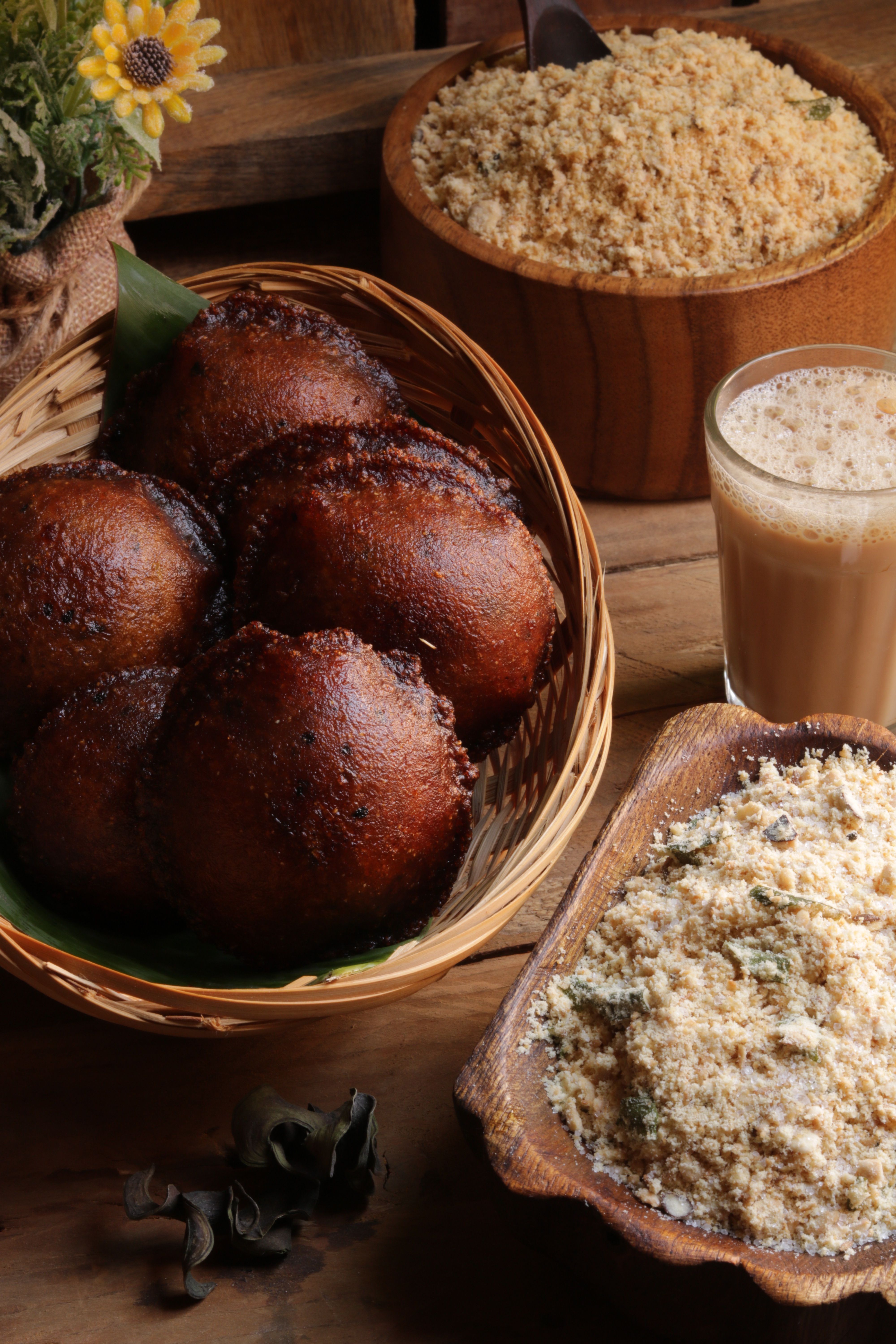
Photo: Saveurs Secretes / Pexels
The diets react (see scores below)
Common Ingredients
- rice
- toor dal
- chana dal
- moong dal
- jaggery
- cardamom
- coconut
- oil
Specific recipes may vary.
Incompatible with 5 of 11 diets
Diet Ratings
Kandarappam is fundamentally incompatible with a ketogenic diet. The dish is built on rice as its primary carbohydrate base, which alone delivers a massive net carb load. It is further compounded by three types of legumes (toor dal, chana dal, moong dal), all of which are high in net carbs. Most critically, jaggery (unrefined cane sugar) is a direct added sugar that would immediately spike blood glucose and shatter ketosis. There is no realistic portion size at which this dish could be consumed while maintaining ketosis. The only keto-friendly elements are coconut, cardamom, and the frying oil.
Kandarappam is a traditional South Indian sweet snack made entirely from plant-based ingredients. Rice and three varieties of dal (toor, chana, and moong) form the base, providing a wholesome legume-and-grain combination. Jaggery is an unrefined plant-derived sweetener made from sugarcane or palm sap with no animal processing agents involved. Cardamom and coconut are fully plant-based aromatics, and the cooking oil (typically coconut or vegetable oil) is plant-derived. Every ingredient in this dish is whole or minimally processed, making it an excellent fit for a whole-food plant-based vegan diet. There are no animal products, by-products, or contested ingredients present.
Kandarappam is fundamentally incompatible with the Paleo diet. The dish contains multiple non-paleo ingredients: rice (a grain), toor dal (a legume), chana dal (a legume), and moong dal (a legume). These four core ingredients are explicitly excluded from the Paleo framework due to their high lectin, phytate, and anti-nutrient content, which contradicts the central premise of Paleolithic eating. Jaggery, while less refined than white sugar, is still a concentrated added sugar that would be avoided in strict paleo. The only paleo-compliant ingredients in this dish are cardamom, coconut, and possibly the oil (depending on type). With the majority of the dish's bulk and protein coming from grains and legumes, there is no meaningful paleo-compatible version of this dish without a complete reconstruction.
Kandarappam is an Indian snack made primarily from legumes (toor dal, chana dal, moong dal) and rice, which are excellent Mediterranean diet staples. The multiple lentils provide strong plant-based protein and fiber, aligning well with Mediterranean principles. However, jaggery (an added sugar) and coconut (a saturated fat source not traditional to Mediterranean cuisine) introduce elements that temper the otherwise positive profile. The oil used is unspecified, which matters significantly — if it were extra virgin olive oil, the score would rise, but traditional preparation likely uses coconut oil or neutral vegetable oil. The dish is minimally processed and whole-ingredient-based, which is a plus, but the added sugar content and coconut push it away from a full approval.
Some modern Mediterranean diet interpretations are more lenient about small amounts of natural sweeteners like jaggery (less refined than white sugar) and recognize coconut as a plant-based fat. From this perspective, the strong legume base and whole-food preparation could justify a more favorable rating, especially given that Mediterranean diet authorities like Oldways emphasize legume-forward, minimally processed foods above strict ingredient geography.
Kandarappam is entirely plant-based and incompatible with the carnivore diet. Every single ingredient — rice, toor dal, chana dal, moong dal, jaggery, cardamom, coconut, and oil — is plant-derived. The dish contains legumes (multiple lentils/dals), a grain (rice), sugar (jaggery), a spice (cardamom), and plant fat (coconut and oil). There is no animal product whatsoever. This represents exactly the category of food the carnivore diet eliminates entirely.
Kandarappam contains multiple excluded ingredients. Rice is a grain and explicitly excluded from Whole30. Toor dal, chana dal, and moong dal are all legumes and explicitly excluded. Jaggery is an added sugar (unrefined cane sugar) and explicitly excluded. Additionally, this dish is a type of appam/pancake, which falls under the 'no recreating baked goods/junk food' rule (crepes, pancakes, and similar items are specifically prohibited even with compliant ingredients). With grains, legumes, and added sugar all present, this dish fails Whole30 on multiple independent grounds.
Kandarappam is a South Indian sweet fritter or appam made with multiple lentils and jaggery. The combination of toor dal, chana dal, and moong dal creates a significant GOS (galacto-oligosaccharides) load, as all three are legumes high in FODMAPs. Even in small amounts, combining three high-FODMAP legume flours stacks the FODMAP burden considerably. Jaggery (concentrated sugarcane or palm sugar) may contain excess fructose depending on the source, adding further FODMAP risk. Coconut in small amounts is low-FODMAP, rice is low-FODMAP, cardamom is low-FODMAP at culinary doses, and oil is fine. However, the triple-legume combination is the dominant concern — this dish is fundamentally built around high-GOS ingredients during the elimination phase. Chana dal (split chickpeas) and toor dal (split pigeon peas) are particularly high in GOS and fructans. Moong dal is slightly lower in FODMAPs but still contributes. A standard serving of this dish would almost certainly exceed safe FODMAP thresholds.
Some FODMAP practitioners note that soaking, fermenting, or cooking legumes can reduce GOS content, and traditional preparation of lentil-based batters sometimes involves soaking that partially leaches FODMAPs. However, Monash University still rates most cooked dal preparations as high-FODMAP at typical serving sizes, and there is no specific Monash testing data on Kandarappam to confirm reduced-FODMAP preparation effects.
Kandarappam is a South Indian sweet snack made from rice, multiple lentils (toor dal, chana dal, moong dal), jaggery, cardamom, coconut, and oil. The lentil base is a strong DASH-positive element, providing plant-based protein, fiber, potassium, and magnesium. Rice contributes complex carbohydrates but is refined, not a whole grain. However, two key concerns pull this toward caution: (1) Jaggery is an added sugar — DASH limits sweets and added sugars, and while jaggery is less refined than white sugar, it is still a concentrated sugar source that raises the glycemic load. (2) Coconut is a tropical ingredient high in saturated fat, which DASH explicitly limits. The frying oil adds additional fat. The dish is naturally low in sodium, which is a DASH positive. Overall, the lentil-forward composition and absence of sodium are favorable, but the combination of added sugar (jaggery) and saturated fat (coconut) in a fried or pan-fried snack format warrants moderation rather than free consumption within a DASH eating plan.
NIH DASH guidelines categorically limit added sugars and tropical oils (including coconut) due to saturated fat content. However, some updated clinical interpretations note that jaggery in small culinary quantities and coconut used as a flavoring rather than a primary fat source may be acceptable in an otherwise nutrient-dense, plant-based dish — particularly when the overall daily saturated fat budget is managed.
Kandarappam is a South Indian sweet snack made from rice, multiple lentils (toor dal, chana dal, moong dal), jaggery, cardamom, coconut, and oil. The macro profile presents several Zone challenges. The primary carbohydrate sources are white rice (high-glycemic, classified as 'unfavorable' in Zone) and jaggery (essentially unrefined sugar with a high glycemic load), both of which can spike insulin significantly. The lentils do provide protein and fiber, which tempers glycemic response somewhat, and they are generally Zone-favorable as a protein/carb hybrid source. However, the protein-to-carb ratio is heavily skewed toward carbohydrates, making it difficult to achieve the 40/30/30 Zone ratio in a typical serving. The fat from coconut is primarily saturated (lauric acid), which Zone has historically discouraged, though Sears' later writings show some softening on certain saturated fats. The oil used for frying adds fat but type is unspecified — if it is coconut or palm oil, this compounds the saturated fat concern. To fit this into a Zone meal, portions would need to be small and paired with a lean protein source and additional monounsaturated fat. As a standalone snack in typical serving sizes, it would break Zone ratios significantly.
Some Zone-aware practitioners note that the combination of three different dals provides meaningful protein, dietary fiber, and slow-digesting complex carbohydrates that moderate glycemic impact relative to pure refined-rice snacks. Sears' later polyphenol-focused work (Zone Diet evolution post-2010) would appreciate the anti-inflammatory properties of cardamom and coconut's medium-chain triglycerides. A small portion of Kandarappam could theoretically serve as a partial carbohydrate block when carefully paired with lean protein and monounsaturated fat to achieve Zone ratios — placing it firmly in 'caution' rather than 'avoid' territory for mindful Zone practitioners.
Kandarappam is a traditional South Indian sweet snack made by deep-frying a batter of rice and mixed lentils (toor dal, chana dal, moong dal) with jaggery, cardamom, and coconut. The ingredient profile is a mix of genuinely anti-inflammatory components and some concerns. On the positive side, the three-lentil combination provides excellent plant-based protein, fiber, and anti-inflammatory phytonutrients — legumes are strongly emphasized in anti-inflammatory frameworks. Jaggery, while still a sugar, is an unrefined whole-food sweetener with trace minerals and a lower glycemic index than refined sugar, making it meaningfully better than HFCS or white sugar, though it still contributes to added sugar load. Cardamom and coconut offer modest anti-inflammatory compounds (antioxidants, lauric acid). However, the dish is deep-fried, which introduces two concerns: (1) significant oil absorption — and while the type of oil matters greatly, traditional preparation often uses coconut oil or generic vegetable oil, neither of which is ideal in large quantities; (2) frying can generate oxidative byproducts. The rice base is refined carbohydrate. The net result is a food with a genuinely anti-inflammatory foundation (legumes, spices, whole sweetener) but a pro-inflammatory preparation method (deep frying, added sugar from jaggery, refined rice). It lands squarely in the moderate/caution zone rather than approve or avoid.
Some traditional food advocates and Ayurvedic-aligned nutritionists would view this more favorably, noting that jaggery is a whole-food sweetener and that the multi-lentil base provides substantial fiber and protein that offset the glycemic impact — classifying it as an acceptable traditional food within a balanced diet. Conversely, stricter anti-inflammatory practitioners (such as those following AIP or low-glycemic protocols) would flag both the added sugar from jaggery and the deep-frying as sufficient reasons to avoid it entirely, regardless of the lentil content.
Kandarappam is a South Indian sweet fried pancake/fritter made from a batter of rice and mixed lentils (toor dal, chana dal, moong dal) sweetened with jaggery and flavored with cardamom and coconut, then deep-fried in oil. The lentil base provides meaningful fiber and moderate plant protein, and the multi-dal combination offers a decent amino acid profile for a plant-based snack. However, several factors work against it for GLP-1 patients: (1) It is deep-fried, increasing fat content significantly and raising the risk of nausea, bloating, and reflux — core GLP-1 side effects. (2) Jaggery is a high-glycemic sugar source with minimal nutritional offset, adding empty-ish calories in a context where every calorie must count. (3) Coconut contributes saturated fat. (4) Rice dilutes the protein and fiber density relative to calories. The protein yield per serving is modest — far below the 15–30g per-meal target — making it a poor primary protein source despite lentils being listed as the protein category. It functions more as a carbohydrate-dominant sweet snack with incidental protein. The fiber from the dals is a genuine positive. In small portions and infrequent consumption it is not a hard avoid, but it cannot be approved given the frying method and jaggery content.
Some GLP-1-focused dietitians working with South Asian patients acknowledge that lentil-based traditional preparations carry meaningful fiber and micronutrient benefits over ultra-processed snack alternatives, and may permit occasional small servings rather than categorical restriction. Others apply a strict no-fried-food rule regardless of cultural context, citing the high sensitivity of GLP-1 patients to fat-induced GI distress.
*See how scores were generated at our methodology page.
Nutritional profile
Six traits that cut across every diet.
Fiber & Plants
How much whole-plant food and fiber it delivers.
Healthy Fats
The quality of its fats (unsaturated, omega-3).
Whole / Unprocessed
How close it is to its natural, unprocessed form.
Gut Gentle
How easy it is on digestion (low FODMAP, few irritants).
Low Glycemic
How little it spikes your blood sugar.
Protein Density
How much protein it packs per calorie.
Controversy Index
Higher controversy = more disagreement between diets.
Diet-Specific Tips
 Vegan — 9/10
View tips
- Rice and three lentil varieties (toor dal, chana dal, moong dal) are fully plant-based whole foods
- Jaggery is a plant-derived unrefined sugar — no bone char or animal processing involved
- Coconut adds healthy plant-based fat
- Cardamom is a plant-based spice
- Oil used for cooking is plant-derived
- No animal products or animal-derived ingredients in any component
- Dish is predominantly whole-food, minimally processed — aligns with both strict vegan and whole-food plant-based standards
 Mediterranean — 5/10
View tips
- Multiple legumes (toor dal, chana dal, moong dal) are strongly Mediterranean-compatible plant proteins
- Jaggery is an added sugar, contradicting Mediterranean diet principles of minimal added sugars
- Coconut is high in saturated fat and not a traditional Mediterranean ingredient
- Rice is a refined/neutral grain; whole grain alternatives would be preferred
- Dish is minimally processed and whole-food based, which is a positive
- Oil type unspecified — not extra virgin olive oil in traditional preparation
 DASH — 5/10
View tips
- Strong lentil base (toor dal, chana dal, moong dal) provides plant protein, fiber, and DASH-friendly minerals
- Jaggery adds significant sugar content — DASH limits sweets and added sugars
- Coconut contributes saturated fat from a tropical oil source, which DASH discourages
- Naturally very low in sodium — a clear DASH advantage
- Rice is refined, not a whole grain — moderate DASH alignment
- Frying oil increases total fat content and caloric density
- Portion size is critical — a small serving is more compatible with DASH than a large one
 Zone — 4/10
View tips
- White rice is a high-glycemic, 'unfavorable' carbohydrate in Zone methodology
- Jaggery is essentially unrefined sugar, adding significant glycemic load
- Lentils (toor, chana, moong dal) provide Zone-favorable protein and fiber, partially mitigating glycemic spike
- High carbohydrate-to-protein ratio makes it difficult to achieve 40/30/30 Zone balance
- Coconut is high in saturated fat, which Zone traditionally limits
- Typically deep-fried in oil of unspecified type, potentially adding omega-6-heavy or saturated fats
- Small portions could fit as a partial carb block if paired correctly, but typical snack servings exceed Zone carb limits
 Anti-Inflammatory — 5/10
View tips
- Mixed lentils (toor, chana, moong dal) are anti-inflammatory — high in fiber, plant protein, and phytonutrients
- Deep-fried preparation significantly increases oil content and introduces oxidative compounds
- Jaggery is an unrefined sweetener — preferable to refined sugar but still adds glycemic load
- Cardamom is an anti-inflammatory spice with antioxidant properties
- Coconut provides lauric acid — inflammatory status is debated but less harmful than trans fats
- Rice base is a refined carbohydrate with limited anti-inflammatory value
- Oil type not specified — outcome depends heavily on whether coconut oil vs. seed oils are used
 GLP-1 Friendly — 5/10
View tips
- Deep-fried preparation significantly increases fat load and GLP-1 GI side effect risk
- Jaggery adds high-glycemic sugar with limited nutritional value — conflicts with nutrient density priority
- Multi-dal base (toor, chana, moong) provides fiber and moderate plant protein — a genuine positive
- Protein per serving likely well below 15g target — insufficient as a standalone protein source
- Coconut contributes saturated fat, compounding the oil from frying
- Rice base makes this carbohydrate-dominant with low protein density per calorie
- Small portion may be tolerated but volume required for satisfaction is low — partial positive
- Not appropriate as a regular GLP-1 snack; occasional and small-portion consumption is the limit