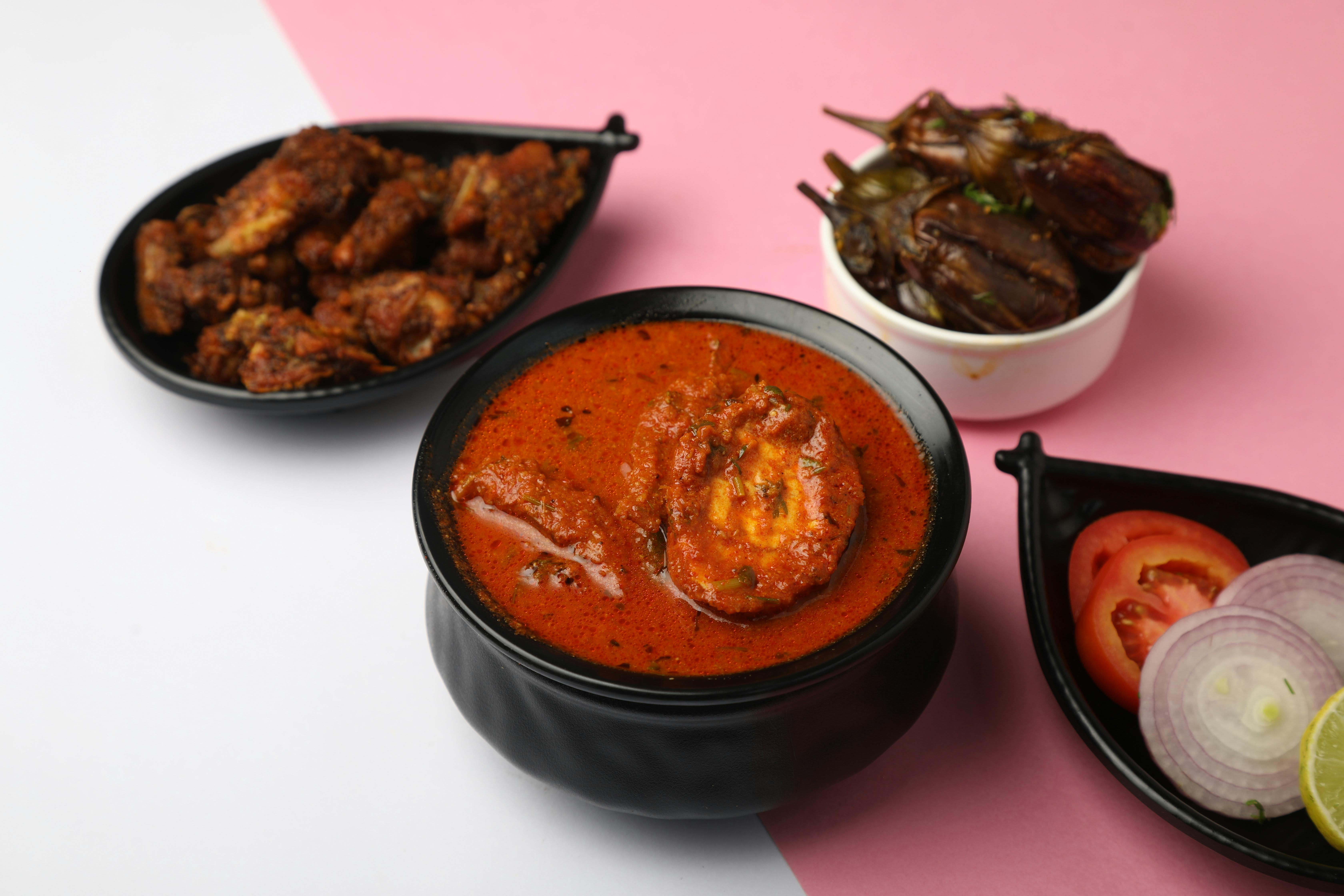
Photo: Milton Das / Pexels
Indian
Kozhi Kuzhambu
The diets react (see scores below)
Common Ingredients
- chicken
- tamarind
- coconut
- fennel seeds
- black pepper
- onion
- tomato
- curry leaves
- garam masala
Specific recipes may vary.
Incompatible with 3 of 11 diets
Diet Ratings
Kozhi Kuzhambu is a South Indian tamarind-based chicken curry that sits in a gray zone for keto. The primary protein (chicken) is excellent for keto. Coconut adds healthy fats. Spices like fennel, black pepper, garam masala, and curry leaves contribute negligible carbs. The concerns are: tamarind is relatively high in natural sugars and carbs (~10g net carbs per 2 tbsp paste), onion and tomato add moderate carbs, and coconut in larger quantities adds some carbs too. In a typical restaurant serving, the cumulative carb load from tamarind, onion, and tomato could push toward 10-15g net carbs per serving, making it manageable within a daily 20-50g budget if portioned carefully. This is generally keto-compatible if tamarind is used sparingly and onion/tomato quantities are modest, but the tamarind base is the key variable that warrants caution.
Strict keto practitioners argue that tamarind-heavy gravies introduce enough sugar and carbs to risk disrupting ketosis, especially combined with onion and tomato, and would recommend avoiding this dish entirely or requesting a coconut cream-only base without tamarind.
Kozhi Kuzhambu is a South Indian chicken curry where chicken is the primary protein and a core structural ingredient. Chicken is unambiguously an animal product (poultry), making this dish entirely incompatible with a vegan diet. All other ingredients — tamarind, coconut, fennel seeds, black pepper, onion, tomato, curry leaves, and garam masala — are plant-based, but the presence of chicken alone disqualifies the dish. No vegan adaptation is possible while retaining the defining ingredient; a plant-based version would require substituting chicken with tofu, jackfruit, or chickpeas, which would constitute a fundamentally different dish.
Kozhi Kuzhambu is a South Indian tamarind-based chicken curry that is largely paleo-compatible. Chicken is a clean protein source, tamarind is a natural fruit-derived souring agent, coconut is a paleo staple, and fennel seeds, black pepper, curry leaves, onion, and tomato are all whole, unprocessed plant foods fully consistent with a Paleolithic diet. The primary concern is garam masala — a spice blend that in its pure, additive-free form (ground whole spices) is paleo-acceptable, but commercial versions often contain added salt or anti-caking agents, which would be non-compliant. If prepared at home or sourced from a clean blend, the dish is solidly approvable. The dish as described contains no grains, legumes, dairy, or seed oils, making it a strong paleo choice assuming homemade or clean-sourced garam masala and no added salt beyond what occurs naturally.
Strict Cordain-school paleo practitioners may flag commercial garam masala blends for potentially containing added salt or undisclosed additives; they would recommend verifying the spice blend is 100% pure ground spices with no fillers or preservatives before approving the dish.
Kozhi Kuzhambu is a South Indian chicken curry featuring several Mediterranean-friendly elements: poultry as the protein (acceptable in moderation), tamarind and tomato providing plant-based acidity, onion and aromatic spices like fennel, black pepper, and curry leaves which are wholesome and anti-inflammatory. However, coconut is a notable concern — it contributes saturated fat and is not part of the traditional Mediterranean fat profile, where extra virgin olive oil is the canonical fat. The dish contains no refined grains or added sugars, and is otherwise whole-food based. As a chicken dish, it falls into the 'moderate consumption' category (a few times per week), making it acceptable but not a Mediterranean staple. The coconut content nudges the score slightly lower.
Some modern Mediterranean diet interpreters, particularly those aligned with broader 'anti-inflammatory' or 'whole foods' frameworks, may view coconut more favorably as a plant-based fat and accept this dish more warmly. However, strict Mediterranean diet guidelines and researchers like Ancel Keys' foundational work firmly center olive oil as the dietary fat, leaving coconut outside the traditional framework.
Kozhi Kuzhambu is a Tamil chicken curry that is fundamentally incompatible with the carnivore diet. While chicken itself is an animal product, this dish is built around a heavily plant-based sauce and spice profile. Tamarind, coconut, onion, and tomato are all plant-derived foods explicitly excluded from carnivore. Fennel seeds, black pepper, curry leaves, and garam masala are plant-based spices and aromatics also excluded. The dish is essentially a plant-forward curry that happens to contain chicken — the majority of its flavor, volume, and ingredients come from excluded plant sources. Even practitioners who are lenient about spices would struggle with the quantity and variety of plant ingredients here, including whole vegetables like onion and tomato and fruit-based tamarind.
Kozhi Kuzhambu is a South Indian tamarind-based chicken curry. All listed ingredients are Whole30 compliant: chicken (allowed protein), tamarind (a natural fruit souring agent), coconut (natural fat/whole food), fennel seeds, black pepper, curry leaves, and garam masala (all compliant spices), onion and tomato (vegetables). There are no grains, legumes, dairy, added sugars, or other excluded ingredients in the core recipe. The dish is a whole-food, protein-and-vegetable-forward preparation that aligns well with the spirit of Whole30.
The main caution is that garam masala is a spice blend — commercially prepared versions can sometimes contain anti-caking agents or fillers, so label reading is advised. Additionally, if this dish is prepared in a restaurant or from a packet, hidden non-compliant additives (e.g., sugar, soy, or thickeners) could be present. Melissa Urban and official Whole30 guidelines consistently encourage checking all spice blend labels for compliant ingredients.
Kozhi Kuzhambu contains two high-FODMAP ingredients that make it unsuitable during the elimination phase: onion and tamarind. Onion is one of the highest sources of fructans and is a clear 'avoid' at any standard culinary quantity. Tamarind paste/concentrate is high in excess fructose and is rated high-FODMAP by Monash University at amounts typically used in South Indian cooking (more than 1 teaspoon of concentrate). While chicken, curry leaves, fennel seeds, black pepper, and tomato (in small amounts) are generally low-FODMAP, and coconut in moderate amounts is acceptable, the onion alone disqualifies this dish during elimination. Garam masala blends are usually low-FODMAP in the small quantities used as seasoning. The dish as traditionally prepared cannot be made low-FODMAP without substituting onion with the green tops of spring onions/scallions and omitting or severely limiting tamarind.
Kozhi Kuzhambu is a South Indian tamarind-based chicken curry with several DASH-friendly elements: lean chicken as protein, tomato and onion as vegetables, and anti-inflammatory spices like black pepper, fennel, and curry leaves that contribute potassium and micronutrients. Tamarind adds tanginess with minimal sodium and some potassium. However, the inclusion of coconut (likely as grated coconut or coconut paste) is a concern under DASH guidelines, as coconut is a tropical oil/food high in saturated fat, which DASH explicitly limits. The amount of coconut used significantly affects the verdict — a small amount as a thickener differs from a coconut milk-heavy gravy. Garam masala is a spice blend and not a sodium concern if used as a dry spice rather than a processed mix with added salt. Sodium content depends heavily on preparation — restaurant versions may add significant salt, while home cooking can be controlled. On balance, this dish has a favorable protein base and vegetable content but is moderated by the coconut component.
NIH DASH guidelines explicitly recommend limiting saturated fat and tropical oils including coconut, which would push this dish toward 'avoid' territory if coconut is used liberally. However, updated clinical interpretations and some DASH-oriented dietitians note that small amounts of whole coconut (as opposed to coconut oil) in a spiced dish with lean chicken, vegetables, and tamarind still fits within a largely DASH-aligned meal pattern, particularly if sodium is managed and portion size is controlled.
Kozhi Kuzhambu is a South Indian chicken curry that presents a mixed Zone Diet profile. The chicken is an excellent lean protein source that fits perfectly within Zone protein blocks. The spice blend (fennel seeds, black pepper, curry leaves, garam masala) is polyphenol-rich and anti-inflammatory, aligning well with Sears' later emphasis on inflammation control. Onion and tomato provide low-glycemic carbohydrates with favorable Zone characteristics. However, the two ingredients that introduce caution are coconut and tamarind. Coconut contains significant saturated fat, which early Zone guidelines strictly limited, though Sears' later writings acknowledged medium-chain fatty acids in coconut differently. Tamarind contributes natural sugars that raise the glycemic load of the dish, requiring portion awareness. The overall dish can fit into Zone ratios if coconut is used sparingly and portion size is controlled, but the fat profile skews toward saturated rather than the preferred monounsaturated fats, and carbohydrate balance depends heavily on how much tamarind is used. Served with a large vegetable side rather than rice, this dish can be reasonably Zone-compatible.
Dr. Sears' earlier Zone writings (Enter the Zone) would flag coconut fat more strictly as an unfavorable saturated fat source, potentially lowering this score. However, his later anti-inflammatory research acknowledges that coconut's medium-chain triglycerides behave differently metabolically than long-chain saturated fats, and the dish's strong polyphenol content from spices and curry leaves could elevate its rating. Some Zone practitioners would approve this dish readily if coconut quantity is small, while purists following the original Enter the Zone framework would rate it more cautiously.
Kozhi Kuzhambu is a South Indian tamarind-based chicken curry with a notably strong anti-inflammatory spice profile. Black pepper contains piperine, which enhances curcumin absorption and has its own anti-inflammatory properties. Fennel seeds contain anethole, a compound with demonstrated anti-inflammatory activity. Curry leaves are rich in antioxidants including carbazole alkaloids. Garam masala typically contains turmeric, cumin, coriander, and cardamom — all with established anti-inflammatory credentials. Tamarind provides polyphenols and tartaric acid with antioxidant properties. Tomatoes contribute lycopene, and onions provide quercetin. The primary protein is lean poultry (chicken), which falls in the 'moderate' category — acceptable and far preferable to red meat on an anti-inflammatory framework. Coconut is the one ingredient that warrants attention: it contains saturated fat (lauric acid), which some anti-inflammatory authorities flag as potentially pro-inflammatory, though the evidence is nuanced. Overall, the dish is spice-forward with a dense polyphenol and antioxidant load, lean protein, and no processed ingredients, refined carbohydrates, or seed oils — making it a strong fit for an anti-inflammatory dietary pattern.
The coconut content introduces debate: Dr. Weil's anti-inflammatory framework limits saturated fat broadly, and coconut's high saturated fat content is flagged by mainstream anti-inflammatory researchers as potentially raising LDL and inflammatory markers. However, some functional medicine practitioners (including those referencing medium-chain triglyceride research) argue lauric acid in coconut behaves differently from other saturated fats and may be metabolically neutral or beneficial in moderate culinary amounts.
Kozhi Kuzhambu is a Tamil-style chicken curry with a tamarind and coconut base. The chicken provides a solid lean protein foundation, which is the top priority for GLP-1 patients. However, coconut — a prominent ingredient — introduces saturated fat in a meaningful amount, which conflicts with the low-fat guideline and may worsen GLP-1 side effects like nausea, bloating, and reflux. The tamarind adds acidity that some GLP-1 patients find irritating to a sluggish digestive system. On the positive side, the dish includes onion, tomato, and spices with anti-inflammatory properties, and the fiber from these vegetables and tamarind offers modest digestive support. Black pepper and garam masala are generally well-tolerated at typical culinary quantities, though the overall spice load could be a mild GI trigger for sensitive patients. The dish is not fried, which is a meaningful advantage. Portion size is critical — a small serving over a modest amount of whole grain rice or with a high-fiber side would improve the profile. The rating depends heavily on how much coconut is used: a light coconut-based gravy is more acceptable than a rich, heavy one.
Some GLP-1-focused dietitians would rate this dish more favorably, noting that the chicken protein and whole-food spice base make it far preferable to processed alternatives, and that moderate coconut in a gravy context delivers less fat per serving than its inclusion implies. Others take a stricter view on coconut's saturated fat content given how sensitized GLP-1 patients are to dietary fat, and would recommend substituting coconut with a tomato-only base to reduce GI risk.
*See how scores were generated at our methodology page.
Nutritional profile
Six traits that cut across every diet.
Fiber & Plants
How much whole-plant food and fiber it delivers.
Healthy Fats
The quality of its fats (unsaturated, omega-3).
Whole / Unprocessed
How close it is to its natural, unprocessed form.
Gut Gentle
How easy it is on digestion (low FODMAP, few irritants).
Low Glycemic
How little it spikes your blood sugar.
Protein Density
How much protein it packs per calorie.
Controversy Index
Higher controversy = more disagreement between diets.
Diet-Specific Tips
 Keto — 5/10
View tips
- Chicken is an ideal keto protein source
- Tamarind contains significant natural sugars and carbs — the primary concern
- Onion and tomato contribute moderate carbs that accumulate
- Coconut adds beneficial fats but also some carbs
- Spice blend (fennel, black pepper, garam masala, curry leaves) is keto-friendly
- Portion control critical — a large serving could exceed daily carb limits
- Manageable within keto if tamarind quantity is limited
 Paleo — 8/10
View tips
- Chicken is a fully approved paleo protein
- Tamarind is a natural fruit-based souring agent — paleo approved
- Coconut is a paleo staple used widely in ancestral diets
- Fennel seeds, black pepper, curry leaves are whole, unprocessed spices and herbs
- Onion and tomato are paleo-approved vegetables
- Garam masala in pure form is acceptable, but commercial blends may contain added salt or additives
- No grains, legumes, dairy, or seed oils present
- Dish is naturally gluten-free and grain-free
 Mediterranean — 5/10
View tips
- Chicken is an acceptable moderate-consumption protein (poultry category)
- Coconut introduces saturated fat not typical of Mediterranean dietary fat profile
- No refined grains, added sugars, or heavily processed ingredients
- Tamarind, tomato, onion, and spices are wholesome plant-based components
- Preparation style is whole-food based, which aligns with Mediterranean principles
- Not a Mediterranean regional dish — cross-cuisine evaluation introduces interpretive variability
 Whole30 — 5/10
View tips
- Chicken is a fully compliant Whole30 protein
- Tamarind is a natural souring agent and whole food — compliant
- Coconut is an approved natural fat
- All spices (fennel seeds, black pepper, curry leaves, garam masala) are compliant in their pure forms
- Onion and tomato are compliant vegetables
- No grains, dairy, legumes, or added sugars in the ingredient list
- Garam masala blends require label verification to ensure no non-compliant additives
 DASH — 5/10
View tips
- Lean chicken is a DASH-approved protein source
- Coconut is a saturated fat-rich tropical food that DASH guidelines advise limiting
- Tamarind, onion, and tomato contribute potassium and are DASH-friendly
- Spices (black pepper, fennel, curry leaves, garam masala) add flavor without added sodium if using whole/ground spices
- Sodium content is highly preparation-dependent — restaurant versions likely exceed DASH sodium targets
- No whole grains, low-fat dairy, or significant fiber sources in this dish alone; needs pairing with brown rice or whole grain accompaniments
- Saturated fat content varies significantly based on how much coconut is used
 Zone — 6/10
View tips
- Chicken is an ideal Zone lean protein source
- Coconut contributes saturated fat, conflicting with Zone's preference for monounsaturated fats
- Tamarind adds natural sugars that increase glycemic load and require portion control
- Onion and tomato are favorable low-glycemic Zone carbohydrates
- Spice blend (black pepper, fennel, curry leaves, garam masala) is polyphenol-rich and anti-inflammatory
- No white rice or high-glycemic starches in the dish itself
- Fat block balance skews saturated rather than monounsaturated — pairing with olive oil or avocado elsewhere in the meal would help
- Overall macro ratio achievable with careful portioning but not naturally balanced
 Anti-Inflammatory — 7/10
View tips
- Black pepper (piperine) — strong anti-inflammatory, enhances bioavailability of other anti-inflammatory compounds
- Fennel seeds — anethole content with documented anti-inflammatory activity
- Curry leaves — rich in carbazole alkaloids and antioxidants
- Garam masala — typically turmeric, cumin, cardamom; dense anti-inflammatory spice blend
- Tamarind — polyphenols and antioxidant tartaric acid
- Onion and tomato — quercetin and lycopene (carotenoid antioxidant)
- Lean chicken — acceptable moderate-category protein, no red meat
- Coconut — saturated fat content is a mild concern under strict anti-inflammatory protocols
- No processed ingredients, seed oils, refined carbs, or added sugars
 GLP-1 Friendly — 5/10
View tips
- Chicken provides high-quality lean protein — strong positive for GLP-1 patients
- Coconut adds saturated fat that may worsen nausea, bloating, and reflux
- Tamarind acidity may irritate slowed gastric emptying in sensitive patients
- Not fried — favorable for digestibility
- Whole-food spice base (fennel, black pepper, curry leaves, garam masala) is generally well-tolerated at culinary doses
- Onion and tomato contribute modest fiber and micronutrients
- Portion-sensitive: a small serving significantly improves the fat and calorie profile
- Overall fat content is preparation-dependent — coconut quantity is the key variable