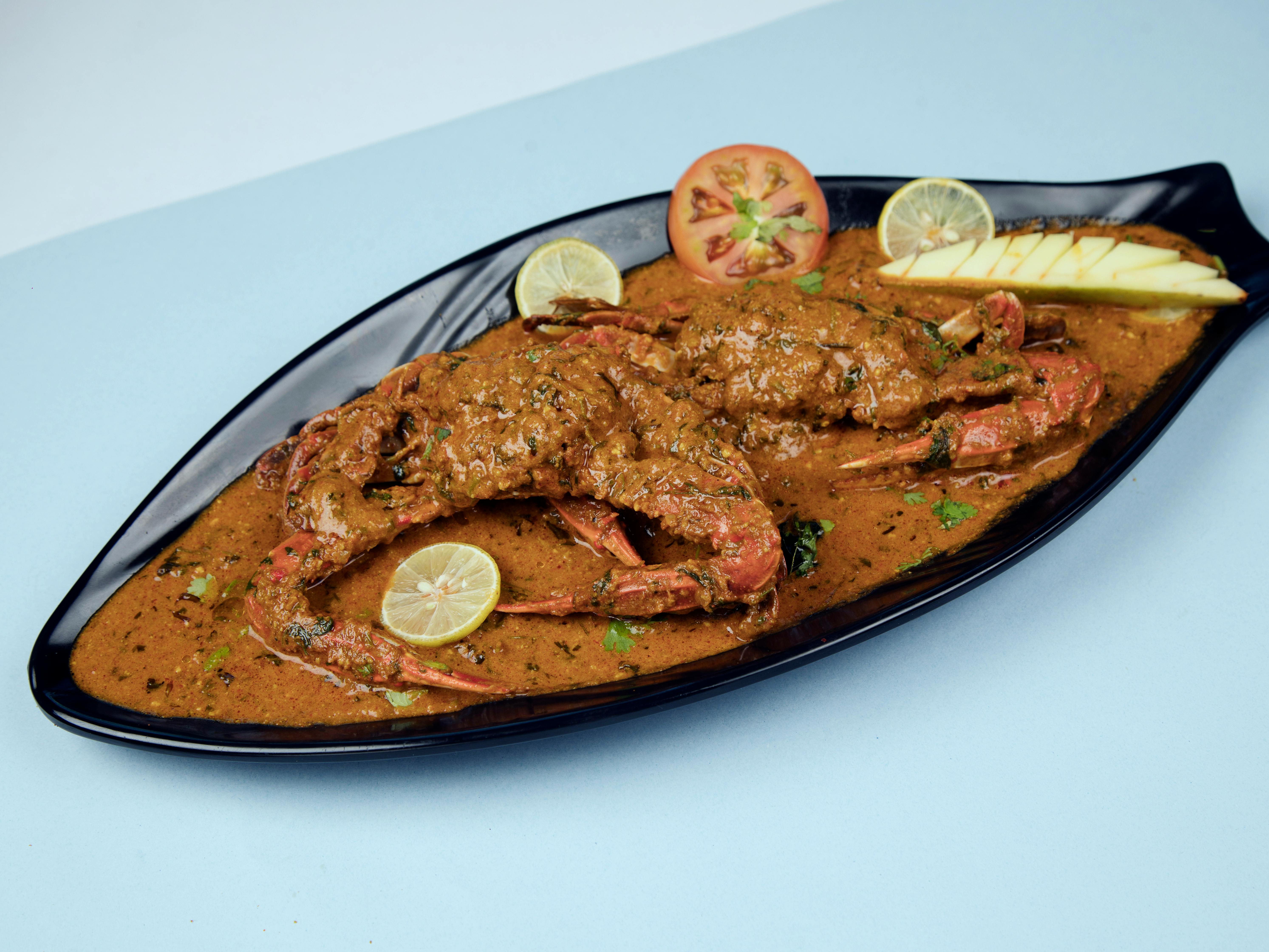
Photo: Milton Das / Pexels
Indian
Nandu Masala
The diets react (see scores below)
Common Ingredients
- crab
- onion
- tomato
- coconut
- fennel seeds
- black pepper
- ginger
- garlic
- curry leaves
- chili powder
Specific recipes may vary.
Incompatible with 3 of 11 diets
Diet Ratings
Nandu Masala features crab as its primary protein, which is inherently keto-friendly — low in fat and very low in carbs. However, the masala base introduces meaningful carb sources: onion and tomato together can add 8-12g net carbs per serving, and coconut (especially if using grated or desiccated coconut in quantity) adds moderate carbs alongside beneficial fat. The spices (fennel seeds, black pepper, chili powder, ginger, garlic, curry leaves) contribute minimal carbs in cooking quantities. The primary concern is portion size of the onion-tomato-coconut base. A standard restaurant serving could push net carbs to 10-18g, which is manageable within a daily keto budget but leaves little room for other carb-containing foods. At home with reduced onion/tomato, this dish becomes much more keto-compatible.
Stricter keto practitioners may flag this as avoid-adjacent, arguing that the combination of onion, tomato, and coconut in a single dish creates a cumulative carb load that, with a typical Indian restaurant serving size, risks exceeding the daily 20g threshold on its own. Some strict keto protocols eliminate tomato and onion entirely due to their sugar content.
Nandu Masala is a South Indian crab curry where crab is the primary protein and central ingredient. Crab is seafood — an animal product — and is unambiguously excluded from a vegan diet. All remaining ingredients (onion, tomato, coconut, fennel seeds, black pepper, ginger, garlic, curry leaves, chili powder) are plant-based, but the dish as a whole is disqualified by the presence of crab.
Nandu Masala is an excellent paleo dish. Crab is a wild-caught seafood fully approved under paleo principles. All supporting ingredients — onion, tomato, coconut, fennel seeds, black pepper, ginger, garlic, curry leaves, and chili powder — are whole, unprocessed plant foods, herbs, and spices that would have been accessible to hunter-gatherers. Coconut adds healthy saturated fat without any dairy concerns. There are no grains, legumes, dairy, refined sugars, seed oils, or processed additives present. The dish is naturally flavored with traditional spice combinations that align well with ancestral eating patterns.
Nandu Masala is built around crab, a shellfish that aligns well with the Mediterranean diet's emphasis on fish and seafood 2-3 times weekly. The supporting ingredients — onion, tomato, ginger, garlic, curry leaves, fennel seeds, and black pepper — are all whole, plant-based aromatics consistent with Mediterranean principles. Coconut is a plant-based fat, though not traditional to the Mediterranean. The dish is free of refined grains, added sugars, red meat, and heavily processed ingredients, making it broadly compatible. The Indian spice profile is non-traditional to the Mediterranean but does not contradict its nutritional principles.
Coconut is a source of saturated fat not native to the Mediterranean diet tradition, and some clinical interpretations of the diet (e.g., the PREDIMED study framework) would flag high saturated fat plant sources as inconsistent with extra virgin olive oil as the preferred primary fat. A stricter Mediterranean reading might lower the score due to coconut's fat profile.
Nandu Masala is fundamentally incompatible with the carnivore diet. While crab itself is an approved animal protein, this dish is overwhelmingly plant-based in its preparation. It contains onion, tomato, coconut, fennel seeds, black pepper, ginger, garlic, curry leaves, and chili powder — all plant-derived ingredients that are explicitly excluded from the carnivore diet. The dish is essentially a spiced vegetable masala that happens to contain crab. No amount of animal protein presence can offset the extensive list of plant foods, spices, and aromatics that define this dish. There is universal consensus in the carnivore community that dishes built around plant-based sauces, spices, and aromatics are off-limits.
Nandu Masala (Indian crab curry) is composed entirely of Whole30-compliant ingredients. Crab is a permitted seafood, and all aromatics and spices — onion, tomato, coconut, fennel seeds, black pepper, ginger, garlic, curry leaves, and chili powder — are naturally compliant whole foods or spices explicitly allowed on the program. There are no grains, legumes, dairy, added sugars, alcohol, or any other excluded ingredients present. This is a straightforward whole-food, protein-forward dish well within the spirit of the Whole30 program.
Nandu Masala contains multiple high-FODMAP ingredients that make it unsuitable during the elimination phase. Onion is one of the highest-FODMAP foods tested by Monash University, rich in fructans and problematic at any meaningful culinary quantity. Garlic is similarly high in fructans and a major FODMAP trigger even in small amounts. Coconut in larger quantities (coconut milk or shredded coconut used in curries) can become high-FODMAP depending on form and serving size. The base protein (crab) is low-FODMAP, as are tomato (in standard servings), ginger, curry leaves, black pepper, chili powder, and fennel seeds. However, the combination of onion and garlic as core flavor ingredients — which are typically used in substantial quantities in masala preparations — makes this dish a clear avoid during elimination. There is no practical way to make a traditional Nandu Masala without these two ingredients in amounts that would trigger FODMAP symptoms.
Nandu Masala (crab masala) presents a mixed DASH profile. Crab is an excellent lean protein source, low in saturated fat and rich in potassium, magnesium, and zinc — well-aligned with DASH principles. Vegetables like onion, tomato, ginger, and garlic are DASH-approved staples that contribute fiber, potassium, and beneficial phytochemicals. Spices such as fennel seeds, black pepper, curry leaves, and chili powder are DASH-compatible flavor enhancers that can reduce the need for salt. However, coconut is a notable concern: it contains saturated fat in the form of tropical oil/coconut flesh, which DASH guidelines explicitly limit. The amount of coconut used in traditional Nandu Masala (often as grated coconut or coconut paste) can be substantial, adding meaningful saturated fat. Additionally, crab has moderate natural sodium content (~845mg per 3oz cooked), and Indian restaurant preparations often add significant salt, potentially pushing sodium toward DASH limits. The overall dish can be DASH-compatible if coconut is minimized or omitted and sodium is controlled, but as traditionally prepared, it warrants caution.
NIH DASH guidelines explicitly limit coconut and tropical oils due to saturated fat content, making this dish a cautious choice. However, some updated clinical interpretations note that coconut flesh (vs. coconut oil) contains fiber alongside its saturated fat, and emerging research suggests coconut's medium-chain fatty acids may have a neutral-to-modest effect on cardiovascular risk markers — some DASH-oriented dietitians now allow moderate coconut use, particularly in traditional culinary contexts.
Nandu Masala (crab curry) has a strong Zone-compatible foundation with crab as a lean, low-fat protein source rich in omega-3s and polyphenols from spices like ginger, garlic, turmeric (implied in curry preparation), and black pepper. Onion and tomato are favorable low-glycemic Zone carbs. However, coconut is the key complicating factor — it introduces saturated fat rather than monounsaturated fat, which conflicts with Zone's fat quality guidelines. Depending on the quantity of coconut used (grated coconut vs. coconut milk in large amounts), the fat profile can shift significantly toward saturated fat, pushing this dish into 'caution' territory. The spice blend (fennel, pepper, curry leaves, chili, ginger, garlic) is excellent from an anti-inflammatory, polyphenol-rich Zone perspective. If coconut is used moderately, this dish can be portioned as a Zone meal — the carb block from onion/tomato is manageable, crab provides solid lean protein blocks, but the fat block may need adjustment by limiting coconut and not adding additional cooking oil. Overall, workable with portion awareness but not a seamless Zone fit due to coconut-derived saturated fat.
Some Zone practitioners following Dr. Sears' later anti-inflammatory writings (notably 'The Zone Diet' updates post-2014) may be more permissive about coconut, as medium-chain triglycerides (MCTs) in coconut have been partially rehabilitated in nutritional science. Additionally, coconut used as a whole food (grated) rather than coconut oil carries fiber and polyphenols alongside its saturated fat, which some Zone-adjacent practitioners view more favorably. In this reading, Nandu Masala could score as high as 7 (approve) if portions are controlled.
Nandu Masala is a South Indian crab curry with a predominantly anti-inflammatory ingredient profile. Crab is a lean shellfish rich in omega-3 fatty acids, selenium, and zinc — all associated with reduced inflammatory markers. The spice base is particularly strong: ginger and garlic are well-established anti-inflammatory agents (gingerols, allicin), black pepper enhances bioavailability of other anti-inflammatory compounds, fennel seeds contain anethole with anti-inflammatory properties, and chili powder contributes capsaicin. Curry leaves are rich in antioxidants including flavonoids and alkaloids. Tomato and onion provide quercetin, lycopene (especially tomato), and polyphenols. The main point of nuance is coconut: fresh/whole coconut or coconut milk is commonly used in this dish and contains medium-chain triglycerides (MCTs) and lauric acid. Most anti-inflammatory protocols flag coconut's high saturated fat content as a concern, though it's somewhat debated — Dr. Weil's pyramid is cautious about coconut oil/cream but acknowledges it differs from animal saturated fats. If whole coconut flesh is used in moderate quantity (as is typical in this preparation), the overall dish remains favorable. Cooking method and oil choice matter — if prepared with excessive coconut oil or seed oil it would reduce the score. Assuming traditional preparation with moderate coconut and no refined seed oils, this dish earns a solid approval.
The coconut content is the primary point of contention: mainstream anti-inflammatory guidelines (Dr. Weil's pyramid, AHA) caution against high saturated fat from coconut oil and cream, and some anti-inflammatory practitioners would rate any coconut-heavy dish as 'caution.' Conversely, paleo and ancestral health advocates argue that lauric acid and MCTs in coconut have a neutral or even anti-inflammatory effect distinct from long-chain saturated animal fats.
Nandu Masala (Indian crab curry) has a genuinely mixed profile for GLP-1 patients. Crab is an excellent lean protein source — roughly 20g protein per 100g with very low fat — which strongly supports the #1 priority. The vegetable base (onion, tomato, ginger, garlic, curry leaves) adds micronutrients and moderate fiber. However, the coconut component is the key concern: coconut (whether fresh, grated, or as milk/paste) is high in saturated fat, and high-fat ingredients are known to worsen GLP-1 side effects including nausea, bloating, and reflux due to slowed gastric emptying. Chili powder in significant quantities may also aggravate reflux or GI discomfort in sensitive patients. The spice blend overall (fennel, black pepper, ginger) is generally well-tolerated and ginger may even ease nausea. The dish scores positively on protein density, digestibility of crab meat itself, and nutrient density, but the coconut fat content and spice level introduce meaningful GI risk that is portion- and preparation-dependent. A version made with a lighter hand on coconut and moderate chili would score higher; a rich, heavy coconut gravy version would push toward avoid territory.
Some GLP-1-focused dietitians accept coconut-based curries in small portions because the protein payoff from shellfish is high and the fat is distributed across the gravy rather than concentrated in the protein itself; others flag coconut as a consistent nausea trigger in GLP-1 patients due to its saturated fat load and recommend substituting coconut with a tomato-only gravy to preserve the dish's protein value without the GI risk.
*See how scores were generated at our methodology page.
Nutritional profile
Six traits that cut across every diet.
Fiber & Plants
How much whole-plant food and fiber it delivers.
Healthy Fats
The quality of its fats (unsaturated, omega-3).
Whole / Unprocessed
How close it is to its natural, unprocessed form.
Gut Gentle
How easy it is on digestion (low FODMAP, few irritants).
Low Glycemic
How little it spikes your blood sugar.
Protein Density
How much protein it packs per calorie.
Controversy Index
Higher controversy = more disagreement between diets.
Diet-Specific Tips
 Keto — 5/10
View tips
- Crab is zero-carb, high-protein and keto-safe as a protein source
- Onion and tomato together contribute 8-12g net carbs per standard serving
- Coconut adds healthy fats but also moderate carbs depending on form and quantity
- Spices (fennel, pepper, chili, curry leaves) add negligible carbs
- Total net carbs per serving estimated 10-18g — manageable but significant
- Portion control of the masala base is critical to maintain ketosis
- Home preparation with reduced onion/tomato significantly improves keto compatibility
 Paleo — 9/10
View tips
- Crab is a wild-caught seafood — strongly approved under paleo
- Coconut is a paleo-approved fat and flavor source
- All spices (fennel, black pepper, chili, curry leaves) are whole and unprocessed
- Aromatics (onion, ginger, garlic, tomato) are fully paleo-compliant vegetables
- No grains, legumes, dairy, seed oils, or refined sugars present
- Dish relies on whole-food ingredients with no processed components
 Mediterranean — 8/10
View tips
- Crab is shellfish, counting toward the recommended 2-3 seafood servings per week
- All aromatics and spices are whole, minimally processed plant foods
- Coconut adds saturated fat not typical of traditional Mediterranean cooking
- No red meat, refined grains, or added sugars
- Indian cuisine, not Mediterranean, but nutritionally compatible in composition
 Whole30 — 9/10
View tips
- Crab is a fully compliant Whole30 protein
- All vegetables and aromatics (onion, tomato, ginger, garlic, curry leaves) are compliant
- Coconut is explicitly allowed on Whole30
- All spices (fennel seeds, black pepper, chili powder) are permitted seasonings
- No excluded ingredients: no grains, dairy, legumes, added sugar, or alcohol
- Dish aligns with the whole-food spirit of the program
 DASH — 5/10
View tips
- Crab is a lean, DASH-friendly protein rich in potassium and magnesium
- Coconut (flesh/paste) adds saturated fat from a tropical source explicitly limited by DASH guidelines
- Onion, tomato, ginger, garlic, and spices are all DASH-compatible and contribute beneficial nutrients
- Crab has moderate baseline sodium; restaurant/home preparation often adds additional salt
- Dish can be improved for DASH by reducing or omitting coconut and controlling added salt
- No added sugars, refined grains, or heavily processed ingredients present
 Zone — 6/10
View tips
- Crab is an excellent lean Zone protein source, low in fat and rich in omega-3 fatty acids
- Coconut introduces saturated fat, conflicting with Zone's preference for monounsaturated fats
- Onion and tomato are favorable low-glycemic Zone carbohydrates
- Spice blend (ginger, garlic, fennel, black pepper, curry leaves) provides anti-inflammatory polyphenols aligned with Zone principles
- Dish lacks a significant carbohydrate block — may need to be served with a low-glycemic carb side to hit 40% carb ratio
- Amount of coconut used (grated vs. coconut milk) is critical — large quantities push fat profile away from Zone-ideal
 Anti-Inflammatory — 8/10
View tips
- Crab provides lean protein with omega-3 fatty acids and selenium
- Ginger and garlic are potent, well-researched anti-inflammatory ingredients
- Black pepper (piperine) enhances bioavailability of anti-inflammatory compounds
- Curry leaves, fennel seeds, and chili powder contribute antioxidants and capsaicin
- Tomato and onion supply lycopene, quercetin, and polyphenols
- Coconut (saturated fat content) is the main moderating factor — amount and form matter
- No refined sugars, processed ingredients, or trans fats
- Overall spice profile is strongly anti-inflammatory by South Asian culinary tradition
 GLP-1 Friendly — 6/10
View tips
- Crab is a high-protein, very low-fat shellfish — strongly supports GLP-1 protein priority
- Coconut adds significant saturated fat per serving, a known GLP-1 GI side effect trigger
- Chili powder at high levels may worsen reflux or nausea in GLP-1 patients
- Ginger and fennel seeds have mild anti-nausea and digestive properties — a minor positive
- Tomato and onion base contributes modest fiber and micronutrients
- Spice-heavy preparation may not be well tolerated on injection days or during peak GLP-1 side effect windows
- Portion size is critical — a small serving of this dish is far more appropriate than a standard restaurant portion
- Preparation method significantly affects rating: dry or lightly sauced version is preferable to a heavy coconut gravy