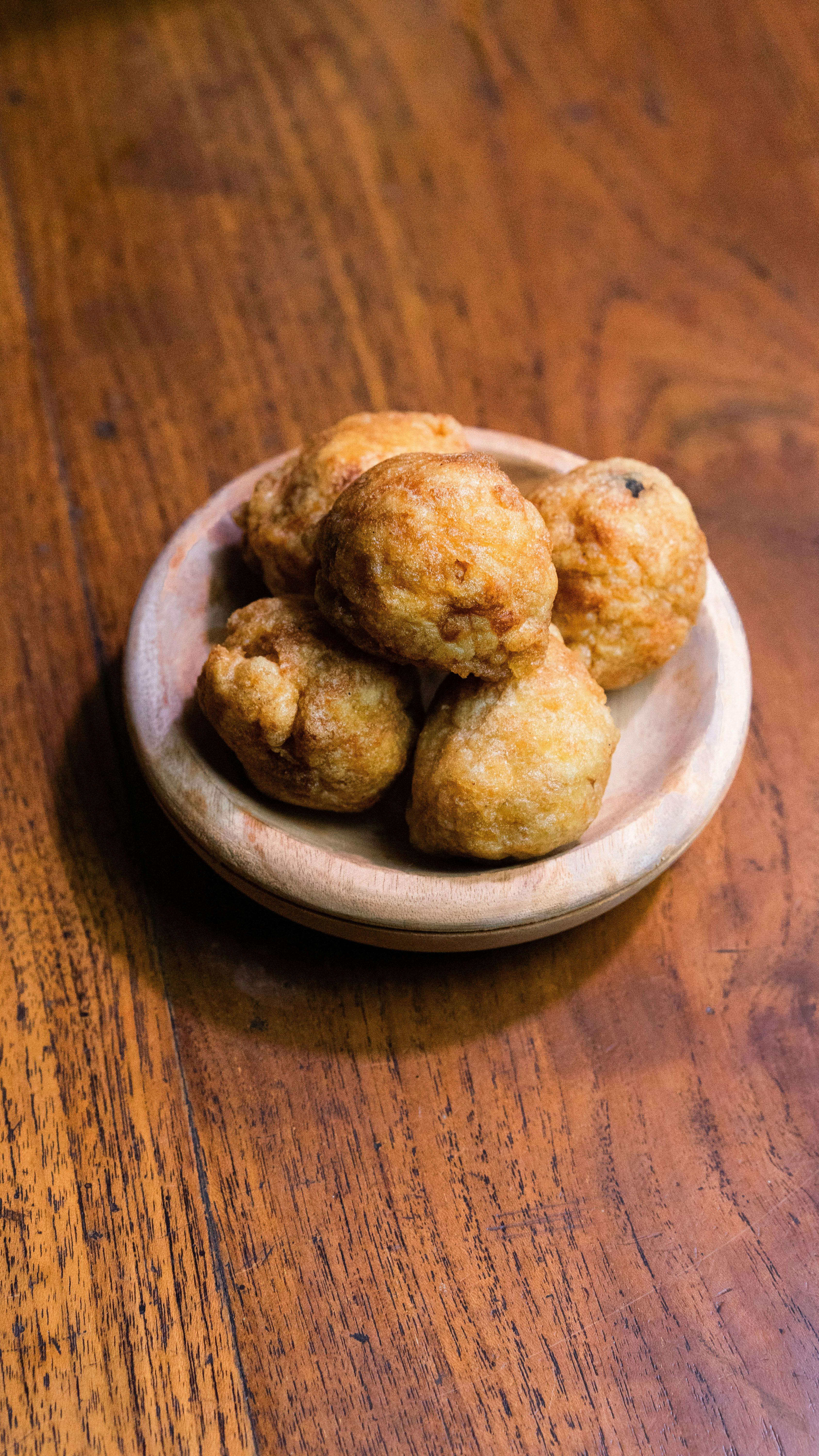
Photo: gabriel bodhi / Pexels
The diets react (see scores below)
Common Ingredients
- rice
- urad dal
- onion
- green chili
- ginger
- mustard seeds
- curry leaves
- oil
Specific recipes may vary.
Incompatible with 5 of 11 diets
Diet Ratings
Paniyaram is made from a fermented batter of rice and urad dal, both of which are extremely high in carbohydrates. Rice alone is a grain with approximately 45g net carbs per 100g, making it fundamentally incompatible with ketogenic macros. A standard serving of paniyaram (4-6 pieces) would deliver well over 50g of net carbs, which exceeds the entire daily keto carb budget in a single sitting. The fermentation process does not meaningfully reduce the carbohydrate load. While onion, green chili, ginger, mustard seeds, curry leaves, and oil are relatively keto-friendly supporting ingredients, the rice-and-lentil base disqualifies this dish entirely. There is no realistic portion size at which paniyaram becomes compatible with ketosis.
Paniyaram in this formulation is entirely plant-based. The batter is made from fermented rice and urad dal (a whole-food legume combination), and the tempering uses mustard seeds, curry leaves, green chili, ginger, and onion — all whole plant ingredients. The oil used for cooking is plant-derived. There are no animal products, dairy, eggs, or animal-derived additives of any kind. The fermentation process is natural and vegan-friendly. As a whole-food, minimally processed dish centered on legumes and grains, it scores near the top of the approval range.
Paniyaram is fundamentally incompatible with the paleo diet. It is made from a fermented batter of rice (a grain) and urad dal (a legume) — two of the most clearly excluded food categories in paleo. These two ingredients form the entire base of the dish, making substitution impossible while retaining the dish's identity. The onion, green chili, ginger, curry leaves, and mustard seeds are paleo-friendly, but they are merely seasonings and cannot redeem the dish. The oil is unspecified and likely a seed oil (common in Indian cooking), which would be an additional violation. There is no meaningful paleo adaptation possible here without completely reconstructing the dish.
Paniyaram is made from a fermented batter of rice and urad dal (lentils), which aligns well with Mediterranean principles of legumes and fermented foods. The aromatic additions (onion, ginger, green chili, curry leaves, mustard seeds) are all plant-based and wholly compatible. However, the primary grain component is white rice — a refined grain — rather than a whole grain, which the Mediterranean diet discourages in favor of whole grains. The lentil (urad dal) component partially offsets this by adding protein, fiber, and legume benefits. The oil used is unspecified; if it were extra virgin olive oil it would score higher, but traditional preparation uses neutral or coconut oil. The fermentation process does improve the nutritional profile and digestibility. Overall, this is a plant-forward, minimally processed dish with a meaningful legume component, but the white rice base and non-olive oil prevent a full approval.
Some Mediterranean diet researchers who emphasize the broader 'dietary pattern' over strict ingredient lists may approve this dish more favorably, noting that fermented legume-grain combinations are nutritionally analogous to traditional Mediterranean preparations like socca or fava-based dishes, and that the absence of processed ingredients or animal fats is the more important criterion.
Paniyaram is entirely plant-based with zero animal-derived ingredients. It is made from fermented rice and urad dal batter, with onion, green chili, ginger, mustard seeds, curry leaves, and plant oil. Every single ingredient is excluded on the carnivore diet. There is no ambiguity here — this dish is incompatible with carnivore eating at every level, including the most lenient interpretations.
Paniyaram contains two major Whole30-excluded ingredients: rice (a grain) and urad dal (a legume). Both are explicitly prohibited on the Whole30 program. Additionally, traditional paniyaram is a fermented batter-based dish that, even if the exclusions were overlooked, falls into the category of recreating grain-based baked/cooked goods (similar to pancakes or muffins in spirit). There is no compliant substitution path that would preserve the identity of this dish. The remaining ingredients — onion, green chili, ginger, mustard seeds, curry leaves, and oil — are all Whole30-compliant, but they cannot redeem the dish given the foundational excluded ingredients.
Paniyaram is a South Indian dish made from a fermented batter of rice and urad dal, cooked in a special pan. While rice is low-FODMAP and fermentation can reduce some FODMAPs, this dish contains multiple high-FODMAP ingredients that make it problematic during elimination. Onion is a major fructan source and is high-FODMAP even in small quantities. Urad dal (black gram) is high in GOS and is considered high-FODMAP. The combination of onion and urad dal makes this dish clearly high-FODMAP at any standard serving. Green chili and ginger are low-FODMAP in typical culinary amounts, mustard seeds and curry leaves are generally safe, and oil is fine — but the core structural ingredients (urad dal) and the flavoring (onion) are both significant FODMAP sources that cannot be offset by portion control at a standard serving.
Paniyaram is a South Indian breakfast made from fermented rice and urad dal batter, cooked in a special pan with small amounts of oil. The base ingredients align reasonably well with DASH principles: urad dal is a legume rich in potassium, magnesium, and fiber; onion, ginger, green chili, and curry leaves are low-sodium vegetables/aromatics that contribute micronutrients. Fermentation may enhance bioavailability of minerals. However, the dish uses refined white rice rather than a whole grain, which reduces its fiber profile. The amount of oil used (typically in a paniyaram pan with oil in each cavity) adds fat, though it is generally moderate and from vegetable sources. The dish is not inherently high in sodium — it relies on natural fermentation rather than added salt in significant quantities, though home preparations often do add salt. Mustard seeds contribute beneficial phytonutrients. Overall, this is a moderately DASH-compatible dish: plant-based, legume-forward, and relatively low in saturated fat, but the refined rice base and added oil prevent a full approval. Portion control is important.
NIH DASH guidelines emphasize whole grains over refined grains, which would lower the score of rice-based dishes like paniyaram. However, updated clinical interpretations note that the fermentation process partially reduces the glycemic impact of white rice and improves mineral bioavailability, and some DASH-oriented dietitians practicing in South Asian contexts consider fermented rice-lentil preparations acceptable given the strong legume component and low saturated fat content.
Paniyaram is a South Indian breakfast made from a fermented rice and urad dal batter, cooked in a special pan with oil. From a Zone perspective, this dish has several challenges. The primary carbohydrate source is white rice (high-glycemic, an 'unfavorable' carb in Zone terminology), which drives up the glycemic load significantly. While urad dal contributes some protein and fiber, the protein content is relatively modest compared to what Zone recommends (~7g per block), and lentil protein is less bioavailable than animal protein. The fat content depends heavily on how much oil is used in cooking. On the positive side, the fermentation process lowers the glycemic index somewhat compared to unfermented rice preparations, and the additions of onion, green chili, ginger, curry leaves, and mustard seeds provide polyphenols and anti-inflammatory compounds that Sears would appreciate. However, the overall macro profile skews carbohydrate-heavy with inadequate protein to achieve the 40/30/30 ratio without significant supplementation. To make Paniyaram Zone-compatible, one would need to pair it with additional lean protein (egg whites, low-fat cottage cheese) and ensure oil portions are primarily monounsaturated. As a standalone meal, it fails the Zone ratio test, but with careful portioning and protein additions, it can be workable.
Some Zone practitioners and later Sears writings on fermented foods and polyphenols would view the fermentation of rice and dal more favorably, as fermentation reduces glycemic impact and improves gut health — an area Sears increasingly emphasized post-2000. Additionally, urad dal's fiber content reduces net carbs, and the combined rice-lentil protein profile provides a more complete amino acid profile than either alone, making it slightly more Zone-compatible than plain rice dishes. A practitioner following Sears' later anti-inflammatory framework might score this higher (5-6) if oil is minimal and portions are small.
Paniyaram is a fermented South Indian dish made from a rice and urad dal batter cooked in a special pan. The fermentation process is a notable positive — it improves digestibility, enhances bioavailability of nutrients, and introduces beneficial probiotics that can support gut health and reduce systemic inflammation. Urad dal (black lentil) provides plant-based protein and fiber, both associated with reduced inflammatory markers. The aromatics — ginger, green chili, mustard seeds, curry leaves, and onion — are genuinely anti-inflammatory ingredients: ginger contains gingerols, mustard seeds have omega-3 ALA and selenium, curry leaves offer antioxidant flavonoids, and green chili provides capsaicin. However, paniyaram is built on a white rice base, which is a refined carbohydrate with a higher glycemic index and minimal fiber compared to whole grains. The ratio of rice to dal is typically high (roughly 2:1 or more), meaning refined starch dominates the dish. The 'oil' ingredient is unspecified — if it's a seed oil (sunflower, rice bran, or refined vegetable oil, which are common in Indian cooking), it adds omega-6 burden; extra virgin olive oil or coconut oil would shift the profile. Overall, the dish is nutritionally solid relative to many breakfast options — fermented, legume-containing, and spice-rich — but the refined white rice base and unspecified oil prevent a full approval. This lands in the moderate/caution zone, particularly if consumed frequently as a staple.
Some anti-inflammatory practitioners, particularly those following a low-glycemic or paleo-adjacent approach, would flag the high white rice content as a concern due to its glycemic load and lack of fiber. Conversely, traditional food researchers and South Asian nutrition advocates argue that fermented white rice preparations like paniyaram have a meaningfully lower glycemic impact than unfermented rice due to lactic acid bacteria reducing starch availability, and that the overall food matrix — legumes, spices, fermentation — makes this a net-positive breakfast in practice.
Paniyaram is made from a fermented rice and urad dal batter, cooked in a special pan with small round molds. The urad dal contributes some protein and fiber, and fermentation improves digestibility and gut health. However, the dish is predominantly rice-based, making it a high-carbohydrate, moderate-protein food — not protein-dense enough per calorie to fully satisfy GLP-1 patients' needs. A standard serving of 4-6 paniyaram provides roughly 6-10g protein, well below the 15-30g per meal target. The oil used in cooking (typically 1-2 tsp per batch in the molds) adds fat, though the amount is moderate compared to deep-fried alternatives. Green chili and ginger may irritate some GLP-1 patients experiencing nausea or reflux, especially during dose escalation. On the positive side, fermentation aids digestion (relevant given GLP-1's slowed gastric emptying), portion size is naturally small and controllable, and the dish avoids heavy saturated fats. It is not a poor choice but functions better as a side or snack paired with a higher-protein accompaniment like sambar (lentil soup) or a protein-rich chutney, rather than as a standalone meal.
Some GLP-1-focused dietitians view fermented South Asian foods favorably due to their digestibility and probiotic benefits, and may rate paniyaram more positively when paired with high-protein sides like sambar. Others caution that the refined rice component and low protein density per serving make it a poor calorie investment for patients eating significantly reduced volumes.
*See how scores were generated at our methodology page.
Nutritional profile
Six traits that cut across every diet.
Fiber & Plants
How much whole-plant food and fiber it delivers.
Healthy Fats
The quality of its fats (unsaturated, omega-3).
Whole / Unprocessed
How close it is to its natural, unprocessed form.
Gut Gentle
How easy it is on digestion (low FODMAP, few irritants).
Low Glycemic
How little it spikes your blood sugar.
Protein Density
How much protein it packs per calorie.
Controversy Index
Higher controversy = more disagreement between diets.
Diet-Specific Tips
 Vegan — 9/10
View tips
- Rice and urad dal batter is 100% plant-based
- No dairy or eggs in the formulation
- Fermented batter — fermentation process is vegan
- Tempering ingredients (mustard seeds, curry leaves, chili, ginger, onion) are all whole plant foods
- Plant-derived cooking oil
- High nutritional value: protein from lentils, complex carbs from rice
- Whole-food, minimally processed preparation
 Mediterranean — 5/10
View tips
- Fermented legume-grain batter aligns with Mediterranean whole-food principles
- White rice is a refined grain, not preferred over whole grains in Mediterranean guidelines
- Urad dal provides plant protein and fiber consistent with Mediterranean legume emphasis
- All aromatics (onion, ginger, chili, curry leaves) are plant-based and compatible
- Oil type unspecified — extra virgin olive oil not traditional in this preparation
- No added sugars, processed ingredients, or red meat
- Fermentation improves nutritional bioavailability and gut health
 DASH — 6/10
View tips
- Urad dal (lentil) is a DASH-approved legume rich in potassium, magnesium, and fiber
- Refined white rice base is not a whole grain — reduces DASH alignment
- Fermentation improves nutrient bioavailability and reduces glycemic index somewhat
- Vegetable oil used is acceptable under DASH (not tropical oil), but quantity matters
- No high-sodium ingredients; sodium level depends on how much salt is added in preparation
- Aromatics (onion, ginger, green chili, curry leaves) contribute beneficial phytonutrients with negligible sodium
- Plant-based, low in saturated fat and cholesterol — positives for DASH
- Portion control recommended; typically consumed in sets of 6-8 pieces which adds up in oil and refined carb intake
 Zone — 4/10
View tips
- White rice is a high-glycemic 'unfavorable' carb in Zone terminology, raising the glycemic load
- Fermentation of the batter partially reduces glycemic index compared to unfermented rice
- Urad dal adds some protein and fiber but insufficient protein alone to meet Zone's ~25g/meal target
- Macro profile is carbohydrate-heavy, requiring supplemental lean protein to achieve 40/30/30 ratio
- Polyphenol-rich additions (ginger, curry leaves, chili, mustard seeds) align with Sears' anti-inflammatory emphasis
- Oil type and quantity are critical — if using olive or avocado oil in modest amounts, fat quality improves
- Not a standalone Zone meal; needs protein pairing (egg whites, cottage cheese) to balance blocks
 Anti-Inflammatory — 6/10
View tips
- Fermentation of rice-dal batter improves digestibility and introduces gut-beneficial probiotics
- Urad dal provides plant-based protein and fiber, supporting anti-inflammatory gut health
- Ginger, green chili, mustard seeds, and curry leaves are established anti-inflammatory spices/aromatics
- White rice base is a refined carbohydrate with higher glycemic index and low fiber content
- Type of cooking oil is unspecified — seed oils (common in India) would add omega-6 load
- Fermentation may partially attenuate glycemic impact of white rice
- No added sugars, processed ingredients, or trans fats
 GLP-1 Friendly — 5/10
View tips
- Low protein density per serving (~6-10g per 4-6 pieces), below the 15-30g per meal target
- Predominantly rice-based — high carbohydrate, moderate glycemic impact
- Fermented batter improves digestibility, relevant for GLP-1 slowed gastric emptying
- Moderate oil use — not fried, but adds calories and fat
- Green chili may worsen nausea or reflux in GLP-1 patients, especially during dose escalation
- Urad dal contributes some fiber and protein but not sufficient as the sole protein source
- Naturally small portions are GLP-1 friendly in volume
- Best consumed paired with sambar or high-protein chutney to meet protein targets