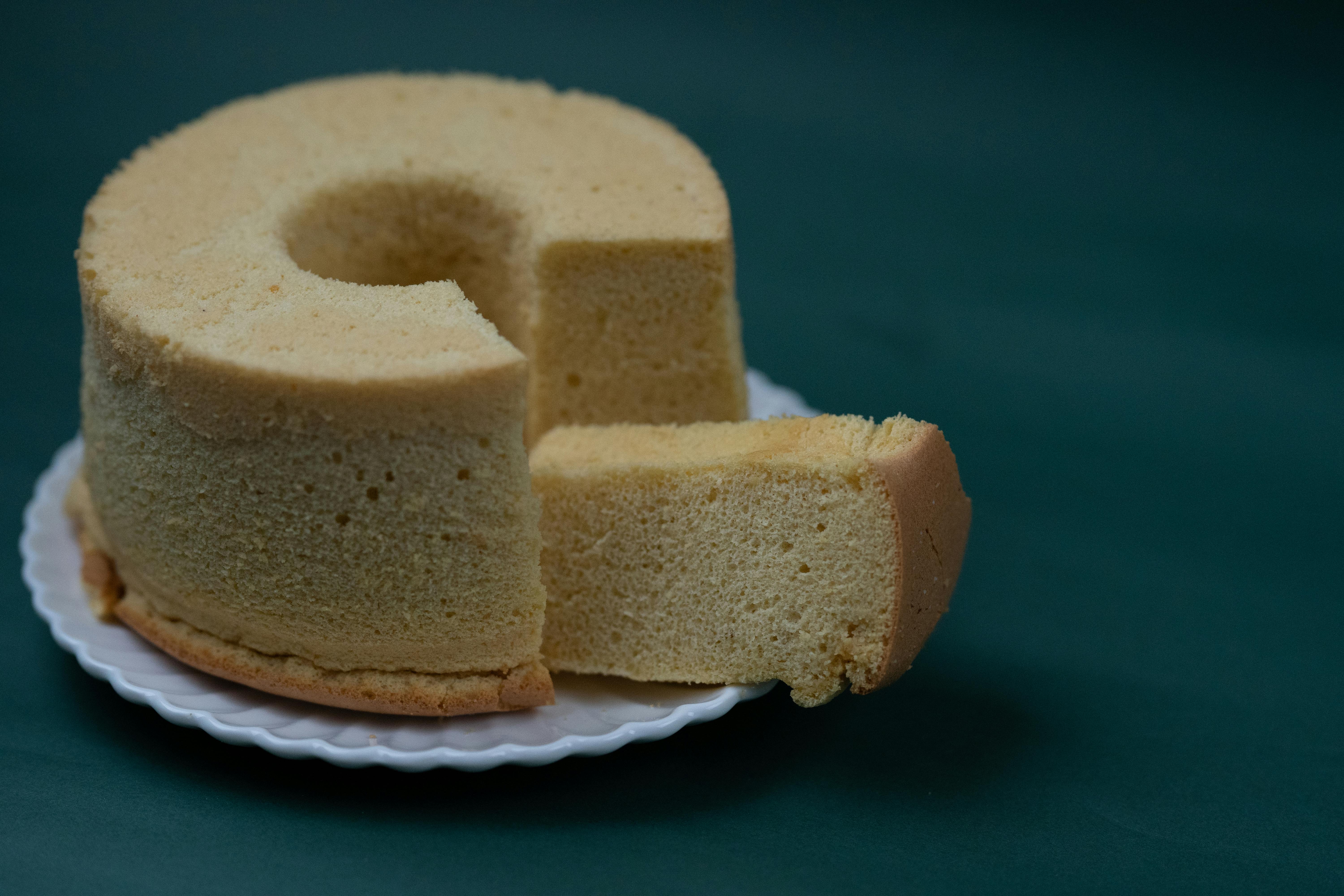
Photo: Cats Coming / Pexels
American
Chiffon Cake
The diets react (see scores below)
Common Ingredients
- cake flour
- sugar
- eggs
- vegetable oil
- water
- vanilla extract
- baking powder
- salt
Specific recipes may vary.
Incompatible with 10 of 11 diets
Diet Ratings
Chiffon cake is fundamentally incompatible with a ketogenic diet. Its two primary ingredients — cake flour (refined wheat grain) and sugar — are the exact foods keto eliminates. A single slice contains approximately 30-40g of net carbs, which alone can exceed or nearly exhaust an entire day's carb budget. Cake flour is a high-glycemic grain that spikes blood sugar and halts ketosis, while sugar provides pure glucose with zero nutritional benefit in a keto context. Vegetable oil, though high in fat, is an inflammatory omega-6 fat generally discouraged even on keto. There is no realistic portion size that makes this food compatible with ketosis.
Chiffon cake contains eggs as a listed ingredient, which are an animal product and clearly excluded from a vegan diet. Eggs are a core structural component of chiffon cake — they provide the lift, moisture, and characteristic airy texture that defines this baked good. There is no ambiguity here: eggs disqualify this dish from being vegan. The remaining ingredients (cake flour, sugar, vegetable oil, water, vanilla extract, baking powder, salt) are all plant-based, but the presence of eggs makes the dish non-vegan as formulated. A vegan version could theoretically be made using egg substitutes such as aquafaba or flax eggs, but the standard recipe is not vegan-compliant.
Chiffon cake is fundamentally incompatible with the paleo diet. It contains multiple non-paleo ingredients: cake flour (a refined wheat grain product, strictly excluded), refined sugar (excluded), vegetable oil (a seed oil, excluded), baking powder (a processed leavening agent with additives), and added salt. While eggs are paleo-approved and vanilla extract is generally acceptable, the foundational ingredients — wheat flour, refined sugar, and seed oil — are core exclusions in every mainstream paleo framework. This is a highly processed baked good with no paleo-compliant substitution possible without fundamentally changing the dish.
Chiffon cake is a refined grain-based dessert with significant added sugar and cake flour (a refined grain), placing it firmly outside Mediterranean diet principles. While it uses vegetable oil rather than butter (a minor positive), the combination of refined flour, added sugar, and its identity as a sweet treat makes it contrary to the Mediterranean dietary pattern, which minimizes processed foods, refined grains, and added sugars. Occasional indulgence in sweets exists in Mediterranean cultures, but this is an American-style cake with no traditional Mediterranean roots and limited nutritional value.
Chiffon cake is almost entirely plant-derived and processed, with cake flour (grain), sugar, vegetable oil, vanilla extract, and baking powder all being explicitly excluded on the carnivore diet. While eggs are the only carnivore-compatible ingredient, they are a minor component in a dish that is fundamentally built on grains, plant oils, and sugar. This is a classic baked good with no place on a carnivore protocol under any interpretation.
Chiffon Cake contains multiple excluded ingredients and also violates Whole30's 'no recreating baked goods' rule. Cake flour is a grain product (wheat), which is explicitly excluded on Whole30. Sugar is an excluded added sugar. Even if compliant versions of these ingredients could be imagined, the dish itself is a baked good (cake), which is explicitly prohibited under Rule 4 regardless of ingredient compliance. This is a clear, unambiguous violation on multiple levels.
Chiffon cake's primary FODMAP concern is cake flour, which is a wheat-based product high in fructans. While cake flour is refined and lower in fiber than whole wheat, it still contains fructans that accumulate with serving size. The remaining ingredients — eggs, vegetable oil, water, vanilla extract, baking powder, salt, and sugar — are all low-FODMAP or FODMAP-free. The wheat flour content is the critical variable. A small slice (approximately 30–40g) may fall within tolerable fructan limits for some people, but a standard serving of cake (60–100g or a typical slice) would likely exceed safe fructan thresholds for the elimination phase. Monash University has not specifically tested chiffon cake, but the fructan content of cake flour follows the same principles as other wheat-based baked goods.
Monash University rates some wheat-based baked goods as low-FODMAP at very small portions due to dilution of fructans by other ingredients, and refined cake flour may have a somewhat lower fructan density than bread flour. However, most clinical FODMAP practitioners advise avoiding wheat-based products entirely during the elimination phase to minimize fructan exposure and simplify compliance, regardless of the refined nature of the flour.
Chiffon cake is a refined-flour dessert/snack with significant added sugar, placing it in the 'sweets' category that DASH guidelines explicitly limit. While it uses vegetable oil (not saturated tropical oils or butter) and eggs, making it better than many baked goods, it still provides little nutritional value in terms of potassium, magnesium, fiber, or calcium — the key DASH nutrients. The refined cake flour lacks the fiber of whole grains, and the substantial sugar content conflicts with DASH's guidance to limit sweets and added sugars. The moderate sodium from baking powder and salt is acceptable. DASH does allow small amounts of sweets (5 or fewer servings per week of limited portions), so an occasional small slice is not categorically forbidden, but it should not be a regular snack.
Chiffon cake is a high-glycemic, nutritionally poor snack that is fundamentally incompatible with Zone Diet principles. Its primary ingredients are cake flour (refined, high-GI carbohydrate) and sugar (pure high-GI carbohydrate), which together dominate the macronutrient profile. There is virtually no lean protein — eggs provide some, but in the proportions typical of chiffon cake, protein contribution is minimal relative to carbohydrates. The fat comes from vegetable oil, which is typically a high omega-6 seed oil (such as canola or soybean oil), conflicting with Zone's preference for monounsaturated fats and anti-inflammatory omega-3s. The macro ratio is wildly skewed toward carbohydrates with negligible protein, making it nearly impossible to build a Zone-balanced snack around this food without radical portioning that would yield an unsatisfyingly tiny portion. The Zone block system identifies refined flour and added sugar as 'unfavorable' carbohydrates to be minimized, and a food where these are the dominant ingredients has no meaningful role in a Zone eating plan. Unlike caution-level foods that can be used in small, carefully measured blocks, chiffon cake delivers empty calories with a hormonal insulin spike that directly opposes the Zone's eicosanoid-balancing goals.
Chiffon cake is a refined dessert with virtually no anti-inflammatory merit. Its primary ingredients — cake flour (highly refined, stripped of fiber and nutrients), sugar (added sugar directly promotes inflammatory cytokine production and raises CRP), and vegetable oil (typically high-omega-6 oils like soybean or canola, which anti-inflammatory protocols discourage, especially in refined baked goods context) — are all in the 'limit' or 'avoid' category. Eggs offer minor nutritional value but are overwhelmed by the surrounding ingredients. Vanilla extract provides trace polyphenols, and baking powder and salt are nutritionally inert. There are no omega-3s, antioxidants, polyphenols, fiber, or other anti-inflammatory compounds of note. The combination of refined carbohydrates and added sugar creates a high glycemic load that triggers insulin spikes and promotes systemic inflammation. This is a classic processed sweet treat with no redemptive anti-inflammatory properties.
Chiffon cake is a poor fit for GLP-1 patients. It is built almost entirely on refined carbohydrates (cake flour, sugar) with negligible protein and virtually no fiber. While it is lower in fat than butter-based cakes due to vegetable oil, that advantage is outweighed by its high sugar content and near-zero nutrient density per calorie. With dramatically reduced appetite on GLP-1 medications, every bite must deliver meaningful protein, fiber, or micronutrients — chiffon cake delivers none of these. The eggs contribute a small amount of protein, but the overall protein-per-serving remains very low relative to calorie cost. The refined flour and sugar combination also promotes rapid blood sugar spikes, which is counterproductive for metabolic health goals that typically accompany GLP-1 therapy. As a snack, it occupies caloric space that should be filled by protein- and fiber-rich options.
*See how scores were generated at our methodology page.
Nutritional profile
Six traits that cut across every diet.
Fiber & Plants
How much whole-plant food and fiber it delivers.
Healthy Fats
The quality of its fats (unsaturated, omega-3).
Whole / Unprocessed
How close it is to its natural, unprocessed form.
Gut Gentle
How easy it is on digestion (low FODMAP, few irritants).
Low Glycemic
How little it spikes your blood sugar.
Protein Density
How much protein it packs per calorie.
Controversy Index
Higher controversy = more disagreement between diets.
Diet-Specific Tips
 DASH — 4/10
View tips
- High added sugar content conflicts with DASH limit on sweets
- Refined cake flour lacks fiber and whole grain benefits
- Uses vegetable oil rather than saturated fat — a relative positive compared to butter-based cakes
- Provides minimal potassium, magnesium, calcium, or fiber
- Moderate sodium from baking powder and salt is within acceptable range
- DASH allows limited sweets — small, infrequent portions are permissible
- Not a core DASH food but not as harmful as high-sodium or high-saturated-fat snacks