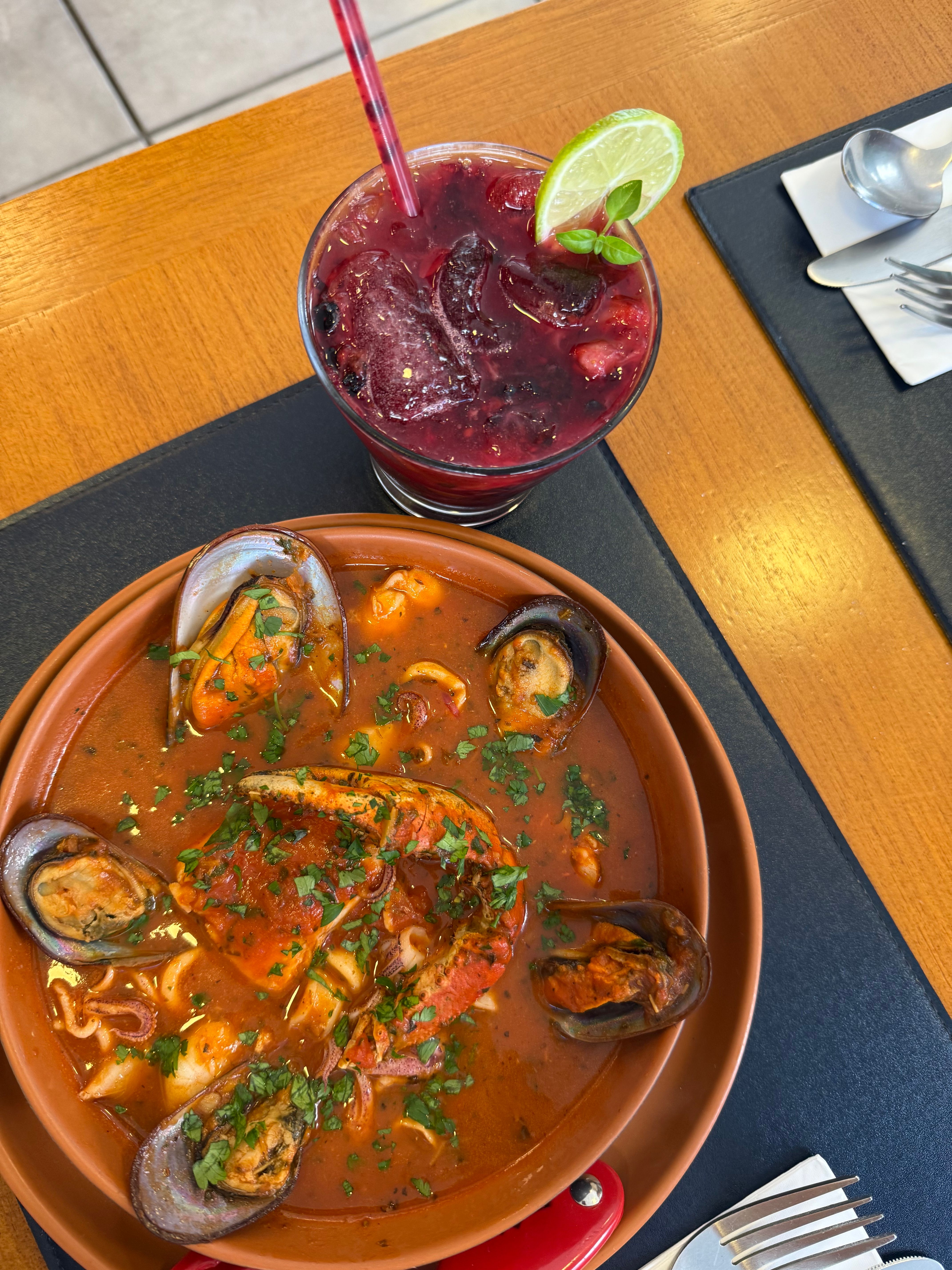
Photo: Luana Mundek / Pexels
Chilean
Caldillo de Congrio
The diets react (see scores below)
Common Ingredients
- conger eel
- potatoes
- onion
- tomato
- carrot
- white wine
- garlic
- cilantro
Specific recipes may vary.
Incompatible with 5 of 11 diets
Diet Ratings
Caldillo de Congrio is fundamentally incompatible with a ketogenic diet in its traditional form. While conger eel is an excellent keto-friendly protein source, the dish is built around potatoes as a primary ingredient, which are a high-starch vegetable with roughly 15-17g net carbs per 100g. A typical serving would easily contain 150-200g of potatoes, pushing 25-35g net carbs from potatoes alone before accounting for the other carb-contributing ingredients. Carrots add additional net carbs (~7g/100g), tomatoes contribute modest carbs, onion adds ~8g/100g, and white wine adds sugars that do not fully cook off. The cumulative carbohydrate load from a standard serving is likely 30-50g of net carbs, which would consume or exceed an entire day's keto carb budget in a single dish with no meaningful fat contribution to compensate. The dish is protein-forward but very low in fat, misaligning with keto macronutrient targets on multiple fronts.
Caldillo de Congrio is a traditional Chilean fish soup whose primary and defining ingredient is conger eel, a marine animal. Fish and all seafood are excluded under vegan dietary rules as animal products. There is no vegan version of this dish without fundamentally replacing its core ingredient.
Caldillo de Congrio is a traditional Chilean fish soup built around conger eel, which is an excellent paleo protein. The supporting vegetables — onion, tomato, carrot, garlic, and cilantro — are all paleo-approved. However, two ingredients introduce debate: white potatoes and white wine. White potatoes are discouraged by Cordain's original Paleo Diet framework but increasingly accepted in modern paleo practice. White wine, while derived from fruit, is an alcoholic and processed product that falls into the paleo 'caution' gray zone. Neither ingredient is an outright violation by community consensus, but together they prevent a clean approval. The dish is otherwise free of grains, legumes, dairy, seed oils, and processed additives, making it one of the more paleo-compatible traditional dishes if the potato and wine questions are resolved in the lenient direction.
Strict Cordain-school paleo would flag white potatoes as a high-glycemic, anti-nutrient-containing tuber to avoid, and would exclude alcohol entirely as a processed, non-ancestral substance. Under this interpretation, the dish would score lower. Conversely, Mark Sisson and Whole30 both permit white potatoes, and many modern paleo practitioners treat small amounts of wine as acceptable, which would push this dish toward approval.
Caldillo de Congrio aligns excellently with Mediterranean diet principles. The primary protein is conger eel, a fatty fish that fits the recommendation of eating fish 2-3 times weekly. The supporting ingredients — onion, tomato, carrot, garlic, and potatoes — are all whole, plant-based vegetables that are staples of the Mediterranean dietary pattern. Garlic and onion are foundational aromatics in Mediterranean cooking. White wine is a traditional Mediterranean cooking ingredient used in moderation. The dish is unprocessed, low in saturated fat, and built around fish and vegetables with no red meat or refined ingredients. The only minor consideration is that potatoes are a starchy ingredient and cilantro, while not a traditional Mediterranean herb, is a fresh herb that adds nutritional value. Overall, this is a whole-food, fish-forward soup that closely mirrors Mediterranean soups and stews like Greek kakavia or Italian brodetto.
Caldillo de Congrio is a traditional Chilean conger eel soup that, while built around a carnivore-approved protein (conger eel/fish), is heavily loaded with plant-based ingredients that are strictly excluded from the carnivore diet. Potatoes, onion, tomato, carrot, garlic, and cilantro are all plant foods, and white wine is a plant-derived fermented beverage. The dish as prepared is fundamentally incompatible with carnivore principles — the eel itself would score well, but it cannot be separated from the plant-heavy broth and vegetables that define this dish. Only the conger eel component could be salvaged if isolated and prepared without the plant ingredients.
Caldillo de Congrio contains white wine, which is an alcoholic beverage and explicitly excluded on Whole30. While all other ingredients are compliant — conger eel (seafood), potatoes, onion, tomato, carrot, garlic, and cilantro are all whole, unprocessed foods fully allowed on Whole30 — the inclusion of white wine as a cooking ingredient disqualifies the dish as traditionally prepared. Alcohol in all forms, including cooking wine, is excluded from the Whole30 program. A compliant version could be made by omitting the white wine or substituting it with seafood or vegetable broth.
Caldillo de Congrio contains two major high-FODMAP ingredients that make it unsuitable during the elimination phase: onion and garlic. Both are among the highest-FODMAP foods tested by Monash University, rich in fructans, and there is no safe serving size for either during elimination. Even small amounts of onion and garlic cooked into a broth are problematic because fructans are water-soluble and leach extensively into the cooking liquid, meaning the entire soup base becomes high-FODMAP. The conger eel (fish) is naturally low-FODMAP, as are potatoes, carrot, and tomato at standard servings. Cilantro is low-FODMAP. White wine is low-FODMAP at a small serving (approximately 150ml), and cooking reduces volume further. However, the onion and garlic are dealbreakers — their fructans permeate the broth and cannot be removed by straining solids out.
Caldillo de Congrio is a Chilean fish soup featuring conger eel as the primary protein alongside DASH-friendly vegetables (potatoes, onion, tomato, carrot, garlic) and aromatic herbs (cilantro). Conger eel is a lean fish that aligns well with DASH's emphasis on fish and lean protein, providing heart-healthy omega-3 fatty acids. The vegetable base contributes potassium, magnesium, fiber, and antioxidants — all core DASH nutrients. White wine is used in modest cooking quantities, which poses minimal concern. The primary DASH risk is sodium: restaurant or traditional preparations may add significant salt, and the sodium content of homemade vs. restaurant versions varies considerably. Prepared with sodium-conscious cooking (limiting added salt), this dish is an excellent DASH choice. Even in traditional form, it lacks processed ingredients, saturated fat, added sugars, or tropical oils.
NIH DASH guidelines don't specifically address conger eel, and its fat profile is less studied than commonly cited DASH-approved fish like salmon or tuna. Some DASH-oriented clinicians may note that traditional Chilean restaurant preparations of this dish can be high in sodium from seasoning, and would recommend it only when prepared at home with controlled salt — rating it 'caution' in restaurant contexts.
Caldillo de Congrio is a Chilean fish stew with a genuinely Zone-friendly protein base (conger eel is a lean, omega-3-rich fish — excellent for Zone's anti-inflammatory focus) and favorable supporting vegetables (onion, tomato, carrot, garlic, cilantro). However, potatoes are a high-glycemic carbohydrate that Dr. Sears explicitly flags as 'unfavorable' in Zone terminology, raising the glycemic load of the dish significantly. The overall macro balance depends heavily on portion ratios: if potatoes dominate the carb block, this soup skews toward high-GI carbs. The fat content from conger eel is relatively modest and primarily beneficial (omega-3s), and white wine adds minimal glycemic impact in cooking quantities. As served traditionally, the potato load makes this a 'caution' rather than an 'approve' — a Zone practitioner could enjoy a portion by reducing potato quantity and pairing with a salad of favorable vegetables to rebalance the carb profile toward low-GI sources.
Some Zone practitioners would rate this higher (6-7) because fish soups are inherently protein-anchored and the vegetable diversity (tomato, onion, carrot, garlic) provides polyphenols and anti-inflammatory compounds Sears champions in his later work (The OmegaRx Zone, The Anti-Inflammation Zone). If potatoes are used in small quantities as a single carb block element rather than the dominant carbohydrate, the dish can approach Zone balance more closely. The lean, omega-3-rich protein source is precisely what Sears recommends.
Caldillo de Congrio is a traditional Chilean fish soup built on a foundation of ingredients with strong anti-inflammatory credentials. Conger eel is a fatty fish providing meaningful omega-3 fatty acids (EPA and DHA), which are among the most well-established anti-inflammatory nutrients and central to every major anti-inflammatory dietary framework. Garlic contains allicin and organosulfur compounds with documented anti-inflammatory and antioxidant effects. Tomatoes contribute lycopene and other carotenoids. Onion provides quercetin, a flavonoid with anti-inflammatory properties. Carrot adds beta-carotene and antioxidants. Cilantro offers polyphenols and has some evidence of anti-inflammatory activity. White wine is used in modest cooking quantities, where most alcohol burns off, leaving minimal residue — this is categorically different from drinking alcohol and not a meaningful concern at culinary levels. Potatoes are a neutral whole-food starch; while not a standout anti-inflammatory food, they are unrefined and contribute potassium and some vitamin C. The dish is broth-based with no cream, butter, seed oils, refined carbohydrates, or added sugars. Cooking method is gentle poaching/simmering, which preserves nutrients. Overall, this is a whole-food, vegetable-rich fish soup that aligns well with anti-inflammatory dietary principles.
Caldillo de Congrio is a light Chilean fish soup built around conger eel, a lean white fish that delivers solid protein per serving. The broth-based format is highly favorable for GLP-1 patients: soups are easy to digest, hydrating, gentle on a slowed gastric system, and naturally portion-friendly. Vegetables (onion, tomato, carrot) add fiber, micronutrients, and water content. Garlic and cilantro are GLP-1-neutral aromatics. The white wine used in cooking largely cooks off, leaving minimal alcohol and primarily flavor. The main caution is potatoes, which add starchy carbohydrates with modest fiber and can raise blood sugar if portions are large — though in a soup context the potato quantity per serving is typically moderate. Conger eel is leaner than fatty fish like salmon but still provides omega-3s, making it a good protein source. The dish scores a 7 rather than higher because the protein density may not reach the 15–30g per meal target without a generous eel portion, and the potato content slightly dilutes nutrient density per calorie compared to a purely vegetable-based fish soup.
Some GLP-1-focused dietitians would flag the potato content more strongly, particularly for patients with insulin resistance or type 2 diabetes, where starchy carbohydrates require closer portion control; others would consider the overall soup format and lean fish base sufficient to rate this a solid approve without reservation.
*See how scores were generated at our methodology page.
Nutritional profile
Six traits that cut across every diet.
Fiber & Plants
How much whole-plant food and fiber it delivers.
Healthy Fats
The quality of its fats (unsaturated, omega-3).
Whole / Unprocessed
How close it is to its natural, unprocessed form.
Gut Gentle
How easy it is on digestion (low FODMAP, few irritants).
Low Glycemic
How little it spikes your blood sugar.
Protein Density
How much protein it packs per calorie.
Controversy Index
Higher controversy = more disagreement between diets.
Diet-Specific Tips
 Paleo — 5/10
View tips
- Conger eel is a whole, unprocessed fish — strongly paleo-approved
- Onion, tomato, carrot, garlic, and cilantro are all paleo-compliant vegetables
- White potatoes are debated: excluded by Cordain, accepted by Sisson and modern paleo frameworks
- White wine is an alcoholic/processed ingredient — falls in the paleo caution zone
- No grains, legumes, dairy, seed oils, refined sugar, or artificial additives present
- Dish is traditional and minimally processed, aligning with paleo philosophy overall
 Mediterranean — 8/10
View tips
- Conger eel is a fatty fish, supporting the 2-3 times weekly fish recommendation
- All vegetable ingredients (tomato, onion, carrot, garlic) are Mediterranean staples
- No processed ingredients, added sugars, or refined grains
- White wine used as a cooking ingredient is consistent with Mediterranean culinary tradition
- Cilantro is not a traditional Mediterranean herb but is a fresh herb with no dietary concern
- Potatoes are a starchy carbohydrate but whole and unrefined
- Dish is low in saturated fat with no red meat or dairy
 DASH — 8/10
View tips
- Conger eel is a lean fish aligned with DASH fish and lean protein recommendations
- Rich vegetable base (potatoes, tomato, carrot, onion) provides potassium, fiber, and magnesium
- No saturated fat, processed ingredients, added sugars, or tropical oils
- Sodium content highly variable — home preparation with limited salt scores higher than restaurant versions
- White wine used in cooking quantity poses minimal concern
- Garlic and cilantro are DASH-positive aromatics with negligible sodium contribution
- Low-sodium preparation recommended to fully align with DASH sodium limits (<2,300mg/day)
 Zone — 6/10
View tips
- Conger eel is a lean, omega-3-rich fish — ideal Zone protein source
- Potatoes are explicitly 'unfavorable' high-glycemic carbs in Zone methodology
- Supporting vegetables (onion, tomato, carrot, garlic) are Zone-favorable low-GI carbs
- Anti-inflammatory polyphenol content from garlic, tomato, and cilantro aligns with Sears' later work
- White wine contributes negligible glycemic load after cooking
- Dish can be Zone-adjusted by reducing potato portions and increasing vegetable base
- Fat content is modest and primarily beneficial (omega-3s from eel), not a concern
 Anti-Inflammatory — 8/10
View tips
- Conger eel provides omega-3 fatty acids (EPA/DHA) — core anti-inflammatory nutrient
- Garlic: allicin and organosulfur compounds reduce inflammatory markers
- Tomato: lycopene and carotenoids with antioxidant activity
- Onion: quercetin (flavonoid) with demonstrated anti-inflammatory properties
- Carrot: beta-carotene and antioxidants
- Broth-based preparation — no cream, butter, or pro-inflammatory fats
- Whole unprocessed ingredients throughout
- White wine used in cooking only — alcohol content largely evaporates, not a concern at culinary quantities
- Potatoes are neutral whole-food starch — not anti-inflammatory but not problematic
 GLP-1 Friendly — 7/10
View tips
- Lean fish protein source — conger eel is low-fat and provides meaningful protein
- Broth-based soup format supports hydration and easy digestibility
- Vegetables contribute fiber, micronutrients, and water content
- White wine used in cooking — alcohol largely evaporates, low concern
- Potatoes add starchy carbs that may require portion awareness, especially for diabetic patients
- Protein per serving may fall short of 15–30g target depending on eel portion size
- No fried components, no heavy fat load, no carbonation — strong GLP-1 compatibility overall