Photo: Kioto Estudio / Pexels
The diets react (see scores below)
Common Ingredients
- potatoes
- beef
- sausage
- onion
- eggs
- garlic
- oil
Specific recipes may vary.
Incompatible with 11 of 11 diets
Diet Ratings
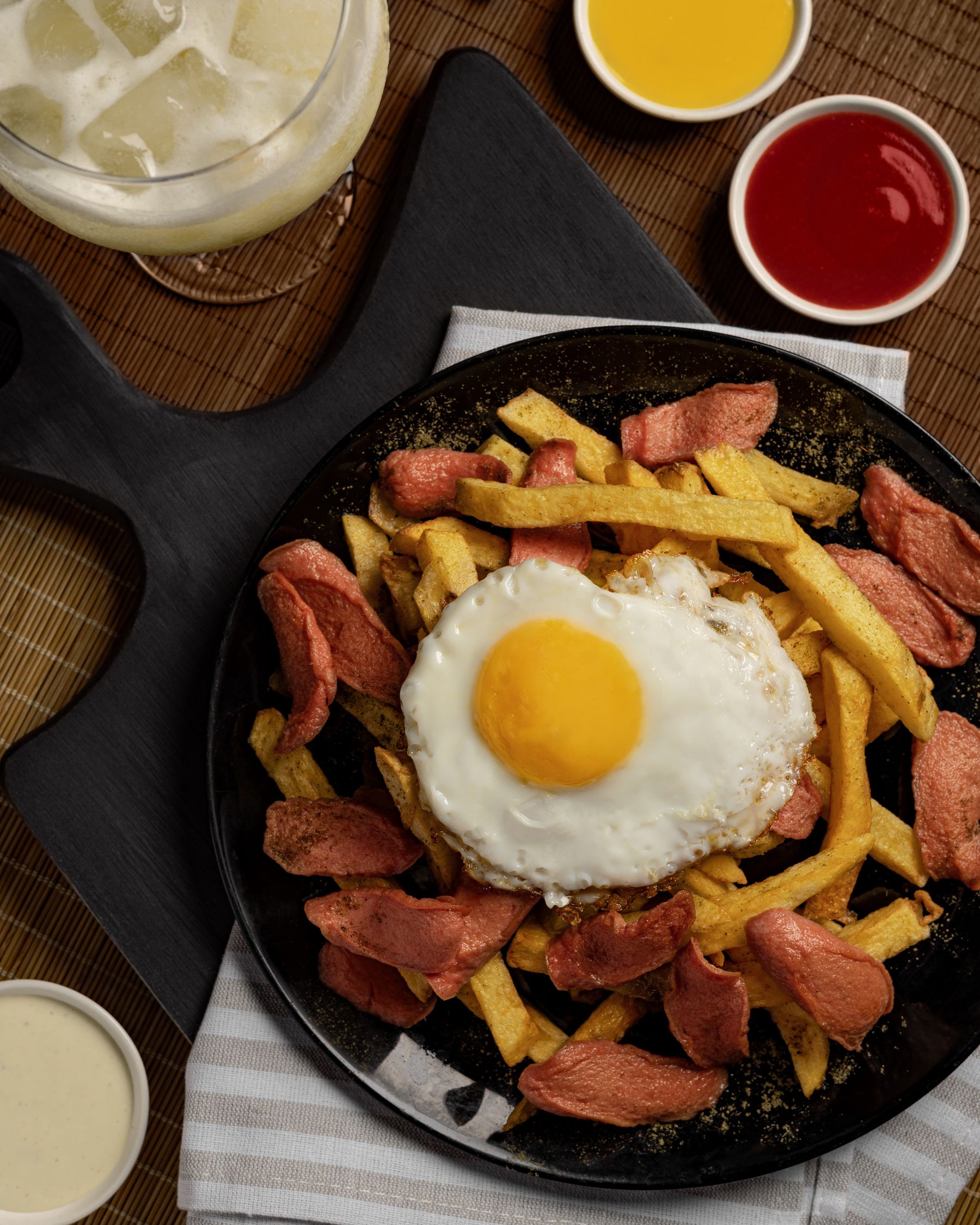
Chorrillana is a Chilean dish built on a large base of French-fried potatoes, which are extremely high in net carbs and starchy carbohydrates. A typical serving contains well over 50g of net carbs from the potatoes alone, making it fundamentally incompatible with ketosis. While several ingredients — beef, sausage, eggs, onion, garlic, and oil — are keto-friendly or at least tolerable in moderation, the central ingredient (potatoes) cannot be separated from the dish's identity. This is not a portion-control situation; the potatoes are the foundation of the meal, not a garnish.
Chorrillana is a Chilean dish consisting of french fries topped with caramelized onions, sliced beef, sausage, and fried eggs. It contains multiple animal products: beef (red meat), sausage (typically pork-based), and eggs. These are all clearly non-vegan ingredients, making this dish entirely incompatible with a vegan diet.
Chorrillana is a Chilean dish of french fries topped with sautéed beef strips, sliced sausage, caramelized onions, and fried eggs. While several components are paleo-friendly (beef, eggs, onion, garlic), the dish has critical non-paleo elements. The sausage is almost certainly a processed meat product containing additives, preservatives, fillers, or curing agents, making it a clear avoid. The oil is unspecified — if it is a seed oil (canola, sunflower, or vegetable oil, which are the most common commercial frying oils), it is excluded from paleo. The base of the dish is white potatoes, which are debated within the paleo community. Together, the processed sausage and likely seed oil used for frying make this dish incompatible with paleo as served in its traditional form.
A lenient modern paleo practitioner following Mark Sisson or Whole30 guidelines might rehabilitate parts of this dish by swapping in compliant sausage (no additives, no fillers), cooking in avocado or coconut oil, and accepting white potatoes — in which case the dish could approach a caution rating. However, the traditional restaurant version as typically served cannot be made paleo-compliant without significant ingredient substitutions.
Chorrillana is a Chilean comfort dish consisting of french fries topped with sautéed beef strips, sausage, caramelized onions, and fried eggs. It fundamentally contradicts Mediterranean diet principles on multiple fronts: it centers on red meat and processed sausage as primary proteins, uses refined/fried potatoes rather than whole plant foods, and typically involves significant amounts of saturated fat from the animal proteins. The combination of red meat plus processed sausage in a single dish far exceeds the Mediterranean guideline of limiting red meat to a few times per month. While eggs and onions are acceptable Mediterranean ingredients, they are minor components here. The dish is essentially a high-calorie, high-saturated-fat, meat-centric preparation with no meaningful plant-forward or whole grain elements.
Chorrillana is a Chilean dish built on a foundation of french fries (potatoes) topped with caramelized onions, beef strips, sausage, and fried eggs. While the beef, sausage, and eggs are carnivore-compatible animal products, the dish is fundamentally defined by its potato base and includes onion and garlic — all plant-derived foods that are strictly excluded on a carnivore diet. Plant oils used for frying also violate carnivore principles. The animal components alone do not redeem a dish whose primary structure is plant-based carbohydrates. No meaningful adaptation is possible without deconstructing the dish entirely.
Chorrillana is a Chilean dish typically made of french fries topped with caramelized onions, sliced beef, sausage, and fried eggs. The core ingredients — potatoes, beef, onion, eggs, garlic, and oil — are all individually Whole30-compliant. However, two significant concerns arise: (1) The dish is essentially a plate of french fries, which the Whole30 program explicitly lists as a prohibited 'junk food recreation' (french fries and tots are specifically called out as off-limits even when made from compliant ingredients). (2) Sausage, as commonly found, nearly always contains added sugar, sulfites (now allowed per 2024 rules), or non-compliant fillers such as grains or soy — a compliant version would require careful label-reading. If the french fry issue is set aside and a fully compliant sausage is used, the dish could be home-prepared in a compliant manner, but the french fry spirit-of-the-program violation is a real concern.
Some Whole30 practitioners argue that home-cooked potato dishes (even fries) made with compliant oil are acceptable since Whole30 does not ban potatoes, and the 'no french fries' rule is interpreted by Melissa Urban and official guidelines as targeting fast-food/deep-fried restaurant versions that foster unhealthy eating habits rather than home-cooked whole potatoes. Others hold strictly to the explicit ban on 'french fries and tots' regardless of preparation context.
Chorrillana is a Chilean dish built on a foundation of multiple high-FODMAP ingredients that cannot be easily substituted without fundamentally changing the dish. Onion is one of the highest-FODMAP foods tested by Monash University, rich in fructans, and is a central, generous component of this dish — not a garnish. Garlic is similarly a top-tier fructan offender and is typically used in meaningful quantities. These two ingredients alone make the dish unacceptable during the FODMAP elimination phase. Additionally, sausage commonly contains garlic, onion powder, or other FODMAP-containing fillers and flavourings, adding further fructan load. Potatoes, beef, eggs, and plain oil are individually low-FODMAP, but the presence of onion and garlic in standard cooking quantities renders the entire dish high-FODMAP. There is no realistic serving size of traditional Chorrillana that would qualify as low-FODMAP.
Chorrillana is a Chilean dish consisting of french fries topped with sautéed beef, sausage, caramelized onions, and fried eggs — essentially a high-calorie, high-fat, high-sodium comfort food. It conflicts with DASH diet principles on multiple fronts: sausage is a processed, high-sodium, high-saturated-fat meat that DASH explicitly discourages; beef (likely a fattier cut) adds additional saturated fat; the dish is typically fried or cooked in substantial oil; and there are no meaningful servings of vegetables beyond onion and garlic. The overall sodium load from sausage and seasoned beef is likely very high. There is virtually no fiber, no low-fat dairy, no whole grains, and no fruits or vegetables of significance. While potatoes offer some potassium and eggs provide protein, these modest positives are overwhelmed by the dish's overall nutritional profile, which is antithetical to DASH principles.
Chorrillana is a Chilean dish built on a foundation of french-fried potatoes topped with caramelized onions, sliced beef, sausage, and fried eggs. From a Zone Diet perspective, this dish is deeply problematic across multiple macro dimensions. The base is white potatoes — explicitly listed by Dr. Sears as an 'unfavorable' high-glycemic carbohydrate to avoid, and here they are fried, adding poor-quality omega-6-heavy seed oils. The protein sources (beef and sausage) are fatty rather than lean, contributing significant saturated fat well beyond Zone fat block targets and displacing the monounsaturated fats Sears advocates. The dish has no low-glycemic vegetables, no colorful Zone-favorable carbohydrates, and no monounsaturated fat sources. The macro ratio is almost certainly skewed toward high-glycemic carbs and saturated fat simultaneously, with the protein coming from unfavorable fatty sources. Even with careful portioning, it is nearly impossible to construct a Zone-balanced meal around this dish without fundamentally changing its core ingredients — at which point it would no longer be Chorrillana. This is one of the rare cases where the dish's structural composition, not just quantity, conflicts with Zone principles.
Chorrillana is a Chilean comfort dish consisting of french fries topped with sautéed onions, sliced beef, sausage, and fried eggs. From an anti-inflammatory perspective, this dish is highly problematic across multiple dimensions. Red meat (beef) and processed sausage are both flagged under anti-inflammatory guidelines — sausage in particular is a processed meat containing nitrates, preservatives, saturated fat, and sodium, all of which are associated with elevated inflammatory markers like CRP and IL-6. The potatoes are almost certainly deep-fried (french fries), which means they are cooked in high-heat refined seed oils (typically sunflower, corn, or soybean oil), contributing excessive omega-6 fatty acids and likely acrylamide from high-temperature frying. The sausage component adds further processed-food concerns. The dish has no meaningful anti-inflammatory components — no colorful vegetables, no herbs/spices beyond garlic (which is a mild positive), no omega-3 sources, no legumes or whole grains. The overall nutritional profile — high saturated fat, processed meat, deep-fried refined carbohydrates, inflammatory cooking oils — places this firmly in the 'avoid' category. Garlic is a minor redeeming element, and eggs are neutral-to-mixed, but they are insufficient to offset the strongly pro-inflammatory character of the dish as a whole.
Chorrillana is a Chilean dish consisting of a large bed of french-fried potatoes topped with sautéed onions, sliced beef, sausage, and fried eggs — essentially a high-fat, high-calorie, carbohydrate-heavy platter. It fails on nearly every GLP-1 dietary criterion. The potatoes are deep-fried, which introduces heavy fat load known to worsen nausea, bloating, and reflux in GLP-1 patients. The sausage contributes significant saturated fat and is a processed meat with low nutrient density per calorie. The overall fat content per serving is very high, the dish is served in large portions by design, and it offers minimal fiber despite the potato base. While beef and eggs do contribute some protein, the protein-to-fat ratio is poor and the protein is not lean. The dish is also heavy and slow to digest, directly conflicting with GLP-1-slowed gastric emptying. Empty refined calories from fried potatoes dominate the nutritional profile. This dish represents a combination of multiple 'avoid' triggers simultaneously: fried food, processed fatty meat, high saturated fat, large portion volume, and poor nutrient density per calorie.
*See how scores were generated at our methodology page.
Nutritional profile
Six traits that cut across every diet.
Fiber & Plants
How much whole-plant food and fiber it delivers.
Healthy Fats
The quality of its fats (unsaturated, omega-3).
Whole / Unprocessed
How close it is to its natural, unprocessed form.
Gut Gentle
How easy it is on digestion (low FODMAP, few irritants).
Low Glycemic
How little it spikes your blood sugar.
Protein Density
How much protein it packs per calorie.
Controversy Index
Higher controversy = more disagreement between diets.