Photo: Guillermo Berlin / Pexels
Chilean
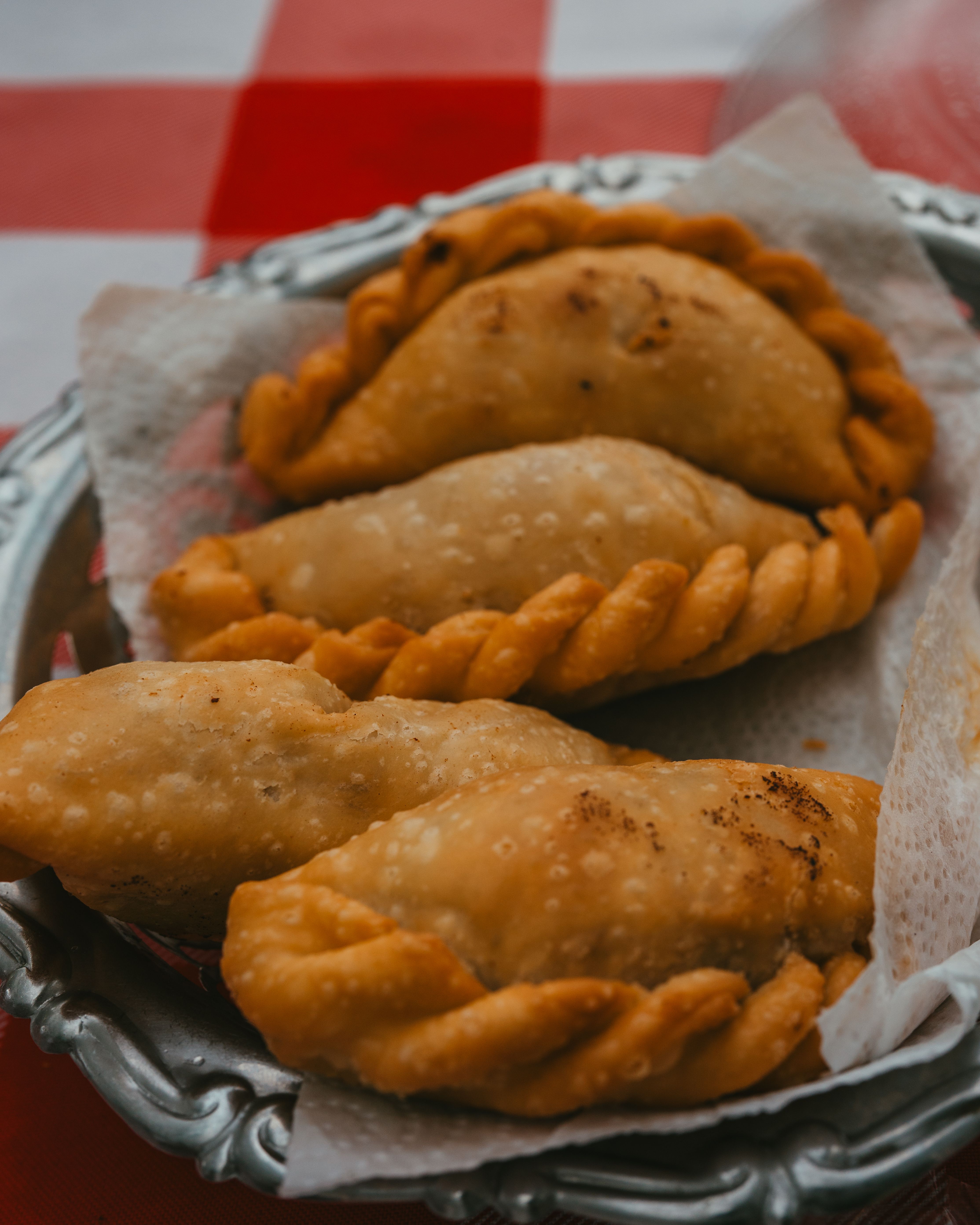
Empanada de Pino
The diets react (see scores below)
Common Ingredients
- beef
- onion
- olives
- raisins
- hard-boiled eggs
- cumin
- paprika
- wheat flour
Specific recipes may vary.
Incompatible with 9 of 11 diets
Diet Ratings
Empanada de Pino is fundamentally incompatible with a ketogenic diet. The dough is made from wheat flour, which is a grain-based, high-carbohydrate ingredient that alone can account for 30-50g of net carbs per empanada. Additionally, raisins are a concentrated source of sugar and carbohydrates, further disqualifying this dish. While the filling contains keto-friendly components — beef, eggs, olives, onion, and spices — the combination of the wheat flour pastry shell and raisins makes this impossible to fit within daily net carb limits without completely deconstructing the dish.
Empanada de Pino contains multiple animal-derived ingredients that are strictly excluded from a vegan diet. Beef is a direct animal product, and hard-boiled eggs are an animal byproduct. Both are clearly non-vegan with no ambiguity. The remaining ingredients (onion, olives, raisins, cumin, paprika, wheat flour) are plant-based, but the presence of beef and eggs renders the dish entirely incompatible with veganism.
Empanada de Pino is fundamentally disqualified by its wheat flour pastry shell, which is a grain-based ingredient explicitly excluded from the paleo diet. While most of the filling ingredients — beef, onion, hard-boiled eggs, olives, raisins, cumin, and paprika — are paleo-compatible, the wheat flour dough that encases the filling is a non-negotiable violation. There is universal consensus across all major paleo frameworks that wheat and wheat-derived products are to be avoided. The filling itself would score well in isolation, but the dish cannot be separated from its defining characteristic: the wheat flour empanada shell.
Empanada de Pino is a poor fit for the Mediterranean diet on multiple grounds. The primary protein is beef, which the Mediterranean diet limits to just a few times per month. The pastry shell is made from refined wheat flour, representing the refined grains that the diet minimizes. Together, these two core components — red meat filling and refined dough — place this dish firmly in 'avoid' territory. While some individual ingredients (olives, onion, eggs, spices) have Mediterranean-friendly qualities, they are minor players in a dish dominated by problematic elements. The dish is also a processed, enclosed pastry snack rather than a whole-food preparation.
Empanada de Pino is fundamentally incompatible with the carnivore diet. The dish is built around a wheat flour pastry shell, which is a grain-based plant food and a primary exclusion on carnivore. Beyond the dough, the filling contains multiple plant-derived ingredients: onion, olives, raisins, cumin, and paprika. Raisins add sugar and are fruit-derived. While beef and hard-boiled eggs are carnivore-approved ingredients, they are completely outnumbered and structurally inseparable from the plant components in this dish as prepared. No modification short of a full deconstruction would make this carnivore-compatible.
Empanada de Pino contains wheat flour as a primary ingredient, which is a grain explicitly excluded on the Whole30 program. The wheat flour pastry dough is the defining structural element of an empanada, making this dish fundamentally non-compliant. Additionally, even if a grain-free flour substitute were used, empanadas fall squarely into the category of baked goods/wraps that Whole30 Rule 4 prohibits recreating — specifically listing 'wraps' and disallowing foods that mimic bread-like or pastry formats. The filling ingredients (beef, onion, olives, raisins, hard-boiled eggs, cumin, paprika) are themselves largely compliant, but the pastry shell makes the dish impossible to approve in its traditional form.
Empanada de Pino contains multiple high-FODMAP ingredients that make it unsuitable during the elimination phase. Wheat flour pastry is high in fructans and is the primary structural component of the dish — there is no way to consume a meaningful portion without significant fructan intake. Onion (pino filling) is one of the highest-FODMAP foods tested by Monash University, rich in fructans, and is a defining, abundant ingredient in this filling. Raisins are high in fructose and polyols (sorbitol) at any realistic serving size. Olives are generally low-FODMAP in small quantities but the combination of the other offenders makes the overall dish clearly high-FODMAP. Hard-boiled eggs, beef, cumin, and paprika are all low-FODMAP and would otherwise be safe, but they cannot offset the three major FODMAP triggers present in substantial quantities.
Empanada de Pino is a traditional Chilean baked pastry filled with ground beef, onions, olives, raisins, hard-boiled eggs, and spices. From a DASH perspective, this dish presents multiple concerns. The wheat flour pastry dough is typically made with refined white flour and significant amounts of lard or shortening, contributing saturated fat that DASH limits. Ground beef is a red meat that DASH explicitly limits due to its saturated fat content. Olives, while containing healthy monounsaturated fats, are very high in sodium — a single empanada can easily contain 400–700mg of sodium from olives and seasoned beef alone, pushing toward or exceeding DASH sodium thresholds when multiple are consumed as a snack. The refined flour crust lacks the fiber of whole grains that DASH emphasizes. The hard-boiled eggs add some nutritional value (protein, micronutrients), and raisins contribute some potassium and natural sweetness, but these positives are outweighed by the red meat, refined pastry, and high sodium load. As commonly consumed (typically 1–2 empanadas per serving), this snack is not compatible with DASH dietary patterns.
NIH DASH guidelines limit red meat, refined grains, and high-sodium foods, placing empanadas firmly in the avoid category. However, some updated clinical interpretations note that eggs are no longer cholesterol-restricted under current dietary guidelines, and if the empanada were modified — substituting lean turkey or legumes for beef, using whole wheat dough, reducing olives, and baking without lard — it could approach a cautionary DASH-compatible food.
Empanada de Pino presents several Zone Diet challenges but isn't categorically off-limits. The wheat flour dough is a high-glycemic refined carbohydrate that forms the structural base — this is the primary Zone concern, as it contributes a significant carb load with a higher glycemic index than Zone-favorable carbs like vegetables or most fruits. The beef filling provides protein but is not the leanest option (Zone prefers skinless chicken, fish, or low-fat sources), and the fat content from beef can lean toward saturated. Raisins are explicitly called out in Zone methodology as 'unfavorable' high-sugar carbs. Hard-boiled eggs contribute additional protein and fat in a reasonably balanced way. Olives add monounsaturated fat, which is Zone-favorable. Onion is a Zone-acceptable low-glycemic carb. The spices (cumin, paprika) are neutral and even anti-inflammatory. The fundamental problem is the macro ratio: the dough-heavy pastry shell tips carbohydrates high-glycemic, the beef adds saturated fat, and the raisins compound the glycemic load. A single empanada would be difficult to fit into a balanced Zone meal without the carb block being dominated by unfavorable, fast-digesting starches. With careful portioning (e.g., one small empanada as part of a larger meal balanced with lean protein and low-GI vegetables), it can fit, but it requires significant dietary engineering.
Some Zone practitioners argue that traditional whole-food dishes like empanadas, even with wheat flour, can fit within Zone blocks if portion size is controlled — particularly if the filling-to-dough ratio is high (more meat, egg, olive filling relative to pastry). Additionally, Sears' later anti-inflammatory work is somewhat more permissive about occasional whole-grain or traditional carbohydrate sources, provided the overall meal achieves the 40/30/30 ratio. A practitioner could count the dough as the carb block, the beef and egg as the protein block, and the olive as the fat block, making it a rough Zone-compatible snack in small portions.
Empanada de Pino presents a mixed anti-inflammatory profile. On the positive side, onions contain quercetin (a notable anti-inflammatory flavonoid), olives provide beneficial monounsaturated fats and polyphenols, raisins offer antioxidants and trace anti-inflammatory compounds, cumin and paprika both carry anti-inflammatory phytochemicals, and hard-boiled eggs deliver choline and selenium. However, the dish has meaningful anti-inflammatory drawbacks: beef is a red meat that is limited on anti-inflammatory frameworks due to saturated fat content and arachidonic acid, which can promote inflammatory signaling when consumed regularly. The wheat flour pastry shell is a refined carbohydrate, contributing to glycemic load without meaningful fiber or antioxidant benefit. The overall dish structure — red meat encased in refined flour dough — leans toward the pro-inflammatory side, even though individual ingredients like olives, onions, and spices partially offset this. Occasional consumption is unlikely to be problematic, but this is not a dish that supports anti-inflammatory eating as a regular snack.
Empanada de Pino is a poor fit for GLP-1 patients. The wheat flour pastry shell is a refined, high-fat, low-fiber dough that is dense and difficult to digest given slowed gastric emptying. The beef filling is typically a fatty ground beef (picada), which adds saturated fat and further burdens digestion. Raisins contribute simple sugars with minimal fiber benefit. Olives add unsaturated fat, which is the better fat type, but still increases overall fat load. Hard-boiled eggs are a positive element, offering protein and micronutrients, and spices like cumin and paprika are generally well tolerated. However, the dominant macronutrient profile is refined carbohydrate plus saturated fat with modest protein per serving — exactly the combination most likely to worsen GLP-1 side effects including nausea, bloating, and reflux. The pastry casing also makes this a low-protein-density food relative to its calorie load, which is counterproductive when caloric intake is already suppressed. Even as a snack portion, the fat and refined carb burden outweigh the nutritional benefit.
*See how scores were generated at our methodology page.
Nutritional profile
Six traits that cut across every diet.
Fiber & Plants
How much whole-plant food and fiber it delivers.
Healthy Fats
The quality of its fats (unsaturated, omega-3).
Whole / Unprocessed
How close it is to its natural, unprocessed form.
Gut Gentle
How easy it is on digestion (low FODMAP, few irritants).
Low Glycemic
How little it spikes your blood sugar.
Protein Density
How much protein it packs per calorie.
Controversy Index
Higher controversy = more disagreement between diets.
Diet-Specific Tips
 Zone — 4/10
View tips
- Wheat flour dough is high-glycemic and Zone-'unfavorable,' dominating carbohydrate block
- Raisins are explicitly unfavorable in Zone methodology due to high sugar content
- Beef is an acceptable Zone protein but less ideal than leaner options; contributes saturated fat
- Hard-boiled eggs provide protein and balanced fat
- Olives contribute Zone-favorable monounsaturated fat
- Onion is a Zone-acceptable low-glycemic carbohydrate
- Overall macro ratio skews toward high-glycemic carbs, making Zone balance difficult without deliberate portioning
- Traditional combination food — can theoretically fit as a rough Zone snack block if portion is small
 Anti-Inflammatory — 4/10
View tips
- Beef (red meat): limited on anti-inflammatory diets due to saturated fat and arachidonic acid content
- Refined wheat flour pastry shell: high glycemic, low fiber, pro-inflammatory at regular consumption
- Olives: anti-inflammatory monounsaturated fats and polyphenols — positive contribution
- Onions: rich in quercetin, a well-researched anti-inflammatory flavonoid
- Cumin and paprika: contain anti-inflammatory phytochemicals (thymoquinone, capsanthin)
- Raisins: provide antioxidants but also concentrated sugars
- Eggs: moderate — provide choline and selenium with some debate around arachidonic acid
- No omega-3 sources, leafy greens, or anti-inflammatory oils present