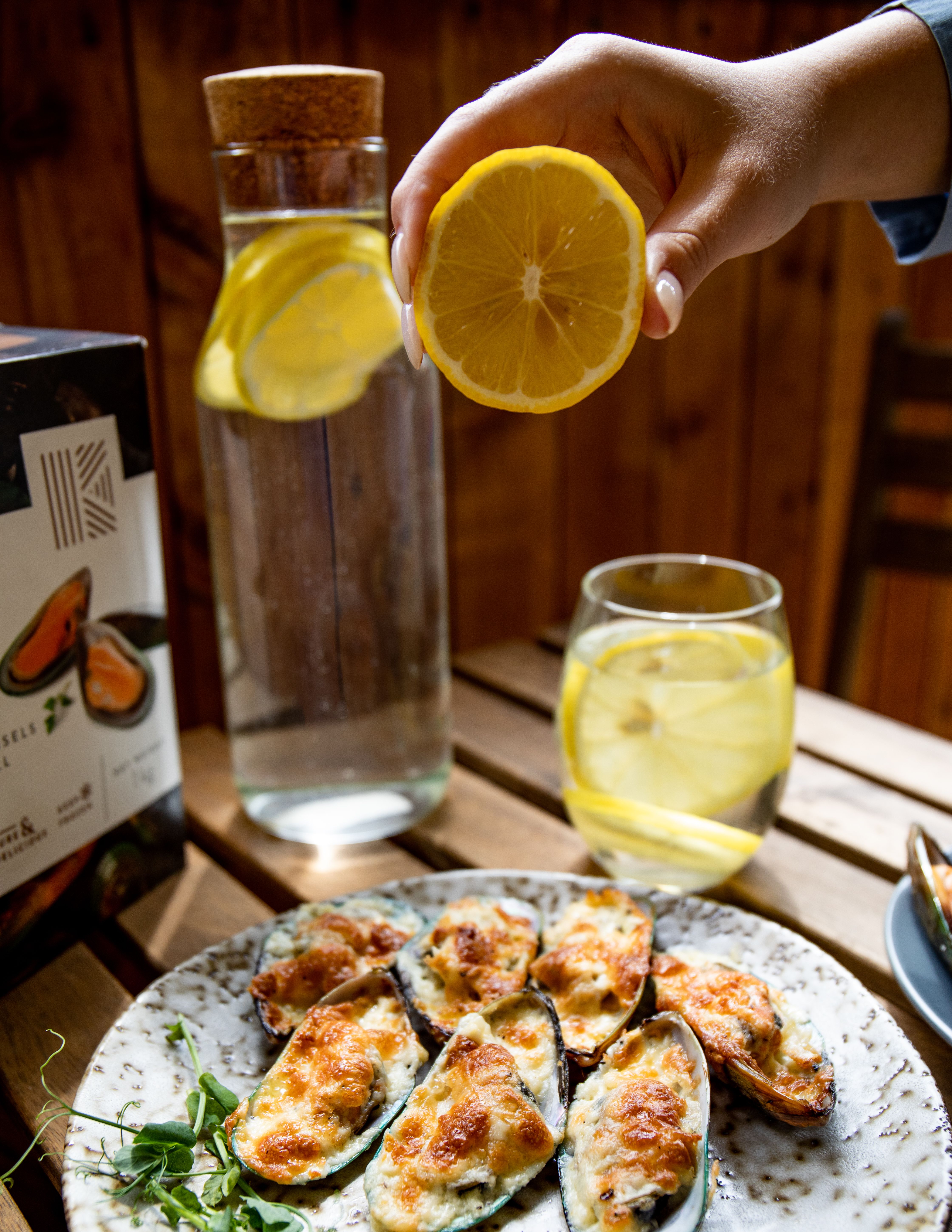
Chilean
Machas a la Parmesana
The diets react (see scores below)
Common Ingredients
- razor clams
- parmesan
- butter
- white wine
- garlic
- lemon
- parsley
Specific recipes may vary.
Incompatible with 5 of 11 diets
Diet Ratings
Machas a la Parmesana is a Chilean dish of razor clams baked with parmesan, butter, white wine, garlic, lemon, and parsley. The ingredient profile is strongly keto-compatible: razor clams are a low-carb shellfish, parmesan adds fat and protein with minimal carbs, and butter is an ideal keto fat. Garlic, parsley, and lemon juice contribute negligible net carbs in cooking quantities. The small amount of white wine used for deglazing is the only notable carb concern, but in typical recipe proportions (a splash per serving), the residual carbs after cooking are minimal — likely under 2g net carbs per serving. Overall, this dish is naturally high in fat, moderate in protein, and very low in net carbs, fitting keto well.
Strict keto practitioners may flag white wine entirely, as even small amounts introduce sugar-derived carbs and can theoretically affect ketosis in highly sensitive individuals. Some clinical protocols also caution against shellfish due to trace carbohydrates in mollusks accumulating across multiple servings.
Machas a la Parmesana contains multiple animal-derived ingredients that are incompatible with a vegan diet. Razor clams are shellfish (animal product), parmesan is a dairy cheese (animal product), and butter is a dairy product (animal product). This dish is fundamentally built on animal ingredients and cannot be considered vegan in any interpretation.
Machas a la Parmesana contains two clear paleo violations: parmesan cheese (dairy) and butter (dairy). While razor clams are an excellent paleo protein, white wine is debated, and garlic, lemon, and parsley are fully approved, the dish is defined by its dairy components — parmesan is the star ingredient and butter is the cooking fat. Dairy is excluded across all mainstream paleo frameworks. There is no paleo-compliant substitution that would preserve the identity of this dish.
Machas a la Parmesana features razor clams (shellfish/seafood), which are strongly encouraged in the Mediterranean diet and should be eaten 2-3 times weekly. However, the dish is prepared with butter as the primary fat rather than olive oil, and includes parmesan cheese, both of which are dairy products used in moderate amounts. The combination of butter and parmesan adds saturated fat that shifts this away from the ideal Mediterranean preparation. The supporting ingredients — white wine, garlic, lemon, and parsley — are all Mediterranean-friendly. If the butter were replaced with extra virgin olive oil, this dish would score much higher. As prepared, it sits in the caution zone: the shellfish base is excellent, but the fat profile leans on dairy rather than olive oil.
Some Mediterranean diet practitioners, particularly those drawing on Italian coastal traditions, would view the moderate use of parmesan and a small amount of butter with seafood as acceptable within a broader Mediterranean framework, especially given the shellfish base. Traditional southern Italian dishes like 'spaghetti alle vongole gratinate' use similar preparations, and purists might argue the overall dish remains Mediterranean in spirit.
Machas a la Parmesana is heavily non-compliant with carnivore diet principles. While razor clams are animal-derived and acceptable, the dish contains multiple plant-based ingredients: white wine (fermented plant product), garlic (plant), lemon (fruit), and parsley (herb/plant). These plant ingredients are categorical exclusions on the carnivore diet. Parmesan cheese adds a debated dairy component, and butter is borderline acceptable. The cumulative effect of multiple plant-based ingredients firmly places this dish in the 'avoid' category. A stripped-down version with just clams, butter, and salt could be adapted, but as prepared this dish is incompatible.
Machas a la Parmesana contains two clearly excluded ingredients: parmesan cheese (dairy) and butter (dairy — only ghee/clarified butter is allowed, not regular butter). These are explicit Whole30 exclusions with no ambiguity. The razor clams, white wine, garlic, lemon, and parsley are all compliant, but the dish cannot be considered Whole30-compatible as traditionally prepared due to the dairy components.
This dish contains garlic, which is one of the highest-FODMAP foods tested by Monash University due to its very high fructan content. Even small amounts of garlic cloves are high-FODMAP and must be avoided during elimination phase. Additionally, parmesan cheese, while lower in lactose than soft cheeses, contributes some lactose concern at larger servings, and butter in meaningful quantities adds minor lactose load. White wine is generally low-FODMAP at a standard 150ml glass, razor clams (shellfish) are low-FODMAP, lemon juice and parsley are low-FODMAP. However, the presence of garlic as a listed ingredient — used as a flavoring agent cooked directly into the dish rather than as an infused oil — makes this dish unavoidably high-FODMAP. The FODMAPs from garlic are water-soluble and transfer into any liquid or butter-based sauce, meaning even removing the garlic cloves after cooking does not render the dish safe. The dish as described cannot be consumed safely during the elimination phase.
Machas a la Parmesana features razor clams, which are a lean shellfish consistent with DASH guidelines for seafood protein. However, the dish is prepared with butter (saturated fat), parmesan cheese (high sodium and saturated fat), and white wine, which collectively raise concerns for DASH compliance. Parmesan is notably high in sodium — a single tablespoon can contain 75-100mg sodium, and typical restaurant-style gratinéed portions use considerably more. Butter adds saturated fat, which DASH explicitly limits. The positive elements include garlic, parsley, and lemon, which add flavor without sodium, and the razor clams themselves provide lean protein, magnesium, and potassium. The dish is not inherently prohibited on DASH, but the parmesan and butter combination requires portion control and makes this a moderate-caution food rather than an approved DASH staple. A home preparation using reduced-fat cheese, minimal butter, and limiting parmesan quantity could improve the DASH score meaningfully.
NIH DASH guidelines explicitly limit saturated fat and sodium-dense cheeses like parmesan, placing this dish in the caution category. However, some DASH-oriented clinicians note that shellfish are among the best lean proteins and that a moderate parmesan portion in an otherwise vegetable-forward snack can fit within weekly saturated fat and sodium budgets, particularly under the 2,300mg/day standard (not the stricter 1,500mg/day) DASH threshold.
Machas a la Parmesana is a Chilean dish of razor clams baked with parmesan, butter, white wine, garlic, lemon, and parsley. From a Zone perspective, the dish has genuine strengths and notable weaknesses. On the positive side, razor clams are an excellent lean protein source rich in omega-3s, aligning well with Zone protein block goals. Garlic, parsley, and lemon are Zone-favorable polyphenol-rich, low-glycemic additions. White wine contributes minimal carbohydrates in typical cooking quantities. The problems lie in the fat profile: butter is a saturated fat source that early Zone writing strictly discouraged, and parmesan adds both saturated fat and sodium. Together, butter and parmesan push the fat content toward saturated rather than monounsaturated fats, which conflicts with Zone's anti-inflammatory fat priorities. The dish also lacks significant carbohydrate blocks — there are virtually no low-glycemic vegetables to complete the 40/30/30 ratio. As a snack, the portion is smaller, which helps limit saturated fat exposure, but it would need to be paired with a vegetable-based side to approach Zone balance. The dish is usable with careful portioning but is not a clean Zone fit as presented.
Later Zone writing, particularly Sears' anti-inflammatory work in 'The Zone Diet and Anti-Aging,' acknowledges that moderate saturated fat is acceptable within an overall anti-inflammatory dietary pattern, especially when omega-3-rich seafood like clams is the protein foundation. Some Zone practitioners would view the butter and parmesan as manageable in snack-sized portions and rate this more favorably (score 6-7), particularly if served alongside a polyphenol-rich vegetable.
Machas a la Parmesana is a Chilean classic featuring razor clams baked with parmesan, butter, white wine, garlic, lemon, and parsley. The dish has a mixed anti-inflammatory profile. On the positive side, razor clams are shellfish rich in zinc, selenium, omega-3 fatty acids, and B12, all of which support reduced inflammatory markers. Garlic is a well-established anti-inflammatory ingredient (organosulfur compounds), parsley contributes flavonoids and vitamin C, lemon provides antioxidant vitamin C and polyphenols, and white wine in small cooking quantities contributes minimal concern. However, butter is a source of saturated fat, which is flagged as a food to limit in anti-inflammatory frameworks. Parmesan is a full-fat, aged cheese — also on the 'limit' list for saturated fat content. The combination of butter and parmesan means the dish carries a meaningful saturated fat load, which tempers the anti-inflammatory benefits of the clams and aromatics. As a snack or starter portion, the quantities are relatively modest, which partially mitigates concern. Overall, this dish sits in a caution zone: genuinely beneficial ingredients are present but offset by saturated fat from dairy.
Some anti-inflammatory authorities (including Dr. Weil) take a more lenient view on moderate full-fat dairy, particularly aged cheeses like parmesan, noting that fermentation and the complex fatty acid profile of aged dairy may not be as pro-inflammatory as once thought. However, stricter anti-inflammatory and AIP-aligned practitioners would flag both butter and parmesan as meaningful saturated fat sources to limit, especially for individuals with elevated CRP or cardiovascular risk.
Machas a la Parmesana is a Chilean dish of razor clams baked in their shells with parmesan, butter, white wine, garlic, lemon, and parsley. The razor clams themselves are an excellent lean protein source with good micronutrient density (zinc, B12, iron), and the portion is naturally small and shellfish-forward. However, the combination of butter and parmesan adds a meaningful saturated fat load per serving — a concern for GLP-1 patients who are sensitive to high-fat preparations triggering nausea, bloating, and reflux due to slowed gastric emptying. The white wine contributes minimal alcohol per serving when cooked (most evaporates), but the fat content is the primary flag. Garlic and lemon are digestive-friendly and add flavor without caloric burden. As a snack category, the portion is likely small (4–6 clams), which limits total fat exposure and makes this more manageable than a full entrée preparation. It is not fried, not spicy, and not processed — meaningful positives. If prepared with reduced butter and a light parmesan dusting rather than a heavy gratin-style topping, this dish moves closer to an approve. As served in most traditional preparations, it lands in caution territory due to the butter-parmesan fat combination.
Some GLP-1-focused dietitians would approve shellfish dishes like this outright, emphasizing the high-quality lean protein and small natural portion size of clam-based dishes, and arguing that the fat from butter and parmesan in a typical serving is modest enough to be well-tolerated by most patients. Others would flag any butter-heavy baked shellfish preparation as a consistent nausea trigger in GLP-1 patients, particularly in the early weeks of dose escalation, where fat sensitivity is most pronounced and individual tolerance varies significantly.
*See how scores were generated at our methodology page.
Nutritional profile
Six traits that cut across every diet.
Fiber & Plants
How much whole-plant food and fiber it delivers.
Healthy Fats
The quality of its fats (unsaturated, omega-3).
Whole / Unprocessed
How close it is to its natural, unprocessed form.
Gut Gentle
How easy it is on digestion (low FODMAP, few irritants).
Low Glycemic
How little it spikes your blood sugar.
Protein Density
How much protein it packs per calorie.
Controversy Index
Higher controversy = more disagreement between diets.
Diet-Specific Tips
 Keto — 8/10
View tips
- Razor clams are low-carb shellfish (~3g net carbs per 100g raw, reduced in a typical serving)
- Butter and parmesan provide keto-friendly fats
- White wine adds minimal residual carbs after cooking but is a flag for strict keto
- Garlic and lemon juice in small cooking amounts are negligible carb contributors
- No grains, starches, or added sugars in the recipe
- High-fat, moderate-protein macronutrient profile aligns with keto targets
 Mediterranean — 5/10
View tips
- Razor clams are excellent Mediterranean-approved seafood
- Butter is used instead of extra virgin olive oil, reducing alignment
- Parmesan adds saturated fat from dairy, acceptable in moderation
- Garlic, lemon, parsley, and white wine are strongly Mediterranean-aligned
- No processed ingredients or added sugars
- Dish would score higher with olive oil substituted for butter
 DASH — 5/10
View tips
- Razor clams are lean shellfish — a DASH-approved protein source rich in magnesium and potassium
- Parmesan cheese contributes significant sodium and saturated fat, the two primary DASH-limited nutrients
- Butter adds saturated fat, further challenging DASH fat targets
- Garlic, parsley, and lemon are DASH-positive flavor components that displace sodium-based seasoning
- Portion size is critical — a small snack serving is more compatible than a large restaurant portion
- Low-fat cheese substitute and minimal butter would substantially improve DASH compatibility
- White wine adds negligible sodium but contributes alcohol calories, which DASH does not emphasize
 Zone — 5/10
View tips
- Razor clams are an excellent lean, omega-3-rich Zone protein source
- Butter and parmesan create a saturated fat burden inconsistent with Zone's monounsaturated fat preference
- Minimal carbohydrate content means the dish cannot stand alone as a Zone-balanced snack without vegetable accompaniment
- Garlic, parsley, and lemon are Zone-favorable polyphenol additions
- Snack-sized portions limit total saturated fat exposure, making this more manageable than a full meal
- White wine contributes negligible carb blocks in cooking quantities
 Anti-Inflammatory — 5/10
View tips
- Razor clams provide omega-3 fatty acids, zinc, and selenium — anti-inflammatory shellfish
- Garlic contains organosulfur compounds (allicin) with well-documented anti-inflammatory effects
- Butter is a saturated fat source flagged as 'limit' in anti-inflammatory frameworks
- Parmesan is a full-fat aged cheese, also categorized as 'limit' due to saturated fat content
- Parsley and lemon contribute antioxidants and flavonoids, supporting the dish's positive components
- White wine used in cooking contributes negligible concern at typical recipe quantities
- Dish is served as a snack/starter, so portion size limits overall saturated fat exposure
 GLP-1 Friendly — 5/10
View tips
- Razor clams are a lean, high-quality protein source rich in B12, zinc, and iron
- Butter and parmesan add saturated fat that may worsen GLP-1 GI side effects (nausea, reflux, bloating)
- Naturally small portion size limits total fat exposure per serving
- Not fried, not spicy, not processed — favorable for digestibility
- White wine alcohol largely cooks off and is not a significant concern at typical serving volumes
- Garlic and lemon are GLP-1-friendly flavor components
- Fat content could be reduced by using less butter and a lighter parmesan application