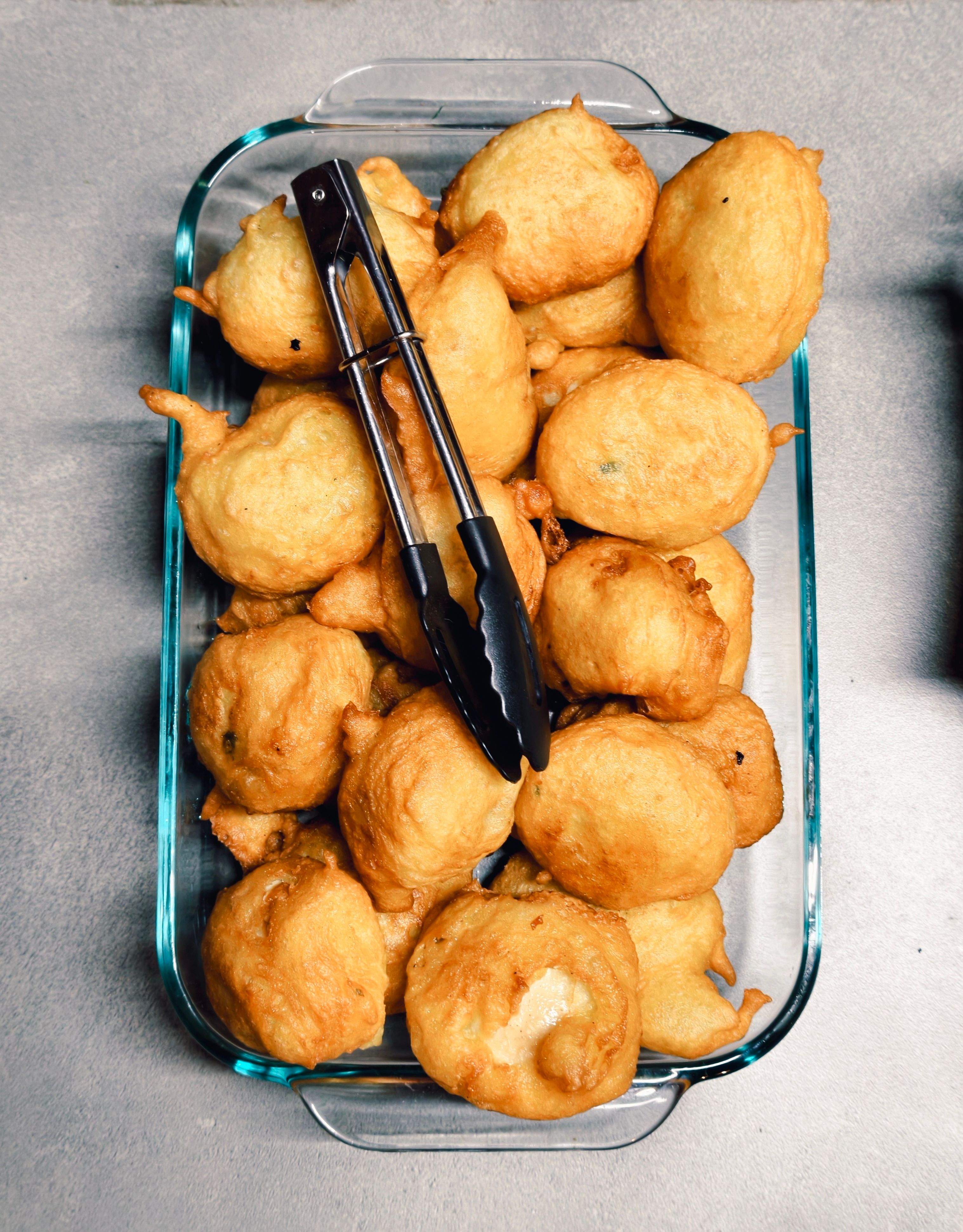
The diets react (see scores below)
Common Ingredients
- pumpkin
- wheat flour
- butter
- baking powder
- salt
- oil
Specific recipes may vary.
Incompatible with 9 of 11 diets
Diet Ratings
Chilean sopaipillas are deep-fried flatbreads made primarily from wheat flour and pumpkin, both of which are high in carbohydrates. Wheat flour is a grain-based ingredient that is entirely incompatible with ketogenic eating, providing a dense load of net carbs per serving. The pumpkin adds additional carbohydrates. A single sopaipilla can easily contain 15-25g of net carbs, and consuming even a couple would likely exceed or seriously compromise a daily keto carb budget of 20-50g. While the frying oil and butter contribute fat, the dominant macronutrient profile is carbohydrate-heavy, making this food fundamentally incompatible with ketosis.
Chilean sopaipillas as listed contain butter, which is a dairy product derived from cow's milk and is therefore not vegan. All other ingredients (pumpkin, wheat flour, baking powder, salt, oil) are fully plant-based. The dish could easily be made vegan by substituting the butter with a plant-based alternative such as vegan margarine or additional oil, but as described with butter in the ingredient list, it fails the vegan standard.
Sopaipillas are a fried dough snack with multiple paleo-incompatible ingredients. Wheat flour is a grain and a clear paleo violation. Butter is a dairy product excluded from strict paleo. Baking powder is a processed additive. Salt is excluded. The frying oil is unspecified but likely a seed oil (e.g., canola or vegetable oil), also excluded. The only paleo-compliant ingredient is pumpkin. This dish is fundamentally a grain-based fried dough and cannot be reconciled with paleo principles in its traditional form.
Sopaipillas are a Chilean fried dough snack made primarily from refined wheat flour, butter, and fried in oil. The use of refined flour (not whole grain), butter (a saturated animal fat rather than olive oil), and deep-frying makes this food contradict core Mediterranean diet principles. While pumpkin is a nutritious vegetable ingredient, it is used in small quantity relative to the refined flour base. The combination of refined carbohydrates, saturated fat from butter, and frying fat places this firmly in the 'avoid' category.
Some interpreters might note that pumpkin adds nutritional value and that frying in a plant-based oil (if olive or sunflower) is not entirely foreign to Mediterranean cooking; traditional Mediterranean cuisines do include some fried foods occasionally (e.g., Spanish churros, Italian zeppole), and occasional indulgence in small portions is not strictly prohibited in flexible Mediterranean diet interpretations.
Sopaipillas are a Chilean fried dough snack made entirely from plant-based ingredients: pumpkin (vegetable), wheat flour (grain), baking powder (plant-derived leavening), and oil (plant oil). Butter is the only potentially animal-derived ingredient, but it is a minor component and the dish is fundamentally a grain-and-vegetable-based food. There is zero animal protein and no meaningful animal-derived nutrition. This food violates every core principle of the carnivore diet — it is a processed grain product with vegetable and plant oil content.
Sopaipillas contain wheat flour, which is a grain explicitly excluded from the Whole30 program. Additionally, butter (regular, not ghee or clarified butter) is a dairy product that is also excluded. Even if those two ingredients were substituted with compliant alternatives, sopaipillas are a fried dough snack that falls squarely into the 'no recreating baked goods/junk food' rule — they are analogous to the explicitly banned categories of chips, crackers, and fried dough items. This dish fails on multiple counts.
Chilean sopaipillas are made primarily with wheat flour as the base ingredient, which is high in fructans — one of the most problematic FODMAPs. Wheat flour is clearly rated as high-FODMAP by Monash University and must be avoided during the elimination phase. The other ingredients (pumpkin at a small serving is low-FODMAP, butter in small amounts is low-FODMAP, baking powder, salt, and frying oil are all low-FODMAP), but they cannot offset the core issue: wheat flour is the dominant structural ingredient and cannot be reduced to a FODMAP-safe threshold in this dish. To make sopaipillas FODMAP-friendly, a gluten-free flour blend (e.g., rice flour) would need to replace the wheat flour entirely.
Chilean sopaipillas are fried flatbreads made with pumpkin, wheat flour, butter, baking powder, salt, and oil. While pumpkin is a DASH-friendly vegetable rich in potassium and fiber, the overall preparation undermines its nutritional benefits. Deep-frying in oil significantly increases total fat content, the butter adds saturated fat, and salt adds sodium. The use of refined wheat flour rather than whole grain flour reduces fiber value. Pumpkin does contribute some beneficial nutrients (potassium, fiber, beta-carotene), which prevents an 'avoid' rating, but the frying method, saturated fat from butter, and refined carbohydrates place this firmly in the 'caution' category. Occasional consumption in small portions is acceptable within a DASH framework, but it is not an emphasized food.
NIH DASH guidelines emphasize limiting total fat, saturated fat, and sodium, which this fried snack exceeds in typical preparation. However, some DASH-oriented clinicians note that home-prepared versions using minimal oil (baked or air-fried), unsalted butter or a plant-based substitute, and whole wheat flour could significantly improve the profile — such modifications would push the score toward the higher end of 'caution' or even borderline 'approve.'
Chilean sopaipillas are deep-fried flatbreads made primarily from wheat flour and pumpkin, fried in oil with butter added. From a Zone Diet perspective, this dish is highly problematic. The dominant macronutrient is high-glycemic refined carbohydrate (white wheat flour), which spikes insulin and works against the Zone's core anti-inflammatory goals. Deep-frying in oil (likely a seed/vegetable oil high in omega-6 fatty acids) adds the wrong type of fat — not the monounsaturated fats Sears recommends. There is essentially no protein, meaning this snack cannot form even a partial Zone block without major supplementation. The pumpkin component is a Zone-favorable vegetable in isolation, but it is a minor contributor here overwhelmed by refined flour and frying oil. As a standalone snack, sopaipillas represent exactly the carbohydrate-dominant, protein-absent, inflammatory-fat-heavy profile that the Zone Diet is designed to avoid. While technically any food can fit in the Zone with extreme portion control and careful pairing, sopaipillas offer so little Zone value and so many unfavorable attributes that they belong in the avoid category. Even a very small portion delivers mostly high-GI carbs with no protein offset and poor fat quality.
Chilean sopaipillas are fried flatbreads made with pumpkin, wheat flour, butter, baking powder, salt, and oil. The pumpkin is a genuine anti-inflammatory asset — it provides beta-carotene, vitamin C, and fiber, all of which support reduced inflammatory markers. However, the overall profile is significantly compromised by several factors: (1) deep-frying in unspecified oil, which if a high-omega-6 refined seed oil (sunflower, corn, etc.) is used, introduces pro-inflammatory oxidized lipids; (2) refined wheat flour as the base, a refined carbohydrate with a high glycemic index that can promote inflammatory response with regular consumption; (3) butter adds saturated fat, which is in the 'limit' category. The dish is a fried starchy snack — even with the pumpkin benefit, the overall preparation method and ingredients tip it into neutral-to-cautionary territory. Occasional consumption is unlikely to cause meaningful harm, but it is not a food that actively reduces inflammation. The pumpkin content is a mitigating factor that prevents a lower score.
Chilean sopaipillas are deep-fried flatbreads made from pumpkin, wheat flour, and butter, cooked in oil. Despite the pumpkin ingredient offering some nutritional value, the deep-frying process makes these a high-fat, low-protein, low-fiber snack with poor nutrient density per calorie. They are essentially empty-calorie fried dough — exactly the food category GLP-1 patients should avoid. The high fat content from frying worsens nausea, bloating, and reflux, which are already common GLP-1 side effects. There is no meaningful protein contribution, and the refined wheat flour offers minimal fiber. The butter adds saturated fat on top of the frying oil. As a snack, this provides nothing of nutritional value that GLP-1 patients need while actively worsening the GI side effect profile.
*See how scores were generated at our methodology page.
Nutritional profile
Six traits that cut across every diet.
Fiber & Plants
How much whole-plant food and fiber it delivers.
Healthy Fats
The quality of its fats (unsaturated, omega-3).
Whole / Unprocessed
How close it is to its natural, unprocessed form.
Gut Gentle
How easy it is on digestion (low FODMAP, few irritants).
Low Glycemic
How little it spikes your blood sugar.
Protein Density
How much protein it packs per calorie.
Controversy Index
Higher controversy = more disagreement between diets.
Diet-Specific Tips
 DASH — 4/10
View tips
- Pumpkin provides DASH-friendly potassium, fiber, and beta-carotene
- Deep-frying substantially increases total fat content
- Butter contributes saturated fat, which DASH limits
- Refined wheat flour reduces fiber compared to whole grain alternatives
- Salt adds sodium, a key concern for DASH
- Not a core DASH food but not categorically excluded if consumed in moderation
- Baked or air-fried versions with whole wheat flour and reduced salt would score higher
 Anti-Inflammatory — 4/10
View tips
- Pumpkin provides beta-carotene and antioxidants — a meaningful anti-inflammatory positive
- Refined wheat flour is a high-glycemic refined carbohydrate, pro-inflammatory with regular intake
- Deep-fried preparation introduces oxidized fats, especially if high-omega-6 seed oils are used
- Butter contributes saturated fat, which falls in the 'limit' category
- No omega-3 fatty acids, polyphenols, or other significant anti-inflammatory compounds beyond the pumpkin
- Best treated as an occasional food rather than a dietary staple