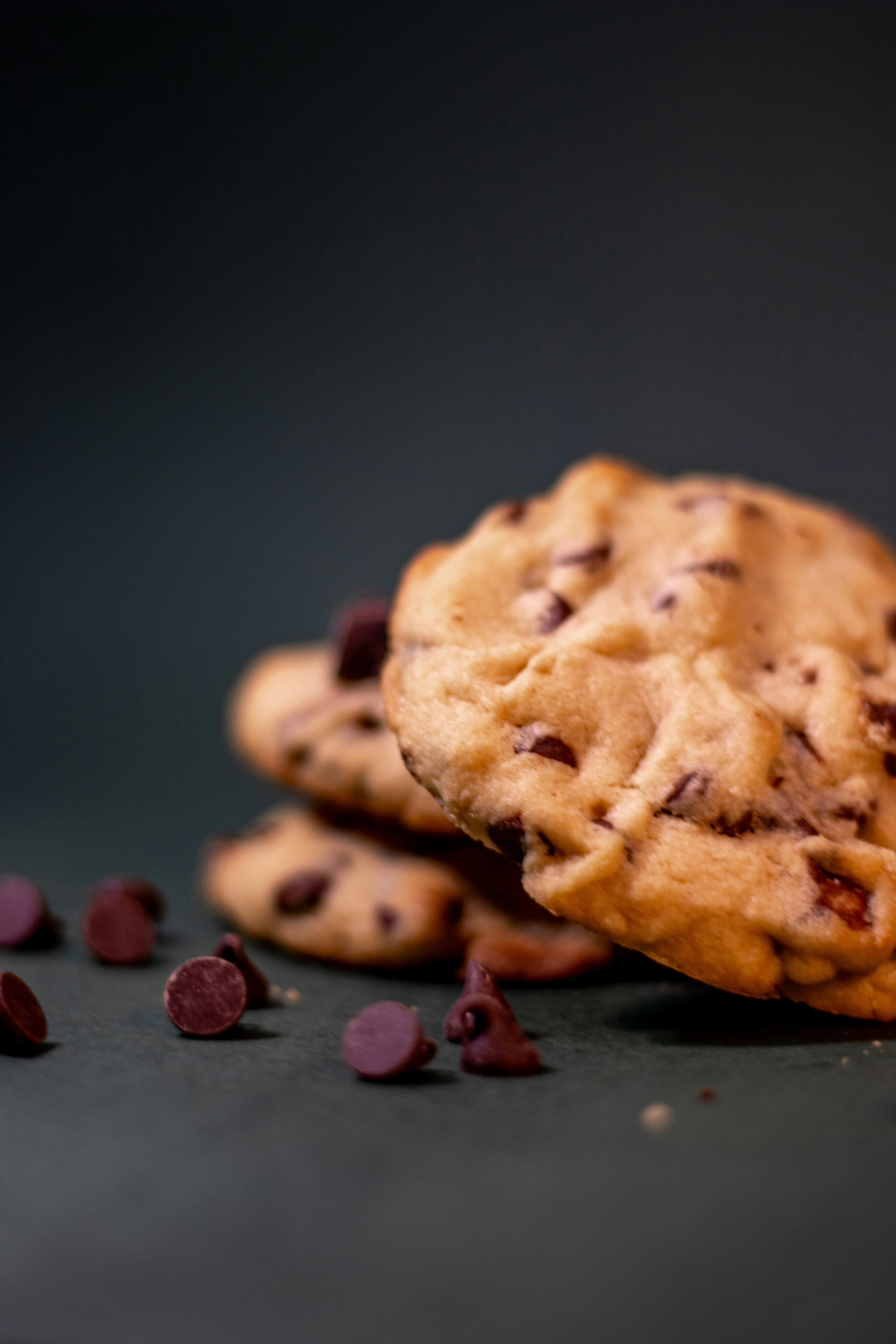
American
Chocolate Chip Cookie
The diets react (see scores below)
Common Ingredients
- butter
- sugar
- brown sugar
- eggs
- vanilla extract
- flour
- baking soda
- salt
- chocolate chips
Specific recipes may vary.
Incompatible with 11 of 11 diets
Diet Ratings
A traditional chocolate chip cookie is one of the most ketogenic-incompatible foods imaginable. It contains multiple high-carb ingredients: all-purpose flour (a grain), white sugar, and brown sugar are the primary components by volume, while chocolate chips add additional sugar. A single standard cookie typically contains 20-30g of net carbs, which alone can exceed an entire day's keto carb allowance. There are no redeeming low-carb properties in this traditional recipe — the fat from butter is completely offset by the carbohydrate load from sugars and flour.
This classic chocolate chip cookie recipe contains multiple animal-derived ingredients that disqualify it from a vegan diet. Butter is a dairy product (milk fat), and eggs are an animal product — both are explicitly excluded under all vegan standards. Standard chocolate chips often contain milk solids as well, adding a third animal-derived ingredient. There is no ambiguity here: this recipe as listed is not vegan. Vegan versions of this cookie can be made by substituting vegan butter (e.g., Earth Balance), flax eggs or aquafaba, and dairy-free chocolate chips, but the recipe as presented fails on multiple counts.
A chocolate chip cookie is one of the clearest possible violations of the Paleo diet. The ingredient list contains multiple non-paleo items: flour (wheat grain), butter (dairy), sugar and brown sugar (refined sugars), baking soda (processed leavening agent), salt (added salt), and conventional chocolate chips (refined sugar, dairy, often soy lecithin). There is virtually no paleo-compliant ingredient in this recipe beyond the eggs and vanilla extract. This dish is a processed, grain-based, dairy-laden, refined-sugar-heavy food that is the antithesis of Paleolithic eating.
Chocolate chip cookies are a highly processed American snack that directly contradicts Mediterranean diet principles on multiple fronts. The recipe is built around refined white flour (a refined grain), large amounts of added sugars (both white and brown sugar), butter (saturated animal fat rather than olive oil), and chocolate chips (typically high in added sugar). There are no vegetables, legumes, whole grains, or plant-forward ingredients of nutritional value. This is exactly the category of food the Mediterranean diet advises minimizing — calorie-dense, nutrient-poor, high in refined carbohydrates and saturated fat, with no redeeming traditional Mediterranean context.
Chocolate chip cookies are entirely incompatible with the carnivore diet. The recipe is dominated by plant-derived and processed ingredients: flour (grain), sugar and brown sugar (refined carbohydrates), vanilla extract (plant-derived), baking soda (processed leavening agent), and chocolate chips (plant-derived, heavily processed with sugar). While butter and eggs are animal-derived, they are minor components of a fundamentally plant-based, sugar-laden baked good. This represents exactly the type of processed, carbohydrate-heavy food the carnivore diet was designed to eliminate. There is no version of this dish that would be considered acceptable under any tier of carnivore eating.
A chocolate chip cookie contains multiple excluded ingredients and also violates the Whole30 rule against recreating baked goods and junk food. Specific violations include: butter (dairy, not ghee/clarified butter), sugar and brown sugar (added sugars), flour (grain/wheat), baking soda in a baked-good context, and chocolate chips (typically contain sugar and dairy). Even if ingredient-level substitutions were made, the Whole30 program explicitly prohibits recreating cookies, as they are named in the spirit-of-the-program rule against baked goods and junk food analogs.
A standard chocolate chip cookie is high-FODMAP primarily due to wheat flour, which contains significant fructans. A typical cookie (30-40g) contains enough wheat flour to exceed safe fructan thresholds during the elimination phase. Brown sugar in larger quantities can also contribute excess fructose, and standard chocolate chips often contain milk solids (lactose). Butter is low-FODMAP, eggs are low-FODMAP, vanilla extract is low-FODMAP, and small amounts of granulated sugar are acceptable — but the wheat flour alone makes this dish a clear avoid during elimination. A low-FODMAP version could be made using certified gluten-free or rice flour-based alternatives, dairy-free dark chocolate chips, and lactose-free adjustments, but the standard recipe is not suitable.
Chocolate chip cookies are a classic example of a food that conflicts with DASH diet principles on multiple levels. They are high in added sugars (white sugar, brown sugar, chocolate chips), saturated fat (butter), refined carbohydrates (all-purpose flour), and sodium (salt, baking soda). DASH explicitly limits sweets, added sugars, and saturated fats, and recommends no more than 5 servings of sweets per week — with a 'serving' being just 1 tablespoon of sugar or a small cookie. A standard chocolate chip cookie far exceeds that modest allowance in a single piece. There are no meaningful amounts of potassium, magnesium, calcium, or fiber, and the dish provides no lean protein. This food offers virtually nothing the DASH diet seeks to emphasize and concentrates several ingredients DASH seeks to limit.
A chocolate chip cookie is one of the clearest 'avoid' foods in Zone Diet methodology. It is dominated by high-glycemic, refined carbohydrates (white flour, white sugar, brown sugar, chocolate chips) with virtually no lean protein and its fat comes primarily from saturated sources (butter) rather than the preferred monounsaturated fats. The macronutrient ratio is nearly the inverse of the Zone target: heavily carbohydrate- and fat-dominant with negligible protein. There is no practical way to portion a chocolate chip cookie into a Zone block without consuming a trivially small amount that provides no satiety. The refined sugars and flour will cause a rapid glycemic spike, triggering the insulin surge that Zone specifically aims to prevent. Additionally, with no vegetables, no omega-3s, and no polyphenol-rich ingredients beyond a small amount in dark chocolate chips (if used), this food scores extremely poorly on Sears' anti-inflammatory framework. There is no lean protein block present, making it impossible to use as a standalone Zone snack without a separate protein source. Even as a partial carb block, the glycemic load is far too high and the carb quality far too poor.
A classic chocolate chip cookie is a textbook pro-inflammatory food. The ingredient list is dominated by three major inflammatory drivers: butter (saturated fat), white sugar, and brown sugar (refined added sugars). The base is refined white flour — a high-glycemic refined carbohydrate that spikes blood glucose and promotes inflammatory signaling. Butter is specifically listed under 'limit' in anti-inflammatory frameworks due to its saturated fat content. The large quantity of added sugars (both white and brown) directly promotes inflammation by elevating blood glucose, driving insulin resistance, and increasing inflammatory cytokines like IL-6 and TNF-alpha. Standard commercial chocolate chips typically contain only 45–55% cacao and include added sugar and emulsifiers, falling well short of the >70% dark chocolate threshold that confers anti-inflammatory polyphenol benefits. The eggs and vanilla extract are benign, but they cannot offset the overwhelmingly pro-inflammatory profile of the other ingredients. This dish has essentially no anti-inflammatory properties and concentrates multiple 'avoid' and 'limit' ingredients in a single serving.
A standard chocolate chip cookie is a poor fit for GLP-1 patients on virtually every relevant dimension. It is high in refined sugar and saturated fat (butter, chocolate chips), made from refined flour with negligible fiber, and provides essentially no protein. With reduced appetite from GLP-1 medication, every calorie consumed needs to deliver nutritional value — a cookie delivers primarily empty calories from sugar and fat. The high sugar content risks blood sugar spikes, the saturated fat content can worsen nausea and GI side effects due to slowed gastric emptying, and the refined carbohydrate load offers no satiety benefit. There is no meaningful protein, no fiber, and no micronutrient density to justify inclusion even as an occasional small serving in an already calorie-restricted eating pattern.
*See how scores were generated at our methodology page.
Nutritional profile
Six traits that cut across every diet.
Fiber & Plants
How much whole-plant food and fiber it delivers.
Healthy Fats
The quality of its fats (unsaturated, omega-3).
Whole / Unprocessed
How close it is to its natural, unprocessed form.
Gut Gentle
How easy it is on digestion (low FODMAP, few irritants).
Low Glycemic
How little it spikes your blood sugar.
Protein Density
How much protein it packs per calorie.
Controversy Index
Higher controversy = more disagreement between diets.