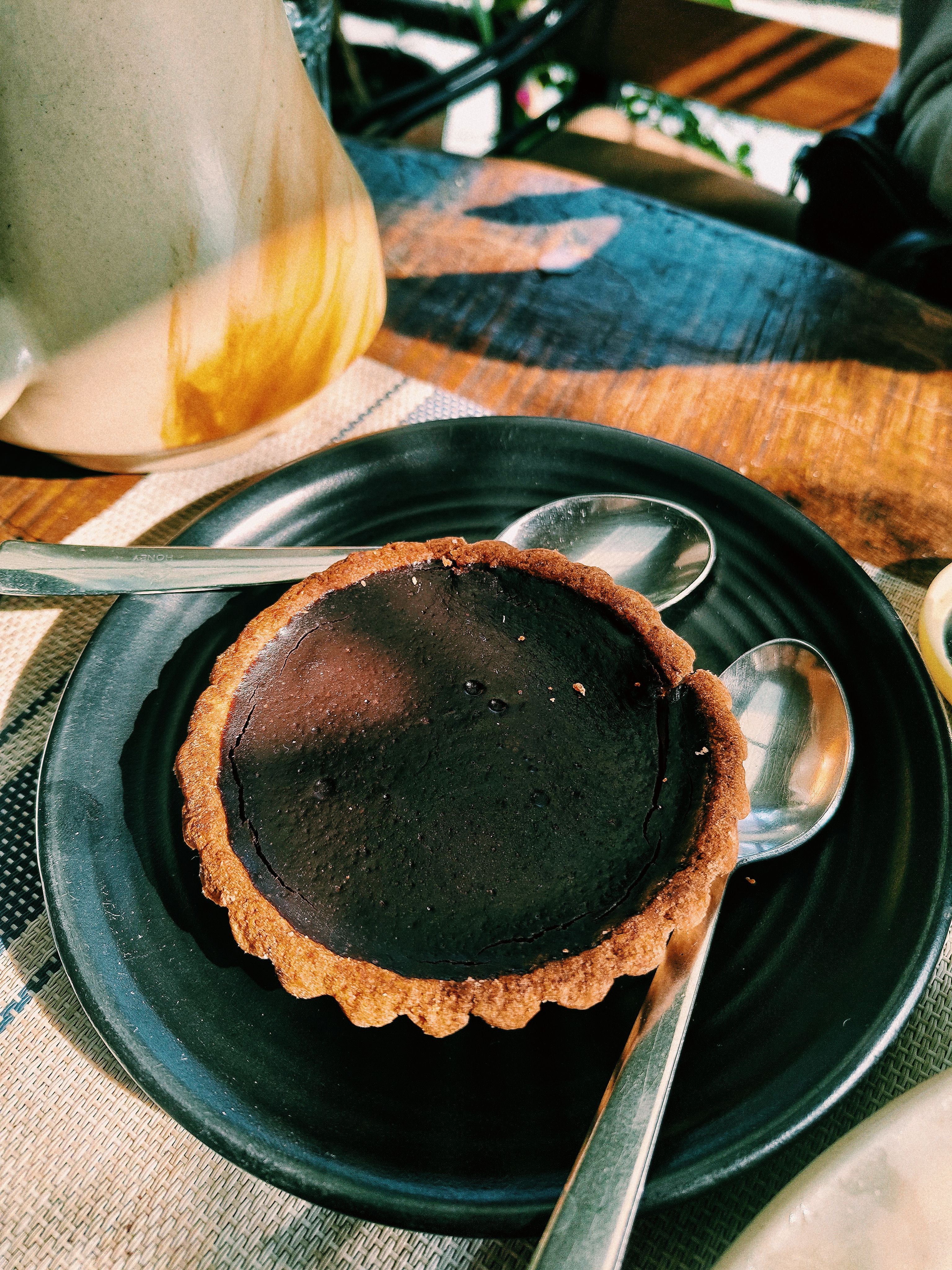
Photo: Laxman Khadka / Pexels
French
Chocolate Ganache Tart
The diets react (see scores below)
Common Ingredients
- dark chocolate
- heavy cream
- butter
- flour
- salt
- sugar
- egg yolk
- vanilla extract
Specific recipes may vary.
Incompatible with 10 of 11 diets
Diet Ratings
Chocolate Ganache Tart is fundamentally incompatible with a ketogenic diet in its standard form. The tart shell is made with wheat flour, which is a grain-based ingredient loaded with net carbs (roughly 20-25g per small serving of crust alone). Sugar is added both to the crust and typically to the ganache filling, contributing significant additional carbohydrates. While some individual ingredients — heavy cream, butter, dark chocolate, and egg yolk — are keto-friendly on their own, the combined presence of flour and sugar makes this dish a clear avoid. A single serving could easily contain 40-60g of net carbs, exceeding the entire daily carb allowance for strict keto. The only redeeming qualities are the high-fat components (cream, butter, chocolate), but these do not offset the disqualifying carb load from the pastry shell and sugar.
Chocolate Ganache Tart contains multiple animal-derived ingredients that are unambiguously non-vegan. Heavy cream and butter are dairy products, and egg yolk is an animal product. All three are explicitly excluded under vegan dietary rules. While dark chocolate itself can be vegan, in this recipe it is combined with cream and butter to form the ganache, and the tart shell is made with butter and egg yolk. There is no meaningful debate within the vegan community about any of these ingredients — dairy and eggs are core exclusions in all mainstream vegan definitions.
Chocolate Ganache Tart contains multiple non-paleo ingredients that make it clearly incompatible with the paleolithic diet. Flour (wheat) is a grain and a core exclusion. Sugar is refined and explicitly banned. Heavy cream and butter are dairy products, excluded from strict paleo. Salt is an added ingredient also excluded. While dark chocolate and vanilla extract occupy a gray area, and egg yolk is paleo-approved, the presence of flour, refined sugar, and dairy disqualifies this dish entirely. There is no ambiguity here — this is a highly processed French pastry built on a foundation of paleo-excluded foods.
Chocolate Ganache Tart is fundamentally at odds with Mediterranean diet principles. It is built around heavy cream, butter, refined white flour, and added sugar — all of which are either minimized or outright discouraged. Heavy cream and butter are high in saturated fat and represent the type of animal-based, non-olive-oil fats the Mediterranean diet actively avoids. Refined flour and added sugar are hallmarks of the processed, high-glycemic foods the diet limits. While dark chocolate in small amounts has antioxidant properties and appears occasionally in Mediterranean-adjacent contexts, the overall composition of this dish — a rich, butter-laden pastry shell filled with a cream-and-butter ganache — is a French pâtisserie indulgence with no meaningful alignment to Mediterranean dietary patterns. There are no vegetables, legumes, whole grains, or olive oil present.
Chocolate Ganache Tart is fundamentally incompatible with the carnivore diet. The dish is built around multiple plant-derived and processed ingredients: dark chocolate (plant-derived cacao), flour (grain-based), sugar (refined plant carbohydrate), and vanilla extract (plant-derived). While heavy cream, butter, and egg yolk are animal-derived and would individually be acceptable to many carnivore practitioners, they are entirely overshadowed by the dominant plant-based components. This is a dessert pastry with no meaningful animal protein and a structure built on grains and plant sugars — the antithesis of carnivore eating.
Chocolate Ganache Tart contains multiple excluded ingredients and violates core Whole30 rules. First, it contains flour (a grain product), sugar (explicitly excluded added sugar), and butter (dairy — only ghee/clarified butter is permitted). Second, even if those ingredients were somehow substituted with compliant alternatives, this dish is a tart — a classic baked pastry/dessert — which falls squarely under the Whole30 rule against recreating baked goods, junk food, and treats (Rule 4). The program explicitly prohibits items like this regardless of ingredient swaps.
The primary FODMAP concern in this Chocolate Ganache Tart is the tart shell, which is made with regular wheat flour. Wheat flour is high in fructans, a key FODMAP, and is clearly restricted during the elimination phase. A standard serving of this tart would include a meaningful portion of the pastry shell, making fructan intake significant. The ganache itself (dark chocolate, heavy cream, butter) is more manageable — dark chocolate is low-FODMAP at around 30g per Monash, heavy cream is low-FODMAP (it's very low in lactose due to high fat content), and butter is low-FODMAP. However, dark chocolate becomes high-FODMAP at larger portions, and the cumulative sugar load adds further concern. Vanilla extract, egg yolk, salt, and sugar are all low-FODMAP. The wheat flour tart shell is the decisive disqualifying factor for the elimination phase.
Chocolate Ganache Tart is fundamentally incompatible with the DASH diet. The dish is dominated by heavy cream, butter, and egg yolk — all high in saturated fat and cholesterol, which DASH explicitly limits. The pastry shell uses refined white flour rather than whole grains, and the dish is high in added sugar with no meaningful contribution of potassium, magnesium, calcium, or fiber. Heavy cream and butter are full-fat dairy products, directly opposed to DASH's emphasis on fat-free or low-fat dairy. The caloric density is high relative to nutritional value from a cardiovascular standpoint. While dark chocolate does contain flavanols and some minerals, the surrounding ingredients completely undermine any marginal benefit. This dessert represents a concentrated source of saturated fat and added sugar — two of the primary dietary components DASH is designed to minimize.
Chocolate Ganache Tart is essentially incompatible with Zone Diet principles. The macronutrient profile is catastrophically skewed: it is overwhelmingly fat and refined carbohydrates with virtually no lean protein. The tart shell combines refined white flour with butter and egg yolk (high saturated fat), while the ganache combines dark chocolate with heavy cream and butter — both major sources of saturated fat. Sugar is a direct high-glycemic carbohydrate that Dr. Sears explicitly classifies as unfavorable. There is no lean protein component whatsoever, making it impossible to achieve anything approaching a 40/30/30 ratio. The fat present is predominantly saturated (butter, heavy cream) rather than the monounsaturated fats favored in the Zone. Even consuming a very small portion alongside lean protein and vegetables would not salvage this food as a 'snack' — the sugar and refined flour spike insulin acutely, directly opposing the Zone's core goal of controlling eicosanoids through stable blood sugar. While dark chocolate does contain polyphenols that Sears acknowledges in his later anti-inflammatory writing, the delivery vehicle here (tart with cream, butter, sugar, and refined flour) negates any such benefit entirely.
This chocolate ganache tart presents a genuinely mixed anti-inflammatory profile. On the positive side, dark chocolate (assuming >70% cacao) is a legitimately anti-inflammatory ingredient — rich in flavanols, polyphenols, and antioxidants that have been shown in research to reduce CRP and IL-6 markers. Dr. Weil's anti-inflammatory pyramid explicitly includes dark chocolate as a recommended food. Vanilla extract also contributes minor antioxidant properties. However, the surrounding tart structure works against this: heavy cream and butter are high in saturated fat, which anti-inflammatory guidelines consistently flag as pro-inflammatory when consumed in significant quantities. Refined white flour and added sugar round out the problematic components — refined carbohydrates and added sugars are among the most consistent drivers of inflammatory response in mainstream research. The result is a dish where one beneficial ingredient (dark chocolate) is embedded in a delivery vehicle of multiple pro-inflammatory components. Portion size matters significantly here — a small slice occasionally is very different from regular consumption. This dish is not recommended as a routine snack but is not an outright inflammatory offense given the dark chocolate's genuine benefits.
Some anti-inflammatory practitioners, including those influenced by Dr. Weil, might argue that if the dark chocolate content is high (>70% cacao) and the portion is modest, the flavanol benefits are meaningful enough to shift this toward acceptable indulgence. Conversely, stricter anti-inflammatory frameworks (such as those targeting autoimmune conditions) would rate this lower — flagging both the saturated fat load from cream and butter and the refined flour and sugar as clearly inflammatory, regardless of the chocolate quality.
Chocolate Ganache Tart is a poor choice for GLP-1 patients on virtually every relevant criterion. The ganache filling is made primarily from heavy cream and butter — two high-saturated-fat ingredients that are well-established triggers for nausea, bloating, and reflux in patients whose gastric emptying is already slowed. The pastry shell adds refined flour, egg yolk, butter, and sugar, contributing additional saturated fat and empty refined carbohydrates with negligible fiber. Sugar is a primary ingredient, delivering a rapid glycemic spike with no nutritional offset. Protein content is essentially zero — egg yolk contributes minimally and is outweighed by its fat contribution. The dish is calorie-dense in a small volume, meaning even a modest portion delivers high fat and sugar with no meaningful protein, fiber, or micronutrient return. For patients already eating significantly less due to appetite suppression, this dish occupies caloric real estate that should go to nutrient-dense foods. It also fails the easy-digestibility criterion — the fat load from cream and butter is among the most common triggers for GLP-1 GI side effects.
*See how scores were generated at our methodology page.
Nutritional profile
Six traits that cut across every diet.
Fiber & Plants
How much whole-plant food and fiber it delivers.
Healthy Fats
The quality of its fats (unsaturated, omega-3).
Whole / Unprocessed
How close it is to its natural, unprocessed form.
Gut Gentle
How easy it is on digestion (low FODMAP, few irritants).
Low Glycemic
How little it spikes your blood sugar.
Protein Density
How much protein it packs per calorie.
Controversy Index
Higher controversy = more disagreement between diets.
Diet-Specific Tips
 Anti-Inflammatory — 4/10
View tips
- Dark chocolate (>70% cacao) contains flavanols and polyphenols with documented anti-inflammatory effects
- Heavy cream is high in saturated fat, a consistently flagged pro-inflammatory component
- Butter adds additional saturated fat load
- Refined flour (pastry crust) is a refined carbohydrate with inflammatory potential
- Added sugar contributes to inflammatory burden, particularly with regular consumption
- Egg yolk is a moderate ingredient — contains some beneficial nutrients but also arachidonic acid
- Overall dish is calorie-dense and rich in saturated fat, undermining the dark chocolate's anti-inflammatory contribution