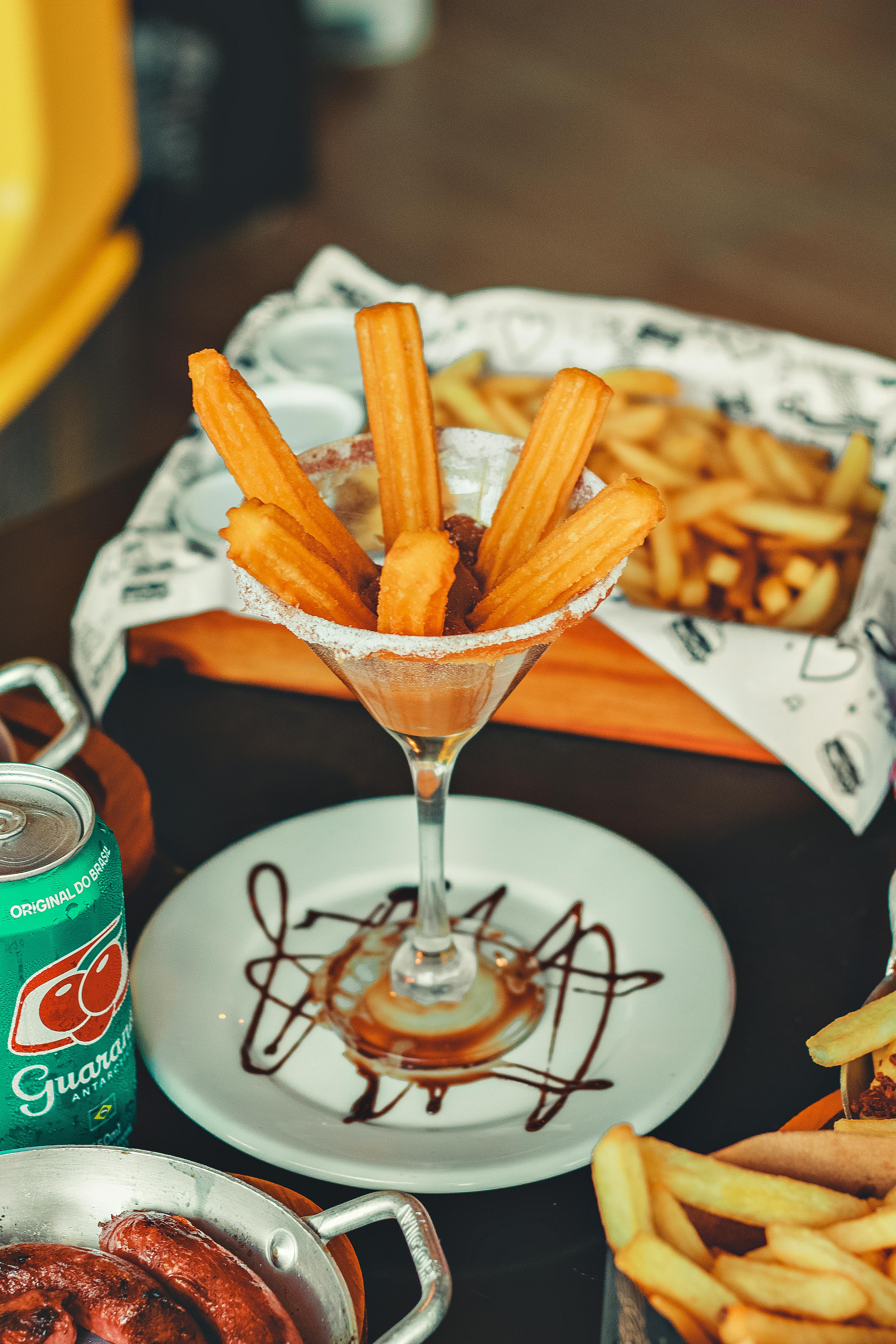
Photo: Lucas Andrade / Pexels
Mexican
Churro Relleno
The diets react (see scores below)
Common Ingredients
- wheat flour
- water
- salt
- vegetable oil
- cinnamon
- sugar
- dulce de leche
Specific recipes may vary.
Incompatible with 11 of 11 diets
Diet Ratings
Churro Relleno is fundamentally incompatible with a ketogenic diet. The base is wheat flour, a high-carb grain that alone disqualifies the dish. It is then coated in sugar and cinnamon, and filled with dulce de leche, which is essentially concentrated caramelized sweetened condensed milk — one of the highest sugar-density fillings possible. A single churro relleno could easily contain 40-60g of net carbs, far exceeding the entire daily keto carb budget, with negligible fat-to-carb ratio and no redeeming keto-friendly properties. Every core ingredient violates ketogenic principles.
Dulce de leche is a caramel confection made by slowly heating sweetened cow's milk, making it a dairy product and therefore incompatible with a vegan diet. While the other ingredients (wheat flour, water, salt, vegetable oil, cinnamon, sugar) are all plant-based and vegan-friendly, the dulce de leche filling is an animal-derived ingredient that disqualifies this dish. A vegan version could be made by substituting the dulce de leche with a plant-based alternative such as coconut milk caramel or date caramel.
Churro Relleno is entirely incompatible with the Paleolithic diet. Wheat flour is a grain and one of the most definitively excluded foods in all paleo frameworks. Vegetable oil (a seed oil) is explicitly prohibited. Refined sugar and added salt are both excluded. Dulce de leche is a dairy-based caramel product, making it doubly non-paleo (dairy plus refined sugar). The only paleo-compatible ingredient in the entire dish is cinnamon. This is essentially a deep-fried grain dough filled with dairy-sugar caramel — every core component violates paleo principles.
Churro Relleno directly contradicts core Mediterranean diet principles on multiple fronts. It is made with refined wheat flour (not whole grain), deep-fried in vegetable oil (not olive oil), loaded with added sugar, and filled with dulce de leche — a concentrated sugar-and-dairy confection high in saturated fat and added sugars. This is a highly processed, sugar-dense fried snack with no meaningful plant-forward nutritional value. It aligns with none of the staple food categories of the Mediterranean diet and embodies exactly the type of processed, high-sugar, refined-grain food the diet explicitly discourages.
Churro Relleno is entirely incompatible with the carnivore diet. Every single ingredient is plant-derived or plant-processed: wheat flour (a grain), vegetable oil (a plant oil), cinnamon (a plant spice), sugar (processed plant product), and dulce de leche (while dairy-adjacent, commercial dulce de leche is heavily sugar-laden and processed). There are zero animal-derived components. This is a deep-fried, sugar-coated, grain-based dessert snack — the antithesis of carnivore eating. No carnivore authority or protocol of any strictness would permit this food.
Churro Relleno contains multiple excluded ingredients that make it completely incompatible with Whole30. Wheat flour is a grain and is explicitly excluded. Sugar is an added sugar and is explicitly excluded. Dulce de leche is a dairy-based caramel sauce made from milk and sugar — both dairy and added sugar are excluded. Beyond the individual ingredients, a churro is a fried dough pastry, which falls squarely into the 'recreating baked goods/junk food' category that Whole30 explicitly prohibits even if compliant ingredients were somehow used. This dish fails on multiple independent grounds.
Churro Relleno contains two major high-FODMAP problems. First, wheat flour is the primary structural ingredient and is high in fructans — a key FODMAP that must be avoided during the elimination phase. There is no fermentation process (as with sourdough) to reduce fructan content, so the fructan load is significant at any standard serving size. Second, dulce de leche is a caramel-like filling made from condensed milk, which is high in lactose — another major FODMAP. The combination of fructans from wheat flour and lactose from dulce de leche makes this dish clearly unsuitable during the low-FODMAP elimination phase. The remaining ingredients — water, salt, vegetable oil, cinnamon, and sugar — are low-FODMAP and not a concern.
Churro Relleno is a deep-fried pastry filled with dulce de leche, making it highly incompatible with the DASH diet on multiple fronts. It is made with refined white flour rather than whole grains, deep-fried in vegetable oil adding significant total fat, coated generously in sugar and cinnamon, and filled with dulce de leche — a caramel sauce high in added sugar and saturated fat from condensed milk. The DASH diet explicitly limits sweets, added sugars, refined grains, and high-fat foods. This dish offers virtually no redeeming DASH-friendly nutrients: no meaningful fiber, potassium, calcium, magnesium, or lean protein. It is essentially a dessert snack built entirely from ingredients DASH guidelines advise limiting or avoiding.
Churro Relleno is essentially a deep-fried wheat dough stick coated in cinnamon sugar and filled with dulce de leche (a caramel-like dairy spread made from sugar and milk). From a Zone Diet perspective, this dish is a near-perfect storm of unfavorable macros: it is almost entirely high-glycemic carbohydrates (refined wheat flour, sugar, dulce de leche) with virtually no lean protein, no low-glycemic vegetables, and the fat present comes from vegetable oil (likely omega-6-heavy seed oil) rather than monounsaturated sources. There is no meaningful protein block to anchor a Zone ratio, and the carbohydrate load is both high-glycemic and dense with added sugars. Dulce de leche alone is essentially concentrated sugar and saturated fat. The 40/30/30 ratio cannot be approached with this dish even with aggressive portioning — it would require adding substantial lean protein and fat on the side while eating a trivially small portion of churro, at which point the churro is no longer the dish being evaluated. Dr. Sears explicitly categorizes refined flour, sugar, and high-glycemic confections as unfavorable or outright avoid-category carbohydrates. This snack offers no Zone-favorable redeeming components.
Churro Relleno is a deep-fried pastry filled with dulce de leche (caramel sauce) and coated in cinnamon sugar — a combination that hits nearly every anti-inflammatory 'avoid' category simultaneously. The base is refined wheat flour (a refined carbohydrate with negligible fiber), deep-fried in vegetable oil (typically high-omega-6 refined oils such as corn or soybean, flagged for oxidation potential and pro-inflammatory fatty acid profile), then coated in added sugar and filled with dulce de leche — a concentrated source of added sugar and saturated fat from condensed milk. The total glycemic load is extremely high, which research consistently links to elevated inflammatory markers including CRP and IL-6. The only nominally anti-inflammatory ingredient is cinnamon, which appears in trivially small amounts as a coating spice and cannot offset the dish's overall inflammatory burden. This snack is essentially a delivery vehicle for refined carbohydrates, added sugar, and pro-inflammatory fats — three of the primary dietary drivers of chronic inflammation.
A Churro Relleno is essentially a deep-fried dough stick made from refined wheat flour and vegetable oil, filled with dulce de leche (a high-sugar caramel dairy spread) and coated in cinnamon sugar. This food fails on nearly every GLP-1 dietary criterion: it provides negligible protein, no meaningful fiber, is deep-fried in oil (high fat, difficult to digest, known to worsen nausea and reflux on GLP-1 medications), is loaded with added sugar and refined carbohydrates, and offers extremely poor nutrient density per calorie. The dulce de leche filling adds concentrated sugar and saturated fat. For GLP-1 patients eating significantly reduced calorie volumes, this food delivers almost no nutritional value — no protein to protect muscle mass, no fiber to support digestion or prevent constipation, and a fat and sugar load that is likely to trigger GI side effects including nausea, bloating, and reflux. It is the archetypal empty-calorie, GLP-1-incompatible snack.
*See how scores were generated at our methodology page.
Nutritional profile
Six traits that cut across every diet.
Fiber & Plants
How much whole-plant food and fiber it delivers.
Healthy Fats
The quality of its fats (unsaturated, omega-3).
Whole / Unprocessed
How close it is to its natural, unprocessed form.
Gut Gentle
How easy it is on digestion (low FODMAP, few irritants).
Low Glycemic
How little it spikes your blood sugar.
Protein Density
How much protein it packs per calorie.
Controversy Index
Higher controversy = more disagreement between diets.