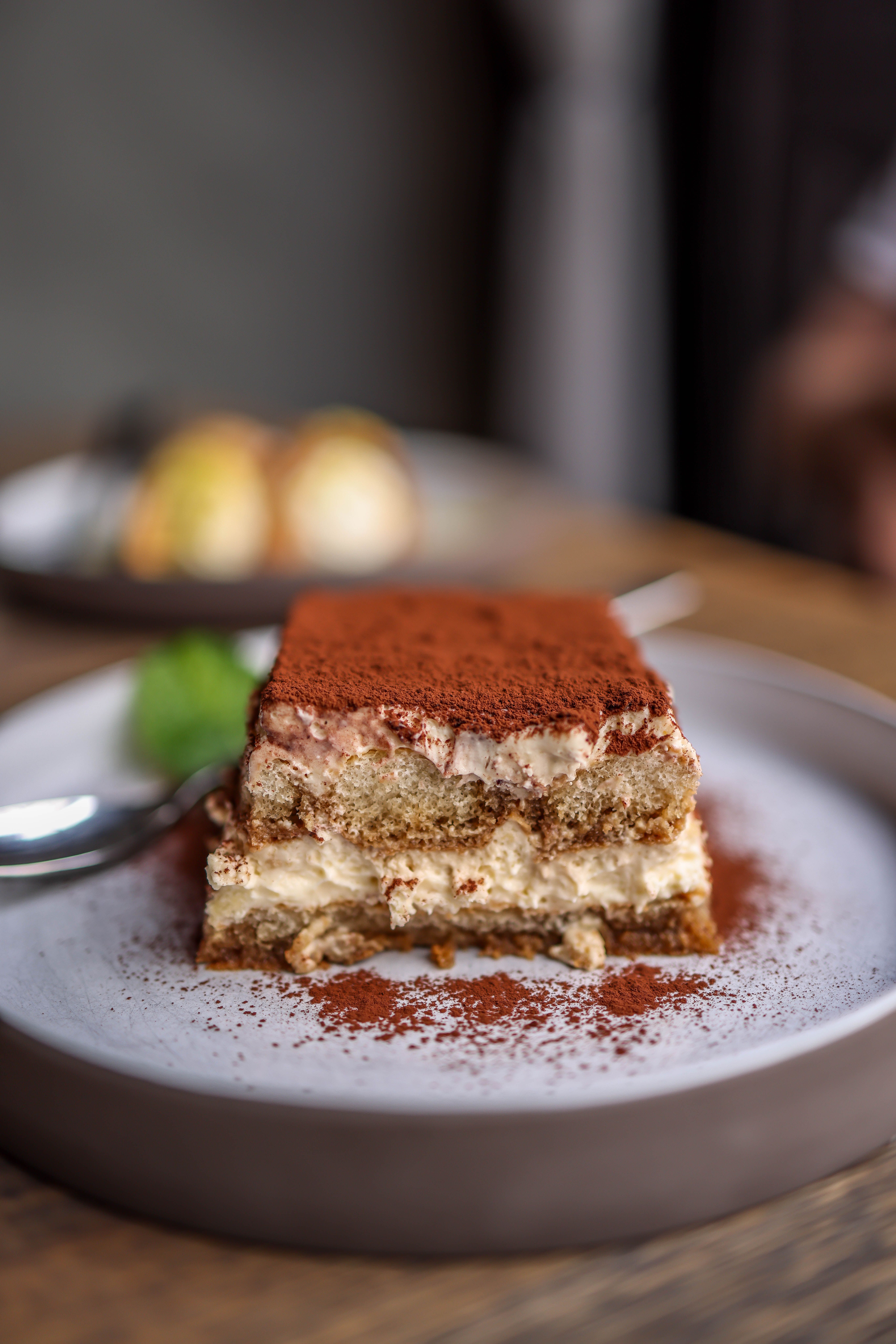
Photo: Valeria Boltneva / Pexels
American
Coffee Cake
The diets react (see scores below)
Common Ingredients
- flour
- sugar
- butter
- eggs
- sour cream
- baking powder
- baking soda
- cinnamon
- salt
- vanilla extract
Specific recipes may vary.
Incompatible with 11 of 11 diets
Diet Ratings
Traditional coffee cake is fundamentally incompatible with a ketogenic diet. The two primary ingredients — wheat flour and sugar — are both high-carb, keto-prohibited foods. A standard serving (approximately 90g) delivers roughly 40-55g of net carbs, which alone can exceed or consume the entire daily carb budget for ketosis. Flour provides fast-digesting starch that spikes blood glucose and insulin, immediately disrupting ketosis. Sugar adds further glycemic load. While butter, eggs, and sour cream are keto-friendly components, they are entirely overshadowed by the grain and sugar content. There is no portion size small enough to make this food compatible with ketogenic macros in any meaningful way.
This Coffee Cake contains multiple animal-derived ingredients that disqualify it from a vegan diet. Butter is a dairy product, eggs are an animal product, and sour cream is a dairy-based ingredient. All three are explicitly excluded under vegan dietary rules. The remaining ingredients — flour, sugar, baking powder, baking soda, cinnamon, salt, and vanilla extract — are plant-based and would be acceptable. However, the presence of three distinct animal products makes this clearly non-vegan. A vegan version is entirely achievable by substituting plant-based butter, flax eggs or commercial egg replacers, and dairy-free sour cream (e.g., cashew- or soy-based), but the dish as described cannot be approved.
Coffee Cake contains multiple non-paleo ingredients that are strictly excluded from the paleolithic diet. Flour (wheat) is a grain and a core exclusion. Sugar is refined and explicitly banned. Butter and sour cream are dairy products. Baking powder and baking soda are processed leavening agents. Salt is an excluded additive. Nearly every primary ingredient in this dish violates paleo principles, making it one of the clearest possible avoid verdicts.
Coffee cake is a quintessential American baked good that contradicts core Mediterranean diet principles on multiple fronts. It is built on refined white flour (not a whole grain), added sugar, and butter as the primary fat — the opposite of olive oil. Sour cream adds saturated fat from dairy, and the overall profile is that of a high-sugar, refined-grain, processed snack with no plant-forward nutritional value. This dish offers no vegetables, legumes, whole grains, or healthy fats, making it incompatible with Mediterranean eating patterns.
Coffee Cake is fundamentally incompatible with the carnivore diet. The dish is composed almost entirely of plant-derived and processed ingredients: flour (grain), sugar (processed plant), baking powder, baking soda, cinnamon (plant spice), and vanilla extract (plant-derived). While it does contain butter and eggs — both animal-derived and acceptable on carnivore — these are minor components overwhelmed by the dominant plant-based ingredients. This is a classic baked good with no meaningful animal-product nutritional profile and is universally rejected across all carnivore tiers, from the strictest Lion Diet to the most lenient animal-based approaches.
Coffee cake violates Whole30 on multiple levels. First, it contains several explicitly excluded ingredients: flour (wheat/grain), sugar (added sugar), butter (dairy), and sour cream (dairy). Second, and independently disqualifying, coffee cake is a baked good — explicitly listed as a category of foods that cannot be recreated even with compliant ingredients under Whole30's Rule 4. Even if every ingredient were swapped for compliant alternatives, making a coffee cake would still violate the spirit and explicit rules of the program.
Coffee Cake as described contains two major high-FODMAP ingredients that make it unsuitable during the elimination phase. First, regular wheat flour is the primary structural ingredient and is high in fructans — a key FODMAP — at any standard serving size. Second, sour cream contains lactose and is high-FODMAP at typical serving amounts used in baking (though small incidental amounts may be tolerable). A standard slice of coffee cake would deliver a significant fructan load from the flour alone, making this a clear avoid. The remaining ingredients — butter (low-lactose fat), eggs, sugar (glucose/fructose in equal ratio, low-FODMAP), baking powder, baking soda, cinnamon (low-FODMAP at normal amounts), salt, and vanilla extract — are all low-FODMAP. However, the wheat flour is the non-negotiable problem ingredient. A low-FODMAP version could be made by substituting gluten-free flour (e.g., rice flour blend) and lactose-free sour cream, but the dish as described is not safe during elimination.
Coffee cake is a classic American baked good that conflicts with multiple core DASH diet principles. It is made primarily from refined white flour (not a whole grain), substantial amounts of sugar (added sugars), and butter (high in saturated fat). Sour cream is a full-fat dairy product, which DASH specifically limits in favor of low-fat or fat-free dairy. Together, butter and sour cream contribute significant saturated fat. The high sugar content adds empty calories with no nutritional benefit aligned with DASH goals. This dish provides negligible potassium, magnesium, calcium, or fiber relative to its caloric load. It closely resembles the category of 'sweets' that DASH explicitly advises limiting to 5 or fewer servings per week, and even then only in small portions. As a snack, it offers none of the nutrient density DASH emphasizes — no lean protein, no vegetables or fruits, no whole grains, no low-fat dairy.
Coffee cake is a highly problematic food from a Zone Diet perspective. Its primary ingredients — refined white flour and sugar — are both high-glycemic carbohydrates that Dr. Sears explicitly classifies as 'unfavorable' and generally recommends avoiding. The macronutrient profile is dominated by rapidly absorbed carbohydrates and saturated fat from butter and sour cream, with negligible lean protein. This creates an extreme imbalance from the 40/30/30 Zone ratio: a typical slice would be roughly 60-70% calories from carbohydrates, 20-25% from fat (largely saturated), and only 5-10% from protein. There is no realistic way to portion a serving of coffee cake that approximates a Zone block balance without making the portion nutritionally trivial. Additionally, the refined flour and sugar drive rapid insulin spikes — precisely the hormonal disruption the Zone Diet is designed to prevent. As a snack category item, it fails entirely because Zone snacks are specifically designed to maintain hormonal balance between meals. There are no redeeming Zone-favorable components in meaningful quantities; eggs contribute some protein but are overwhelmed by the carbohydrate and fat load.
Coffee cake is a classic American baked good whose ingredient profile is heavily pro-inflammatory by anti-inflammatory diet standards. Refined white flour is a refined carbohydrate with a high glycemic load that drives insulin spikes and promotes inflammatory cytokine production. Sugar is a primary ingredient, appearing twice (in the cake and typically in the streusel topping), and excess added sugar is one of the most well-documented dietary drivers of systemic inflammation via AGE formation and NF-κB activation. Butter contributes saturated fat, which in excess is associated with elevated inflammatory markers. Sour cream adds additional saturated fat and full-fat dairy. Eggs are a moderate ingredient and nutritionally neutral-to-slightly-positive in this context, and cinnamon is genuinely anti-inflammatory — but these minor positives are overwhelmed by the dominant pro-inflammatory components. The overall macronutrient profile — high refined carbohydrate, high saturated fat, high added sugar, negligible fiber, no omega-3s, no phytonutrients — represents essentially the opposite of what an anti-inflammatory dietary pattern emphasizes. This is not a food to be moderated; it is a food to be treated as an occasional indulgence at best, and avoided as a regular snack.
Coffee cake is a poor fit for GLP-1 patients across nearly every priority dimension. It is built on refined flour and sugar, providing empty calories with negligible protein and minimal fiber. Butter and sour cream contribute significant saturated fat, which worsens GLP-1 side effects including nausea, bloating, and reflux — especially problematic given the slowed gastric emptying caused by the medication. The high sugar content spikes blood glucose and contributes nothing to satiety or muscle preservation. There is no meaningful protein source listed, failing the most critical dietary priority for GLP-1 patients. As a snack, it occupies valuable caloric real estate that should be used for nutrient-dense, protein- and fiber-forward foods. Even a small portion delivers little nutritional return and meaningful GI risk.
*See how scores were generated at our methodology page.
Nutritional profile
Six traits that cut across every diet.
Fiber & Plants
How much whole-plant food and fiber it delivers.
Healthy Fats
The quality of its fats (unsaturated, omega-3).
Whole / Unprocessed
How close it is to its natural, unprocessed form.
Gut Gentle
How easy it is on digestion (low FODMAP, few irritants).
Low Glycemic
How little it spikes your blood sugar.
Protein Density
How much protein it packs per calorie.
Controversy Index
Higher controversy = more disagreement between diets.