Photo: Milan Masnikosa / Pexels
The diets react (see scores below)
Common Ingredients
- pork
- rice
- peas
- onion
- garlic
- cumin
- scallions
- pork skin
Specific recipes may vary.
Incompatible with 10 of 11 diets
Diet Ratings
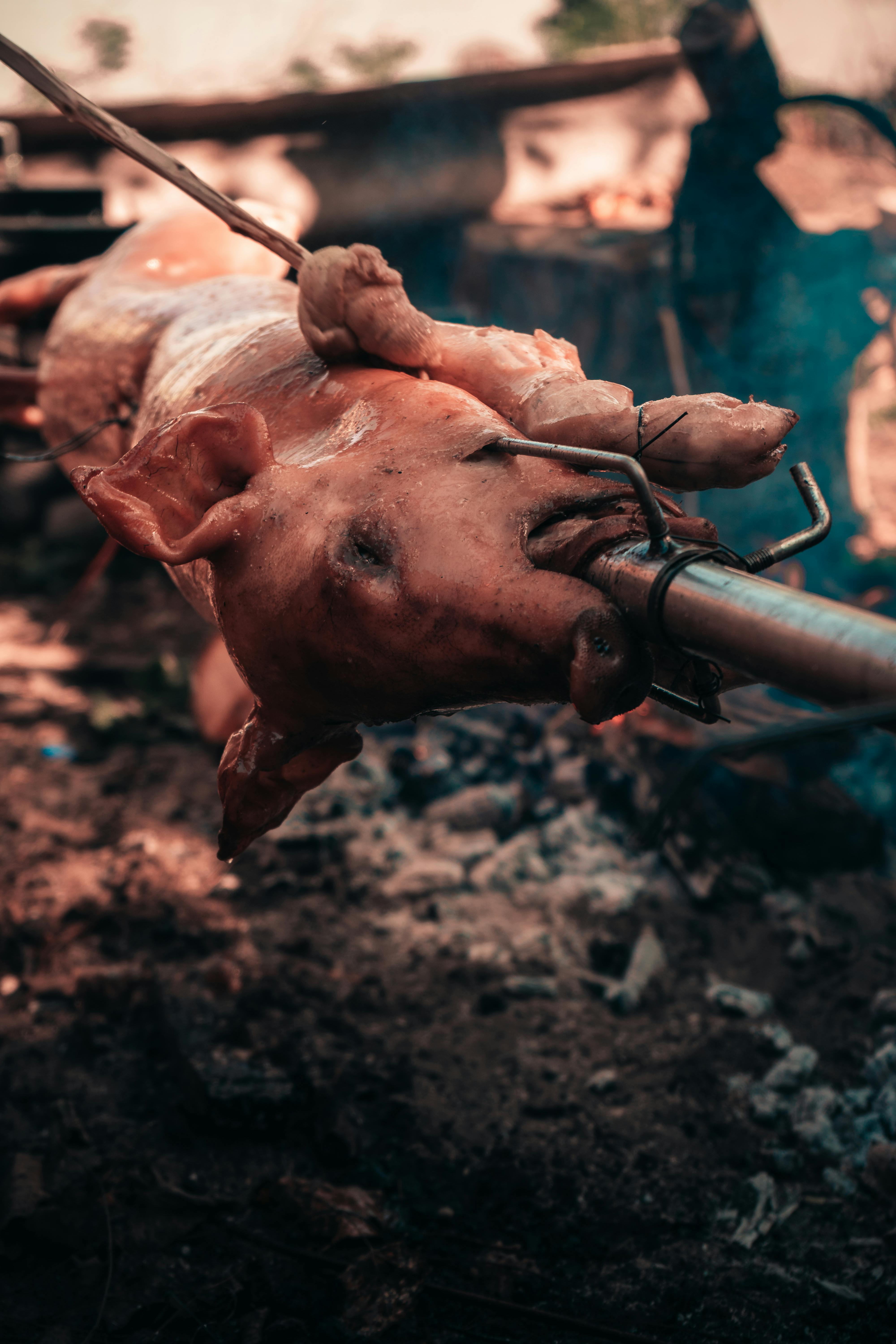
Lechona is a traditional Colombian dish where a whole pig is stuffed with rice and peas before roasting. While the pork itself and pork skin (chicharrón) are excellent keto foods, the stuffing is the disqualifying element. Rice is a high-carb grain with approximately 45g of net carbs per cooked cup, and peas add additional starch. A standard serving of lechona includes a significant portion of this rice-and-pea stuffing alongside the meat, making it virtually impossible to keep net carbs within keto limits without surgically removing all the stuffing. The dish as traditionally served cannot be considered keto-compatible.
Lechona is a traditional Colombian dish centered entirely on pork — a whole pig stuffed with seasoned rice and peas, then slow-roasted. The dish contains multiple animal-derived ingredients: pork (meat) and pork skin (also animal-derived). These are direct animal products that are categorically excluded from a vegan diet. There is no ambiguity here; this dish is fundamentally incompatible with veganism.
Lechona is a traditional Colombian dish that combines paleo-approved pork with two clear non-paleo ingredients: rice (a grain) and peas (a legume). Both are explicitly excluded from the paleo diet. Rice is a grain containing anti-nutrients, and peas are legumes that paleo guidelines reject due to their lectin and phytate content. While pork, pork skin, onion, garlic, cumin, and scallions are all paleo-compliant, the rice and peas are structural components of the dish — not optional garnishes — making the overall dish non-paleo. The dish cannot be meaningfully modified without fundamentally changing its identity.
Lechona is a Colombian dish centered on whole roasted pork with crispy pork skin (chicharrón), stuffed with white rice and peas. This dish fundamentally conflicts with Mediterranean diet principles on multiple fronts: pork is a red meat that the Mediterranean diet limits to a few times per month, and pork skin is extremely high in saturated fat. The white rice stuffing is a refined grain with minimal fiber benefit. The dish is also traditionally roasted in its own pork fat rather than olive oil, removing the primary healthy fat source of the Mediterranean diet. While peas, onion, garlic, and cumin are Mediterranean-friendly ingredients, they are minor components overwhelmed by the large quantities of fatty pork and pork skin. This is not a dish compatible with Mediterranean eating patterns as a regular meal.
Lechona is a traditional Colombian dish where a whole pig is stuffed with rice, peas, onions, garlic, cumin, and scallions before being slow-roasted. While the pork and pork skin themselves are fully carnivore-approved, the dish is fundamentally defined by its plant-based stuffing: rice (a grain), peas (a legume), onions, garlic, scallions (vegetables), and cumin (a spice). These plant ingredients are central to the dish — not optional garnishes — making Lechona incompatible with the carnivore diet. The pork alone could be extracted and eaten, but the dish as prepared and served must be avoided.
Lechona contains rice, which is an explicitly excluded grain on the Whole30 program. Rice is listed among the grains eliminated for the full 30 days. Additionally, peas (yellow/green split peas used in traditional lechona) are legumes, which are also excluded. While pork, onion, garlic, cumin, scallions, and pork skin are all compliant ingredients, the core stuffing of this dish—rice and peas—makes it incompatible with Whole30. Note: green beans, sugar snap peas, and snow peas are the only legume exceptions, and the field peas/yellow peas used in lechona do not qualify for this exception.
Lechona contains multiple high-FODMAP ingredients that make it unsuitable during the elimination phase. Garlic is one of the highest FODMAP foods tested by Monash University, rich in fructans at any culinary amount. Onion is similarly high in fructans and must be avoided entirely during elimination. Peas (green peas) are high in GOS and fructans at standard serving sizes (safe only at very small portions of about 1/4 cup, but typically used in larger quantities in lechona). Scallions (green onions) — the white bulb portion contains fructans and is high-FODMAP, and in traditional preparation both white and green parts are commonly used. While pork itself, rice, pork skin, and cumin are all low-FODMAP, the combination of garlic, onion, peas, and scallions in a single dish makes this a high-FODMAP meal with no realistic way to consume a standard serving safely during elimination.
Lechona is a traditional Colombian dish featuring whole roasted pork stuffed with rice, peas, and seasonings — but the defining characteristic is the inclusion of pork skin (chicharrón-style crackling), which is extremely high in saturated fat and often sodium. The dish is centered on fatty pork cuts, which DASH explicitly limits as red meat high in saturated fat. Pork skin specifically is one of the highest saturated fat foods available. While the rice, peas, onion, garlic, and scallions are individually DASH-compatible, the overall dish is dominated by full-fat pork and crispy pork skin, making it incompatible with DASH principles. Traditional preparation also typically involves generous salting throughout the meat, stuffing, and skin, contributing to high sodium content. The combination of high saturated fat from fatty pork cuts plus pork skin, high sodium, and red meat as the primary protein places this firmly in the 'avoid' category under DASH guidelines.
Lechona is a traditional Colombian dish that presents multiple Zone Diet challenges. The primary issues are: (1) The protein source is whole roasted pork — not a lean cut — and includes pork skin (chicharrón), which is very high in saturated fat, pushing this well away from Zone's lean protein and monounsaturated fat ideals. (2) Rice is a high-glycemic carbohydrate that Zone classifies as 'unfavorable,' and in lechona it constitutes a major portion of the dish's volume, making macro balancing very difficult. (3) The fat content from pork skin and pork fat is predominantly saturated, the opposite of Zone's monounsaturated fat preference. The saving graces are peas (a moderate-glycemic legume that provides some protein and fiber), onion, garlic, scallions, and cumin — all Zone-friendly aromatics. However, the structural carbohydrate (white rice) and fat profile (pork skin/fat) make this dish very hard to fit into Zone ratios without radical modification. A small portion could theoretically be consumed alongside a large vegetable side to partially correct the macro imbalance, but as traditionally served, lechona skews heavily toward unfavorable carbs and saturated fat with insufficient lean protein balance. The score of 3 reflects that it is not categorically impossible (peas and aromatics help slightly, and it's not pure sugar), but it sits at the lower end of 'caution' bordering on 'avoid' due to the combination of high-GI starch and high saturated fat.
Lechona is a traditional Colombian whole-roasted pork dish where the pig is stuffed with seasoned rice, peas, onions, garlic, and cumin, then slow-roasted in its own skin. While it contains several beneficial anti-inflammatory ingredients — garlic and onion (quercetin, organosulfur compounds), cumin (a warming spice with anti-inflammatory properties), and peas (fiber, plant protein) — these are overwhelmed by the dish's core composition. The primary ingredient is fatty whole pork, which is high in saturated fat and arachidonic acid (an omega-6 precursor to pro-inflammatory eicosanoids). The pork skin is particularly problematic: it is extremely high in saturated fat and, when roasted to a crisp (chicharrón-style crackling), represents a concentrated source of pro-inflammatory saturated fat. The rice component is refined white rice, a refined carbohydrate with minimal fiber that contributes to post-meal blood glucose spikes associated with elevated CRP and IL-6. The dish is also calorie-dense and portion sizes are typically large. The combination of high saturated fat from both the pork meat and skin, refined carbohydrates, and the overall macronutrient profile places Lechona firmly in the 'avoid' category under anti-inflammatory dietary principles. The beneficial spices and vegetables are present in insufficient quantities to meaningfully offset these concerns.
Lechona is a traditional Colombian dish of whole roasted pork stuffed with seasoned rice, peas, and spices, served with crispy pork skin (chicharrón). While it contains some protein from the pork and modest fiber from the peas, it is fundamentally incompatible with GLP-1 dietary guidelines. The dish is dominated by fatty pork — including the belly and skin — which is extremely high in saturated fat and overall fat content. The crispy pork skin alone is one of the highest-fat, most calorie-dense foods possible. High dietary fat is a primary driver of GLP-1 side effects including nausea, bloating, reflux, and prolonged gastric discomfort, all of which are amplified because GLP-1 medications already slow gastric emptying significantly. The rice component adds refined carbohydrate volume with low nutritional density relative to the calories consumed. The fat-to-protein ratio is poor — while pork provides protein, the cut and preparation method (whole roasted fatty pork with skin) mean fat calories vastly outweigh protein value. This is a large-portion, heavy, greasy dish that would be difficult to eat in small quantities while still being satisfying, and it is precisely the type of food most likely to cause severe GI distress in GLP-1 patients.
*See how scores were generated at our methodology page.
Nutritional profile
Six traits that cut across every diet.
Fiber & Plants
How much whole-plant food and fiber it delivers.
Healthy Fats
The quality of its fats (unsaturated, omega-3).
Whole / Unprocessed
How close it is to its natural, unprocessed form.
Gut Gentle
How easy it is on digestion (low FODMAP, few irritants).
Low Glycemic
How little it spikes your blood sugar.
Protein Density
How much protein it packs per calorie.
Controversy Index
Higher controversy = more disagreement between diets.
Diet-Specific Tips
 Zone — 5/10
View tips
- White rice is a high-glycemic, 'unfavorable' Zone carbohydrate that dominates the dish's carb profile
- Pork skin is very high in saturated fat, contrary to Zone's monounsaturated fat preference
- Whole pork (not a lean cut) raises saturated fat content further beyond Zone ideals
- Peas provide some fiber, protein, and a lower glycemic contribution, partially offsetting rice
- Onion, garlic, scallions, and cumin are Zone-friendly anti-inflammatory aromatics
- Macronutrient ratio is heavily skewed — high carb from rice, high saturated fat from pork skin, making 40/30/30 balance nearly unachievable as traditionally served
- Portion control and pairing with large non-starchy vegetable sides would be required to approach Zone compliance