Photo: Su La Pyae / Pexels
Colombian
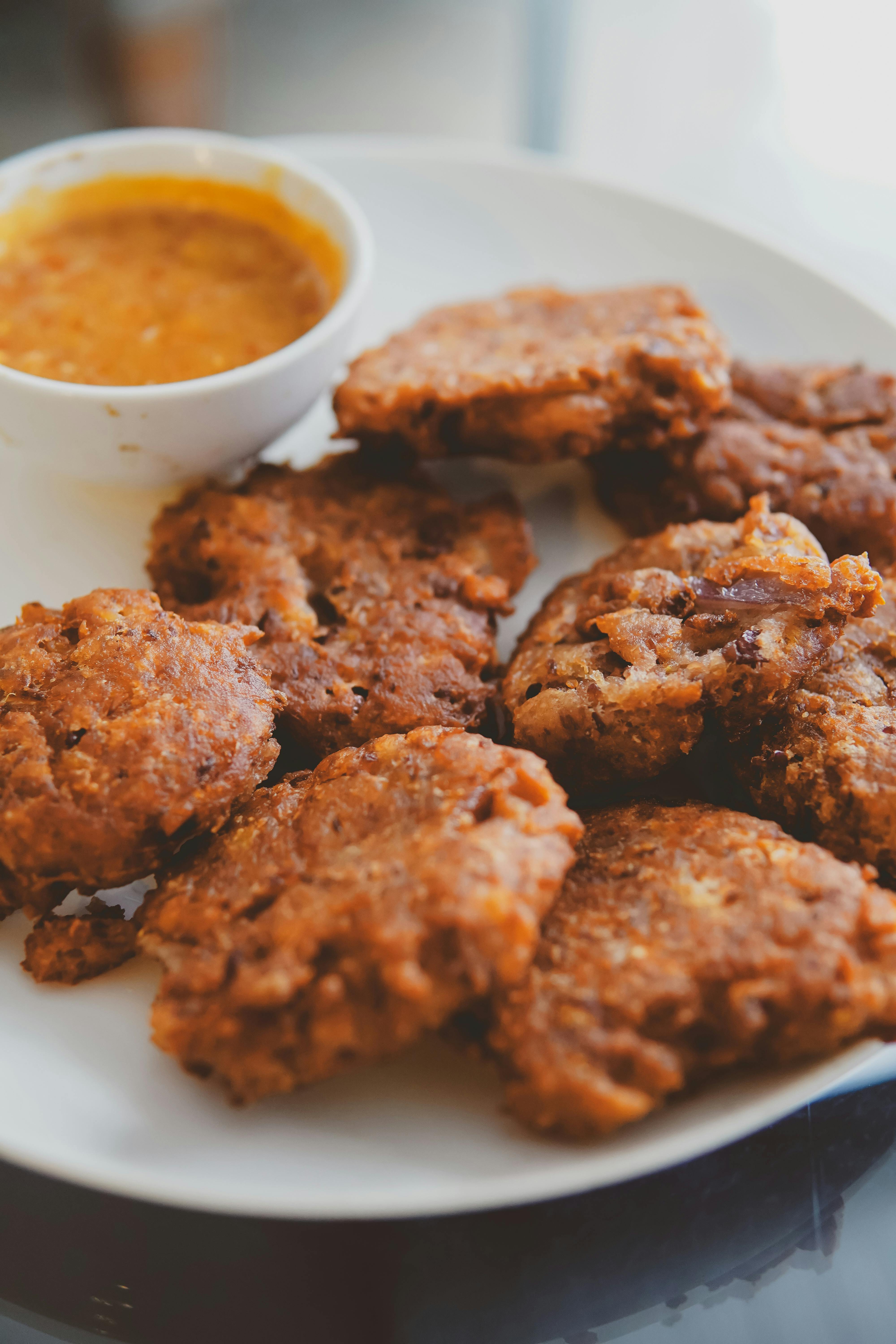
Patacones
The diets react (see scores below)
Common Ingredients
- green plantains
- oil
- salt
- garlic
- water
Specific recipes may vary.
Incompatible with 4 of 11 diets
Diet Ratings
Patacones are made from green plantains, which are extremely high in starch and net carbs. A single medium green plantain contains approximately 30-35g of net carbs, and a typical serving of patacones (2-3 pieces) can easily deliver 40-60g of net carbs — well exceeding the entire daily keto limit in one side dish. While green plantains have slightly less sugar than ripe ones, they are still a starchy, high-carb food fundamentally incompatible with ketosis. The frying oil is keto-friendly, but the plantain base makes this dish a clear avoid.
Patacones (twice-fried green plantain rounds) are entirely plant-based. Every ingredient listed — green plantains, oil, salt, garlic, and water — is derived from plants or is a mineral/neutral substance. There are no animal products, dairy, eggs, or animal-derived additives present. Green plantains are a whole plant food, and the preparation method (frying, smashing, re-frying) uses only plant-derived oil. The score is 9 rather than 10 primarily because the dish is fried rather than minimally processed, which whole-food plant-based advocates may note, but from a vegan standpoint it is exemplary.
Patacones (twice-fried green plantains) have three significant paleo concerns. First, the added salt is explicitly excluded from the paleo framework. Second, the oil used for frying in the traditional Colombian preparation is almost certainly a seed oil (typically vegetable or canola oil), which is prohibited — only animal fats, olive oil, coconut oil, avocado oil, or similar would be acceptable. Third, while green plantains themselves are a starchy fruit and arguably paleo-compatible, the preparation method (deep-frying in seed oils with added salt) makes this dish non-compliant. Even if coconut oil were substituted and salt omitted, the dish would still be a processed/fried preparation that sits in a gray area. As presented with conventional oil and salt, this dish should be avoided.
Some paleo practitioners, particularly those following a more permissive or ancestral template, argue that plantains are a whole, unprocessed starchy fruit similar to tubers and fully acceptable. If prepared with coconut oil and no added salt, a version of patacones could be considered paleo-compliant by authorities like Mark Sisson or the Primal Blueprint framework.
Patacones are twice-fried green plantains, a whole plant food with good fiber and resistant starch. Green plantains themselves align well with Mediterranean diet principles as a minimally processed starchy vegetable. However, the deep-frying method introduces significant oil absorption, and the type of oil matters greatly — traditional preparation typically uses vegetable oils (sunflower, corn, or palm) rather than extra virgin olive oil, which undermines Mediterranean diet compatibility. The dish is not traditional to Mediterranean cuisine, but plant-based starchy sides are encouraged. If prepared with olive oil (pan-fried or baked), this would score higher. The garlic and minimal salt are positive elements.
Some modern Mediterranean diet interpretations would approve patacones more readily, arguing that green plantains are a whole plant food analogous to other starchy vegetables like potatoes, and that the cooking method (frying) is less important than the food quality itself. Traditional Mediterranean cuisines do include fried preparations such as Spanish patatas bravas or Greek loukoumades, suggesting frying per se is not categorically excluded.
Patacones are fried green plantains — entirely plant-derived with zero animal products. Plantains are a starchy fruit, oil is plant-based (likely vegetable oil), and garlic is a plant. Every single ingredient violates the core carnivore principle of eating exclusively animal-derived foods. This is one of the clearest possible 'avoid' cases on the carnivore diet.
Patacones (twice-fried green plantains) are made from entirely Whole30-compliant ingredients: green plantains (a vegetable/starch), oil, salt, garlic, and water. No excluded ingredients are present. However, patacones fall into a gray area similar to other fried starchy snacks. The Whole30 program explicitly excludes 'chips, french fries, and tots' from the 'no recreating junk food' rule, and patacones function as a fried starchy side/snack in a similar spirit. Green plantains are starchy vegetables, and when double-fried into crispy rounds, they closely mimic the role of chips or fries. The official Whole30 program does not explicitly call out patacones, but the spirit of avoiding fried starch-based snack-type foods applies here. All individual ingredients are compliant, so a strict reading of the rules would allow them, but the program's guidance around fried starchy foods warrants caution.
Strictly by ingredient rules, patacones are fully compliant — green plantains are a whole food vegetable, and the Whole30 does not list them as excluded. However, the official Whole30 guidelines discourage recreating 'french fries or tots' type foods, and some practitioners argue that double-fried plantain rounds fall squarely into that prohibited comfort-food category, regardless of ingredient compliance.
Patacones are twice-fried green plantains, and the main FODMAP concern is the garlic used in the recipe. Green plantains themselves are low-FODMAP at standard servings (Monash rates unripe plantain as low-FODMAP at around 75g). Oil and salt are FODMAP-free. However, garlic is one of the highest-FODMAP foods (fructans) and is problematic even in small amounts when directly consumed. The key question is how garlic is used: if the plantains are soaked or rubbed with garlic water (a common Colombian technique called 'agua de ajo') before the second fry, or if crushed garlic is used as a direct seasoning, this introduces meaningful fructan exposure. If garlic-infused oil were substituted instead, the dish would be low-FODMAP. As traditionally prepared with direct garlic contact, the dish warrants caution.
Monash University confirms garlic is high-FODMAP even in small amounts due to fructans, so clinical FODMAP practitioners would typically advise avoiding traditionally prepared patacones during the elimination phase unless garlic is replaced with garlic-infused oil. The plantain base itself is safe, but the garlic preparation method is the deciding factor.
Patacones (twice-fried green plantains) present a mixed DASH profile. Green plantains themselves are DASH-friendly — they are a starchy vegetable rich in potassium, fiber, and complex carbohydrates with no sodium or saturated fat. However, the traditional preparation involves deep-frying in oil (typically vegetable oil), which significantly increases total fat content and caloric density. The added salt introduces sodium that must be monitored within DASH limits. The oil used matters: if a neutral vegetable oil (canola, sunflower) is used in moderate amounts, the saturated fat concern is lower than if lard or palm oil is used. The dish is not inherently high in sodium or saturated fat when home-prepared with restraint, but the frying method and salting push it out of the 'core DASH food' category. Portion control is key — one or two patacones as a side dish can fit within DASH guidelines, but they should not replace higher-priority DASH vegetables.
NIH DASH guidelines emphasize vegetables prepared without added fat and with minimal sodium; the frying preparation and salt make patacones a less optimal choice. However, some DASH-oriented dietitians note that plantains fried in unsaturated vegetable oil with light salting can reasonably fit within daily fat and sodium budgets, especially given the potassium and fiber benefits of the plantain itself.
Patacones are twice-fried green plantain discs — a staple Colombian side dish. Green plantains have a lower glycemic index than ripe plantains or white bread due to their high resistant starch content, which is a meaningful Zone advantage. However, the frying process adds significant fat (likely a seed oil such as vegetable or canola oil, which is omega-6-heavy and anti-inflammatory unfavorable in Zone terms), and plantains are still a starchy carbohydrate that counts as an 'unfavorable' Zone carb block — similar to how Dr. Sears categorizes grains. A typical serving (2-3 patacones) could easily deliver 20-30g net carbs with little protein and a notable fat load from frying oil, making the 40/30/30 ratio very difficult to achieve with this dish alone. As a side component of a larger Zone-balanced meal with lean protein and vegetables, it can be incorporated in small portions, but it requires strict portion control and awareness that the frying oil is typically not the monounsaturated-preferred type.
Green plantains contain substantial resistant starch, which some Zone-informed nutritionists argue behaves more like fiber than a rapidly absorbed carb, potentially lowering the effective glycemic impact. Sears' later anti-inflammatory writings place greater emphasis on polyphenols and omega-3/omega-6 ratios than glycemic index alone — if fried in olive oil or avocado oil, the fat profile improves considerably. Some Zone practitioners would treat a small portion of patacones as a reasonable unfavorable carb block in an otherwise well-structured Zone meal.
Patacones (twice-fried green plantain patties) have a mixed anti-inflammatory profile. On the positive side, green plantains are a resistant starch-rich whole food with meaningful amounts of potassium, vitamin C, vitamin B6, and dietary fiber — all supportive of gut health and reduced systemic inflammation. Garlic is a well-established anti-inflammatory ingredient containing allicin and organosulfur compounds. However, the preparation method — deep or pan frying — introduces the main concern: the type and quantity of oil used. Traditional patacones are typically fried in refined vegetable oils (corn, sunflower, or palm oil), which are high in omega-6 fatty acids or saturated fat and may generate oxidative byproducts at high heat. If fried in avocado oil or refined coconut oil (more heat-stable options), the profile improves somewhat. The dish is not inherently processed or additive-laden, and green plantains are nutritionally superior to ripe plantains due to lower glycemic load, but the frying method and oil choice are significant modifiers. Salt is neutral in moderate amounts. Overall, this is a borderline-acceptable dish in an anti-inflammatory context — better than most fried snacks due to the whole-food base, but the frying method prevents an 'approve' rating.
Some anti-inflammatory nutritionists would rate patacones more favorably, emphasizing that green plantains are a low-glycemic, prebiotic-rich whole food and that frying in a heat-stable oil like avocado oil is not inherently problematic in moderation. Critics of the 'caution' label would argue the dish is vastly preferable to processed snack foods. Conversely, stricter anti-inflammatory protocols (such as those influenced by AIP or Dr. Mark Hyman's functional medicine approach) would flag any regularly fried food as pro-inflammatory due to oxidized lipid formation and potential glycation end-products regardless of oil type.
Patacones are twice-fried green plantain discs, making them a high-fat, fried food that directly conflicts with core GLP-1 dietary guidelines. The frying process significantly increases fat content and creates a heavy, greasy food that is known to worsen GLP-1 side effects including nausea, bloating, and reflux. Green plantains do offer some fiber and resistant starch, and they are lower in sugar than ripe plantains, which are modest positives. However, the dish provides no meaningful protein, is calorie-dense relative to its nutritional value, and the fried preparation makes it poorly tolerated by most GLP-1 patients. As a side dish with no protein contribution, it occupies caloric real estate that could be used for nutrient-dense foods. The oil used for frying also typically saturates the plantain, compounding the fat load per serving.
*See how scores were generated at our methodology page.
Nutritional profile
Six traits that cut across every diet.
Fiber & Plants
How much whole-plant food and fiber it delivers.
Healthy Fats
The quality of its fats (unsaturated, omega-3).
Whole / Unprocessed
How close it is to its natural, unprocessed form.
Gut Gentle
How easy it is on digestion (low FODMAP, few irritants).
Low Glycemic
How little it spikes your blood sugar.
Protein Density
How much protein it packs per calorie.
Controversy Index
Higher controversy = more disagreement between diets.
Diet-Specific Tips
 Vegan — 9/10
View tips
- Green plantains are a whole plant food — unambiguously vegan
- Oil, salt, garlic, and water contain no animal-derived ingredients
- No dairy, eggs, meat, or animal-derived additives in the recipe
- Frying reduces the score slightly from a whole-food plant-based perspective, but not a vegan compliance issue
- Traditional Colombian patacones are naturally vegan in their base form
 Mediterranean — 5/10
View tips
- Green plantains are a whole, minimally processed plant food with fiber and resistant starch
- Deep-frying significantly increases caloric density and fat content
- Oil type not specified — traditional preparation uses non-olive oils, reducing Mediterranean compatibility
- No added sugars or refined grains
- Garlic is a Mediterranean-approved aromatic
- Not a traditional Mediterranean food, but plant-based starchy sides are encouraged
- Preparation method (deep-frying) is not the Mediterranean ideal compared to roasting or sautéing in olive oil
 Whole30 — 5/10
View tips
- All ingredients (green plantains, oil, salt, garlic, water) are individually Whole30-compliant
- Green plantains are a whole, unprocessed vegetable starch — not a grain or legume
- Patacones are twice-fried and function as a crispy, starchy side/snack, similar to fries or chips
- Whole30 explicitly excludes 'french fries, tots, and chips' under the no-junk-food-recreation rule
- No explicit mention of patacones in official Whole30 guidelines — creates ambiguity
- If served as a side dish rather than a snack/chip substitute, the case for compliance is stronger
 Low-FODMAP — 5/10
View tips
- Green plantains are low-FODMAP at standard serving (~75g per Monash)
- Garlic is high-FODMAP due to fructans — even small amounts can trigger symptoms
- Traditional Colombian patacones often use garlic water soak or direct garlic rubbing, introducing fructans
- Garlic-infused oil would be a safe low-FODMAP substitute (FODMAPs are water-soluble, not fat-soluble)
- Oil and salt are FODMAP-free
- Verdict depends heavily on preparation method — direct garlic contact = caution/avoid; garlic-infused oil only = approve
 DASH — 5/10
View tips
- Green plantains are a potassium- and fiber-rich starchy vegetable, aligned with DASH principles
- Deep-frying adds significant fat and calories, reducing DASH compatibility
- Total fat impact depends heavily on oil type — unsaturated oils (canola) are preferable to tropical oils (palm, coconut)
- Added salt raises sodium content; amount depends on preparation
- No saturated fat from the plantain itself; fat profile determined by frying oil
- Portion control critical — 1-2 pieces can fit within DASH daily fat and sodium budgets
- Preferred DASH preparation would be baked or air-fried with minimal oil and salt
 Zone — 4/10
View tips
- Green plantains have lower GI than ripe plantains due to resistant starch, but are still a starchy 'unfavorable' Zone carb
- Frying adds significant fat, likely from omega-6-heavy seed oils — contrary to Zone's anti-inflammatory fat priorities
- No protein component, making macro balancing entirely dependent on accompanying dishes
- Portion control is critical — even a small serving can consume a full carb block allocation
- If fried in olive or avocado oil, the fat quality concern is partially mitigated
- As a side in a mixed Zone meal with lean protein and vegetables, small portions are workable but not ideal
 Anti-Inflammatory — 5/10
View tips
- Green plantains provide resistant starch, fiber, and micronutrients (potassium, B6, vitamin C) with anti-inflammatory potential
- Garlic contributes allicin and organosulfur compounds with documented anti-inflammatory effects
- Frying method introduces risk of oxidized lipids depending on oil type used
- Traditional preparation often uses refined corn, sunflower, or palm oil — high omega-6 or saturated fat content
- Lower glycemic load compared to ripe plantains is a relative benefit
- No processed additives, artificial ingredients, or refined sugars — positive attribute
- Outcome is highly oil-dependent; avocado oil would improve the rating, corn or sunflower oil would worsen it