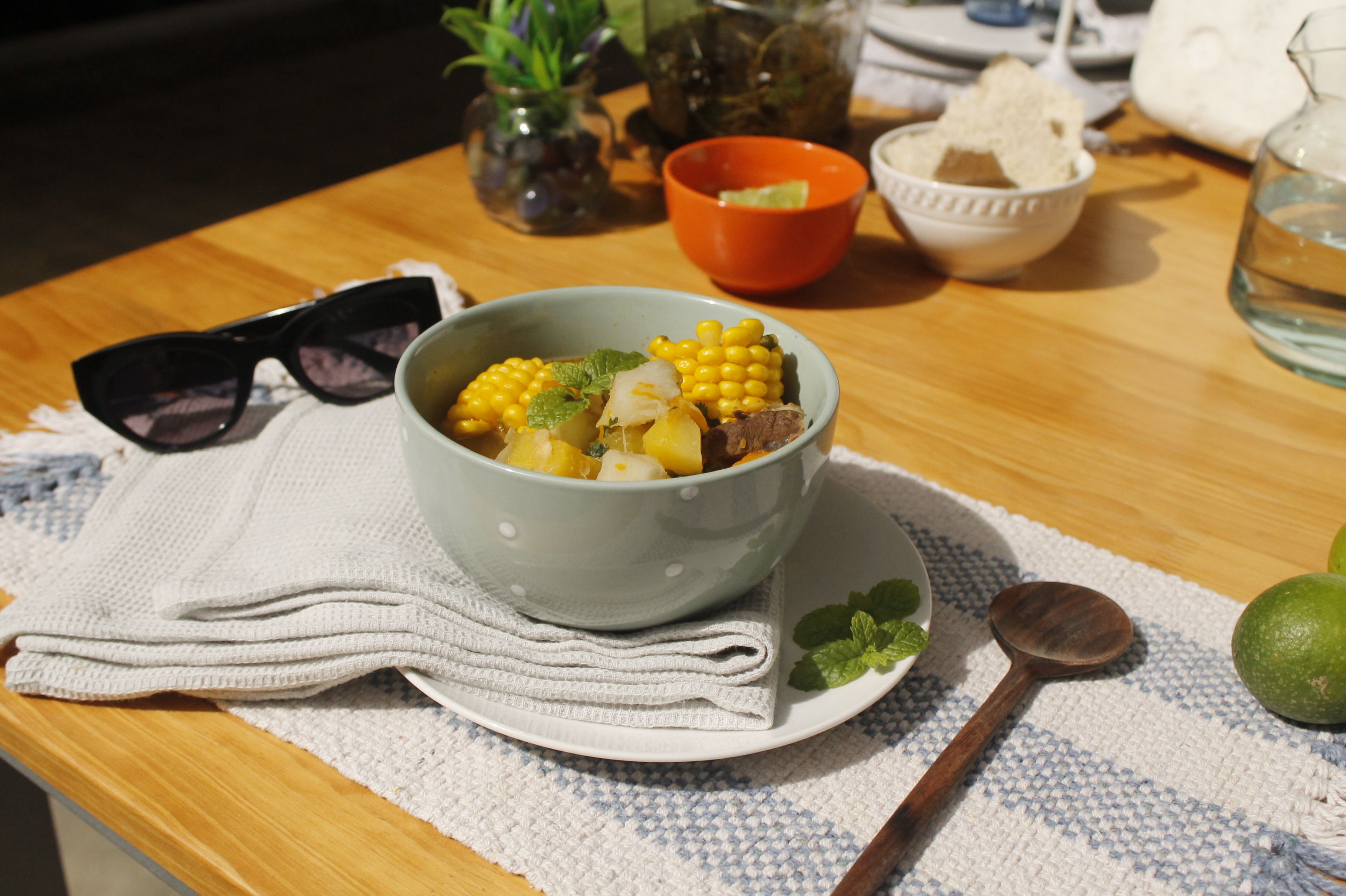
Photo: Oriana Fotos / Pexels
The diets react (see scores below)
Common Ingredients
- chicken
- beef
- yuca
- plantain
- corn
- potatoes
- cilantro
- onion
- garlic
Specific recipes may vary.
Incompatible with 5 of 11 diets
Diet Ratings
Sancocho is fundamentally incompatible with ketogenic eating. The dish contains multiple high-carbohydrate ingredients that together make it impossible to consume without exceeding daily net carb limits. Yuca (cassava) contains approximately 35-40g net carbs per 100g serving. Plantain contains roughly 25-30g net carbs per 100g. Corn contributes 15-20g net carbs per small ear. Potatoes add another 15-17g net carbs per 100g. Even a modest single serving of this soup would easily deliver 80-150g of net carbs, far exceeding the entire daily keto allowance of 20-50g. The chicken and beef are keto-friendly, and small aromatics like cilantro, onion, and garlic are manageable in small amounts, but the four starchy staples are non-negotiable structural components of the dish that cannot be removed without fundamentally changing it.
Sancocho contains both chicken and beef, which are animal flesh and therefore strictly excluded under vegan dietary rules. The plant-based components (yuca, plantain, corn, potatoes, cilantro, onion, garlic) are all vegan-compliant, but the presence of two distinct animal proteins makes this dish clearly incompatible with a vegan diet. There is no ambiguity here — meat is a core excluded category with no debate within veganism.
Sancocho contains two clear paleo violations: corn is a grain and is excluded by all mainstream paleo authorities, and white potatoes are discouraged by strict Cordain-school paleo (The Paleo Diet's official guide). The remaining ingredients — chicken, beef, yuca, plantain, cilantro, onion, and garlic — are largely paleo-compliant. Yuca (cassava) and plantains are accepted tubers/fruits, and the aromatics are unprocessed vegetables. However, corn alone is a hard disqualifier with high consensus, and the white potatoes add a second point of contention. The dish cannot be approved or even rated as caution in its traditional form due to the corn. A modified version removing corn (and optionally potatoes) would be much more paleo-friendly.
Some modern paleo practitioners, particularly those following Mark Sisson's Primal Blueprint or Whole30, would accept white potatoes as a starch source, reducing the violations to corn only. Additionally, Paul Jaminet's Perfect Health Diet tolerates white rice and other starchy tubers, which could soften the stance on potatoes — but corn as a grain remains broadly excluded even in these more lenient frameworks.
Sancocho is a hearty, whole-ingredient soup with many Mediterranean-friendly components: starchy vegetables (yuca, plantain, corn, potatoes), aromatics (onion, garlic, cilantro), and chicken as the primary protein. However, the inclusion of beef alongside chicken is a complicating factor — red meat is limited in the Mediterranean diet to a few times per month, and combining it with chicken in one dish pushes the overall assessment toward caution. The cooking method (slow-simmered soup with no refined grains, no added sugars, and no processed ingredients) is very aligned with Mediterranean principles. If the beef portion is small or optional, the dish improves considerably. The absence of olive oil and the reliance on starchy root vegetables as the primary carbohydrate sources (rather than whole grains or legumes) are minor divergences from Mediterranean ideals.
Some Mediterranean diet interpreters would approve the vegetable-heavy, minimally processed nature of this dish and consider the small amount of beef in a large communal soup acceptable within the 'few times per month' allowance, particularly if served as a shared meal with modest individual portions of meat.
Sancocho is a traditional Colombian soup that, while containing animal proteins (chicken and beef), is overwhelmingly composed of plant-based ingredients. Yuca, plantain, corn, potatoes, cilantro, onion, and garlic are all strictly excluded on the carnivore diet. The plant foods dominate the dish in both volume and carbohydrate load, making this fundamentally incompatible with carnivore principles regardless of the meat content. No adaptation short of a complete recipe overhaul would make this dish carnivore-compliant.
Sancocho as listed contains mostly Whole30-compliant ingredients: chicken, beef, yuca, plantain, potatoes, cilantro, onion, and garlic are all approved. However, corn is an excluded grain on Whole30. The dish as traditionally prepared includes corn on the cob (mazorca), which makes this version non-compliant as described. If the corn is omitted, the remaining ingredients are fully compliant and the dish would be a solid approve. A 'caution' rating reflects that a compliant version is easily achievable with one substitution, and the dish is otherwise a whole-food, unprocessed preparation well in the spirit of Whole30.
Some Whole30 practitioners note that corn on the cob in a soup is a borderline case since it's consumed as a vegetable in many cultures, but the official Whole30 guidelines by Melissa Urban are unambiguous: corn is classified as a grain and is excluded in all forms, including whole cobs. There is no community exception for corn the way there is for green beans or snap peas.
Sancocho contains two high-FODMAP ingredients that are essentially non-negotiable parts of the dish: onion and garlic. Both are among the highest-fructan foods tested by Monash University and must be avoided entirely during the elimination phase — even small amounts of onion or garlic cooked into a broth will leach fructans into the liquid, making the entire soup high-FODMAP. The remaining ingredients are more favorable: chicken and beef are FODMAP-free proteins, yuca (cassava) is low-FODMAP at standard servings, unripe/green plantain is low-FODMAP in moderate portions, corn on the cob is low-FODMAP at roughly half a cob, potatoes are low-FODMAP, and cilantro is low-FODMAP. However, the presence of onion and garlic — both cooked directly into the broth — means the soup as traditionally prepared is clearly high-FODMAP. There is no realistic way to consume a standard serving of this dish during the elimination phase.
Sancocho contains many DASH-friendly ingredients — chicken (lean protein), yuca, plantain, corn, potatoes, cilantro, onion, and garlic are all vegetables or whole foods rich in potassium, fiber, and magnesium. However, the inclusion of beef introduces saturated fat, which DASH limits. As a traditional Colombian stew, sodium content depends heavily on preparation: homemade versions can be moderate in sodium, but restaurant or heavily salted versions may exceed DASH thresholds. The starchy tubers (yuca, plantain, potato, corn) together create a high-carbohydrate, high-calorie load that requires portion control. The dish is not inherently incompatible with DASH, but the beef component and variable sodium content push it into the caution zone. Replacing beef with additional chicken or fish, and controlling added salt, would significantly improve its DASH alignment.
NIH DASH guidelines explicitly limit red meat and high-sodium soups, which would place this dish firmly in caution. However, updated clinical interpretations note that when beef is a minor component in a predominantly vegetable-rich, homemade soup with no added processed salt, some DASH-oriented dietitians consider it acceptable as an occasional meal within overall daily sodium and saturated fat budgets.
Sancocho is a hearty Colombian stew that combines both Zone-friendly and Zone-challenging ingredients. On the positive side, chicken provides lean protein aligned with Zone principles, and aromatics like cilantro, onion, and garlic are low-glycemic and polyphenol-rich. However, the carbohydrate profile is heavily loaded with high-glycemic and starchy ingredients: potatoes (explicitly unfavorable in Zone), corn (high-glycemic, unfavorable), plantain (moderate-to-high glycemic, especially if ripe), and yuca/cassava (very high glycemic index, ~85 GI). The dual-protein inclusion of beef adds saturated fat, which Zone recommends limiting. Together, the starchy carbs dominate the dish and would skew the macro ratio far above 40% carbohydrates — likely 60-70% carb calories — making it difficult to hit the 40/30/30 target without significant modification. A Zone-adapted version would reduce or eliminate potatoes and yuca, use a smaller portion of plantain and corn, increase the chicken-to-starch ratio, and add a monounsaturated fat source. As traditionally prepared, it requires careful portioning and selective ingredient management to fit Zone blocks.
Some Zone practitioners argue that traditional whole-food stews like Sancocho — despite starchy ingredients — are vastly preferable to processed foods and can be made Zone-compatible by controlling portion size (a small bowl as part of a balanced plate). Dr. Sears' later writings emphasize that polyphenol-rich, anti-inflammatory whole foods eaten in moderation are the spirit of the Zone, and the broth-based format naturally dilutes glycemic impact compared to eating the same starches dry. From this perspective, a modest serving with extra chicken could score closer to a 5-6.
Sancocho is a traditional Colombian stew with a mixed anti-inflammatory profile. On the positive side, it contains several anti-inflammatory ingredients: garlic and onion (quercetin, allicin), cilantro (antioxidants, polyphenols), and corn (fiber, antioxidants). The broth-based cooking method is generally favorable. Chicken as the primary protein is lean and acceptable in an anti-inflammatory framework. However, the inclusion of beef introduces concern — red meat is flagged as a food to limit due to saturated fat content and arachidonic acid, which can promote inflammatory pathways. The starchy vegetable trio of yuca, plantain, and potatoes provides fiber and micronutrients, which is a positive, but these are high-glycemic carbohydrates that in large portions could contribute to blood sugar spikes and downstream inflammatory signaling. Overall, this is a wholesome, minimally processed home-cooked dish with real anti-inflammatory ingredients, but the red meat inclusion and high starch load keep it from a full approval. Prepared with chicken only and moderate portions of the starchy roots, it would score higher.
Some anti-inflammatory practitioners, particularly those following AIP or strict Weil-framework protocols, would flag the beef content more strongly and note that the high glycemic load from yuca, plantain, and potatoes in combination could meaningfully blunt any anti-inflammatory benefit for metabolically sensitive individuals. Conversely, a whole-foods, Mediterranean-adjacent perspective (e.g., mainstream anti-inflammatory nutrition research) would note that this is a nutrient-dense, additive-free, fiber-rich traditional dish that compares very favorably to processed alternatives and the red meat portion per serving in a shared stew is likely modest.
Sancocho is a nutrient-dense, broth-based soup with a solid foundation for GLP-1 patients, but its carbohydrate load and dual-protein composition introduce meaningful trade-offs. The broth base supports hydration and easy digestibility — both critical on GLP-1 medications. Chicken provides lean, high-quality protein and should be the dominant protein in a GLP-1-optimized portion. However, the inclusion of beef raises saturated fat concerns depending on the cut used; traditional sancocho often uses tougher, fattier cuts like short rib or beef shank. The starch load is significant: yuca, plantain, corn, and potato together deliver a high glycemic, high-carbohydrate combination that crowds out protein density per serving — a real concern when total food volume tolerance is reduced. Fiber contribution is moderate from the vegetables and starchy ingredients, but these starches are not high-fiber sources in the way legumes or whole grains would be. Aromatics (cilantro, onion, garlic) are GLP-1 friendly with no concerns. Overall, this dish can work well for GLP-1 patients if portioned carefully — emphasizing broth and chicken, limiting starchy solids, and choosing lean beef cuts or omitting beef entirely. As served in a traditional full portion, the starch density and potential fat content from beef tip this into caution territory.
Some GLP-1-focused dietitians would rate this more favorably, noting that the broth base makes it inherently low in fat per cup, easy to digest, and hydrating — and that patients can self-regulate starch intake by eating around the denser solids. Others would flag that the multi-starch combination and variable beef fat content make this dish harder to standardize, and that patients with GI sensitivity or blood sugar management goals should treat this as an occasional rather than regular option.
*See how scores were generated at our methodology page.
Nutritional profile
Six traits that cut across every diet.
Fiber & Plants
How much whole-plant food and fiber it delivers.
Healthy Fats
The quality of its fats (unsaturated, omega-3).
Whole / Unprocessed
How close it is to its natural, unprocessed form.
Gut Gentle
How easy it is on digestion (low FODMAP, few irritants).
Low Glycemic
How little it spikes your blood sugar.
Protein Density
How much protein it packs per calorie.
Controversy Index
Higher controversy = more disagreement between diets.
Diet-Specific Tips
 Mediterranean — 5/10
View tips
- Chicken is an acceptable moderate-frequency protein (poultry)
- Beef inclusion pushes toward red meat category, which is limited to a few times per month
- Rich in whole vegetables: yuca, plantain, corn, potatoes, onion, garlic
- Cilantro and aromatics are Mediterranean-friendly flavor bases
- No refined grains, added sugars, or processed ingredients
- Whole-ingredient, slow-cooked preparation aligns with Mediterranean cooking methods
- No olive oil present as cooking fat
- Starchy root vegetables dominate carbohydrates rather than whole grains or legumes
 Whole30 — 5/10
View tips
- Corn is a grain explicitly excluded on Whole30 — this is the critical non-compliant ingredient
- All other ingredients (chicken, beef, yuca, plantain, potatoes, cilantro, onion, garlic) are fully Whole30 compliant
- Removing corn would make this dish a high-scoring approve
- No added sugars, dairy, legumes, or other excluded ingredients present
- Whole, unprocessed preparation aligns well with Whole30 philosophy
 DASH — 5/10
View tips
- Beef included — source of saturated fat, which DASH limits
- Chicken is a DASH-approved lean protein
- Multiple vegetables and starchy tubers provide potassium, fiber, and magnesium
- Sodium highly variable by preparation — homemade with minimal salt scores higher
- High starch load from yuca, plantain, corn, and potato requires portion control
- No processed or cured meats, no added oils, no full-fat dairy — positives for DASH
- Substituting beef with fish or more chicken would significantly improve DASH compatibility
 Zone — 4/10
View tips
- Potatoes are explicitly 'unfavorable' and discouraged in Zone due to high glycemic index
- Yuca (cassava) has a very high glycemic index (~85), making it one of the worst Zone carb choices
- Corn is a high-glycemic unfavorable carb in Zone methodology
- Plantain glycemic impact varies (unripe is lower GI, ripe is higher), but still classified as unfavorable
- Chicken provides lean Zone-favorable protein
- Beef adds saturated fat, limiting Zone compatibility compared to all-chicken version
- Aromatics (cilantro, garlic, onion) are Zone-favorable low-glycemic additions
- Overall carbohydrate load would far exceed the 40% carb target as traditionally prepared
- Broth-based format is preferable to dry starches but does not overcome the high-GI carb density
 Anti-Inflammatory — 6/10
View tips
- Chicken (primary protein) is lean and anti-inflammatory-compatible
- Beef inclusion is a moderate red meat concern — limit per anti-inflammatory guidelines
- Garlic and onion provide allicin and quercetin with anti-inflammatory properties
- Cilantro contributes polyphenols and antioxidants
- Yuca, plantain, and potato are high-glycemic starches — beneficial fiber offset by glycemic load concerns
- Broth-based preparation is favorable vs. fried or processed alternatives
- No processed ingredients, refined sugars, seed oils, or additives — whole-food dish
- Corn adds fiber and antioxidants (carotenoids in yellow corn)
 GLP-1 Friendly — 6/10
View tips
- Broth base supports hydration and easy digestibility — positives for GLP-1 patients
- Chicken is a lean, high-quality protein source — approve-tier ingredient
- Beef inclusion raises saturated fat risk depending on cut (shank, short rib are common and fatty)
- High starch load from yuca, plantain, corn, and potato combined reduces protein density per serving
- Starchy vegetables are not high-fiber sources; fiber contribution is moderate, not exceptional
- Aromatics (garlic, onion, cilantro) are GLP-1 friendly with no GI concerns
- Portion sensitivity is high — broth-forward, chicken-heavy portions score better than starch-heavy servings
- Traditional preparation may include skin-on chicken and fatty beef cuts, increasing fat content significantly