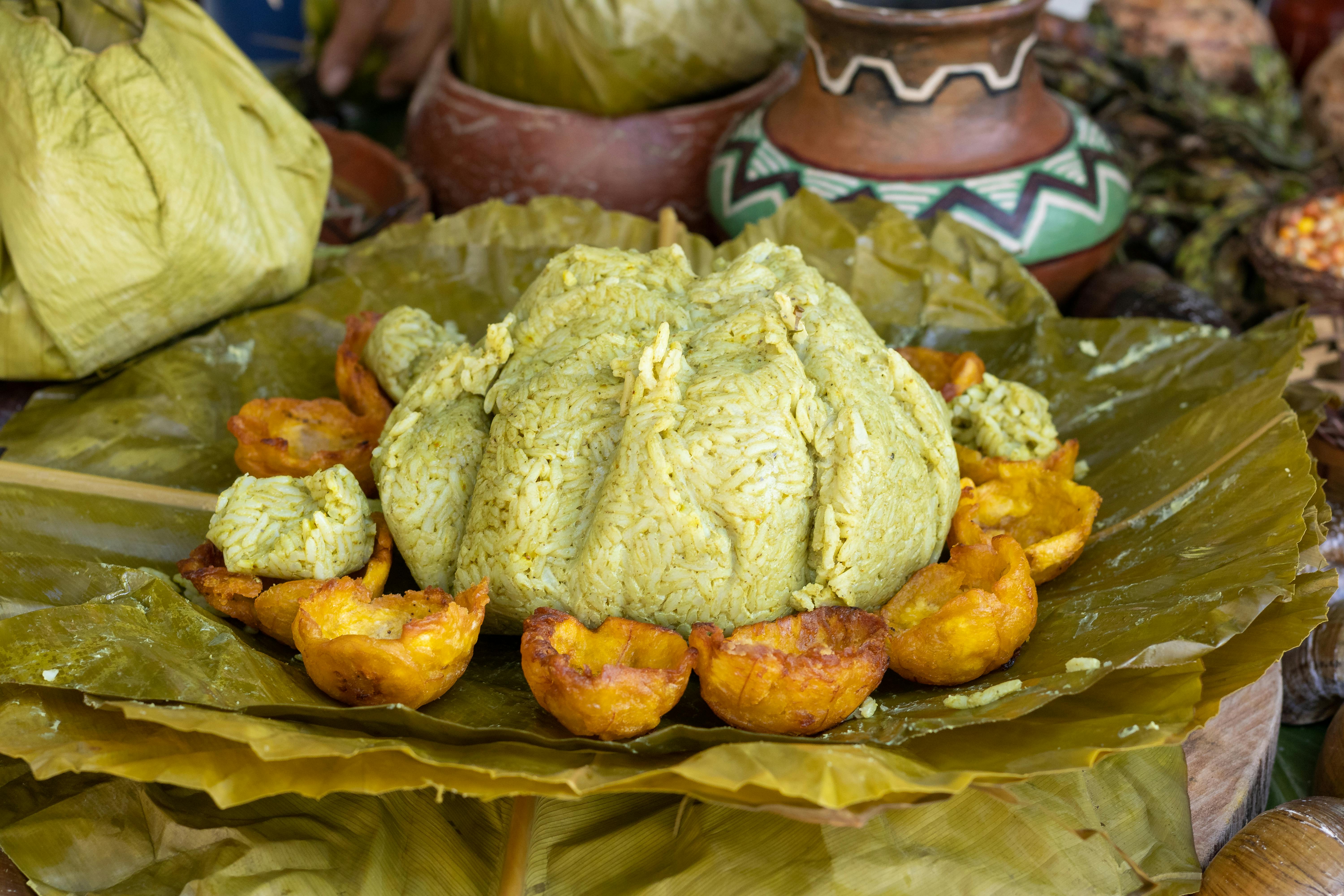
Photo: Mario Vásquez Rioja / Pexels
Colombian
Tamal Tolimense
The diets react (see scores below)
Common Ingredients
- corn dough
- pork
- chicken
- peas
- carrot
- potatoes
- rice
- garlic
- banana leaves
Specific recipes may vary.
Incompatible with 8 of 11 diets
Diet Ratings
Tamal Tolimense is fundamentally incompatible with a ketogenic diet. The dish is built on a foundation of multiple high-carbohydrate ingredients: corn dough (masa) is the primary wrapper and bulk ingredient, contributing a massive carb load. Additionally, it contains rice, potatoes, peas, and carrots — all starchy or high-carb vegetables. A single tamal can easily contain 60-100g or more of net carbs, far exceeding the entire daily keto allowance of 20-50g. The protein components (pork and chicken) are keto-friendly, and banana leaves are merely a cooking wrapper, but they do nothing to offset the overwhelming carbohydrate content from the other ingredients.
Tamal Tolimense is a traditional Colombian dish that contains multiple animal products. Pork and chicken are both meat ingredients, making this dish entirely incompatible with a vegan diet. There is no ambiguity here — this is a meat-centered dish at its core, with the corn dough and vegetables serving as accompaniments to the animal proteins.
Tamal Tolimense is fundamentally incompatible with the paleo diet. The dish contains multiple strictly excluded ingredients: corn dough (a grain), rice (a grain), and peas (a legume). These are not minor or debated components — they form the structural base and filling of the dish. Corn masa is the primary ingredient, and rice and peas are core fillers. The pork, chicken, carrot, and garlic are paleo-approved, and banana leaves used for wrapping are neutral, but the non-paleo ingredients are so central and numerous that no reasonable modification would preserve the dish's identity. This is a clear, high-confidence avoid.
Tamal Tolimense is a calorie-dense Colombian dish that conflicts with core Mediterranean diet principles in several ways. Pork is the primary protein, categorized as red/processed meat that should be limited to a few times per month under Mediterranean guidelines. The dish combines corn dough, rice, and potatoes — a triple stack of refined or starchy carbohydrates with minimal fiber diversity — rather than whole grains and legumes as emphasized in the diet. While chicken, peas, carrots, and garlic are positive components, they are secondary to the dominant pork and starchy base. There is no olive oil, and the fat content comes primarily from pork fat rendered during cooking. The overall composition — pork-heavy, starch-dominated, no olive oil — places this dish well outside Mediterranean dietary principles.
Tamal Tolimense is almost entirely plant-based in its structure. The dish is built around corn dough (masa), rice, peas, carrot, potatoes, and garlic — all strictly excluded plant foods on the carnivore diet. While it does contain pork and chicken, these animal proteins are a minority component surrounded by multiple forbidden plant ingredients. The banana leaves used for wrapping are also plant-derived. Even setting aside the wrapping, the core composition of this dish is incompatible with carnivore principles. There is no version of this traditional Colombian dish that could be adapted to carnivore without fundamentally changing what it is.
Tamal Tolimense contains multiple excluded ingredients. Corn dough (masa) is made from corn, which is a grain explicitly excluded on Whole30. Rice is also a grain and explicitly excluded. These two ingredients alone are sufficient to disqualify the dish. Additionally, corn dough falls into the 'no recreating baked goods/junk food' category as it forms a dough/wrap-style base similar to excluded tortillas or wraps. The proteins (pork and chicken), vegetables (carrot, potatoes), peas, garlic, and banana leaves (used as wrappers) would otherwise be compliant, but the dish as a whole cannot be made Whole30-compatible without fundamentally altering its nature.
Tamal Tolimense contains garlic as a listed ingredient, which is high-FODMAP due to fructans and must be avoided during the elimination phase. Garlic is typically cooked directly into the masa (corn dough) and the meat filling, meaning FODMAPs are fully incorporated into the dish with no easy removal. Peas are also high-FODMAP (GOS) at typical serving sizes — Monash rates green peas as low-FODMAP only at very small portions (≤1/4 cup), but in a tamal they are a standard filling component likely exceeding this threshold. Corn dough (masa de maíz) is generally low-FODMAP in moderate portions, as is chicken, pork, carrot, potato, and rice individually. Banana leaves are used as wrapping and contribute no FODMAPs. However, the combination of garlic (unavoidable high-FODMAP ingredient) and peas at typical serving quantities makes this dish unsuitable for the elimination phase without significant recipe modification.
Monash University rates garlic as clearly high-FODMAP, making this a near-certain avoid. However, some clinical FODMAP practitioners note that if garlic is used only in small amounts and the dish is otherwise low-FODMAP, individual tolerance may vary — but this is not appropriate guidance for the strict elimination phase. The pea quantity further compounds the risk.
Tamal Tolimense is a traditional Colombian dish with a mixed nutritional profile from a DASH perspective. On the positive side, it contains DASH-friendly vegetables (peas, carrot, potatoes) and lean protein sources (chicken). However, pork — particularly as used in traditional tamales — often includes fatty cuts (shoulder, belly, or ribs with lard), which contributes saturated fat that DASH limits. The corn dough (masa) is typically prepared with lard or animal fat, significantly raising saturated fat content. The dish is also commonly high in sodium due to seasoning, and the large portion size (a single tamal can weigh 300–500g) makes caloric and sodium control challenging. The combination of rice and corn dough within one serving also provides a high carbohydrate load. While individual ingredients like vegetables and chicken align with DASH, the overall preparation method and pork fat content push this into the 'caution' zone. If prepared with lean pork cuts, minimal lard in the masa, and reduced salt, the score could improve.
Traditional NIH DASH guidelines flag the high saturated fat from lard-based masa and fatty pork cuts as problematic. However, some DASH-oriented nutritionists note that if the tamal is prepared with vegetable oil instead of lard, lean pork loin, and herbs instead of heavy salting, it can fit within DASH principles as an occasional portion-controlled meal rich in vegetables and mixed proteins.
Tamal Tolimense is a traditional Colombian dish that presents significant challenges for Zone Diet compliance. The dish is built around multiple high-glycemic carbohydrate sources — corn dough (masa), rice, and potatoes — all stacked in a single serving. This creates a massive carbohydrate overload that makes achieving a 40/30/30 macro ratio essentially impossible without drastically reducing portion size. The corn dough alone dominates the carb block count, and adding rice and potatoes on top pushes net carbs far beyond Zone parameters. On the protein side, pork and chicken together are promising, but pork (especially in traditional tamales) tends to be fatty cuts, increasing saturated fat load. The vegetables present — peas, carrot — are modest contributors and partially offset by the starchy profile of peas. The overall macro ratio of a full Tamal Tolimense is likely to be extremely carbohydrate-heavy (perhaps 60-70% of calories from carbs) with moderate protein and fat, the inverse of Zone ideals. While a very small portion could theoretically be incorporated into a Zone-friendly meal with added lean protein and low-GI vegetables on the side, the dish as served cannot function as a Zone-compliant main course. The score of 3 reflects that this dish is very difficult to zone-balance, though it is not nutritionally empty like candy or soda — it does contain real protein and some vegetables.
Some Zone practitioners argue that traditional whole-food dishes like tamales, despite their carbohydrate density, are preferable to processed foods and can be eaten in small portions (half or less of a standard serving) as the carbohydrate block contribution to a meal, with additional lean protein and low-GI vegetables added alongside. Dr. Sears' later writings emphasize the anti-inflammatory polyphenol framework, under which the garlic and vegetable content offer some benefit. In this view, a small portion might rate as 'caution' rather than near-avoid.
Tamal Tolimense is a traditional Colombian dish with a mixed anti-inflammatory profile. On the positive side, it contains garlic (a meaningful anti-inflammatory spice), colorful vegetables (peas, carrots), and chicken, which is an acceptable lean protein within anti-inflammatory guidelines. Banana leaves are used as wrapping and impart negligible nutritional effect. However, the dish is anchored by pork as the primary protein — a red/processed-adjacent meat that should be limited in anti-inflammatory diets, particularly if fatty cuts (lard-enriched masa is common in traditional preparation). The corn dough and rice represent refined or moderate-glycemic starches that contribute little anti-inflammatory value and can mildly promote inflammation at high quantities. Potatoes are nutritionally neutral to mildly beneficial depending on preparation. Traditional tamale recipes frequently incorporate lard into the masa, which is high in saturated fat — a significant pro-inflammatory concern. The dish lacks meaningful omega-3s, polyphenols, or phytonutrients beyond the modest vegetable content. Garlic is a genuine positive. Overall, this is a starchy, pork-forward dish that is acceptable occasionally but not well-aligned with consistent anti-inflammatory eating patterns.
Some anti-inflammatory-leaning nutritionists note that traditionally prepared whole-food dishes like tamales — made from nixtamalized corn (masa), whole vegetables, and unprocessed meats — are far preferable to ultra-processed foods, and the vegetable content and garlic provide real benefit. If prepared with olive oil or without lard, and using lean pork cuts, the dish could edge toward a more favorable profile. The anti-inflammatory framework is not rigid, and occasional consumption of culturally significant whole-food meals is broadly compatible with the diet's principles.
Tamal Tolimense is a dense, starchy, high-calorie dish that presents multiple challenges for GLP-1 patients. The base is a thick corn dough (masa) combined with rice and starchy vegetables (potato, carrot, peas), making it carbohydrate-heavy and very calorie-dense per serving. While it contains both pork and chicken, the pork component — typically including fatty cuts such as ribs, belly, or shoulder — contributes significant saturated fat, which worsens GLP-1 side effects like nausea, bloating, and reflux. The overall fat-to-protein ratio is unfavorable compared to lean protein sources. The dish is large and filling by design, conflicting with the small-portion requirement. Gastric emptying is already slowed on GLP-1 medications, and a heavy, starchy, fat-containing meal like this significantly increases the risk of prolonged fullness, nausea, and GI discomfort. Fiber content is modest despite the vegetables, as most bulk comes from refined starch. Nutrient density per calorie is low. The cooking method (steamed in banana leaves) is not fried, which is a mild positive, but it does not offset the structural issues of the dish.
Some GLP-1-focused dietitians note that if portion size is strictly limited (e.g., eating only a small portion of the filling and leaving much of the masa), the chicken and vegetable components provide meaningful protein and micronutrients. However, most clinicians advise against dishes where the starchy, high-fat base is inseparable from the protein component, as the overall macronutrient profile remains poorly suited for GLP-1 patients regardless of effort to portion-control.
*See how scores were generated at our methodology page.
Nutritional profile
Six traits that cut across every diet.
Fiber & Plants
How much whole-plant food and fiber it delivers.
Healthy Fats
The quality of its fats (unsaturated, omega-3).
Whole / Unprocessed
How close it is to its natural, unprocessed form.
Gut Gentle
How easy it is on digestion (low FODMAP, few irritants).
Low Glycemic
How little it spikes your blood sugar.
Protein Density
How much protein it packs per calorie.
Controversy Index
Higher controversy = more disagreement between diets.
Diet-Specific Tips
 DASH — 4/10
View tips
- Pork often includes fatty cuts high in saturated fat, conflicting with DASH fat limits
- Traditional corn dough (masa) is typically made with lard, adding significant saturated fat
- Vegetables (peas, carrot, potatoes) are DASH-positive components
- Chicken provides lean protein aligned with DASH
- High sodium likely from seasoning and preparation — DASH limits sodium to <2,300mg/day
- Large portion size makes caloric and sodium control difficult
- Double starch (corn dough + rice) in one serving increases carbohydrate density
- Preparation method is critical — low-fat versions with lean pork and vegetable oil would score higher
 Zone — 5/10
View tips
- Triple high-glycemic carb stacking: corn masa + rice + potatoes severely disrupts Zone carb blocks
- Carbohydrate-to-protein ratio is heavily skewed, making 40/30/30 balance nearly impossible at normal serving size
- Pork in traditional tamales is often fatty cuts, adding saturated fat beyond Zone recommendations
- Chicken component is Zone-favorable but its contribution is diluted by the overall carb load
- Peas and carrots provide some low-GI vegetable content but insufficient to counterbalance the starchy profile
- As a whole dish, cannot serve as a Zone-compliant main; only very small portions could be incorporated
- Banana leaf wrapping is neutral — a cooking vessel with no macro impact
 Anti-Inflammatory — 4/10
View tips
- Pork as primary protein — red/fatty meat limited in anti-inflammatory diets
- Likely contains lard in traditional masa — high saturated fat, pro-inflammatory
- Garlic is a genuine anti-inflammatory ingredient
- Peas and carrots add modest vegetable/antioxidant value
- Corn dough and rice are refined/starchy — low anti-inflammatory contribution
- Chicken as secondary protein is more favorable than pork
- No omega-3 sources, polyphenol-rich foods, or anti-inflammatory herbs beyond garlic
- Banana leaves are neutral — used for wrapping only