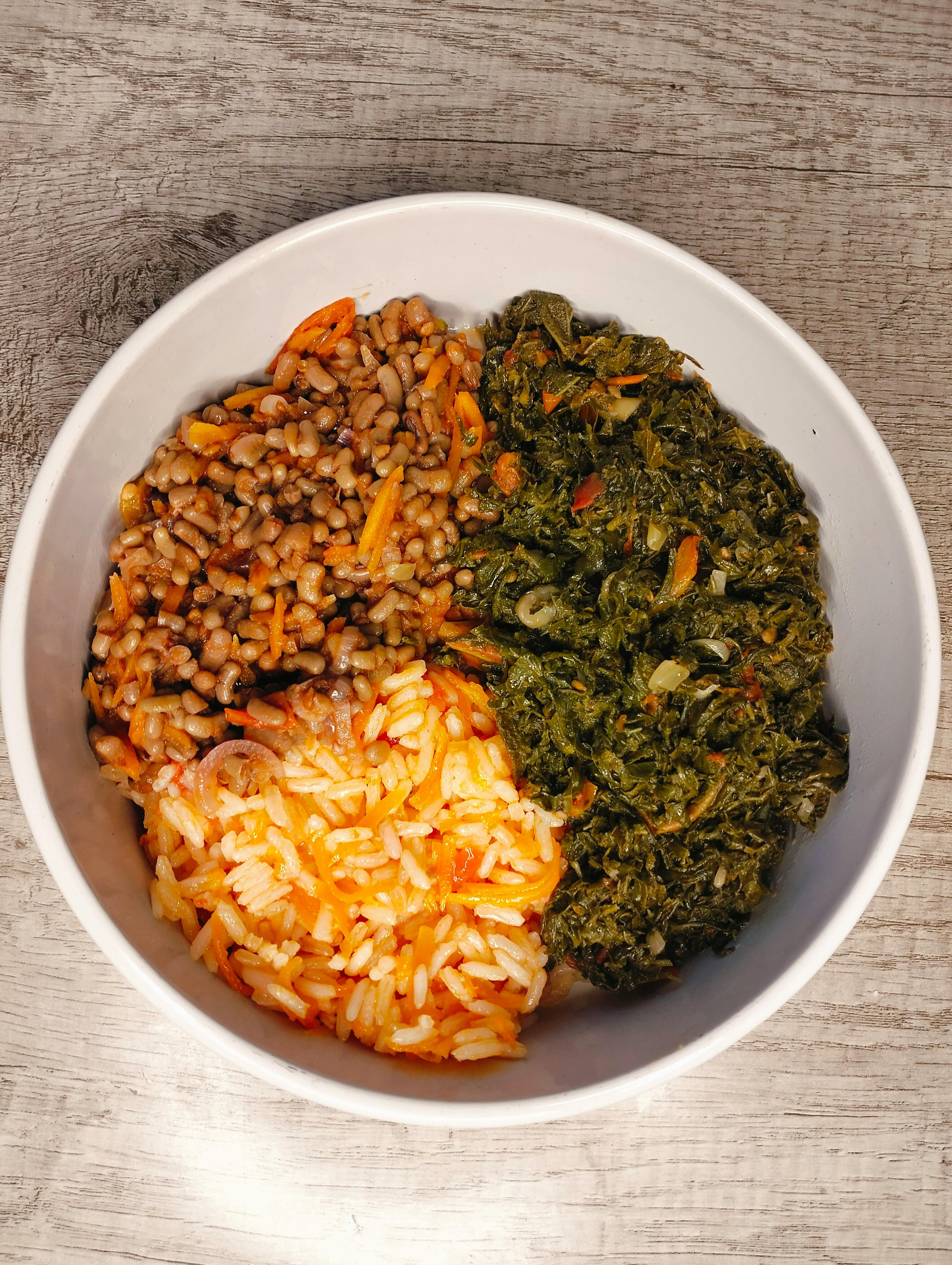
Photo: Elizabeth Ntalalai / Pexels
The diets react (see scores below)
Common Ingredients
- wild spinach
- peanut butter
- onions
- tomatoes
- garlic
- palm oil
- smoked fish
- salt
Specific recipes may vary.
Incompatible with 5 of 11 diets
Diet Ratings
Fumbwa is a Congolese wild spinach stew that has several keto-friendly elements: palm oil (high saturated fat, excellent for keto), wild spinach (low-carb leafy green), smoked fish (protein, no carbs), and garlic. The main concerns are peanut butter (moderate carbs ~3-4g net carbs per 2 tbsp, plus some keto practitioners flag it as a legume), tomatoes (moderate carbs, ~3-4g net carbs per 100g), and onions (moderate carbs, ~7g net carbs per 100g). In a standard serving, the cumulative net carbs from tomatoes, onions, and peanut butter could range from 8-15g, which is manageable within a daily keto budget if portions are controlled. The dish is otherwise fat-rich and protein-moderate, aligning well with keto macros. It can fit keto with mindful portioning, particularly limiting tomatoes and onions.
Some strict keto practitioners would flag peanut butter as a legume-derived ingredient and exclude it entirely, and would also consider the tomato and onion combination too carb-dense for regular consumption. Carnivore-adjacent keto followers would avoid this dish altogether due to its plant-heavy base.
Fumbwa contains smoked fish, which is an animal product and a direct disqualifier under vegan dietary rules. Fish is explicitly excluded from a vegan diet regardless of preparation method. The dish is otherwise largely plant-based — wild spinach, peanut butter, onions, tomatoes, and garlic are all vegan-compliant, and palm oil, while ethically contested by some vegans, is technically plant-derived. However, the presence of smoked fish makes the dish non-vegan as prepared. A vegan adaptation could be made by omitting the smoked fish or substituting smoked tofu or smoked paprika for a similar depth of flavor.
Fumbwa contains three clear paleo violations: peanut butter (a legume product, strictly excluded from paleo), added salt (explicitly excluded), and smoked fish (processed via smoking and likely salted, making it a processed food). Palm oil is generally paleo-accepted as a natural fat, and the remaining ingredients — wild spinach, onions, tomatoes, and garlic — are fully paleo-compliant. However, peanut butter alone is a hard disqualifier under all mainstream paleo frameworks, and the combination of added salt and smoked fish compounds the issues. This dish cannot be considered paleo-compatible without significant modification.
Fumbwa is a nutrient-dense, plant-forward dish built around wild spinach, tomatoes, onions, and garlic — all strongly aligned with Mediterranean principles. Peanut butter (ground peanuts) is a legume-based fat source comparable to other nuts and nut pastes encouraged in the Mediterranean diet. The smoked fish adds a beneficial protein source consistent with the diet's emphasis on seafood. However, palm oil is the primary fat, which departs from the Mediterranean principle of extra virgin olive oil as the core fat; palm oil is high in saturated fat and is not part of the traditional Mediterranean culinary framework. This single ingredient prevents a full approval, though the overall dish profile remains largely positive.
Some modern Mediterranean diet interpreters with a broader plant-based lens may focus on the whole-food, vegetable-forward composition and the fish content, arguing that the dish's overall nutrient profile (fiber, antioxidants, omega-3s from fish) aligns well enough to approve with a simple substitution of olive oil. Conversely, strict traditional Mediterranean guidelines consistently identify palm oil as a non-compatible fat, keeping this dish in the caution range.
Fumbwa is almost entirely plant-based, making it fundamentally incompatible with the carnivore diet. The dish is built around wild spinach (a leafy green plant food), peanut butter (a legume-based product), onions, tomatoes, and garlic (all plant foods), and palm oil (a plant-derived oil). The only animal-derived ingredient is smoked fish, which on its own would be carnivore-approved, but it plays a minor supporting role in an overwhelmingly plant-based dish. Every primary ingredient violates carnivore principles: leafy greens, legumes, alliums, nightshades, and plant oils are all strictly excluded. This dish cannot be modified to fit a carnivore framework without essentially replacing every ingredient.
Fumbwa contains peanut butter, which is made from peanuts — a legume explicitly excluded on the Whole30 program. Peanuts and all peanut-derived products (including peanut butter and peanut oil) are strictly off-limits for the full 30 days. All other ingredients — wild spinach, onions, tomatoes, garlic, palm oil, smoked fish (assuming no non-compliant additives), and salt — are Whole30-compatible. However, peanut butter is a core ingredient in this dish and cannot simply be omitted without fundamentally changing the recipe.
Fumbwa contains multiple high-FODMAP ingredients that make it unsuitable during the elimination phase. Garlic is one of the highest-FODMAP foods (fructans) and is a primary seasoning here. Onions are similarly high in fructans and are used as a base ingredient. Peanut butter, while low-FODMAP at small servings (2 tablespoons per Monash), is commonly used in generous quantities in this dish, pushing it toward high-FODMAP GOS territory. The combination of garlic and onion alone is sufficient to classify this dish as high-FODMAP, regardless of portion size adjustments to other ingredients.
Fumbwa contains several DASH-friendly ingredients (wild spinach, tomatoes, onions, garlic) that are rich in potassium, magnesium, and fiber. However, three ingredients raise significant DASH concerns: (1) Palm oil is a tropical oil high in saturated fat, which DASH explicitly limits — NIH/NHLBI guidelines discourage tropical oils including palm oil. (2) Smoked fish, while a lean protein source, is typically very high in sodium due to the smoking/curing process, pushing this dish toward or beyond DASH sodium limits in a single serving. (3) Peanut butter contributes healthy unsaturated fats and protein (DASH-positive), but commercial versions often contain added sodium and require portion control. The combination of palm oil and smoked fish makes this dish moderately problematic for DASH adherents, though the vegetable-forward base is genuinely beneficial. Prepared with a small amount of palm oil, low-sodium or fresh fish instead of smoked, and reduced-sodium peanut butter, this dish could score considerably higher.
NIH DASH guidelines explicitly limit tropical oils like palm oil due to saturated fat content; however, some updated clinical interpretations note that palm oil's saturated fat profile (rich in palmitic acid) behaves differently from trans fats, and that traditional whole-food dishes eaten in culturally appropriate portions may not warrant categorical exclusion — particularly when the overall dietary pattern is vegetable-rich.
Fumbwa is a Congolese wild spinach stew with a mixed Zone profile. The base ingredients — wild spinach, onions, tomatoes, and garlic — are excellent low-glycemic, polyphenol-rich carbohydrates that align well with Zone principles. Smoked fish provides a lean protein source with beneficial omega-3s, supporting the Zone's anti-inflammatory goals. However, two fat sources create complexity: peanut butter contributes primarily omega-6-heavy fat rather than the preferred monounsaturated fats, and palm oil is high in saturated fat, which early Zone writings discouraged. The combination of peanut butter and palm oil likely pushes total fat content high and skews the fat profile away from Zone ideals. Portioning is critical — a small serving alongside a lean protein could work within a Zone meal, but the dish as typically prepared likely exceeds Zone fat block targets and lacks the 40/30/30 ratio on its own. The smoked fish does provide meaningful protein, partially offsetting the 'no primary protein' categorization, but the quantity is typically modest relative to the fat load from peanut butter and palm oil.
Some Zone practitioners following Sears' later anti-inflammatory framework (Toxic Fat, The Mediterranean Zone) might be more lenient on palm oil in small amounts given its mixed fatty acid profile, and peanut butter does contain some monounsaturated fat alongside its omega-6 content. Wild spinach and smoked fish are genuinely Zone-favorable ingredients. A Zone practitioner could reduce the peanut butter and palm oil quantities significantly and treat Fumbwa as a vegetable-forward side dish accompanying a lean protein main, making it workable. The smoked fish protein, if substantial, could also help bring the dish closer to Zone ratios.
Fumbwa is a traditional Congolese dish with a genuinely mixed anti-inflammatory profile. On the positive side, wild spinach (fumbwa leaves) is rich in antioxidants, carotenoids, and fiber — strongly anti-inflammatory. Garlic contains allicin and other sulfur compounds with well-documented anti-inflammatory effects. Tomatoes contribute lycopene and polyphenols. Onions provide quercetin, a potent flavonoid. Peanut butter offers monounsaturated fats, resveratrol, and some plant-based protein, though it also contains a notable omega-6 load. Smoked fish adds a meaningful source of omega-3 fatty acids, a key anti-inflammatory nutrient, though smoking introduces polycyclic aromatic hydrocarbons (PAHs) and nitrosamines that are mildly concerning from an inflammatory standpoint. The significant drag on this dish is palm oil — specifically red palm oil, which is common in this context. While red palm oil contains tocotrienols and beta-carotene with some antioxidant value, it is very high in saturated fat (palmitic acid), which anti-inflammatory frameworks including Dr. Weil's pyramid recommend limiting. It is distinctly different from extra virgin olive oil, the preferred cooking fat in anti-inflammatory eating. The combination of beneficial greens, garlic, tomatoes, and fish-derived omega-3s is offset meaningfully by the palm oil's saturated fat content and the peanut butter's omega-6 contribution, landing this dish squarely in 'caution' territory — nourishing and largely whole-food-based, but not a clean anti-inflammatory approve due to the fat profile.
Some anti-inflammatory nutrition researchers, particularly those focusing on traditional African diets, argue that unrefined red palm oil's tocotrienol vitamin E and beta-carotene content give it meaningful antioxidant benefit that distinguishes it from refined palm oil or butter — and that its saturated fat in a whole-food context is far less concerning than processed saturated fats. Conversely, stricter anti-inflammatory protocols (and AHA guidelines) flag palmitic acid in palm oil as pro-inflammatory at higher intakes, placing this dish closer to an 'avoid' rating in frameworks that weight saturated fat heavily.
Fumbwa is a nutrient-dense traditional Congolese dish with meaningful strengths and real concerns for GLP-1 patients. On the positive side, wild spinach provides fiber, vitamins, and minerals; smoked fish contributes lean protein and omega-3s; tomatoes, onions, and garlic add antioxidants and digestive support with high water content. However, the dish has two significant GLP-1 concerns: palm oil is high in saturated fat and can worsen nausea, bloating, and reflux given slowed gastric emptying; and peanut butter, while providing some protein and unsaturated fats, adds substantial fat per serving. The combination of two high-fat ingredients in one dish pushes the total fat load into problematic territory for GLP-1 patients managing GI side effects. Smoked fish also tends to be high in sodium, which can contribute to water retention. As a side dish with no designated primary protein, it does not reliably meet per-meal protein targets on its own. In small portions alongside a lean protein main, it becomes more acceptable — but the palm oil and combined fat content prevent a full approval.
Some GLP-1-focused dietitians argue that traditional dishes using whole-food fat sources like peanut butter should be preserved in culturally appropriate meal plans, particularly when portion size is controlled, since the fiber and micronutrient density partially offset the fat concerns. Others maintain that any dish combining palm oil and peanut butter exceeds the per-meal fat threshold that reliably triggers GI side effects in GLP-1 patients, and would recommend modifying the recipe by reducing or substituting the palm oil with a small amount of olive oil.
*See how scores were generated at our methodology page.
Nutritional profile
Six traits that cut across every diet.
Fiber & Plants
How much whole-plant food and fiber it delivers.
Healthy Fats
The quality of its fats (unsaturated, omega-3).
Whole / Unprocessed
How close it is to its natural, unprocessed form.
Gut Gentle
How easy it is on digestion (low FODMAP, few irritants).
Low Glycemic
How little it spikes your blood sugar.
Protein Density
How much protein it packs per calorie.
Controversy Index
Higher controversy = more disagreement between diets.
Diet-Specific Tips
 Keto — 5/10
View tips
- Palm oil is an ideal keto fat source — high in saturated fat, zero carbs
- Wild spinach is a low-carb leafy green, keto-compatible
- Smoked fish adds clean protein with no carbs
- Peanut butter contributes moderate net carbs (~3-4g per 2 tbsp) and is technically a legume
- Tomatoes and onions add moderate net carbs; portion size is critical
- Combined net carbs per serving estimated at 8-15g — manageable but portion-sensitive
- No added sugars or grains — dish is whole and minimally processed
 Mediterranean — 5/10
View tips
- Wild spinach is a nutrient-dense leafy green strongly aligned with Mediterranean diet principles
- Smoked fish contributes seafood protein consistent with Mediterranean recommendations
- Peanut butter provides plant-based healthy fats similar to nuts and legumes in the Mediterranean diet
- Palm oil is high in saturated fat and is not a traditional Mediterranean fat source, replacing the preferred extra virgin olive oil
- Onions, tomatoes, and garlic are core Mediterranean aromatics
- No refined grains, added sugars, or red meat present
 DASH — 4/10
View tips
- Palm oil is a tropical oil high in saturated fat, explicitly limited by DASH guidelines
- Smoked fish is typically very high in sodium, conflicting with DASH sodium targets (<2,300mg/day)
- Wild spinach is an excellent DASH food — high in potassium, magnesium, and fiber
- Peanut butter provides DASH-compatible healthy fats and protein but adds sodium
- Tomatoes, onions, and garlic are core DASH vegetables
- Dish could be modified to score higher by substituting palm oil with canola/olive oil and using fresh or low-sodium fish
 Zone — 5/10
View tips
- Wild spinach is an excellent Zone carbohydrate — low-glycemic, polyphenol-rich, and non-starchy
- Smoked fish adds lean protein with beneficial omega-3 fatty acids
- Palm oil is high in saturated fat, which Zone discourages — especially in early Sears writings
- Peanut butter is omega-6-heavy and calorie-dense fat, not the preferred monounsaturated fat source
- Tomatoes, onions, and garlic are favorable low-glycemic Zone carbs
- Combined fat sources (peanut butter + palm oil) likely create an imbalanced fat-heavy profile
- As a side dish with no primary protein designated, this cannot stand alone as a Zone meal without supplementation
- Portion control of peanut butter and palm oil is essential for any Zone compatibility
 Anti-Inflammatory — 5/10
View tips
- Wild spinach: high in antioxidants, carotenoids, and fiber — strongly anti-inflammatory
- Garlic and onions: allicin, quercetin — well-documented anti-inflammatory compounds
- Tomatoes: lycopene and polyphenols — beneficial antioxidant contribution
- Smoked fish: provides omega-3 fatty acids, but smoking process introduces PAHs and nitrosamines
- Palm oil: high in saturated palmitic acid — a significant pro-inflammatory concern in anti-inflammatory frameworks
- Peanut butter: monounsaturated fats and resveratrol are positive, but elevated omega-6 content is a mild concern
- Overall whole-food, minimally processed ingredient base is a positive structural feature
 GLP-1 Friendly — 5/10
View tips
- Palm oil is high in saturated fat — a known GLP-1 GI trigger, especially combined with another fat source in the same dish
- Peanut butter adds protein but also significant fat; combined fat load per serving is a concern
- Smoked fish provides lean protein and omega-3s — a genuine positive
- Wild spinach is high in fiber and micronutrients, supporting GLP-1 digestion goals
- Dish is listed as a side with no primary protein — does not meet 15-30g per-meal protein target alone
- High sodium from smoked fish warrants attention for patients managing blood pressure
- Tomatoes, onions, garlic add hydration and nutrient density
- Culturally significant dish — modification (reducing palm oil) preferred over elimination where possible