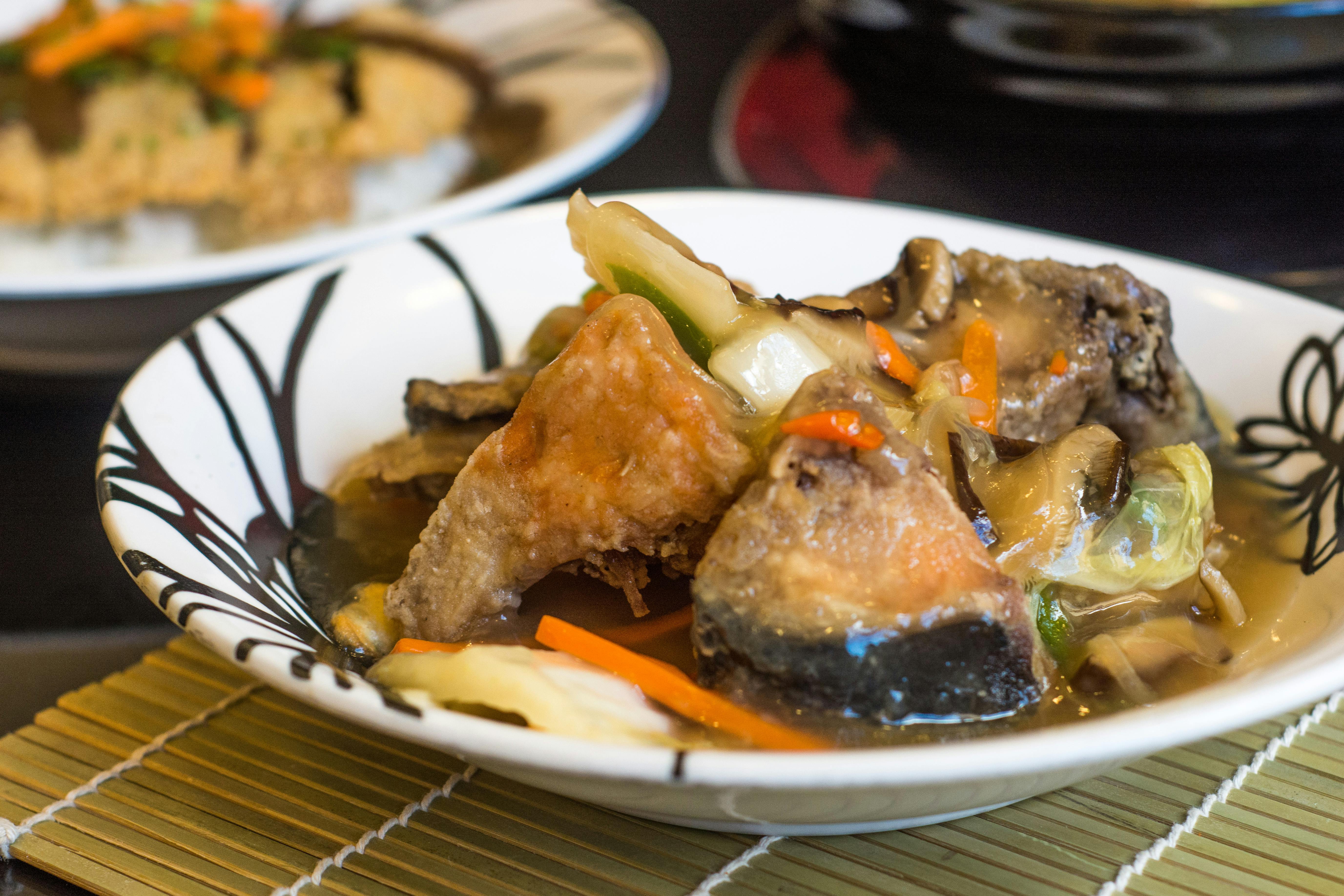
Photo: Marvin Sacdalan / Pexels
The diets react (see scores below)
Common Ingredients
- fish
- banana leaves
- onions
- tomatoes
- garlic
- chili
- lemon
- palm oil
Specific recipes may vary.
Incompatible with 3 of 11 diets
Diet Ratings
Liboke is a traditional Congolese dish where fish is wrapped in banana leaves and steamed or grilled with aromatics and palm oil. The core ingredients are strongly keto-compatible: fish provides quality protein, palm oil adds healthy saturated fat, and the aromatics (garlic, onion, chili, lemon) contribute minimal net carbs in typical cooking quantities. Tomatoes and onions do contain some carbs but in the small amounts used as seasoning rather than bulk, they stay well within keto limits. The banana leaves are used as a cooking vessel and are not consumed, contributing zero carbs. This dish is naturally low-carb, high-fat, and unprocessed — a good keto fit.
Some strict keto practitioners flag tomatoes and onions as borderline ingredients that can accumulate carbs if used in generous portions; those following very tight clinical protocols (under 20g net carbs) may prefer to moderate the quantity of these aromatics or substitute with lower-carb options.
Liboke is a Congolese dish in which fish (an animal product) is the primary protein, steamed in banana leaves. Fish is explicitly excluded under vegan dietary rules regardless of preparation method. All other ingredients — banana leaves, onions, tomatoes, garlic, chili, lemon, and palm oil — are plant-based, but the presence of fish makes the dish incompatible with a vegan diet.
Liboke is a traditional Congolese dish where fish is wrapped in banana leaves and slow-cooked with vegetables and aromatics. Nearly all ingredients are strongly paleo-compliant: fish is a core ancestral protein, onions, tomatoes, garlic, chili, and lemon are all whole vegetables/fruits with no processing concerns, and banana leaves serve as a cooking vessel rather than an ingredient consumed. Palm oil is the one ingredient that warrants attention — it is a fruit-derived oil (from the oil palm fruit), not a seed oil, and is generally accepted in paleo circles as a traditional fat used by indigenous populations. It is distinct from the excluded industrial seed oils. The dish contains no grains, legumes, dairy, refined sugar, or added salt in its traditional preparation, making it an excellent paleo-aligned meal. The cooking method (steam-wrapping in leaves) is arguably one of the most ancestrally authentic techniques possible.
Some strict paleo adherents raise concerns about palm oil due to its high processing potential in commercial forms and environmental considerations, though these are ethical rather than nutritional objections. Loren Cordain's original framework would scrutinize any oil beyond naturally rendered animal fats, though palm fruit oil is widely accepted by Mark Sisson and most modern paleo practitioners as a whole-food-derived fat.
Liboke is a Congolese dish of fish steamed in banana leaves with vegetables — a fundamentally wholesome preparation. Fish is a Mediterranean diet staple, and the supporting ingredients (onions, tomatoes, garlic, chili, lemon) are all core Mediterranean components. The cooking method (steaming/wrapping) is gentle and healthy. The primary concern is palm oil, which is the traditional fat used in Congolese cuisine. Palm oil is high in saturated fat and is not part of the Mediterranean dietary tradition, where extra virgin olive oil is the canonical fat. This single ingredient prevents a full approval, though the overall dish profile remains relatively healthy.
Some integrative Mediterranean diet practitioners argue that minimally processed, traditional plant-based oils from non-Mediterranean cultures can be accepted in moderation, particularly red palm oil which contains some beneficial carotenoids. However, mainstream Mediterranean diet authorities (including those following the PREDIMED study framework) consistently emphasize olive oil as the defining fat source and would flag palm oil as inconsistent with the pattern.
Liboke is a Congolese dish where fish is wrapped and steamed in banana leaves with a marinade of onions, tomatoes, garlic, chili, lemon, and palm oil. While the fish itself is carnivore-approved, the dish is heavily laden with plant-based ingredients that are entirely excluded from the carnivore diet. Banana leaves (used as a cooking vessel but impart plant compounds), onions, tomatoes, garlic, chili, and lemon are all plant foods — vegetables, aromatics, and citrus — none of which are permitted. Palm oil, while sometimes debated, is a plant-derived oil (from palm fruit) and is excluded in favor of animal fats like tallow or lard. The fish is the only carnivore-compatible component, but the preparation method and accompanying ingredients make this dish incompatible with carnivore eating as a whole.
Liboke is a traditional Congolese dish where fish is marinated with vegetables and aromatics, then wrapped in banana leaves and steamed or grilled. Every ingredient in this dish is fully Whole30 compliant: fish is an approved protein, banana leaves are simply a cooking vessel (not consumed), onions and tomatoes are vegetables, garlic and chili are approved aromatics/spices, lemon provides acidity and is fully allowed, and palm oil is a natural fat explicitly compatible with Whole30. There are no grains, legumes, dairy, added sugars, or any other excluded ingredients. This is a whole-food, minimally processed dish that aligns perfectly with the spirit and rules of the Whole30 program.
Liboke contains two high-FODMAP ingredients that are problematic at standard cooking quantities: garlic (high fructans — avoid at any culinary amount) and onions (high fructans — among the most potent FODMAP sources). Both are used as core flavoring ingredients in this dish, not incidentally, meaning a standard serving will deliver a significant fructan load. Fish itself is low-FODMAP, as are tomatoes (at standard serving), chili, lemon, palm oil, and banana leaves. However, the garlic and onion combination makes this dish a clear avoid during the elimination phase without recipe modification.
Liboke is a Congolese steamed fish dish wrapped in banana leaves, which is an inherently healthy preparation method — low sodium, no frying, and the fish provides lean protein rich in omega-3 fatty acids. The vegetable-forward aromatics (onions, tomatoes, garlic, chili, lemon) are all DASH-approved ingredients that contribute potassium, fiber, and antioxidants. However, the inclusion of palm oil is the primary concern for DASH compliance. Palm oil is a tropical oil high in saturated fat (~50% saturated), which DASH explicitly limits. It is categorized alongside coconut and palm kernel oils as oils to avoid. The amount of palm oil used in preparation significantly affects the overall rating. If used sparingly, this dish trends toward approval; if used generously (as is traditional in many Congolese preparations), the saturated fat load becomes problematic. The dish is naturally low in sodium, which is a strong DASH positive.
NIH DASH guidelines explicitly limit tropical oils including palm oil due to saturated fat content. However, some updated clinical interpretations note that palm oil contains roughly equal proportions of saturated and unsaturated fats (including oleic acid), and some cardiovascular nutrition researchers argue it is less harmful than trans fats or heavily processed oils — a minority of DASH-oriented dietitians may permit it in small culinary quantities rather than categorically excluding it.
Liboke is a traditional Congolese steamed fish dish wrapped in banana leaves, which is a generally Zone-friendly preparation method. The core protein — fish — is excellent for the Zone: lean, rich in omega-3 fatty acids, and easy to portion into blocks. The vegetable aromatics (onions, tomatoes, garlic, chili) are all low-glycemic Zone-favorable carbohydrates. Lemon adds polyphenols and flavor without glycemic impact. The primary concern is palm oil, which is high in saturated fat (palmitic acid) and is not a Zone-recommended fat source — Zone strongly favors monounsaturated fats like olive oil. Palm oil also has a relatively high omega-6 profile compared to omega-3, which conflicts with Sears' anti-inflammatory framework. However, if palm oil is used in modest amounts (as is typical in this style of preparation), the overall dish can still approximate Zone ratios reasonably well — the fat block would simply be less ideal in quality. The dish lacks a significant carbohydrate component beyond the aromatics, so a Zone practitioner would need to pair it with additional low-GI vegetables or a small fruit serving to hit the 40% carb target. Overall, this is a nutritionally sound traditional dish that scores well on protein and cooking method but is held back by palm oil and the need for carbohydrate supplementation.
Some Zone practitioners and Sears' later writings (particularly 'The Zone Diet' anti-inflammatory updates) acknowledge that not all saturated fats are equally harmful — palm oil contains some stearic acid fractions and the traditional culinary context may make it acceptable in small quantities. Additionally, the banana leaves themselves contribute negligible macros and the overall dish is far healthier than most processed alternatives. A lenient Zone reading could score this higher (7) if palm oil is used sparingly.
Liboke is a traditional Congolese steamed fish dish that combines several strongly anti-inflammatory ingredients with one more problematic one. The fish (typically freshwater or river fish) provides lean protein and potentially beneficial omega-3 fatty acids, though the specific omega-3 content depends on the species. Garlic, chili, onions, tomatoes, and lemon are all well-supported anti-inflammatory ingredients rich in quercetin, allicin, lycopene, vitamin C, and flavonoids. The banana leaf steaming method is a gentle, low-heat cooking technique that avoids the formation of advanced glycation end-products (AGEs) associated with high-heat methods. The key concern is palm oil: while palm oil is not as damaging as trans fats and contains some antioxidants (tocotrienols, beta-carotene in red palm oil), it is high in saturated fat (palmitic acid), which most anti-inflammatory frameworks recommend limiting. It is distinct from the more harmful palm kernel oil but still falls under the 'limit' category per anti-inflammatory guidelines. The overall dish is nutritious and whole-food-based, but the palm oil prevents a full 'approve' rating.
Some nutritionists, particularly those familiar with traditional African diets, argue that unrefined red palm oil — rich in tocotrienols, carotenoids, and vitamin E — has genuine anti-inflammatory and antioxidant properties and should not be conflated with refined palm oil or palm kernel oil. Researchers like Dr. Bruce Holub have noted red palm oil's tocotrienol content as cardioprotective. However, mainstream anti-inflammatory frameworks including Dr. Weil's pyramid and the IF Rating system generally recommend limiting saturated-fat-heavy oils, placing palm oil in a moderation category regardless of refinement level.
Liboke is a traditional Congolese steamed fish dish cooked in banana leaves with aromatics. The preparation method — steaming in banana leaves — is excellent for GLP-1 patients: it is low in added fat, gentle on the stomach, and preserves nutrients well. Fish is a high-quality lean protein source that supports muscle preservation during rapid weight loss, and the tomatoes, onions, and garlic add micronutrient value with minimal calories. The chili content is a mild concern, as spicy ingredients can worsen reflux or nausea in GLP-1 patients, though the amount used in Liboke is typically moderate rather than intense. The primary drawback is palm oil, which is high in saturated fat and calorically dense — even a small amount adds up quickly given reduced portion sizes on GLP-1s. Palm oil is the main reason this dish does not score higher. If palm oil is used minimally (a teaspoon or less), the dish is close to an approve. If used generously, it shifts toward a more significant caution. The steaming method and fish base are strongly positive factors.
Some GLP-1-focused dietitians would rate this more favorably, arguing that the saturated fat in a small amount of palm oil is outweighed by the dish's lean protein, gentle cooking method, and anti-inflammatory vegetable profile. Others are more conservative about palm oil specifically due to its saturated fat content interacting with slowed gastric emptying to increase nausea risk and its poor cardiovascular profile at higher doses.
*See how scores were generated at our methodology page.
Nutritional profile
Six traits that cut across every diet.
Fiber & Plants
How much whole-plant food and fiber it delivers.
Healthy Fats
The quality of its fats (unsaturated, omega-3).
Whole / Unprocessed
How close it is to its natural, unprocessed form.
Gut Gentle
How easy it is on digestion (low FODMAP, few irritants).
Low Glycemic
How little it spikes your blood sugar.
Protein Density
How much protein it packs per calorie.
Controversy Index
Higher controversy = more disagreement between diets.
Diet-Specific Tips
 Keto — 8/10
View tips
- Fish is an excellent keto protein source — zero carbs, high-quality fat
- Palm oil provides substantial healthy saturated fat, boosting fat macros
- Banana leaves act as cooking wrapper only — not eaten, no carb contribution
- Tomatoes and onions add minimal net carbs in seasoning-level quantities
- Garlic, chili, and lemon contribute negligible carbs at typical culinary doses
- Whole, unprocessed preparation method aligns with keto food quality principles
 Paleo — 8/10
View tips
- Fish is a core paleo-approved protein source
- Banana leaves used as cooking vessel — not consumed, no concern
- Onions, tomatoes, garlic, chili, and lemon are all whole, unprocessed paleo-compliant ingredients
- Palm oil is fruit-derived (not a seed oil) and generally accepted in paleo — distinct from industrial seed oils
- No grains, legumes, dairy, refined sugar, or processed additives present
- Traditional steam-cooking method is ancestrally authentic
- Commercial palm oil may be more refined than ideally desired — fresh/unrefined red palm oil is preferable
 Mediterranean — 5/10
View tips
- Fish as primary protein strongly aligns with Mediterranean diet guidelines (2-3 times weekly)
- Steaming in banana leaves is a clean, low-fat cooking method
- Onions, tomatoes, garlic, chili, and lemon are all core Mediterranean ingredients
- Palm oil is high in saturated fat and not part of traditional Mediterranean culinary practice
- No refined grains, added sugars, or processed ingredients
- Overall dish is whole and minimally processed despite the oil concern
 Whole30 — 9/10
View tips
- Fish is an approved Whole30 protein
- Palm oil is a compliant natural fat
- All vegetables (onions, tomatoes, garlic, chili) are fully allowed
- Lemon juice is compliant as a natural acidic seasoning
- Banana leaves are a cooking vessel only, not an ingredient of concern
- No grains, dairy, legumes, or added sugars present
- Dish is whole-food based and honors the spirit of the program
 DASH — 5/10
View tips
- Fish is a DASH-approved lean protein rich in omega-3 fatty acids
- Palm oil is a tropical oil high in saturated fat (~50%), explicitly limited by DASH guidelines
- Steaming in banana leaves is a heart-healthy, low-sodium preparation method
- Vegetables (tomatoes, onions, garlic, chili) and lemon contribute potassium, fiber, and antioxidants — all DASH-positive
- Dish is naturally very low in sodium, which strongly aligns with DASH principles
- Overall DASH compatibility depends heavily on the quantity of palm oil used — smaller amounts shift verdict toward approve
 Zone — 6/10
View tips
- Fish is an ideal Zone protein: lean, omega-3 rich, easily portioned to ~25g protein per serving
- Palm oil is high in saturated fat and not a Zone-favored fat — olive oil or avocado oil would be preferred substitutes
- Vegetables (onions, tomatoes, garlic, chili) are Zone-favorable low-glycemic carbohydrates
- Lemon juice adds polyphenols, consistent with Sears' anti-inflammatory emphasis
- Steaming in banana leaves is a clean, low-fat cooking method that preserves nutrients
- Dish is carbohydrate-light in its base form — needs pairing with additional Zone carb sources to hit 40% ratio
- No processed ingredients, no added sugar, no refined grains — aligns well with Zone's whole-food philosophy
 Anti-Inflammatory — 6/10
View tips
- Fish provides lean protein and potential omega-3 fatty acids depending on species
- Garlic and chili are potent anti-inflammatory spices (allicin, capsaicin)
- Tomatoes and onions contribute lycopene, quercetin, and flavonoids
- Lemon adds vitamin C and antioxidant support
- Banana leaf steaming is a gentle, health-preserving cooking method
- Palm oil is high in saturated fat (palmitic acid) — flagged for limiting in anti-inflammatory protocols
- Whole, unprocessed ingredient list with no refined carbohydrates or additives
 GLP-1 Friendly — 6/10
View tips
- Fish provides high-quality lean protein — strongly positive for muscle preservation
- Steaming in banana leaves is ideal: low-fat, easy to digest, gentle on the GI tract
- Palm oil is high in saturated fat — the key drawback; portion of oil used is critical
- Chili may worsen reflux or nausea in sensitive GLP-1 patients
- Tomatoes, onions, and garlic add nutrient density with minimal caloric cost
- No refined carbohydrates or added sugars
- Overall fat content is portion-dependent and preparation-dependent