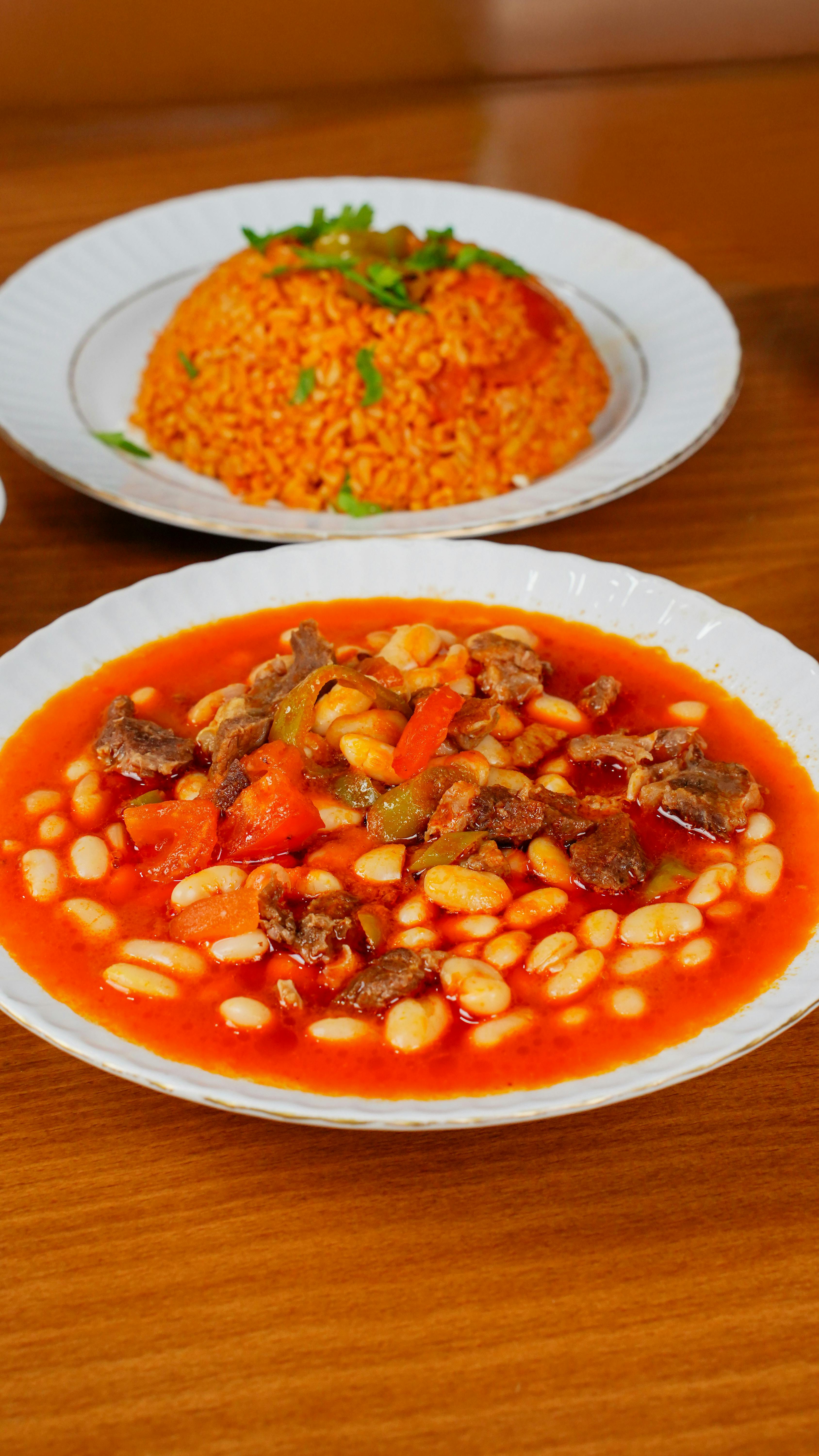
Photo: mehmetography / Pexels
The diets react (see scores below)
Common Ingredients
- white beans
- onions
- tomatoes
- garlic
- palm oil
- chili
- bay leaf
- salt
Specific recipes may vary.
Incompatible with 5 of 11 diets
Diet Ratings
Madesu is a Congolese bean stew whose primary ingredient — white beans — is fundamentally incompatible with ketogenic eating. White beans are extremely high in net carbs: a single 100g serving contains roughly 40–45g of net carbs after fiber, easily blowing the entire daily keto carb budget in one small portion. The dish is built around beans as the protein and bulk source, so there is no meaningful way to adapt it while retaining its character. Palm oil is keto-friendly and the aromatics (onion, tomato, garlic, chili) are modest in carbs individually, but they are irrelevant when the base ingredient alone causes this level of carb overload. This is not a portion-control situation — even a very small serving would deliver significant net carbs from the beans.
Madesu is a traditional Congolese bean stew made entirely from plant-based ingredients. White beans provide excellent plant protein, and the aromatics (onions, tomatoes, garlic, chili, bay leaf) are all whole plant foods. The dish is nutritionally solid and free of any animal products. However, palm oil is the contested ingredient: while it is botanically plant-derived and technically vegan, a notable portion of the vegan community avoids it due to the severe deforestation and orangutan habitat destruction associated with its production. This ethical concern is enough to warrant a 'caution' rating rather than a full 'approve,' as many ethical vegans consider environmental harm to sentient wildlife to be incompatible with vegan values. Without the palm oil concern, this dish would score 8-9 as a wholesome, whole-food plant-based meal.
Many ethical vegans and major vegan organizations (e.g., Vegan Society) argue that palm oil's link to orangutan habitat destruction and wildlife displacement makes it incompatible with vegan principles, even though no animal is directly consumed. A minority of plant-based eaters, however, hold that veganism is strictly defined by the absence of animal-derived ingredients, and therefore consider palm oil fully vegan-compliant.
Madesu is a Congolese bean stew whose primary ingredient — white beans — is a legume, which is explicitly excluded from the paleo diet. Legumes contain antinutrients such as lectins and phytates that paleo authorities argue were not a significant part of the Paleolithic diet. Beyond the beans, the dish also includes added salt, which is discouraged on strict paleo. Palm oil is generally paleo-acceptable (it is a fruit oil, not a seed oil), and the remaining vegetables — onions, tomatoes, garlic, chili, and bay leaf — are fully paleo-compliant. However, the foundational ingredient being a legume makes this dish incompatible with paleo principles regardless of the other components.
Madesu is a wholesome, plant-based bean stew with excellent Mediterranean-aligned ingredients: white beans (a staple legume), onions, tomatoes, garlic, and aromatic spices. These components are quintessentially Mediterranean in spirit. However, the dish uses palm oil as its fat source rather than extra virgin olive oil, which is the canonical fat of the Mediterranean diet. Palm oil is high in saturated fat and is not part of Mediterranean culinary tradition, which explicitly centers olive oil. The rest of the dish is nutritionally strong — high fiber, plant protein, antioxidant-rich vegetables — so it scores well overall but falls short of a full approval due to the palm oil.
Some modern Mediterranean diet interpreters focus on the overall dietary pattern rather than strict ingredient substitutions, arguing that a legume-forward stew with vegetables and aromatics captures the spirit of the diet regardless of the specific cooking fat. In this view, Madesu could be considered approvable if palm oil use is modest and the broader dietary context is plant-rich.
Madesu is a Congolese bean stew made entirely from plant-based ingredients. White beans are a legume — explicitly excluded from the carnivore diet. Every other ingredient (onions, tomatoes, garlic, palm oil, chili, bay leaf) is also plant-derived. There is no animal product whatsoever in this dish. This is a complete and unambiguous violation of carnivore diet principles across all tiers, from the most permissive 'animal-based' approach to the strictest Lion Diet. There is universal consensus in the carnivore community that legumes and plant-based stews like this are off the table.
Madesu is a traditional Congolese bean stew whose primary protein is white beans. Beans (legumes) are explicitly excluded from the Whole30 program. While green beans, sugar snap peas, and snow peas are specific exceptions, white beans (and legumes in general) are firmly on the excluded list. All other ingredients — onions, tomatoes, garlic, palm oil, chili, bay leaf, and salt — are fully Whole30-compliant, but the foundational ingredient (white beans) makes this dish incompatible with the program.
Madesu is a Congolese bean stew that contains multiple high-FODMAP ingredients that make it unsuitable during the elimination phase. White beans are high in GOS (galacto-oligosaccharides) and fructans at any standard serving size — a typical main-dish portion (around 100-150g) far exceeds the Monash-tested low-FODMAP threshold of approximately 40g canned, drained white beans. Onions are one of the highest-FODMAP foods tested by Monash, rich in fructans, and are a core aromatic in this dish. Garlic is also extremely high in fructans even at tiny amounts. The combination of these three high-FODMAP ingredients in a single dish makes this a definitive avoid during the elimination phase. The remaining ingredients — tomatoes (low-FODMAP at standard serves), palm oil, chili (low-FODMAP), bay leaf, and salt — are all low-FODMAP, but they cannot offset the primary FODMAP burden from the beans, onions, and garlic.
Madesu is a Congolese white bean stew with a strong DASH-friendly foundation: white beans are an excellent source of potassium, magnesium, fiber, and plant protein — all core DASH nutrients. Onions, tomatoes, garlic, and chili add vegetables with minimal caloric or sodium penalty. However, two ingredients pull the rating down significantly. First, palm oil is a tropical oil high in saturated fat (~50% saturated), which DASH explicitly limits alongside coconut and palm kernel oil. Second, salt is added in an unspecified quantity; traditional preparations can be moderately to heavily salted, creating sodium concerns central to DASH. If palm oil is replaced with canola or olive oil and salt is kept minimal, this dish would score 8-9 and easily earn approval. As typically prepared, it sits in cautious territory.
NIH DASH guidelines explicitly flag tropical oils including palm oil as foods to limit due to saturated fat content. However, some updated clinical interpretations note that palm oil's saturated fat (primarily palmitic acid) may have a more neutral cardiovascular effect than lauric-acid-dominant oils like coconut oil, and that the overall nutrient density of a bean-based dish may offset modest palm oil use — a perspective not yet reflected in formal DASH guidance.
Madesu is a Congolese bean stew that presents a mixed Zone Diet profile. White beans serve as both the primary protein and carbohydrate source — a common challenge in Zone planning since they count as vegetarian protein blocks but also carry significant carbohydrate load. Per Zone rules, when using vegetarian protein (beans), fat blocks are calculated at 3g fat per block rather than 1.5g. The tomatoes, onions, and garlic are favorable low-glycemic vegetables that add polyphenols and fit Zone carb blocks well. However, palm oil is the main concern: it is high in saturated fat (palmitic acid), which Dr. Sears has consistently flagged as pro-inflammatory and suboptimal compared to monounsaturated fats like olive oil. Palm oil lacks the monounsaturated profile Zone favors. White beans themselves are 'unfavorable' carbs in Zone terminology due to their moderate glycemic load and high net carb density, requiring careful block portioning. The dish is not balanced for a standalone Zone meal — it is carbohydrate-heavy with no lean animal protein to complete protein blocks efficiently, and the fat source is suboptimal. With careful portioning (small serving of beans, adding a lean protein source, substituting olive oil), it can fit into a Zone meal as a side carb component.
Some Zone practitioners and later Sears writings on anti-inflammatory nutrition acknowledge that beans, despite being 'unfavorable' carbs, are high in fiber (lowering net carbs and glycemic impact) and contain beneficial polyphenols and resistant starch. The net carb calculation for beans is significantly lower than total carbs. A strict early Zone reading (Enter the Zone) classifies beans as unfavorable due to glycemic concerns, while later Sears work (The OmegaRx Zone, Zone Diet anti-inflammatory framework) is more tolerant of bean-based meals given their fiber and polyphenol content.
Madesu is a traditional Congolese white bean stew with a genuinely mixed anti-inflammatory profile. On the positive side, white beans are an excellent source of plant-based protein, soluble fiber, and polyphenols — all associated with reduced inflammatory markers like CRP. Tomatoes provide lycopene and vitamin C, garlic is a well-established anti-inflammatory ingredient, chili pepper contains capsaicin, and the bay leaf adds minor antioxidant value. These are all strongly anti-inflammatory components. The central concern is palm oil, specifically red/crude palm oil commonly used in Congolese cooking. Palm oil is high in saturated fat (palmitic acid, ~50%), which at regular intake is associated with pro-inflammatory signaling through TLR4 activation and NF-κB pathways. Most anti-inflammatory frameworks including Dr. Weil's explicitly recommend limiting saturated fats, and palm kernel oil is in the 'avoid' category. The quantity of palm oil used is critical — traditional Congolese recipes can use it generously. If used sparingly, the dish's strong bean, tomato, garlic, and chili base could push it toward 'approve,' but as typically prepared with meaningful palm oil, a 'caution' rating is appropriate. Substituting with extra virgin olive oil would substantially improve the profile.
Some nutrition researchers distinguish between red palm oil and palm kernel oil, noting that red palm oil contains tocotrienols (vitamin E) and beta-carotene with potential antioxidant properties — Dr. Joseph Mercola and certain traditional food advocates argue red palm oil in culinary amounts is not harmful and may even offer benefits. However, mainstream anti-inflammatory authorities including Dr. Weil's framework place palm oil in the 'limit' category due to its high saturated fat content, and most updated anti-inflammatory dietary guidelines do not rehabilitate it as a regular cooking fat.
Madesu is a traditional Congolese white bean stew that offers meaningful nutritional benefits for GLP-1 patients but is held back by one significant ingredient: palm oil. White beans are an excellent source of both plant-based protein (~15g per cooked cup) and dietary fiber (~11g per cup), directly supporting the top two GLP-1 dietary priorities. The tomatoes, onions, and garlic add micronutrients and are easy to digest. However, palm oil is high in saturated fat, which can worsen GLP-1 side effects including nausea, bloating, and reflux — the amount used in cooking matters significantly, and traditional preparations can be generous with it. The chili ingredient introduces mild GI risk for patients sensitive to spice, though a small amount of chili in a stew is typically less irritating than raw or concentrated hot sauce. Overall, this dish has a strong nutritional foundation but the palm oil and potential chili load prevent a full approval. A modified version using a small amount of olive oil instead of palm oil would score considerably higher (7-8).
Some GLP-1-focused dietitians may be more permissive with palm oil in culturally significant dishes, arguing that the high fiber and protein content of the beans outweigh the saturated fat concern when portion sizes are small. Others take a stricter view, noting that saturated fat is a primary driver of GI side effects and that no amount is recommended when patients are already managing nausea.
*See how scores were generated at our methodology page.
Nutritional profile
Six traits that cut across every diet.
Fiber & Plants
How much whole-plant food and fiber it delivers.
Healthy Fats
The quality of its fats (unsaturated, omega-3).
Whole / Unprocessed
How close it is to its natural, unprocessed form.
Gut Gentle
How easy it is on digestion (low FODMAP, few irritants).
Low Glycemic
How little it spikes your blood sugar.
Protein Density
How much protein it packs per calorie.
Controversy Index
Higher controversy = more disagreement between diets.
Diet-Specific Tips
 Vegan — 6/10
View tips
- All ingredients are plant-derived — no animal products present
- White beans are an excellent whole-food plant protein source
- Palm oil is plant-based but ethically contested within vegan discourse due to deforestation and harm to orangutan populations
- Tomatoes, onions, garlic, and chili are whole plant foods that boost nutritional value
- No hidden animal-derived additives (e.g., lard, fish sauce) typical in some regional variants
 Mediterranean — 6/10
View tips
- White beans are a core Mediterranean legume — excellent protein and fiber source
- Tomatoes, onions, and garlic are foundational Mediterranean vegetables
- Palm oil replaces olive oil — high in saturated fat and not a Mediterranean tradition
- No animal protein, refined grains, or added sugars — plant-forward profile
- Chili, bay leaf, and garlic provide flavor without processed additives
- Dish would score 8-9 if olive oil were substituted for palm oil
 DASH — 5/10
View tips
- White beans are a DASH-ideal food: high in potassium, magnesium, fiber, and plant protein
- Palm oil is a DASH-restricted tropical oil due to high saturated fat (~50%)
- Added salt raises sodium concern — quantity is preparation-dependent and should be minimized
- Vegetables (tomatoes, onions, garlic) contribute DASH-positive micronutrients
- Substituting palm oil with olive or canola oil would significantly improve DASH compatibility
- No added sugar, no processed meats, no full-fat dairy — structure is otherwise DASH-aligned
 Zone — 5/10
View tips
- White beans count as vegetarian protein blocks but carry high carbohydrate load, requiring careful block balancing
- Palm oil is high in saturated fat — suboptimal fat source compared to Zone-preferred monounsaturated fats (olive oil, avocado)
- No lean animal protein present — dish relies entirely on beans for protein, which is less efficient in Zone block terms
- Tomatoes, onions, garlic are favorable low-glycemic Zone carb sources with anti-inflammatory polyphenols
- High fiber content of white beans significantly reduces net carbs, partially mitigating glycemic concerns
- As a standalone main dish, macronutrient ratio skews heavily toward carbohydrates without adequate protein or fat balance
- Could be improved for Zone compliance by substituting olive oil for palm oil and pairing with a lean protein side
 Anti-Inflammatory — 5/10
View tips
- White beans: strongly anti-inflammatory — high fiber, polyphenols, plant protein reduce CRP
- Palm oil: high saturated fat (palmitic acid ~50%) — pro-inflammatory at regular/generous use; major concern
- Garlic: well-established anti-inflammatory via organosulfur compounds
- Tomatoes: lycopene and vitamin C provide antioxidant and anti-inflammatory benefit
- Chili pepper: capsaicin has documented anti-inflammatory and analgesic properties
- Onions: quercetin content supports anti-inflammatory profile
- No refined carbohydrates, added sugars, or processed ingredients
- Net verdict depends heavily on quantity of palm oil used
 GLP-1 Friendly — 5/10
View tips
- White beans provide strong dual benefit: ~15g protein and ~11g fiber per cup, directly supporting GLP-1 priorities #1 and #2
- Palm oil is high in saturated fat, a known trigger for nausea, bloating, and reflux in GLP-1 patients
- Amount of palm oil used is not specified — traditional Congolese preparations can be oil-heavy, worsening GI risk
- Chili may cause mild GI irritation in sensitive patients, though risk depends on quantity and type
- Beans are small-portion friendly and nutrient-dense per calorie, well-suited to reduced appetite
- Tomatoes and onions add water content, supporting hydration
- Easy substitution: replacing palm oil with a small amount of olive oil would significantly improve the rating