Photo: Nano Erdozain / Pexels
The diets react (see scores below)
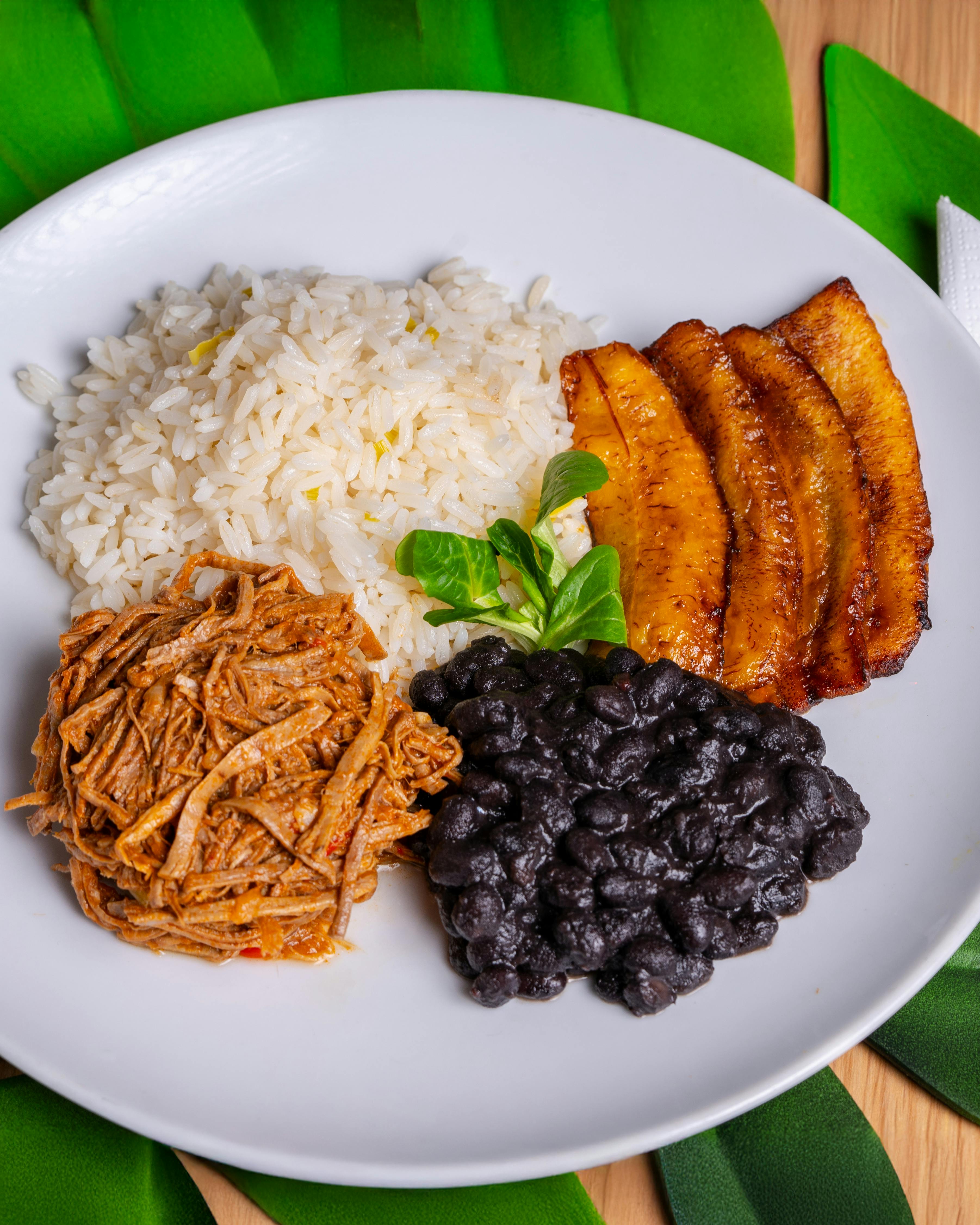
Common Ingredients
- rice
- black beans
- beef
- plantains
- cabbage
- tomatoes
- eggs
- onion
Specific recipes may vary.
Incompatible with 7 of 11 diets
Diet Ratings
Casado is fundamentally incompatible with a ketogenic diet. The dish is built around rice and black beans, which are extremely high in net carbs — white rice alone delivers roughly 45g of net carbs per cup, and black beans add another 20-25g net carbs per half-cup serving. Plantains are a starchy fruit with approximately 24-27g net carbs per half-cup. Together, these three ingredients alone can easily exceed 80-100g of net carbs in a single meal, which is 2-5x the entire daily keto allowance. The remaining ingredients — beef, cabbage, tomatoes, eggs, and onion — are individually keto-friendly or borderline, but they cannot rescue this dish. There is no realistic portion size of a traditional Casado that would maintain ketosis.
Casado contains multiple animal products that are clearly incompatible with a vegan diet. Beef is the primary protein — a direct animal product. Eggs are also listed as an ingredient, adding a second animal-derived component. These two ingredients alone make the dish firmly off-limits for vegans. The remaining ingredients (rice, black beans, plantains, cabbage, tomatoes, onion) are all plant-based and would be vegan-friendly in isolation.
Casado is a traditional Costa Rican plate built around two core paleo-excluded food groups: rice (a grain) and black beans (a legume). Both are explicitly off-limits in the paleo framework due to their anti-nutrient profiles (lectins, phytates) and the fact that they were not part of the Paleolithic diet. The remaining ingredients — beef, plantains, cabbage, tomatoes, eggs, and onion — are all paleo-compliant and would score well on their own. However, rice and black beans are not minor garnishes; they are the structural foundation of this dish, making the overall plate incompatible with paleo guidelines. No meaningful version of Casado can be served without them and still be considered Casado.
Casado is a Costa Rican plate meal that contains several Mediterranean-friendly components (black beans, cabbage, tomatoes, onion, plantains) alongside white rice and beef. The primary protein is beef, which is limited to a few times per month in the Mediterranean diet, immediately pushing this dish toward caution or avoid territory. White rice is a refined grain not emphasized in Mediterranean eating. The combination of beef as the central protein with white rice as the starch base means two of the main components conflict with Mediterranean principles. The legumes, vegetables, and eggs present are positives, but they are secondary to the beef and refined rice. As a regular meal, this dish does not align well with Mediterranean guidelines.
Some Mediterranean diet interpreters might rate this as 'caution' rather than 'avoid,' noting that the black beans, vegetables, and eggs provide substantial Mediterranean-aligned nutrition, and that the beef portion in a Casado is often modest. If beef is consumed infrequently and the rest of the diet is Mediterranean-compliant, an occasional Casado could fit within flexible monthly red meat allowances.
Casado is a traditional Costa Rican plate that is overwhelmingly plant-based in composition. While it does contain beef and eggs — both carnivore-approved ingredients — the dish is dominated by rice (grain), black beans (legume), plantains (starchy fruit), cabbage (vegetable), tomatoes (fruit/vegetable), and onion (vegetable). The majority of the dish's caloric and volumetric content comes from plant foods that are strictly excluded on the carnivore diet. Grains and legumes are among the most consistently rejected food groups across all carnivore tiers due to antinutrients, lectins, and carbohydrate load. There is no meaningful carnivore modification possible here — this is a fundamentally plant-centered meal with animal products as accompaniments, not the foundation.
Casado contains two clearly excluded ingredient categories: rice (a grain) and black beans (a legume). Both are explicitly prohibited on the Whole30 program. While the dish also includes many compliant components — beef, plantains, cabbage, tomatoes, eggs, and onion — the presence of rice and black beans makes the dish as traditionally prepared non-compliant. There is no workaround here; these are core structural components of a Casado, not optional garnishes.
Casado contains multiple high-FODMAP ingredients that make it unsuitable during the elimination phase. Black beans are very high in GOS (galacto-oligosaccharides) and are a significant FODMAP concern at any standard serving size used in a full dish. Onion is one of the highest-fructan foods and a major FODMAP trigger. Together, these two ingredients alone would classify this dish as high-FODMAP. Rice is low-FODMAP and safe. Beef (plain) is low-FODMAP. Eggs are low-FODMAP. Tomatoes are low-FODMAP at standard servings. Cabbage is low-FODMAP at small portions (up to 75g) but can become moderate at larger amounts. Plantains (unripe/green) are generally low-FODMAP at moderate servings per Monash. Despite several safe components, the black beans and onion are non-negotiable high-FODMAP ingredients at the quantities used in a traditional Casado serving, making this dish inappropriate for the elimination phase without significant modification.
Casado is a traditional Costa Rican plate meal with a mixed DASH profile. Several components are strongly DASH-aligned: black beans (excellent source of fiber, potassium, magnesium, and plant protein), rice (preferably whole grain for DASH but white rice is common), cabbage and tomatoes (non-starchy vegetables rich in fiber and potassium), and onion (a DASH-friendly aromatic). Plantains add potassium and fiber, though ripe fried plantains (maduros) add fat and sugar, while green boiled or baked plantains are more DASH-ideal. Eggs are moderately acceptable under updated DASH interpretations. The primary concern is beef: DASH limits red meat due to saturated fat and recommends lean cuts in small portions (≤6 oz/day). The overall dish can be DASH-compatible if beef is a lean cut (e.g., sirloin) in modest portions, but as commonly served, the beef portion may exceed DASH recommendations and preparation methods (frying plantains, salting) can add sodium and saturated fat. The dish earns moderate approval because its vegetable, legume, and grain components are genuinely DASH-positive, but the red meat and potentially fried elements require portion control.
NIH DASH guidelines categorically limit red meat and emphasize poultry or fish as preferred proteins, which would push this dish toward a lower score given beef as the primary protein. However, updated clinical interpretations note that when lean beef is consumed in modest portions alongside the robust legume and vegetable components present here, the overall dietary pattern remains favorable — some DASH-oriented dietitians would approve this dish if beef is lean and the plantains are baked rather than fried.
Casado is a classic Costa Rican plate that presents a significant Zone challenge primarily due to its carbohydrate load and glycemic profile. The dish combines white rice (high-glycemic, 'unfavorable' in Zone terminology), black beans (moderate glycemic, acceptable in Zone but carb-dense), and plantains (high-sugar, especially if ripe/fried — among the most unfavorable Zone carbs alongside bananas and raisins). Together, these three components create a heavy carbohydrate surplus that dramatically skews the 40/30/30 ratio. On the positive side, beef provides a solid protein block, eggs add lean protein, and cabbage and tomatoes are excellent low-glycemic Zone-favorable vegetables. Onion is also Zone-acceptable. However, the ratio problem is severe: rice + beans + plantains will generate far more carbohydrate calories than the protein from beef and eggs can balance, making the 40/30/30 target nearly impossible without drastically reducing portions of the starchy components. Fat content depends on cooking method — if beef is fatty cuts and plantains are fried in oil, saturated fat and overall fat may be elevated. A Zone practitioner could salvage components of this dish by eliminating the rice, severely limiting plantains, doubling the vegetable portion, and focusing on the beans as the primary carb source in a controlled block — but as traditionally served, Casado does not naturally align with Zone principles.
Casado is a balanced Costa Rican plate-lunch with a genuinely mixed anti-inflammatory profile. On the positive side: black beans are excellent — fiber-rich legumes with antioxidants and polyphenols that are explicitly emphasized in anti-inflammatory frameworks. Rice provides a whole-food carbohydrate base (though typically white rice in Costa Rica, which is nutritionally neutral at best). Cabbage and tomatoes contribute antioxidants, vitamin C, and lycopene. Plantains provide resistant starch, potassium, and carotenoids. Eggs contribute choline and selenium with debated inflammatory neutrality. Onion provides quercetin, a well-studied anti-inflammatory flavonoid. The problematic element is beef, which is classified as a 'limit' food in anti-inflammatory frameworks due to saturated fat content and arachidonic acid, which can upregulate inflammatory eicosanoids. The overall dish is not dominated by heavily processed foods, refined sugars, or trans fats, which keeps it out of the 'avoid' range. However, beef as the primary protein prevents an 'approve' rating. The dish could be significantly improved by substituting fish, tofu, or legumes as the primary protein. Portion size of beef matters — a smaller serving alongside the bean base shifts the profile favorably.
Some anti-inflammatory practitioners (e.g., those aligned with the Mediterranean or Weil frameworks) would rate this more favorably if the beef is grass-fed, noting improved omega-3 to omega-6 ratio and conjugated linoleic acid content; grass-fed beef occupies a middle ground in many anti-inflammatory guidelines. Conversely, stricter plant-forward anti-inflammatory advocates (e.g., Dr. Joel Fuhrman's nutritarian model) would rate this more harshly due to any red meat inclusion and the use of white rice.
Casado is a traditional Costa Rican plate meal combining rice, black beans, beef, plantains, cabbage salad, tomatoes, egg, and onion. It has genuine nutritional strengths for GLP-1 patients — black beans provide both protein and meaningful fiber, cabbage and tomatoes add micronutrients and hydration, and eggs contribute additional high-quality protein. However, several factors pull it into caution territory. The primary protein is beef, which depending on the cut (often ground beef or a braised cut) carries moderate to high saturated fat — a concern for GLP-1 side effects and cardiovascular health during weight loss. White rice is a refined grain with low fiber and nutrient density per calorie, and the portion is typically large. Fried or sweet plantains (maduros) add sugar and potentially fat if pan-fried. As traditionally plated, the total volume is large — the full portion is unlikely to be appropriate for a GLP-1 patient with significantly reduced appetite, and eating a large portion risks nausea and GI discomfort due to slowed gastric emptying. If the patient consumes a half or smaller portion, focuses on the beans, egg, cabbage, and lean beef, and minimizes the rice and plantains, the dish becomes considerably more GLP-1 friendly. The fiber from beans is a genuine asset.
Some GLP-1-focused dietitians would rate this higher, arguing that beans plus egg plus beef deliver a reasonable combined protein and fiber load, and that the dish can easily be portioned — eat the protein and legume components first, leave most of the rice. Others caution that the typical restaurant portion of white rice and sweetened plantains makes this a high-glycemic, high-volume meal that is poorly suited to the reduced gastric capacity seen on GLP-1 medications, particularly in early treatment phases.
*See how scores were generated at our methodology page.
Nutritional profile
Six traits that cut across every diet.
Fiber & Plants
How much whole-plant food and fiber it delivers.
Healthy Fats
The quality of its fats (unsaturated, omega-3).
Whole / Unprocessed
How close it is to its natural, unprocessed form.
Gut Gentle
How easy it is on digestion (low FODMAP, few irritants).
Low Glycemic
How little it spikes your blood sugar.
Protein Density
How much protein it packs per calorie.
Controversy Index
Higher controversy = more disagreement between diets.
Diet-Specific Tips
 DASH — 6/10
View tips
- Black beans are a DASH superstar: high in fiber, potassium, magnesium, and plant protein
- Beef (red meat) is limited on DASH due to saturated fat; lean cuts in small portions are acceptable
- Cabbage, tomatoes, and onion are DASH-approved non-starchy vegetables
- Plantains: boiled/baked = DASH-friendly; fried = adds saturated fat and calories
- Eggs are acceptable in moderation under most current DASH clinical interpretations
- Rice is a neutral grain; whole grain rice would be more DASH-optimal than white rice
- Sodium from preparation (salting, seasoning) is a variable that can significantly affect DASH compatibility
- Overall plate is portion-dense; portion control of beef and fried plantains is key
 Zone — 4/10
View tips
- White rice is a high-glycemic 'unfavorable' carbohydrate in Zone terminology
- Plantains are high in sugar and glycemic load, comparable to bananas — explicitly unfavorable in Zone
- Black beans are moderate-glycemic and high-fiber, making them among the better carb choices, but still dense
- Triple carb combination (rice + beans + plantains) makes 40/30/30 ratio nearly impossible as served
- Beef provides solid protein blocks but lean cuts must be selected to avoid saturated fat excess
- Eggs add lean protein favorably
- Cabbage, tomatoes, and onion are Zone-favorable low-glycemic vegetables — a positive element
- Cooking method (fried plantains, fatty beef) can further worsen the fat profile
- As traditionally portioned, carbohydrate calories will far exceed the 40% Zone target
 Anti-Inflammatory — 5/10
View tips
- Beef as primary protein is a 'limit' food — saturated fat and arachidonic acid are mildly pro-inflammatory
- Black beans are a strongly anti-inflammatory legume — fiber, polyphenols, resistant starch
- Plantains contribute carotenoids and resistant starch — mildly anti-inflammatory
- Cabbage and tomatoes add antioxidants (vitamin C, lycopene, glucosinolates)
- Onion provides quercetin, a flavonoid with anti-inflammatory research support
- Eggs are nutritionally contested — neutral to mildly beneficial for most people
- White rice is nutritionally neutral — not inflammatory but lacks anti-inflammatory properties
- No processed ingredients, trans fats, refined sugars, or seed oils — clean whole-food base
 GLP-1 Friendly — 5/10
View tips
- Black beans provide meaningful fiber (approx 7-8g per half cup) and plant protein — a genuine GLP-1 asset
- Beef cut determines fat content significantly — lean cuts are acceptable, fatty or ground beef raises saturated fat concerns
- White rice adds bulk and calories with minimal fiber or micronutrient density
- Plantains add sugar load; fried preparation adds fat — maduros are worse than patacones nutritionally
- Total plate volume is large for GLP-1 patients with reduced gastric capacity — portion control is essential
- Egg adds high-quality complete protein and is easy to digest
- Cabbage and tomatoes support hydration and micronutrient density
- Dish is highly customizable — patient behavior at the table matters as much as the ingredients listed