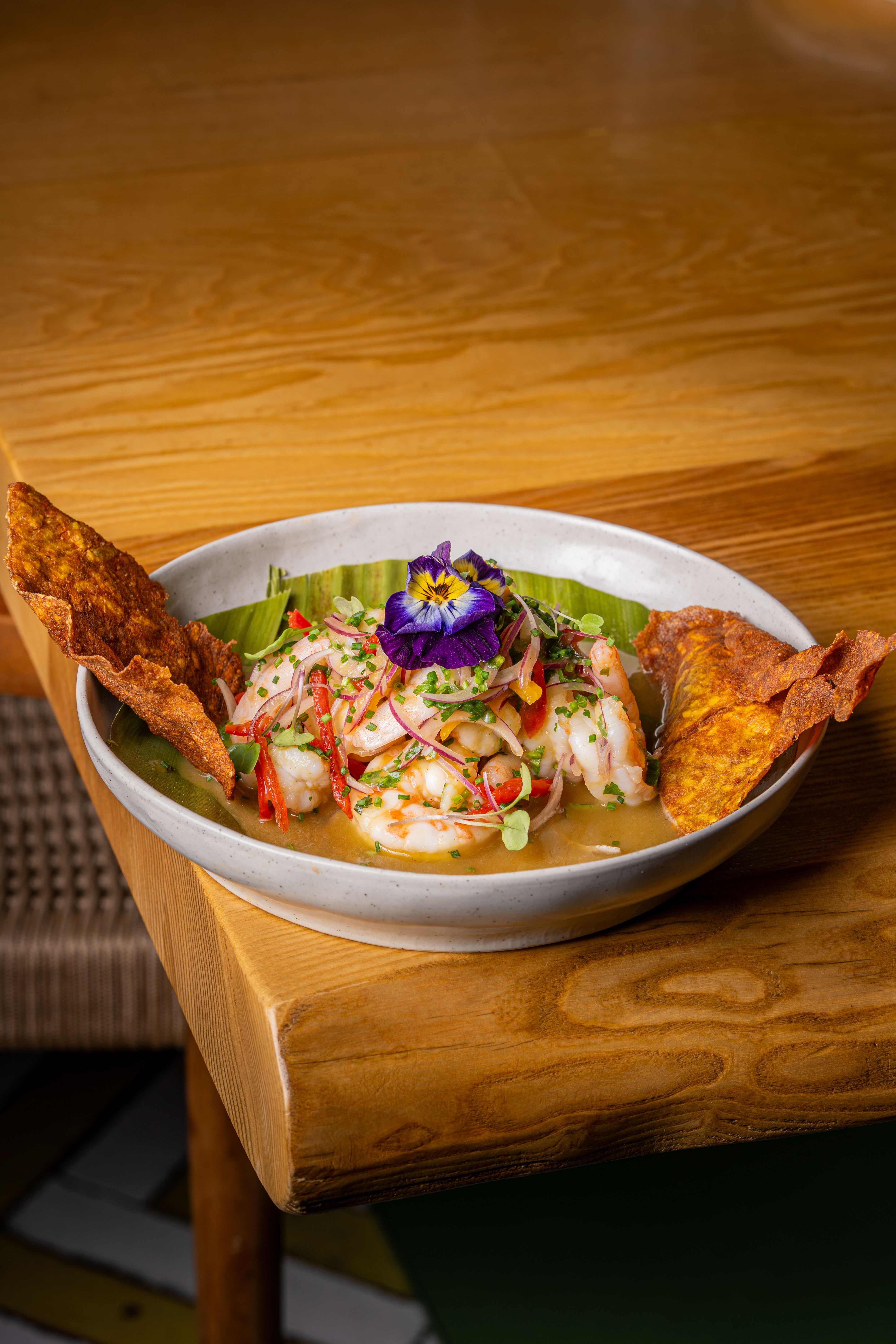
Photo: Nano Erdozain / Pexels
Costa-Rican
Ceviche Tico
The diets react (see scores below)
Common Ingredients
- white fish
- lime juice
- onion
- red bell pepper
- cilantro
- garlic
- salt
Specific recipes may vary.
Incompatible with 4 of 11 diets
Diet Ratings
Ceviche Tico is built on white fish (lean, zero-carb protein), lime juice, and low-carb vegetables. White fish is an excellent keto protein source with negligible carbs. Lime juice contributes a small amount of carbs (~1-2g per standard serving after dilution), onion adds minimal carbs in typical ceviche quantities (~2-3g), red bell pepper adds ~2-3g net carbs per small portion, and cilantro/garlic/salt are negligible. A standard serving lands well under 10g net carbs, making this comfortably keto-compatible. The main consideration is that this dish is lower in fat than ideal for keto macros, but it is not disqualifying — it pairs well with avocado or olive oil to boost fat intake.
Some strict keto practitioners flag ceviche due to the cumulative carb load from lime juice and onion if portions are generous, and note that the lean protein without accompanying fat does little to drive the high-fat macro target; these advocates suggest it be treated as a 'caution' food unless paired explicitly with a high-fat side.
Ceviche Tico contains white fish as its primary protein, which is an animal product explicitly excluded from a vegan diet. Fish is unambiguously non-vegan regardless of preparation method. The remaining ingredients — lime juice, onion, red bell pepper, cilantro, garlic, and salt — are all plant-based, but the presence of fish makes the dish entirely incompatible with vegan dietary principles.
Ceviche Tico is almost entirely paleo-compliant — white fish, lime juice, onion, red bell pepper, cilantro, and garlic are all approved paleo foods. However, the inclusion of added salt disqualifies it under strict paleo rules. Salt (refined sodium chloride) is an agricultural-era processed mineral additive excluded from the paleo framework, which emphasizes foods available to hunter-gatherers in unprocessed forms. Without the salt, this dish would be a strong approve.
Ceviche Tico is an excellent match for Mediterranean diet principles. The primary protein is white fish, which aligns perfectly with the diet's emphasis on seafood 2-3 times weekly. The remaining ingredients — lime juice, onion, red bell pepper, cilantro, garlic, and salt — are all whole, minimally processed plant-based foods strongly encouraged in the Mediterranean pattern. There are no red meats, refined grains, added sugars, or processed ingredients. The dish is naturally light, nutrient-dense, and anti-inflammatory. The only minor note is the absence of olive oil, which is the Mediterranean diet's primary fat source, but the dish is otherwise exemplary and the omission does not disqualify it.
Ceviche Tico is predominantly plant-based in its flavoring profile. While white fish is a carnivore-approved animal protein, the dish is heavily loaded with plant-derived ingredients: lime juice, onion, red bell pepper, cilantro, and garlic. These are all excluded foods on the carnivore diet. The majority of this dish's flavor, volume, and character come from plant foods, making it incompatible. Salt is the only other acceptable ingredient. This is not a borderline case — the plant ingredients are core, structural components of the dish, not trace additives.
Ceviche Tico is made entirely from Whole30-compliant ingredients. White fish is an explicitly allowed protein, lime juice is a natural citrus juice with no added sweeteners, and onion, red bell pepper, cilantro, and garlic are all compliant vegetables and herbs. Salt is explicitly permitted under Whole30 rules. The dish is a whole, unprocessed preparation with no excluded ingredients (no grains, dairy, legumes, added sugars, or alcohol). The acid-curing method is simply a cooking technique and raises no compliance concerns.
Ceviche Tico contains two well-established high-FODMAP ingredients that cannot be eliminated without fundamentally changing the dish: onion (high in fructans at any meaningful serving) and garlic (also high in fructans, among the highest-FODMAP foods tested by Monash). These are core flavor components, not optional garnishes, and their FODMAP content is not mitigated by the lime juice marinade (fructans are water-soluble and remain in the dish). White fish, lime juice, red bell pepper (at standard portions), and cilantro are all low-FODMAP and would be fine. However, the presence of both onion and garlic makes this dish a clear avoid during the elimination phase.
Ceviche Tico is built almost entirely from DASH-friendly ingredients: white fish is a lean protein explicitly encouraged by DASH guidelines, lime juice adds acid with negligible sodium or calories, and onion, red bell pepper, cilantro, and garlic are all non-starchy vegetables rich in potassium and antioxidants — core DASH foods. The primary concern is the added salt, which is standard in this dish and can vary significantly by cook. At home-prepared levels, sodium can be kept modest (200–400mg per serving), keeping it well within DASH limits. However, restaurant or heavily salted versions could push sodium higher. No saturated fat, no added sugar, no processed ingredients, and no tropical oils are present. The dish is naturally high in lean protein, low in calories, and rich in micronutrients aligned with DASH goals.
NIH DASH guidelines do not explicitly address ceviche, and sodium content is highly preparation-dependent — some DASH clinicians would rate this 'caution' if salt is not carefully controlled, while updated clinical interpretations emphasize the overall dietary pattern and would approve this dish as long as salt is measured and kept to a minimum.
Ceviche Tico is an exceptionally Zone-friendly dish. White fish (corvina, tilapia, or similar) is a lean protein source that fits perfectly into Zone protein blocks, providing roughly 7g protein per ounce with minimal fat. Lime juice, onion, red bell pepper, cilantro, and garlic are all low-glycemic, polyphenol-rich vegetables and flavor agents that map cleanly onto Zone carbohydrate blocks. Red bell pepper in particular is a Zone-favored colorful vegetable high in antioxidants. The dish is naturally very low in fat, which actually means it needs a small monounsaturated fat addition (a few olives, a sliver of avocado, or a drizzle of olive oil) to complete the 40/30/30 ratio — but the dish itself presents no Zone obstacles. There are no high-glycemic carbs, no refined grains, no sugars, no seed oils, and no saturated fat concerns. The anti-inflammatory profile is strong: omega-3-containing white fish, polyphenol-rich cilantro and bell pepper, and the acidic lime environment. This dish aligns with virtually every Zone principle Dr. Sears articulates in Enter the Zone and Mastering the Zone.
Ceviche Tico is a strong anti-inflammatory dish. White fish (typically corvina or tilapia in Costa Rica) is a lean protein with a favorable omega-6 to omega-3 ratio compared to red meat, and fish in general is emphasized in anti-inflammatory frameworks. Lime juice provides vitamin C and flavonoids with antioxidant properties. Red bell pepper is rich in carotenoids (beta-carotene, beta-cryptoxanthin) and vitamin C, both well-documented anti-inflammatory antioxidants. Onion contributes quercetin, a potent anti-inflammatory flavonoid. Garlic contains allicin and organosulfur compounds shown to reduce inflammatory markers including CRP and IL-6. Cilantro provides additional polyphenols and has demonstrated anti-inflammatory activity in research. The dish contains no refined carbohydrates, added sugars, seed oils, trans fats, or processed ingredients. The preparation is raw/acid-marinated, which preserves heat-sensitive nutrients. The only minor limitation is that white fish like tilapia, while lean and healthy, contains less omega-3 than fatty fish like salmon or mackerel. If prepared with a higher-omega-3 fish (e.g., corvina or snook), the score would edge toward 9. Sodium from salt should be moderated for those with inflammation related to hypertension, but at culinary quantities this is not a concern for the general population.
Ceviche Tico is an excellent GLP-1-friendly dish. White fish (typically tilapia or corvina in Costa Rican preparations) is a lean, high-quality protein source delivering roughly 20-25g of protein per standard serving with very low fat content. The acid-based 'cooking' via lime juice requires no oil or heat, keeping fat negligible. All remaining ingredients — onion, red bell pepper, cilantro, garlic — are low-calorie, nutrient-dense vegetables that contribute fiber, vitamins C and A, and antioxidants. The dish is naturally hydrating due to the high water content of the vegetables and lime juice marinade. Portions are inherently small and satisfying. There are no fried components, no refined grains, no added sugars, and no high-fat ingredients. Gastric emptying concerns are minimal — this is a light, easily digestible preparation. The only minor consideration is sodium from added salt, which should be kept moderate, but this is standard culinary practice and not a disqualifying factor.
*See how scores were generated at our methodology page.
Nutritional profile
Six traits that cut across every diet.
Fiber & Plants
How much whole-plant food and fiber it delivers.
Healthy Fats
The quality of its fats (unsaturated, omega-3).
Whole / Unprocessed
How close it is to its natural, unprocessed form.
Gut Gentle
How easy it is on digestion (low FODMAP, few irritants).
Low Glycemic
How little it spikes your blood sugar.
Protein Density
How much protein it packs per calorie.
Controversy Index
Higher controversy = more disagreement between diets.
Diet-Specific Tips
 Keto — 8/10
View tips
- White fish is a clean, zero-carb protein source fully compatible with keto
- Net carbs from all ingredients combined are low (~5-8g per standard serving)
- Lime juice contributes minor carbs but within acceptable range for a serving
- Red bell pepper and onion add small amounts of carbs — portion control advised
- Dish is naturally low in fat; does not meet the 70-80% fat macro target on its own
- No grains, added sugars, or starchy vegetables present
- Whole, unprocessed ingredients align with keto food quality standards
 Mediterranean — 9/10
View tips
- White fish as primary protein aligns with Mediterranean seafood recommendations
- All vegetables (onion, red bell pepper, garlic) are whole, plant-based, and encouraged
- No processed ingredients, refined grains, or added sugars
- Lime juice replaces olive oil as the fat/acid component — no olive oil present, a minor deviation
- Cilantro and garlic provide antioxidant and anti-inflammatory benefits
- Dish is naturally low in saturated fat and high in lean protein
 Whole30 — 6/10
View tips
- White fish: explicitly allowed protein
- Lime juice: natural citrus, no added sugar, fully compliant
- Onion, red bell pepper, cilantro, garlic: all compliant vegetables/herbs
- Salt: explicitly permitted
- No excluded ingredients present
- Whole, minimally processed preparation honors the spirit of the program
 DASH — 8/10
View tips
- Lean white fish is a DASH-approved protein source
- All vegetables (onion, red bell pepper, garlic, cilantro) are core DASH foods
- No saturated fat, trans fat, or added sugar
- Lime juice replaces heavy dressings or sauces — DASH-positive
- Salt content is the critical variable; home-prepared with measured salt is acceptable, heavy-salted versions may approach caution territory
- No processed ingredients or tropical oils
- Naturally rich in potassium and vitamin C from vegetables
 Zone — 9/10
View tips
- White fish is a lean Zone-favorable protein source
- All vegetables (onion, red bell pepper, garlic) are low-glycemic and Zone-favorable
- Lime juice and cilantro add polyphenols with negligible glycemic impact
- Naturally very low in fat — a small monounsaturated fat addition (avocado, olives) needed to complete 40/30/30 ratio
- No high-glycemic carbohydrates, refined ingredients, or seed oils
- Strong anti-inflammatory profile consistent with Zone dietary goals
 Anti-Inflammatory — 8/10
View tips
- Lean white fish: low saturated fat, good lean protein, moderate omega-3s
- Red bell pepper: high in carotenoids and vitamin C (anti-inflammatory antioxidants)
- Garlic: organosulfur compounds reduce CRP and IL-6
- Onion: quercetin is a well-researched anti-inflammatory flavonoid
- Lime juice: vitamin C and flavonoids with antioxidant activity
- Cilantro: polyphenols with documented anti-inflammatory properties
- No seed oils, refined carbs, added sugars, or processed ingredients
- White fish lower in omega-3s than fatty fish — minor limitation
 GLP-1 Friendly — 9/10
View tips
- Lean white fish provides high-density protein (~20-25g per serving) with very low fat
- Zero added oil — lime-acid preparation method eliminates cooking fat entirely
- Colorful vegetables (bell pepper, onion, cilantro) add fiber, micronutrients, and water content
- Naturally hydrating dish supports GLP-1 hydration needs
- Easy to digest — no heavy, greasy, or fried components
- Small-portion friendly and inherently satisfying in modest servings
- No refined grains, added sugars, or problematic ingredients
- Moderate sodium from salt — should be kept in check but not a significant concern