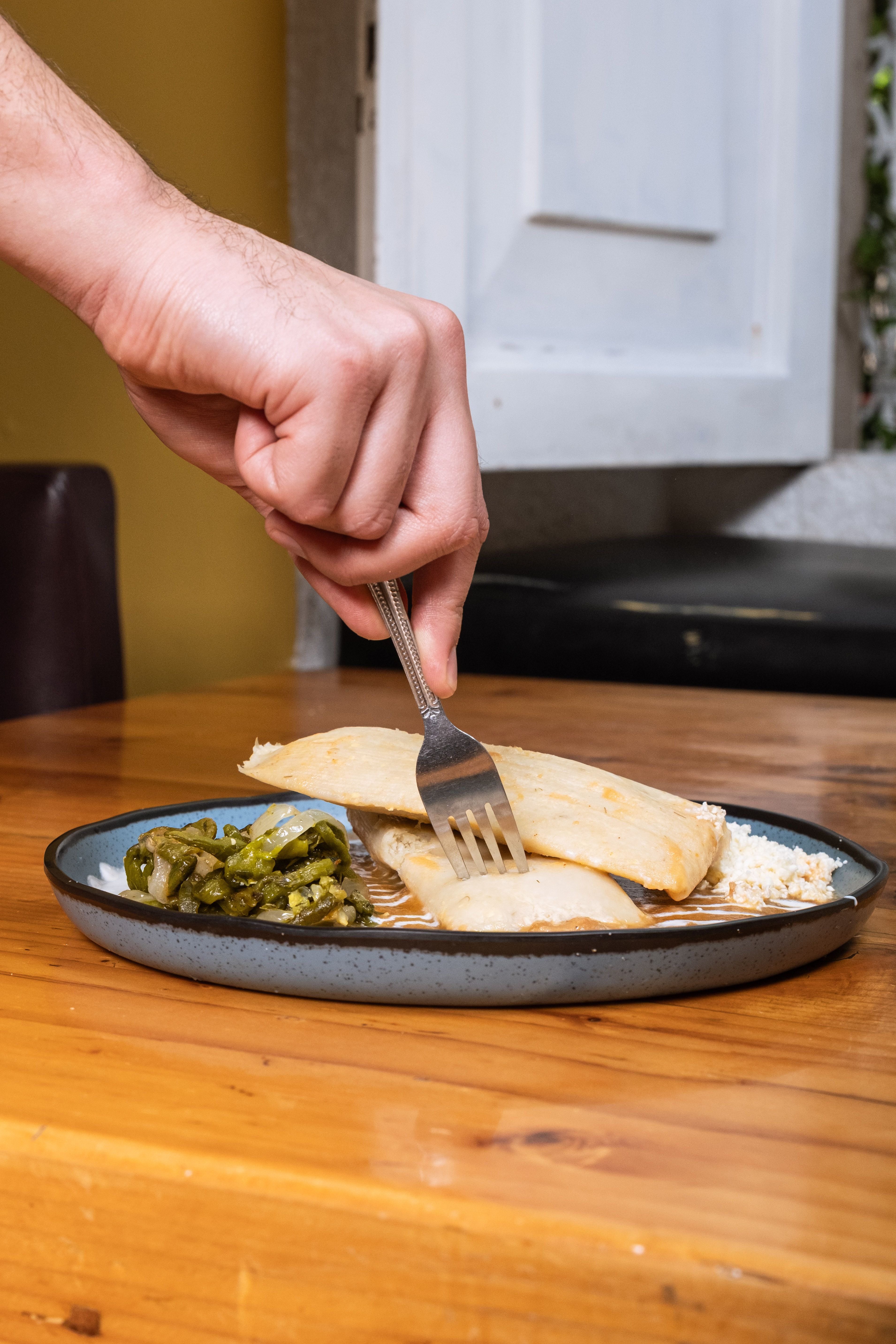
Photo: Urian Rivera / Pexels
The diets react (see scores below)
Common Ingredients
- corn masa
- pork
- potatoes
- carrots
- peas
- rice
- banana leaves
- annatto
Specific recipes may vary.
Incompatible with 6 of 11 diets
Diet Ratings
Costa Rican tamales are fundamentally incompatible with ketogenic eating. The base is corn masa (masa harina), which is a high-carb grain flour that alone can deliver 30-40g+ of net carbs per tamal. This is compounded by potatoes, rice, and peas — all of which are starchy or high-carb ingredients that add further net carbs. A single tamal could easily contain 60-80g of net carbs, which exceeds the entire daily keto allowance in one serving. The pork filling and banana leaf wrapping are keto-neutral or fine, but they cannot redeem the dish given the overwhelming carbohydrate load from multiple high-carb ingredients.
Costa Rican tamales contain pork as the primary protein, which is an animal product and strictly excluded from a vegan diet. All other ingredients (corn masa, potatoes, carrots, peas, rice, banana leaves, annatto) are plant-based, but the presence of pork makes this dish entirely incompatible with veganism. There is no ambiguity here — pork is meat.
Costa Rican tamales contain multiple paleo-excluded ingredients that make this dish firmly non-compliant. Corn masa is a processed grain product (corn is a grain), and rice is also a grain — both are clearly excluded from paleo. Peas are legumes, also excluded. Potatoes are debated in paleo circles, and while carrots, pork, banana leaves, and annatto are paleo-compatible, the foundational ingredients of this dish (corn masa and rice) are disqualifying on their own. This is not a borderline case — grains form the structural base of the dish.
Costa Rican tamales present several conflicts with Mediterranean diet principles. Pork is the primary protein — red/processed meat that is limited to a few times per month under Mediterranean guidelines. The dish is also carbohydrate-dense, combining refined corn masa and white rice together, both of which are refined or non-whole-grain starches that the Mediterranean diet discourages in favor of whole grains. While the vegetables (potatoes, carrots, peas) and annatto are positive elements, they play a supporting role in what is fundamentally a pork-and-refined-starch dish. There is no olive oil, and the fat profile is dominated by lard or pork fat in traditional preparation. The banana leaf wrapping is neutral. Overall, this dish's core components — pork and refined grains — push it firmly into 'avoid' territory.
Some Mediterranean diet interpreters note that traditional whole-food preparations using minimally processed corn masa and vegetables are preferable to ultra-processed foods, and occasional consumption of pork in a vegetable-rich context could be tolerated within the 'few times per month' red meat allowance. The vegetable fillings provide some nutritional value.
Costa Rican Tamales are overwhelmingly plant-based in composition. While pork is present, it is a minor component surrounded by a dominant corn masa dough base, potatoes, carrots, peas, and rice — all strictly excluded plant foods on the carnivore diet. Banana leaves (used for wrapping) and annatto (a plant-derived colorant/spice) add further plant elements. There is no version of this dish that could be made carnivore-compatible without completely deconstructing it into a different dish entirely. The pork content does not redeem what is fundamentally a grain-and-vegetable-forward preparation.
Costa Rican tamales contain multiple Whole30-excluded ingredients. Corn masa is a grain product (corn is explicitly excluded from Whole30). Rice is also a grain and explicitly excluded. Peas are legumes (not among the explicitly permitted legume exceptions like green beans, sugar snap peas, or snow peas). With three separate excluded ingredient categories present, this dish is clearly non-compliant regardless of how the other ingredients (pork, potatoes, carrots, banana leaves, annatto) might be individually compliant.
Costa Rican tamales contain several ingredients that require careful consideration under Monash FODMAP guidelines. Corn masa (nixtamalized corn dough) is generally low-FODMAP at standard servings. Plain pork is low-FODMAP. Potatoes and carrots are low-FODMAP. Rice is low-FODMAP. Banana leaves (used for wrapping, not consumed) and annatto are low-FODMAP. The main concern is green peas, which are moderate-to-high in GOS and fructans — Monash rates green peas as low-FODMAP only at very small servings (approximately 1/4 cup or 35g), and tamales typically contain a meaningful portion of peas mixed throughout. Additionally, the overall portion size of a tamale is generous, meaning cumulative FODMAP load from peas plus any stacking effect with other ingredients becomes relevant. Traditional preparation may also include onion or garlic in the pork filling (not listed but extremely common in this dish), which would push it firmly into 'avoid' territory. As listed without those aromatics, the dish is borderline caution due to the pea content and serving size considerations.
Monash University rates green peas as low-FODMAP only at very small portions (35g), but clinical FODMAP practitioners often advise avoiding peas entirely during elimination due to their GOS content and the difficulty of controlling portion size within a mixed dish. Additionally, traditional Costa Rican tamal recipes almost universally include onion and garlic in the filling, which are not listed here but would make this an 'avoid' in real-world practice.
Costa Rican tamales contain a mix of DASH-friendly and DASH-problematic components. On the positive side, vegetables (potatoes, carrots, peas), corn masa, rice, and annatto are all acceptable DASH ingredients that contribute fiber, potassium, and complex carbohydrates. However, pork is typically the fatty, lard-mixed version used in traditional tamales — the masa is commonly prepared with lard or shortening (high in saturated fat), and the pork filling often includes fatty cuts with significant added salt. Sodium content in traditional tamales can be substantial (400–700mg+ per tamal), and the lard-enriched masa raises saturated fat concerns. While banana leaves are neutral (used for wrapping), the overall dish as traditionally prepared sits in caution territory due to fat and sodium load. A modified version using lean pork, olive oil instead of lard, and reduced-sodium seasoning would score meaningfully higher.
NIH DASH guidelines flag both high sodium and saturated fat from lard as problematic in traditional tamales. However, some DASH-oriented dietitians note that if lard is replaced with a small amount of vegetable oil and sodium is controlled in seasoning, the vegetable and masa content makes tamales a reasonable occasional DASH inclusion — particularly given the fiber, potassium from vegetables, and relatively moderate portion size of a single tamal.
Costa Rican tamales present significant Zone Diet challenges due to their macronutrient profile. The dish is dominated by high-glycemic carbohydrates: corn masa (processed corn flour with moderate-to-high glycemic index), potatoes (a explicitly 'unfavorable' and high-glycemic carb in Zone), rice (another unfavorable high-glycemic carb), and peas. This stacking of multiple unfavorable carbohydrate sources makes it extremely difficult to achieve a 40/30/30 ratio — the carbohydrate load is far too high relative to protein and fat. The pork, while providing protein, is likely a fattier cut in traditional preparation, adding saturated fat rather than favorable monounsaturated fat. The protein-to-carb ratio is heavily skewed toward carbs. Unlike a dish where you might simply reduce portion size to balance one high-glycemic carb, this dish layers three problematic carb sources (masa, potato, rice) simultaneously. Even small portions would deliver a disproportionate carbohydrate and glycemic load. It scores a 3 rather than 1-2 because it contains some vegetables (carrots, peas) and protein, and annatto has anti-inflammatory polyphenol properties — but the structural carbohydrate imbalance is severe and not easily corrected by portioning alone.
Costa Rican tamales present a mixed anti-inflammatory profile. On the positive side, corn masa provides some fiber and polyphenols, vegetables (potatoes, carrots, peas) contribute antioxidants and carotenoids, annatto (achiote) contains bixin and norbixin — carotenoid-based pigments with emerging anti-inflammatory properties — and banana leaves used in cooking are inert but traditional and clean. However, pork is the primary protein, and depending on the cut (shoulder and belly are common in tamales), it can be relatively high in saturated fat, which is a concern in anti-inflammatory eating. Pork is classified in the 'moderate/limit' zone alongside red meat in many anti-inflammatory frameworks. The inclusion of white rice alongside corn masa adds refined carbohydrate load with limited fiber or antioxidant benefit. The dish is also calorie-dense and starchy. There are no omega-3 rich ingredients, minimal herbs or anti-inflammatory spices beyond annatto, and no olive oil or other beneficial fats featured. Overall, this is a culturally rich traditional dish with some vegetable content but a profile weighted toward refined starches and potentially fatty pork — placing it firmly in the 'caution' range for an anti-inflammatory diet.
Some anti-inflammatory practitioners would rate lean pork cuts more favorably, noting pork tenderloin is comparable to chicken in saturated fat content — meaning the verdict depends heavily on the cut used. Additionally, traditional whole-food preparations like this, made from unprocessed ingredients without additives, may be viewed more favorably than a strict macronutrient analysis suggests, particularly compared to ultra-processed alternatives.
A Costa Rican tamal is a calorie-dense, carbohydrate-heavy dish built around a corn masa base mixed with lard or fat, wrapped in banana leaves. The primary protein is pork, which in traditional tamales is typically a fatty cut (shoulder or belly), making the fat content moderate to high. The masa itself is starchy, low in fiber, and often prepared with added fat to achieve its characteristic texture. While the dish does include vegetables (carrots, peas, potatoes) and some rice, these contribute limited fiber relative to the overall carbohydrate and calorie load. Protein content per serving is moderate but not high-density given the caloric cost. The combination of high starch, moderate-to-high fat, and slow gastric emptying induced by GLP-1 medications creates meaningful risk for nausea, bloating, and prolonged fullness discomfort. Portion size matters significantly — a single tamal can range from 250–450+ calories with limited protein return. Not an ideal GLP-1 companion food, but a small portion of a leaner preparation (less lard in the masa, leaner pork loin filling) could be tolerated occasionally.
Some GLP-1-focused dietitians may permit tamales in very small portions as a culturally meaningful food, arguing that rigid elimination of traditional foods undermines long-term adherence. Others take a stricter position given the fat content of traditional masa preparation and the pork filling, flagging the high starchy carbohydrate load as particularly problematic when total caloric intake is already reduced.
*See how scores were generated at our methodology page.
Nutritional profile
Six traits that cut across every diet.
Fiber & Plants
How much whole-plant food and fiber it delivers.
Healthy Fats
The quality of its fats (unsaturated, omega-3).
Whole / Unprocessed
How close it is to its natural, unprocessed form.
Gut Gentle
How easy it is on digestion (low FODMAP, few irritants).
Low Glycemic
How little it spikes your blood sugar.
Protein Density
How much protein it packs per calorie.
Controversy Index
Higher controversy = more disagreement between diets.
Diet-Specific Tips
 Low-FODMAP — 5/10
View tips
- Green peas are moderate-to-high FODMAP in typical serving sizes due to GOS and fructans
- Corn masa, pork, potatoes, carrots, and rice are individually low-FODMAP
- Banana leaves are not consumed and pose no FODMAP concern
- Annatto is low-FODMAP
- Traditional preparation commonly includes onion and garlic (not listed), which are high-FODMAP fructan sources
- Cumulative FODMAP load from a full tamale serving may exceed safe thresholds even without onion/garlic
 DASH — 4/10
View tips
- Pork filling often uses fatty cuts with significant sodium
- Corn masa traditionally prepared with lard — high saturated fat
- Vegetables (carrots, peas, potatoes) are DASH-positive ingredients
- Estimated sodium per tamal can exceed 400mg depending on preparation
- Whole-grain corn masa provides some fiber
- No added sugars or processed additives
- Low-sodium, lard-free preparation would raise score to approve range
 Zone — 5/10
View tips
- Triple stacking of unfavorable high-glycemic carbs: corn masa, white rice, and potatoes — all explicitly classified as unfavorable in Zone methodology
- Corn masa is a processed, high-glycemic carbohydrate with minimal fiber, spiking insulin rapidly
- Potatoes are specifically called out by Dr. Sears as a food to avoid due to high glycemic index
- Rice compounds the glycemic load further, making the 40/30/30 ratio structurally impossible in a single serving
- Pork in traditional tamale preparation is often a fattier cut, contributing saturated rather than monounsaturated fat
- Positive: contains some vegetables (carrots, peas) and annatto provides anti-inflammatory polyphenols
- Even reduced portion sizes cannot adequately correct the carb-to-protein imbalance due to the dish's composition
 Anti-Inflammatory — 4/10
View tips
- Pork as primary protein adds saturated fat risk depending on cut (shoulder/belly common)
- White rice and corn masa create a high refined carbohydrate load
- Vegetables (carrots, peas, potatoes) add modest antioxidant and fiber value
- Annatto (achiote) contains carotenoids with mild anti-inflammatory properties
- No omega-3 fatty acids, anti-inflammatory herbs/spices, or beneficial fats like olive oil
- Whole-food, additive-free preparation is a relative positive over processed alternatives
- Calorie-dense and starchy overall profile
 GLP-1 Friendly — 4/10
View tips
- Corn masa is starchy, calorie-dense, and typically prepared with added fat (lard), reducing nutrient density per calorie
- Pork filling is often a fatty cut, increasing saturated fat content and worsening GLP-1 GI side effects
- Moderate protein content but poor protein-to-calorie ratio compared to lean alternatives
- Limited fiber despite vegetable inclusions (carrots, peas); masa and rice dilute fiber density
- High carbohydrate load combined with slowed gastric emptying increases nausea and bloating risk
- Banana leaf wrapping is inert — no nutritional impact
- Annatto is fine; a natural colorant with negligible effect
- Portion-sensitive: a single full tamal may crowd out more nutrient-dense foods given reduced appetite on GLP-1s