Photo: Nano Erdozain / Pexels
Costa-Rican
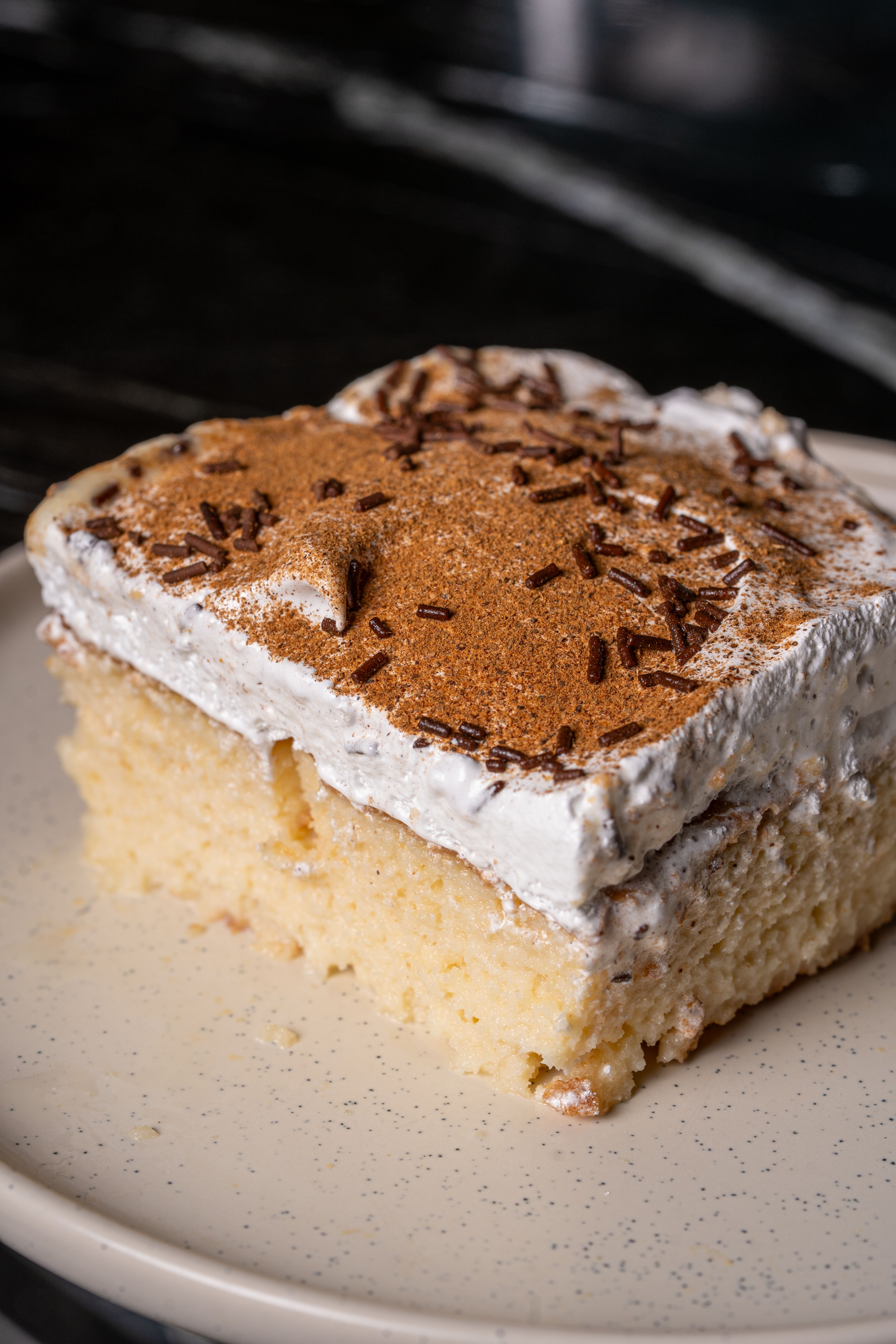
Tres Leches
The diets react (see scores below)
Common Ingredients
- flour
- eggs
- sugar
- evaporated milk
- condensed milk
- heavy cream
- vanilla
Specific recipes may vary.
Incompatible with 11 of 11 diets
Diet Ratings
Tres Leches is fundamentally incompatible with a ketogenic diet. The cake base is made with wheat flour, a high-carb grain that alone disqualifies the dish. Sugar is used both in the cake batter and is a primary ingredient in condensed milk, which is essentially milk reduced with massive amounts of added sugar. A single serving of Tres Leches can easily contain 50-70g of net carbs, far exceeding an entire day's keto carb allowance. While heavy cream is keto-friendly and eggs are acceptable, these two ingredients are overwhelmed by the high-carb, high-sugar components. There is no realistic portion size that makes this dish compatible with ketosis.
Tres Leches is fundamentally incompatible with a vegan diet. The dish contains multiple animal-derived ingredients: eggs (animal product), evaporated milk (dairy), condensed milk (dairy), and heavy cream (dairy). The name itself — 'three milks' — reflects its core identity as a dairy-saturated dessert. There is no ambiguity here; this dish is defined by its animal ingredients and cannot be considered vegan in any standard interpretation.
Tres Leches is fundamentally incompatible with the Paleo diet. It contains multiple core non-Paleo ingredients: wheat flour (a grain, strictly excluded), refined sugar (excluded), evaporated milk, condensed milk, and heavy cream (all dairy, excluded). Virtually every primary ingredient violates Paleo principles. The only Paleo-compatible ingredients in the entire dish are eggs and vanilla. There is no meaningful way to consider this dish Paleo-friendly.
Tres Leches is a dessert cake that fundamentally contradicts Mediterranean diet principles on multiple fronts. It is built on refined white flour (not a whole grain), loaded with added sugar, and saturated with three high-fat dairy products — evaporated milk, condensed milk (which is heavily sweetened), and heavy cream. This combination delivers excessive added sugars, refined carbohydrates, and saturated fat in a single serving. There is no meaningful plant-forward nutrition, no olive oil, no legumes, no vegetables, and no whole grains. It falls squarely into the 'minimal processed foods and added sugars' category that the Mediterranean diet explicitly discourages. Even as an occasional treat, the density of refined ingredients and added sugar makes this a poor fit.
Tres Leches is fundamentally incompatible with the carnivore diet. The dish is built on a flour-based sponge cake, which is a grain product entirely excluded from any tier of carnivore eating. It is heavily sweetened with sugar and condensed milk (which contains added sugar), both of which are prohibited. While some ingredients — eggs, heavy cream, and evaporated milk — are animal-derived, they are minor components of what is essentially a grain-and-sugar dessert. Vanilla is a plant-derived flavoring. No version of this dish can be modified to be carnivore-compliant without ceasing to be Tres Leches entirely.
Tres Leches contains multiple Whole30-excluded ingredients: flour (a grain), sugar (added sugar), evaporated milk (dairy), condensed milk (dairy + added sugar), and heavy cream (dairy). Additionally, even if all ingredients were somehow made compliant, this is a cake — a baked good explicitly prohibited under Whole30's 'no recreating baked goods' rule. This dish fails on nearly every Whole30 criterion simultaneously.
Tres Leches is fundamentally incompatible with the low-FODMAP elimination diet due to multiple high-FODMAP ingredients. The cake base uses wheat flour, which is high in fructans — a primary FODMAP trigger. The three milks (evaporated milk, condensed milk, and heavy cream) present a significant lactose load: evaporated milk and condensed milk are both concentrated dairy products with very high lactose content. While heavy cream is lower in lactose and generally considered low-FODMAP in small amounts, the combined lactose burden from the three milks is substantial. Even a single standard slice of Tres Leches would deliver high-FODMAP quantities of both fructans (from flour) and lactose (from the milk mixture). There is no realistic portion size at which this dish becomes safe during the elimination phase.
Tres Leches is a dessert cake soaked in three types of milk — evaporated milk, sweetened condensed milk, and heavy cream — making it extremely high in added sugar, saturated fat, and calories. The sweetened condensed milk alone contributes a large amount of added sugar, while heavy cream is a full-fat dairy product explicitly discouraged by DASH guidelines. The refined white flour provides no meaningful fiber or micronutrients. This dish is directly contrary to core DASH principles: it is high in saturated fat (heavy cream, full-fat dairy), high in added sugars (condensed milk, sugar), made with refined grains, and offers no meaningful potassium, magnesium, fiber, or lean protein. DASH guidelines explicitly limit sweets, full-fat dairy, saturated fat, and added sugar — Tres Leches hits all of these limits simultaneously.
Tres Leches is one of the most Zone-incompatible desserts possible. The macronutrient profile is almost entirely high-glycemic carbohydrates and saturated fat, with virtually no lean protein to anchor a Zone block structure. The base is white flour cake — a high-glycemic refined carbohydrate — soaked in three dairy fats: evaporated milk, condensed milk (which is essentially sugar syrup with milk), and heavy cream. Sugar appears both in the cake batter and implicitly through the condensed milk. There is no lean protein source present, no low-glycemic carbohydrates, and no monounsaturated fat. The eggs contribute some protein but are overwhelmed by the sugar and fat load. Even with extreme portion control, a meaningful serving would catastrophically skew the 40/30/30 ratio — delivering perhaps 70-80% of calories from carbohydrates and fat while providing negligible protein. The condensed milk alone — essentially a sugar-concentrate — is precisely the type of ingredient Dr. Sears identifies as most disruptive to insulin control. This dish has no practical role in a Zone meal or snack without complete deconstruction.
Tres Leches is a dessert built almost entirely on pro-inflammatory ingredients. Refined white flour is a high-glycemic refined carbohydrate with no fiber or phytonutrients. Added sugar is present in large quantities from both the granulated sugar in the cake and the condensed milk, which is essentially milk cooked down with significant added sugar. Condensed milk and heavy cream are high in saturated fat, which at high intake levels is associated with elevated inflammatory markers. Evaporated milk adds further full-fat dairy. The combination of refined carbohydrates, high added sugar, and high saturated fat represents a triple pro-inflammatory burden. There are no anti-inflammatory components present — no omega-3 fatty acids, no polyphenols, no antioxidants, no fiber, no beneficial spices. The vanilla extract is negligible in quantity and anti-inflammatory impact. This dish is a concentrated source of ingredients that anti-inflammatory diet frameworks consistently flag as problematic.
Tres Leches is a poor fit for GLP-1 patients on virtually every relevant dimension. It is built on refined flour and sugar with no meaningful protein or fiber, making it nutritionally empty per calorie. The three-milk soak — condensed milk, evaporated milk, and heavy cream — delivers a high load of saturated fat and concentrated sugar in a small serving, precisely the combination most likely to worsen GLP-1 side effects including nausea, bloating, and reflux. Gastric emptying is already slowed by the medication, and a dense, high-fat, high-sugar dessert will sit heavily and uncomfortably. The calorie cost relative to nutritional return is extremely unfavorable for patients who are eating significantly less and need every bite to contribute protein, fiber, or micronutrients. As a snack category item this is particularly problematic — snack opportunities should prioritize protein and fiber to bridge meals, not deliver sugar and saturated fat.
*See how scores were generated at our methodology page.
Nutritional profile
Six traits that cut across every diet.
Fiber & Plants
How much whole-plant food and fiber it delivers.
Healthy Fats
The quality of its fats (unsaturated, omega-3).
Whole / Unprocessed
How close it is to its natural, unprocessed form.
Gut Gentle
How easy it is on digestion (low FODMAP, few irritants).
Low Glycemic
How little it spikes your blood sugar.
Protein Density
How much protein it packs per calorie.
Controversy Index
Higher controversy = more disagreement between diets.