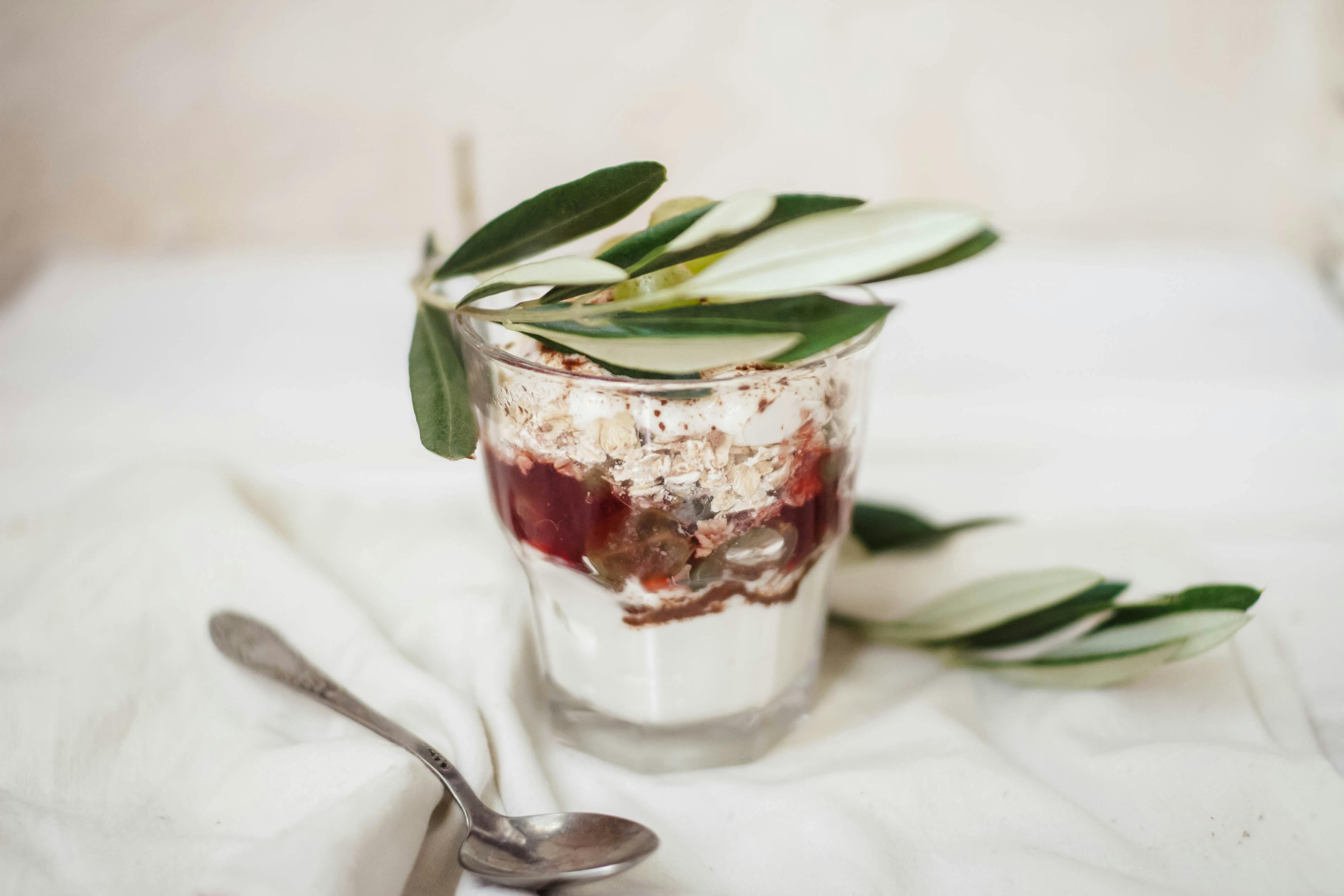
Photo: Mary Nikitina / Pexels
The diets react (see scores below)
Common Ingredients
- heavy cream
- whisky
- oats
- honey
- raspberries
- butter
Specific recipes may vary.
Incompatible with 9 of 11 diets
Diet Ratings
Cranachan is fundamentally incompatible with ketogenic eating. The dish combines multiple high-carb ingredients: oats are a grain with significant net carbs (~27g per 40g serving), honey is pure sugar (~17g net carbs per tablespoon), and raspberries add additional sugar and carbs. While heavy cream and butter are excellent keto fats, they cannot offset the carbohydrate load from oats, honey, and raspberries combined. A standard serving of Cranachan could easily contain 40-60g of net carbs, exceeding the entire daily keto carb budget in one snack. The whisky adds minimal carbs but is still a consideration. This dish as traditionally prepared is not adaptable to keto without replacing most of its defining ingredients.
Cranachan contains multiple animal-derived ingredients that make it entirely incompatible with a vegan diet. Heavy cream and butter are dairy products (animal-derived), and honey is excluded by the Vegan Society and most mainstream vegan organizations as an animal product. With three distinct animal-derived ingredients — dairy cream, dairy butter, and honey — this dish is unambiguously non-vegan. The oats, whisky, and raspberries are the only plant-based components.
Cranachan is fundamentally incompatible with the Paleo diet. The dish contains multiple core non-Paleo ingredients: oats (a grain, strictly excluded), heavy cream (dairy, excluded), and butter (dairy, excluded). While raspberries are fully Paleo-approved and honey is a accepted in moderation (caution), and whisky is a debated gray area as an alcohol, the grain and dairy foundations of this traditional Scottish dessert make it clearly off-limits. No amount of modification within the dish's identity could make it Paleo-compliant — removing the oats and cream would mean it is no longer Cranachan.
Cranachan is a traditional Scottish dessert that conflicts significantly with Mediterranean diet principles. The dish is dominated by heavy cream and butter, both high-saturated-fat dairy products that are not part of the Mediterranean dietary pattern, which emphasizes olive oil as the primary fat. Whisky adds empty alcohol calories beyond any modest wine allowance. Honey contributes added sugar. While oats (a whole grain) and raspberries (a fruit) are genuinely positive elements, and dairy in moderate amounts can be acceptable, the overall composition is high in saturated fat and added sugar, with no olive oil and a non-Mediterranean fat profile. This is a rich indulgence dish, not aligned with Mediterranean eating patterns.
Cranachan is a traditional Scottish dessert that is fundamentally incompatible with the carnivore diet. While it contains two animal-derived ingredients (heavy cream and butter), the dish is dominated by plant-based and non-carnivore components: oats (a grain), raspberries (a fruit), and honey (debated but plant-derived). Whisky is an alcohol distilled from grain and is entirely off-limits. The combination of a grain, fruit, and alcohol makes this dish a clear 'avoid' regardless of the dairy components present. No carnivore framework — not even the most permissive animal-based approach — would accommodate oats, raspberries, and whisky together.
Cranachan contains multiple excluded ingredients that make it clearly non-compliant with Whole30. Heavy cream and butter are dairy products (excluded; only ghee/clarified butter is allowed). Whisky is alcohol (excluded). Oats are a grain (excluded). Honey is an added sugar (excluded). Only raspberries are Whole30-compliant. With five out of six ingredients violating Whole30 rules, this dish is firmly in the avoid category.
Cranachan contains several ingredients that require careful portion control on the low-FODMAP elimination diet. Heavy cream is low-FODMAP at standard serving sizes (whipping/heavy cream is low in lactose due to low lactose content per serve). Whisky is distilled and considered low-FODMAP. Oats are low-FODMAP at up to 52g (½ cup) per Monash. Raspberries are low-FODMAP at up to 60g (approx. 30 berries) per Monash. Butter is low-FODMAP. The main concerns are honey (high-FODMAP due to excess fructose — even small amounts like 1 teaspoon can be problematic) and cumulative FODMAP load from multiple moderate-risk ingredients. Honey is a standard and integral ingredient in cranachan and is difficult to omit without changing the dish. If honey is replaced with maple syrup (low-FODMAP) and portion sizes of oats and raspberries are controlled, the dish could be made low-FODMAP, but as traditionally prepared, honey makes this dish risky during elimination.
Monash University clearly rates honey as high-FODMAP even at small servings (1 teaspoon), so strict elimination-phase practitioners would advise avoiding traditional cranachan entirely. However, some FODMAP practitioners allow small amounts (½ tsp) of honey with the understanding that individual tolerance varies, making the verdict dependent on recipe quantities and personal threshold.
Cranachan is a traditional Scottish dessert/snack built around heavy cream and butter as primary ingredients, both of which are high in saturated fat — directly contradicting DASH diet principles that explicitly limit saturated fat and specify low-fat or fat-free dairy. Heavy cream is among the foods DASH most clearly discourages. While the dish does contain DASH-friendly components — raspberries (excellent source of fiber, potassium, antioxidants), oats (whole grain, fiber-rich), and honey (natural sweetener in moderation) — these positives are overwhelmed by the dominant saturated fat contributors. Whisky adds empty calories and alcohol, which DASH does not encourage. The combination of heavy cream and butter in a single serving delivers a substantial saturated fat load well in excess of DASH targets. The dish as traditionally prepared is fundamentally incompatible with DASH principles.
Cranachan is a traditional Scottish dessert/snack that presents significant Zone Diet challenges. The macro profile is heavily skewed toward fat and carbohydrates with minimal lean protein. Heavy cream is high in saturated fat — an 'unfavorable' fat in Zone terminology — and provides essentially no protein blocks. Honey is a high-glycemic, concentrated sugar source that Sears classifies as unfavorable. Butter adds more saturated fat with no Zone benefit. Oats are a moderately favorable carb (whole grain, lower GI than refined grains), and raspberries are an excellent Zone-favorable fruit rich in polyphenols and fiber. However, the overall dish has no meaningful lean protein source, is dominated by saturated fat rather than monounsaturated fat, and the honey spikes the glycemic load significantly. As a snack, it would require pairing with a substantial lean protein source and portion control so extreme it would barely resemble the dish. The whisky adds empty alcohol calories. Raspberries and oats are the only genuinely Zone-friendly components. The dish scores a 3 rather than 1-2 because those two ingredients have real Zone value, but the overall composition is very difficult to incorporate into Zone balance without fundamental reformulation.
Cranachan is a traditional Scottish dessert with a mixed anti-inflammatory profile. On the positive side, raspberries are rich in antioxidants, polyphenols, and vitamin C, making them one of the more anti-inflammatory fruits available. Oats provide beta-glucan fiber and have demonstrated reductions in inflammatory markers in research. Whisky in moderate amounts may offer some polyphenol benefit (similar to other spirits), though it is not as well-regarded as red wine in anti-inflammatory frameworks. On the negative side, heavy cream is high in saturated fat and is categorized as full-fat dairy — a food to limit under anti-inflammatory guidelines. Butter amplifies the saturated fat load further, and honey adds sugar, which in excess can be pro-inflammatory. Together, heavy cream and butter are the most concerning components, pulling this dish toward a caution rating. This is an indulgent dessert rather than a health food, but it is not as aggressively pro-inflammatory as dishes featuring trans fats, processed meats, or refined grains. Occasional consumption is reasonable for most people, but the high saturated fat and sugar content make it inappropriate for regular consumption on an anti-inflammatory diet.
Some anti-inflammatory practitioners (particularly those following AIP or stricter dairy-free protocols) would rate this more harshly given the heavy cream and butter, arguing saturated fat from full-fat dairy promotes inflammatory cytokines. Conversely, a minority of researchers note that full-fat dairy contains conjugated linoleic acid (CLA) and fat-soluble antioxidants that may have neutral or even modest anti-inflammatory effects, and that the oat and raspberry components partially offset the inflammatory burden.
Cranachan is a poor fit for GLP-1 patients. The dominant ingredients are heavy cream and butter, which are high in saturated fat and known to worsen GLP-1 side effects including nausea, bloating, and reflux — particularly problematic given the medication's slowed gastric emptying. Whisky contributes alcohol and empty calories. Honey adds concentrated sugar with negligible nutritional value. While oats provide some fiber and raspberries offer vitamins and antioxidants, these positives are overwhelmed by the high-fat, high-sugar, alcohol-containing base. Protein content is minimal. As a snack category item, it delivers almost no protein, moderate sugar, high saturated fat, and includes alcohol — hitting multiple 'avoid' criteria simultaneously.
*See how scores were generated at our methodology page.
Nutritional profile
Six traits that cut across every diet.
Fiber & Plants
How much whole-plant food and fiber it delivers.
Healthy Fats
The quality of its fats (unsaturated, omega-3).
Whole / Unprocessed
How close it is to its natural, unprocessed form.
Gut Gentle
How easy it is on digestion (low FODMAP, few irritants).
Low Glycemic
How little it spikes your blood sugar.
Protein Density
How much protein it packs per calorie.
Controversy Index
Higher controversy = more disagreement between diets.
Diet-Specific Tips
 Zone — 5/10
View tips
- Heavy cream is high in saturated fat — classified as 'unfavorable' fat in Zone methodology
- Honey is a high-glycemic concentrated sugar — an 'unfavorable' carbohydrate source in Zone
- No lean protein source present — critical Zone block is entirely missing for a snack
- Butter adds additional saturated fat with no Zone nutritional benefit
- Raspberries are Zone-favorable: low glycemic, high fiber, high polyphenol content
- Oats are a moderately favorable whole-grain carbohydrate in the Zone framework
- Whisky contributes empty alcohol calories that disrupt Zone macro balance
- Overall fat profile is predominantly saturated rather than monounsaturated — contrary to Zone fat guidelines
 Anti-Inflammatory — 4/10
View tips
- Raspberries are high in polyphenols and antioxidants — a strong anti-inflammatory positive
- Oats provide beta-glucan fiber linked to reduced CRP
- Heavy cream is full-fat dairy — categorized as 'limit' under anti-inflammatory guidelines
- Butter adds additional saturated fat, compounding the inflammatory load
- Honey adds sugar — pro-inflammatory in excess
- Whisky is alcohol other than red wine — categorized as 'limit'; present in small culinary amounts
- Overall dish is high in saturated fat and sugar, limiting its anti-inflammatory value