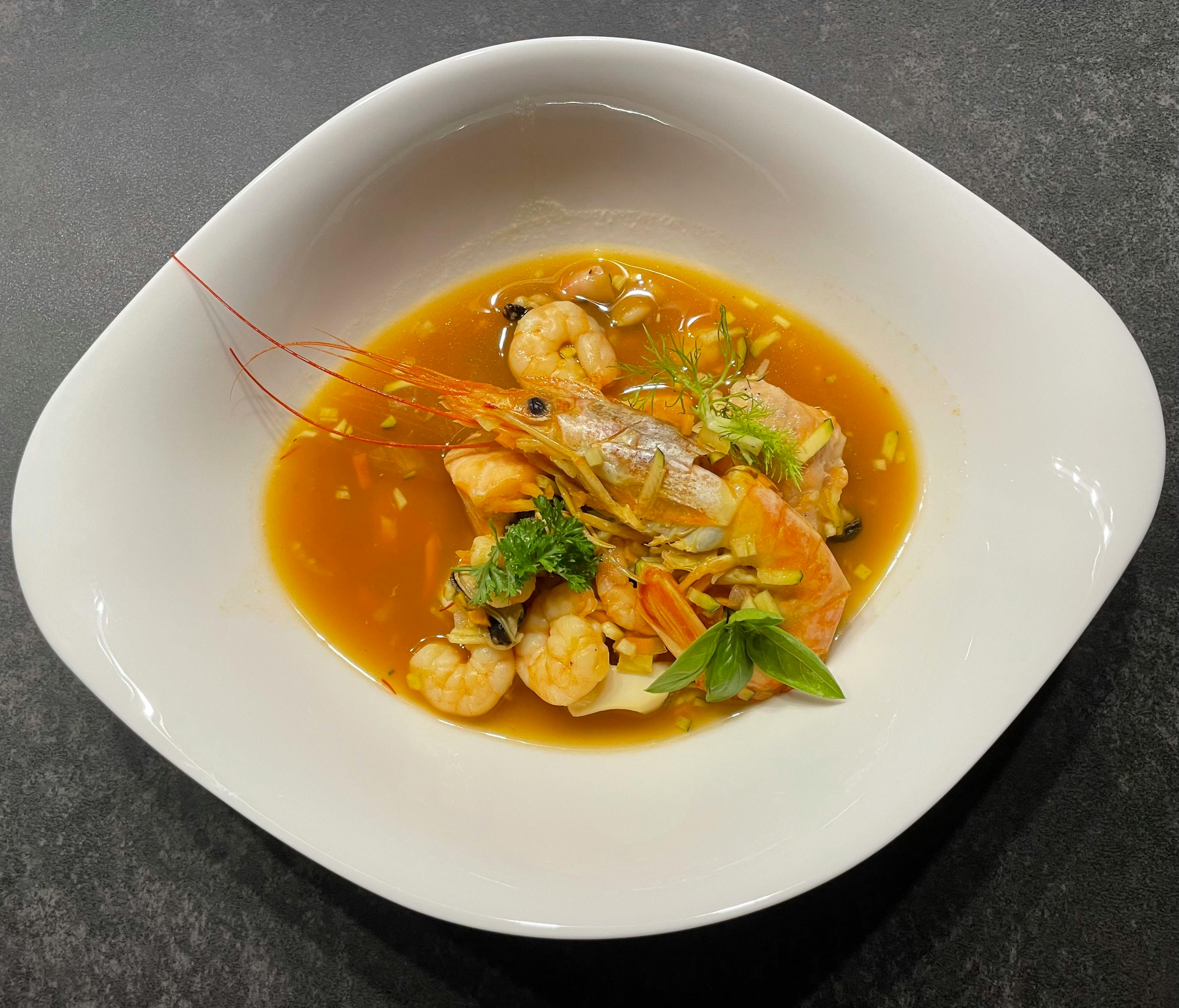
Photo: Rudi Kessler / Pexels
The diets react (see scores below)
Common Ingredients
- mixed fish
- onion
- garlic
- tomato
- white wine
- olive oil
- parsley
- polenta
Specific recipes may vary.
Incompatible with 6 of 11 diets
Diet Ratings
Brudet is a traditional Croatian fish stew that would otherwise be keto-friendly (fish, olive oil, onion, garlic, tomato, white wine) but is critically undermined by the inclusion of polenta as a listed ingredient. Polenta is ground cornmeal — a high-carb grain product with approximately 21g of net carbs per 100g serving. In traditional Brudet, polenta is served alongside or cooked into the dish as a staple starch base, making it a core component rather than an optional garnish. The remaining ingredients carry moderate carb loads too: tomato adds ~3-4g net carbs, white wine ~3-4g per serving, and onion ~4-5g. Combined with polenta, a standard serving would far exceed the 20-50g daily keto carb threshold in a single dish. Without the polenta, the fish stew base would rate as a 'caution' (6/10) due to tomato and wine. With polenta as listed, it is incompatible with ketosis.
Brudet is a traditional Croatian fish stew whose primary and defining ingredient is mixed fish — an animal product explicitly excluded from vegan diets. There is no ambiguity here: fish are animals, and consuming them violates the foundational principle of veganism regardless of the otherwise plant-based supporting ingredients (onion, garlic, tomato, white wine, olive oil, parsley, polenta).
Brudet is a traditional Croatian fish stew that is nearly paleo-compliant, but is disqualified by two key non-paleo ingredients: polenta and white wine. Polenta is made from ground corn, which is a grain and strictly excluded from the paleo diet. White wine, while derived from grapes, is an alcoholic processed beverage that strict paleo excludes — though some in the paleo community place it in the caution category. The remaining ingredients — mixed fish, onion, garlic, tomato, olive oil, and parsley — are all solidly paleo-approved. However, the inclusion of polenta (a core grain) is a clear disqualifier that pushes this dish into avoid territory. Without the polenta and with wine moved to a caution consideration, this dish could easily be adapted to a paleo-friendly version.
Brudet is a traditional Croatian fish stew that aligns excellently with Mediterranean diet principles. Mixed fish as the primary protein meets the recommendation for fish 2-3 times weekly. Olive oil is the primary fat, and the base is built from classic Mediterranean vegetables (onion, garlic, tomato) with fresh herbs. White wine is a traditional Mediterranean cooking ingredient. The only consideration is polenta, a refined corn product, which somewhat departs from the whole grain preference of the Mediterranean diet, though it is traditional in the Dalmatian coastal region.
Some strict Mediterranean diet interpretations would note that polenta (refined cornmeal) is not a whole grain and is not native to the traditional Mediterranean pantry, preferring whole grain bread or legumes as accompaniments. However, in Dalmatian and broader Adriatic coastal traditions, polenta has long been a staple pairing with fish stews, and traditional dietary patterns of the region do incorporate it.
Brudet is a Croatian fish stew that, while centered on fish (a carnivore-approved protein), is fundamentally incompatible with the carnivore diet due to its extensive plant-based ingredient list. Onion, garlic, tomato, parsley, and olive oil are all plant-derived and strictly excluded. White wine is a fermented plant product. Polenta is a grain (corn-based) and one of the most disqualifying ingredients possible on a carnivore diet. The fish itself would be approved, but the dish as prepared is overwhelmingly plant-based in its supporting ingredients and cannot be considered carnivore-compatible in any tier of the diet.
Brudet is a traditional Croatian fish stew that is largely Whole30-compliant in its core ingredients (mixed fish, onion, garlic, tomato, olive oil, parsley), but it contains two problematic components. First, white wine is used in cooking — alcohol in any form, including for cooking, is excluded on Whole30. Second, polenta is made from ground corn, and corn is explicitly listed as an excluded grain. Either of these ingredients alone would disqualify the dish as traditionally prepared.
Brudet contains two major high-FODMAP ingredients that make it unsuitable for the elimination phase of the low-FODMAP diet: onion and garlic. Both are among the highest-FODMAP foods tested by Monash University — onion is extremely high in fructans and is problematic even in very small amounts (e.g., 1/4 of a small onion exceeds safe thresholds), and garlic is perhaps the single most potent FODMAP trigger, with even trace amounts causing issues. These two ingredients are fundamental to the dish and cannot be reduced to safe portions without fundamentally altering the recipe. The remaining ingredients are largely low-FODMAP: mixed fish (protein, no FODMAPs), tomatoes (low-FODMAP at standard serve of ~65g), white wine (low-FODMAP at ~150ml), olive oil (FODMAP-free), parsley (low-FODMAP), and polenta/cornmeal (low-FODMAP at standard serves). However, the onion and garlic alone are sufficient to classify this dish as high-FODMAP and unsuitable during elimination.
Brudet is a Croatian fish stew that aligns well with DASH diet principles. The dish centers on mixed fish (lean protein rich in omega-3s), vegetables (onion, garlic, tomato), olive oil (heart-healthy fat), and herbs (parsley) — all core DASH-friendly ingredients. Polenta, made from whole or degerminated cornmeal, adds a whole-grain-adjacent carbohydrate base with moderate fiber. White wine contributes minimal alcohol and some acidity but is used in cooking amounts where most alcohol evaporates. The primary concern is sodium, which depends heavily on preparation: if salt is added generously during cooking or if certain fish varieties are salted, sodium could climb. Home-prepared versions without added salt can be quite low in sodium. Olive oil keeps saturated fat low. Overall, this dish reflects the Mediterranean-DASH overlap and is a strong candidate for approval with attention to sodium control.
NIH DASH guidelines explicitly endorse fish as a lean protein source and vegetables/olive oil as staples, making Brudet a natural fit. However, some DASH clinicians note that restaurant or traditional preparations may use significant added salt, and certain fish selections (e.g., fattier or cured fish) could alter the sodium and saturated fat profile — in those cases, a 'caution' rating would be more appropriate.
Brudet is a Croatian fish stew that aligns well with many Zone Diet principles but requires modification around the polenta component. The mixed fish provides excellent lean protein with anti-inflammatory omega-3 fatty acids — a cornerstone of Zone eating. Olive oil supplies ideal monounsaturated fat. Onion, garlic, tomato, and parsley are all favorable low-glycemic vegetables rich in polyphenols, supporting Sears' anti-inflammatory framework. White wine adds minimal carbohydrate load per serving. The problematic element is polenta (corn-based), which is a higher-glycemic carbohydrate that Zone classifies as 'unfavorable.' Corn has a moderate-to-high glycemic index and lacks the fiber density of preferred Zone carbohydrates. However, polenta is typically served as a side or base portion rather than a dominant ingredient in brudet itself — if kept to a small serving (under half a cup), it can be counted as carbohydrate blocks without derailing the 40/30/30 ratio, especially since the rest of the dish is Zone-favorable. The overall macro profile of brudet without excess polenta trends toward a solid Zone-compatible meal: lean protein, monounsaturated fat, low-glycemic vegetables. Portioning the polenta carefully and pairing with extra vegetables would bring this squarely into Zone territory.
Traditional brudet is served with a generous portion of polenta, which shifts the carbohydrate load toward higher-glycemic territory. Some Zone practitioners would view polenta similarly to white rice or corn products — acceptable only in very small blocks — and would prefer substituting polenta with additional non-starchy vegetables or skipping it entirely. Sears' later writings increasingly emphasize polyphenol-rich, very low-glycemic carbohydrates, making corn-based polenta a less favorable choice even in moderate amounts. A stricter Zone interpretation might score this a 5 unless the polenta is significantly reduced.
Brudet is a traditional Croatian fish stew with a strong anti-inflammatory profile overall. Mixed fish — typically Adriatic varieties like sea bream, scorpionfish, or mullet — provide lean protein and, for oilier species, meaningful omega-3 fatty acids (EPA and DHA). Olive oil contributes oleocanthal, a well-documented anti-inflammatory compound. Garlic and onion supply allicin, quercetin, and organosulfur compounds that reduce inflammatory markers like CRP and IL-6. Tomato delivers lycopene and other carotenoids. Parsley is rich in flavonoids (apigenin, luteolin) and vitamin C. White wine in cooking contributes polyphenols, though the alcohol content largely evaporates and the residual quantity is minor. The main consideration is polenta: while a whole grain product, refined cornmeal polenta has a relatively high glycemic index and moderate fiber, making it less ideal than intact whole grains — this modestly tempers the score. Overall, the dish aligns well with the anti-inflammatory framework: predominantly fish, vegetables, extra virgin olive oil, and herbs, with only one ingredient of mild concern.
The white wine inclusion is a point of mild debate — Dr. Weil's pyramid permits moderate red wine for resveratrol, but updated anti-inflammatory guidelines increasingly recommend avoiding alcohol entirely (including white wine) given emerging research suggesting no safe threshold; however, the quantity used in cooking is minimal. Additionally, the inflammatory potential of the specific fish used varies: fattier, oily fish (sardines, mackerel) score significantly higher than leaner white fish, so the omega-3 benefit is fish-dependent.
Brudet is a Croatian fish stew that aligns well with GLP-1 dietary priorities. Mixed fish provides a lean, high-quality protein source with omega-3 fatty acids, particularly if the fish selection includes oily varieties like mackerel or sardines. Tomato, onion, garlic, and parsley contribute fiber, micronutrients, and antioxidants with minimal calories. Olive oil is a preferred unsaturated fat used in modest amounts for cooking. Polenta adds digestible complex carbohydrates and some additional fiber, though it is lower in protein and fiber than alternatives like legumes or whole grains. The stew format is gentle on the GI tract, easy to digest, and hydrating — all beneficial for GLP-1 patients. The dish scores well overall as a nutrient-dense, protein-forward, low-fat, easily digestible meal appropriate for small servings.
The rating is sensitive to which fish are used — fattier fish like mackerel or bluefish increase fat content significantly, which some GLP-1-focused dietitians flag as a nausea risk, while others consider omega-3-rich fatty fish a net positive worth the trade-off. The white wine ingredient also divides practitioners: some accept the residual alcohol in a cooked dish as negligible, while others advise GLP-1 patients to avoid alcohol in any form due to heightened sensitivity and liver considerations.
*See how scores were generated at our methodology page.
Nutritional profile
Six traits that cut across every diet.
Fiber & Plants
How much whole-plant food and fiber it delivers.
Healthy Fats
The quality of its fats (unsaturated, omega-3).
Whole / Unprocessed
How close it is to its natural, unprocessed form.
Gut Gentle
How easy it is on digestion (low FODMAP, few irritants).
Low Glycemic
How little it spikes your blood sugar.
Protein Density
How much protein it packs per calorie.
Controversy Index
Higher controversy = more disagreement between diets.
Diet-Specific Tips
 Mediterranean — 9/10
View tips
- Fish as primary protein strongly supports Mediterranean guidelines
- Extra virgin olive oil as primary cooking fat
- Abundant vegetables and aromatics (tomato, onion, garlic, parsley)
- Polenta is a refined grain, not optimal but regionally traditional
- No processed ingredients, added sugars, or red meat
- White wine used in moderation for cooking, consistent with Mediterranean tradition
 DASH — 8/10
View tips
- Mixed fish provides lean protein and heart-healthy omega-3 fatty acids, a DASH priority
- Olive oil is the fat source, keeping saturated fat low
- Vegetables (tomato, onion, garlic) contribute potassium, fiber, and antioxidants
- Parsley adds micronutrients with negligible sodium
- Polenta is a moderate-GI whole-grain carbohydrate; portion control recommended
- Sodium is the key variable — home preparation without added salt keeps this DASH-compliant
- White wine used in cooking reduces to minimal alcohol; acceptable in DASH context
- No high-sodium processed ingredients, full-fat dairy, or red meat
 Zone — 6/10
View tips
- Mixed fish provides lean protein with anti-inflammatory omega-3 fatty acids — highly favorable for Zone
- Olive oil is the ideal Zone fat source (monounsaturated, anti-inflammatory)
- Tomato, onion, garlic, and parsley are all low-glycemic, polyphenol-rich Zone-favorable vegetables
- Polenta (corn-based) is a higher-glycemic 'unfavorable' carbohydrate in Zone terminology
- White wine contributes minimal carbohydrates per serving and is generally acceptable in Zone
- Dish can be Zone-balanced if polenta portion is kept small and vegetable volume is emphasized
- Strong anti-inflammatory ingredient profile aligns with Sears' broader nutritional philosophy
 Anti-Inflammatory — 8/10
View tips
- Mixed fish provides lean protein and omega-3 fatty acids (amount varies by species — oily fish are superior)
- Extra virgin olive oil is a cornerstone anti-inflammatory fat (oleocanthal)
- Garlic and onion contain allicin, quercetin, and organosulfur anti-inflammatory compounds
- Tomato supplies lycopene and carotenoids
- Parsley contributes apigenin and luteolin flavonoids
- Polenta (refined cornmeal) has a higher glycemic index than whole intact grains — minor concern
- White wine contributes polyphenols but alcohol is debated in anti-inflammatory contexts; cooking quantity is small
- No processed ingredients, refined sugars, trans fats, or pro-inflammatory seed oils
 GLP-1 Friendly — 8/10
View tips
- High-quality lean protein from mixed fish supports muscle preservation
- Omega-3 fatty acids from fish are a preferred fat source on GLP-1 protocols
- Tomato, onion, garlic, and parsley provide fiber, micronutrients, and antioxidants
- Olive oil used as cooking fat aligns with unsaturated fat preference
- Stew format is hydrating, easy to digest, and well-tolerated with slowed gastric emptying
- Polenta is a moderate-fiber carbohydrate but lower in protein and fiber density than legume-based alternatives
- White wine introduces residual alcohol — a caution flag even in cooked preparations
- Dish is naturally portion-friendly and nutrient-dense per calorie