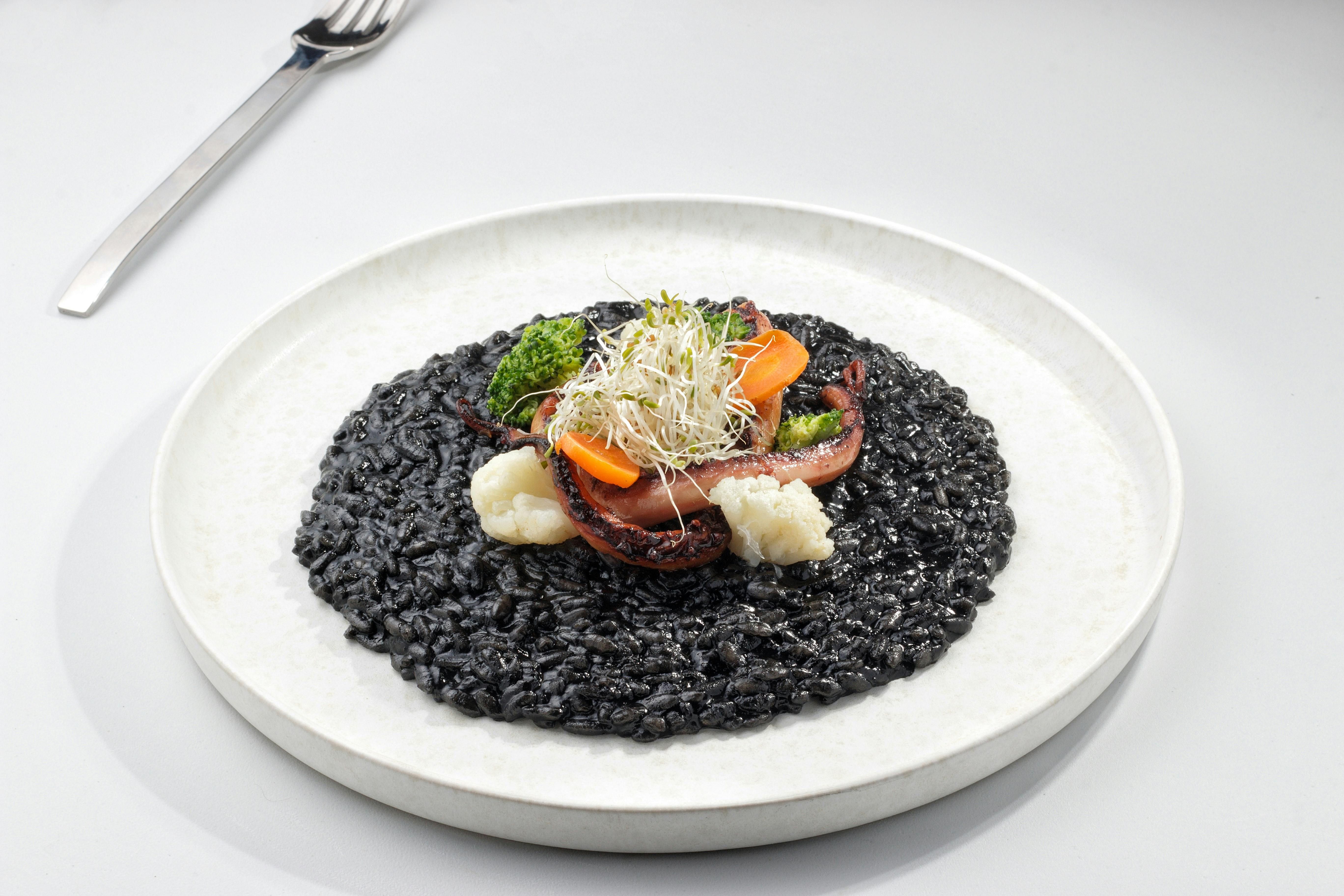
Photo: Adriano Bragi / Pexels
The diets react (see scores below)
Common Ingredients
- cuttlefish
- squid ink
- arborio rice
- onion
- garlic
- white wine
- olive oil
- parsley
Specific recipes may vary.
Incompatible with 6 of 11 diets
Diet Ratings
Crni Rizot is built around arborio rice, a short-grain starchy rice that is fundamentally incompatible with a ketogenic diet. A standard serving (about 1 cup cooked) of arborio rice contains roughly 35-40g of net carbs on its own, easily exceeding or maxing out an entire day's keto carb budget in one dish. The other ingredients — cuttlefish, squid ink, olive oil, garlic, onion, parsley, and white wine — range from keto-friendly to mildly cautionary, but they are irrelevant given that rice is the primary bulk ingredient and the defining component of this dish. Squid ink and cuttlefish are actually excellent low-carb, nutrient-dense seafood options, making this a case where a single grain ingredient disqualifies an otherwise potentially adaptable dish.
Crni Rizot (Croatian black risotto) is fundamentally a seafood dish. Cuttlefish is a marine animal, making it a clear animal product excluded under all definitions of veganism. Squid ink, while plant-like in appearance, is an animal-derived secretion harvested from cephalopods. Both primary ingredients are animal products, making this dish entirely incompatible with a vegan diet.
Crni Rizot is a traditional Croatian black risotto whose defining ingredient is arborio rice, a grain that is explicitly excluded from the Paleolithic diet. Grains are among the clearest non-paleo foods, as they require agricultural processing and contain anti-nutrients such as lectins and phytates. While several other ingredients are paleo-compliant — cuttlefish (excellent paleo protein), squid ink (natural, unprocessed), olive oil (approved fat), onion, garlic, and parsley (all paleo vegetables) — the rice is non-negotiable and disqualifying. White wine is a gray-area ingredient on its own, but it is moot here given the rice. No modification short of removing the rice entirely (and thus changing the dish fundamentally) would make this paleo-compatible.
Crni Rizot (Black Risotto) is a traditional Croatian Adriatic dish that aligns well with Mediterranean principles in several respects: cuttlefish is an excellent seafood protein, olive oil is the primary fat, aromatics like onion, garlic, and parsley are staples, and white wine is a traditional Mediterranean cooking ingredient. The main tension lies in the use of arborio rice, a refined short-grain white rice. Modern Mediterranean diet guidelines emphasize whole grains over refined grains, and arborio is notably starchy and lower in fiber than whole-grain alternatives. However, the dish is deeply rooted in Adriatic coastal tradition and is seafood-forward, which is strongly encouraged. The portion of refined rice is offset by the nutritional value of cuttlefish and the overall minimally processed, whole-ingredient preparation.
Traditional Dalmatian and broader Adriatic Mediterranean cuisine has long featured white rice dishes like risotto as legitimate staples, and some Mediterranean diet researchers — particularly those focused on traditional dietary patterns of coastal Croatia, Italy, and Greece — accept white rice in moderate portions as compatible with the diet's spirit. The 2013 PREDIMED study and Lyon Diet Heart Study did not strictly exclude white rice from Mediterranean-style eating.
Crni Rizot is fundamentally incompatible with the carnivore diet. While cuttlefish and squid ink are animal-derived and would be acceptable, the dish is built around arborio rice — a grain that is entirely excluded on carnivore. Additionally, onion, garlic, parsley, white wine, and olive oil are all plant-derived ingredients that violate carnivore principles. The dish is essentially a plant-heavy rice dish with seafood as a secondary component, not an animal-product-centered meal. No meaningful modification short of completely reconstructing the dish would make it carnivore-compatible.
Crni Rizot (Croatian black risotto) is made with arborio rice, which is a grain and explicitly excluded from the Whole30 program. Rice in all forms — including arborio, white, brown, and wild — is on the excluded grains list. The rest of the ingredients (cuttlefish, squid ink, onion, garlic, white wine used in cooking, olive oil, parsley) are largely compliant, but the foundational ingredient — arborio rice — makes this dish incompatible with Whole30. There is no workaround here; rice is a core, non-negotiable exclusion.
Crni Rizot (Croatian black risotto) contains two significant high-FODMAP ingredients that make it unsuitable during the elimination phase: onion and garlic. Both are among the highest-fructan foods tested by Monash University and must be avoided entirely during elimination — there is no safe serving size for either. Onion is one of the most problematic fructan sources, and garlic is rated as high-FODMAP even at very small amounts (e.g., 1/4 clove). The remaining ingredients are generally low-FODMAP: cuttlefish and squid are low-FODMAP seafood, squid ink has no known significant FODMAP content, arborio rice is low-FODMAP (all white rice is safe), olive oil is FODMAP-free, dry white wine is low-FODMAP at a standard serving (around 150ml), and parsley is low-FODMAP as a herb. However, the presence of both onion and garlic as structural flavor base ingredients — not trace garnishes — means this dish cannot be made FODMAP-compliant as traditionally prepared without a significant recipe overhaul (e.g., substituting garlic-infused oil and omitting onion or using the green tops of spring onions).
Crni Rizot (Croatian black risotto) is built on several DASH-friendly ingredients: cuttlefish is a lean seafood protein low in saturated fat, olive oil is a recommended vegetable oil, onion, garlic, and parsley contribute micronutrients and flavor, and white wine in cooking amounts is generally acceptable. However, arborio rice is a refined white rice, not a whole grain, which DASH de-emphasizes in favor of whole grains. The dish as traditionally prepared in Croatian cuisine often incorporates added salt to season the risotto, and cuttlefish/squid naturally contain moderate sodium. Squid ink itself is used in small amounts and poses no significant nutritional concern. The overall dish is moderate in sodium depending on preparation, uses no saturated fat sources, and features a lean protein — making it acceptable in moderation but not a core DASH food due to the refined grain base and preparation-dependent sodium levels.
NIH DASH guidelines explicitly favor whole grains over refined grains like arborio rice, placing this dish in 'caution' territory. However, updated clinical interpretations note that when refined grains are paired with lean seafood, olive oil, vegetables, and herbs — and sodium is controlled — the overall dietary pattern remains cardiovascular-friendly; some DASH-oriented clinicians would allow this dish as an occasional meal if salt is minimized.
Crni Rizot (Black Risotto) presents a mixed Zone profile. The cuttlefish is an excellent lean protein source — low fat, high protein, fitting neatly into Zone protein blocks. Squid ink adds negligible macronutrient impact. Olive oil is the ideal Zone monounsaturated fat. Onion, garlic, and parsley are favorable low-glycemic carb contributors. However, the dish is anchored by Arborio rice, which is a high-glycemic, 'unfavorable' Zone carbohydrate. Arborio rice has a glycemic index of approximately 69-72 and is a refined starch with minimal fiber, meaning its net carbs hit fast. In a traditional risotto preparation, rice is the dominant ingredient by volume and calorie, which means the 40/30/30 block balance would be heavily skewed toward high-GI carbohydrates rather than the preferred low-glycemic vegetables. White wine adds minor sugar-based carbs. The dish can be made Zone-compatible by dramatically reducing the rice portion (perhaps half the traditional amount) and increasing cuttlefish and vegetable components, but as traditionally prepared, the rice dominance makes it a 'caution' food requiring careful portion control rather than an outright Zone meal.
Some Zone practitioners and Sears' later writings acknowledge that the glycemic load — not just glycemic index — matters most. A smaller portion of Arborio rice in the context of the full dish (with its protein, fat, and other ingredients moderating absorption) may produce an acceptable glycemic load. Additionally, the Mediterranean character of this dish (olive oil, seafood, aromatics) aligns well with the anti-inflammatory principles Sears emphasizes in his later work (The OmegaRx Zone, The Anti-Inflammation Zone), potentially elevating its practical Zone compatibility beyond what the raw rice GI suggests.
Crni Rizot (Black Risotto) is a Croatian seafood dish with a generally favorable anti-inflammatory profile. Cuttlefish is a lean seafood providing protein, some omega-3 fatty acids, and selenium — all associated with reduced inflammation. Squid ink is rich in melanin and antioxidant compounds, with emerging research suggesting anti-inflammatory, antimicrobial, and even neuroprotective properties. Olive oil is a cornerstone anti-inflammatory fat, delivering oleocanthal and monounsaturated fatty acids. Garlic and onion contribute quercetin, organosulfur compounds, and polyphenols that suppress NF-κB inflammatory pathways. Parsley provides flavonoids and vitamin C. White wine contributes polyphenols in modest culinary amounts. The main concern is arborio rice — a refined, high-glycemic white rice that lacks the fiber and micronutrients of whole grains, which is a meaningful anti-inflammatory limitation. The dish would score higher if made with a whole grain base. Overall, the beneficial seafood, olive oil, aromatics, and the unique antioxidant contribution of squid ink outweigh the refined rice drawback for most people.
Most anti-inflammatory frameworks would endorse this dish given its seafood and olive oil base, but Dr. Weil and others emphasize whole grains over refined white rice, and some practitioners following stricter anti-inflammatory protocols (e.g., those focused on blood sugar regulation) would flag arborio rice as a pro-inflammatory glycemic load concern that warrants modification or caution.
Crni Rizot is a traditional Croatian black risotto made with cuttlefish and squid ink. It has meaningful strengths for GLP-1 patients: cuttlefish is a lean, high-protein seafood (roughly 16-18g protein per 100g, very low fat), and olive oil is a preferred unsaturated fat. Squid ink contains antioxidants and is nutritionally neutral. However, the dish has notable drawbacks in this context. Arborio rice is a refined, low-fiber grain with a high glycemic index — exactly the type of refined carbohydrate that is less ideal for GLP-1 patients, who benefit from fiber-rich whole grains. Traditional risotto preparation is also rich in olive oil and white wine, adding caloric density without proportional nutritional return. The dish is soft and easy to digest, which is a genuine positive when GI side effects are active. White wine cooks off significantly during preparation, so alcohol content in the finished dish is negligible. Portion size is important: a small serving delivers decent protein with manageable fat, but a full restaurant portion tips the caloric balance unfavorably given the refined rice base. The dish is not fried, not spicy, and not ultra-processed, so it avoids the major avoid-category triggers.
Some GLP-1-focused dietitians would rate this more favorably, emphasizing the lean seafood protein and easy digestibility as primary concerns when patients are struggling with nausea and reduced appetite — in that context, a soft, protein-containing, non-greasy dish like risotto may be clinically preferable to a nutritionally superior food the patient cannot tolerate. Others would flag the refined Arborio rice more strongly, particularly for patients with comorbid type 2 diabetes or insulin resistance, where glycemic response to refined grains is a more urgent concern than for weight-loss-only patients.
*See how scores were generated at our methodology page.
Nutritional profile
Six traits that cut across every diet.
Fiber & Plants
How much whole-plant food and fiber it delivers.
Healthy Fats
The quality of its fats (unsaturated, omega-3).
Whole / Unprocessed
How close it is to its natural, unprocessed form.
Gut Gentle
How easy it is on digestion (low FODMAP, few irritants).
Low Glycemic
How little it spikes your blood sugar.
Protein Density
How much protein it packs per calorie.
Controversy Index
Higher controversy = more disagreement between diets.
Diet-Specific Tips
 Mediterranean — 6/10
View tips
- Cuttlefish is an excellent seafood source, strongly encouraged 2-3 times weekly
- Olive oil is the primary cooking fat, a Mediterranean cornerstone
- Squid ink is a whole, natural ingredient with antioxidant properties
- Arborio rice is a refined grain, not a whole grain — a notable deviation from modern guidelines
- Onion, garlic, parsley, and white wine are all traditional Mediterranean aromatics
- Dish is minimally processed with whole, recognizable ingredients
- Strong roots in Adriatic coastal culinary tradition
 DASH — 6/10
View tips
- Arborio rice is a refined grain, not aligned with DASH whole-grain emphasis
- Cuttlefish is a lean seafood protein — strongly DASH-compatible
- Olive oil is a DASH-recommended fat source
- Sodium content is preparation-dependent; traditional recipes may add significant salt
- No saturated fat sources, no added sugar, no processed meats
- Squid ink is nutritionally minimal and not a DASH concern
- Onion, garlic, and parsley add micronutrients and can reduce need for added salt
- Low-sodium preparation would improve DASH compatibility
 Zone — 5/10
View tips
- Cuttlefish is an excellent lean protein, ideal for Zone protein blocks
- Arborio rice is a high-glycemic 'unfavorable' carbohydrate — the Zone's primary concern here
- Olive oil provides ideal monounsaturated fat in line with Zone fat guidelines
- Squid ink adds polyphenol-like antioxidants with negligible macro impact
- Traditional preparation is rice-heavy, skewing the 40/30/30 ratio unfavorably
- Portion control (reducing rice, increasing cuttlefish) can bring this dish into Zone balance
- White wine adds minor unfavorable carbohydrates
- Garlic, onion, and parsley are favorable low-GI Zone carb contributors
 Anti-Inflammatory — 7/10
View tips
- Cuttlefish provides lean protein with omega-3 fatty acids and selenium
- Squid ink contains melanin and antioxidant compounds with promising anti-inflammatory research
- Extra virgin olive oil delivers oleocanthal and anti-inflammatory monounsaturated fats
- Garlic and onion contribute quercetin and organosulfur anti-inflammatory compounds
- Arborio rice is a refined high-glycemic grain — a notable anti-inflammatory limitation
- Parsley adds flavonoids and vitamin C
- White wine contributes polyphenols in small culinary quantities
 GLP-1 Friendly — 5/10
View tips
- Cuttlefish is a lean, high-protein seafood — positive for protein priority
- Arborio rice is a refined grain with low fiber and high glycemic index — negative for GLP-1 dietary goals
- Olive oil is a preferred unsaturated fat — acceptable in moderate amounts
- Soft texture and easy digestibility are beneficial when GI side effects are present
- White wine in cooking: alcohol largely evaporates, negligible concern in finished dish
- Portion-sensitive: small serving is more appropriate than a full restaurant portion
- No frying, no added sugars, no ultra-processed ingredients — avoids major avoid-category triggers
- Moderate caloric density from rice and olive oil combined limits nutrient density per calorie