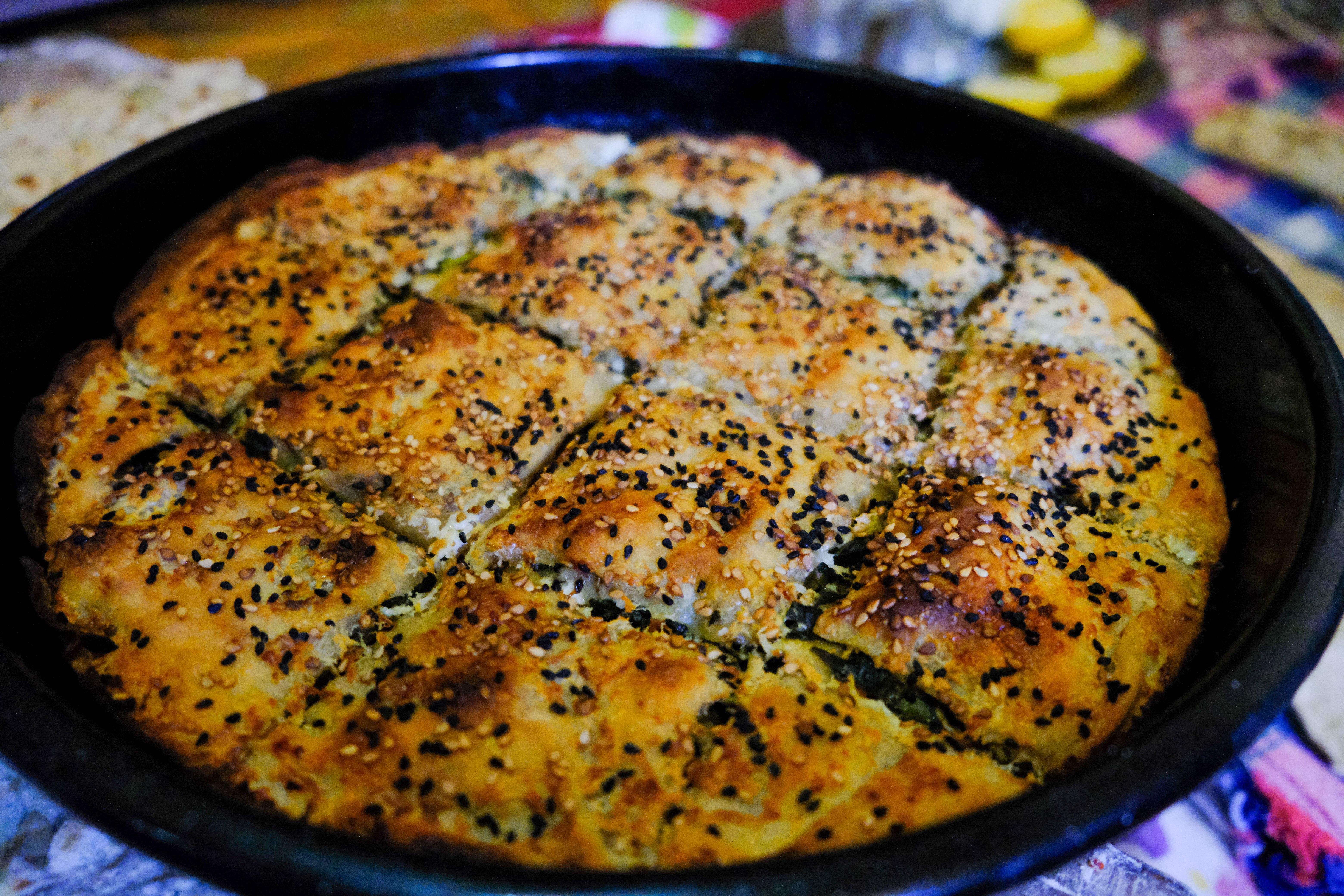
Photo: Enes Beydilli / Pexels
Croatian
Soparnik
The diets react (see scores below)
Common Ingredients
- flour
- swiss chard
- onion
- garlic
- parsley
- olive oil
- salt
Specific recipes may vary.
Incompatible with 5 of 11 diets
Diet Ratings
Soparnik is a traditional Croatian flatbread made with wheat flour as its primary structural ingredient, which makes it fundamentally incompatible with a ketogenic diet. Wheat flour is a high-carb grain product, and a single serving of this flatbread would easily exceed the entire daily net carb limit of 20-50g. While the filling of swiss chard, onion, garlic, parsley, and olive oil contains keto-friendly elements, the flour-based dough dominates the macronutrient profile and cannot be portioned down enough to fit within keto parameters. This is a grain-based dish with no viable modification that would preserve its identity.
Soparnik is a traditional Croatian flatbread filled with Swiss chard, onion, garlic, and parsley, dressed with olive oil and salt. Every single ingredient is fully plant-based with no animal products or animal-derived ingredients present. The dough is made with flour (no eggs or dairy), and the filling is entirely vegetables and aromatics. This is essentially a whole-food, minimally processed dish — the kind of meal that whole-food plant-based advocates would strongly endorse alongside standard vegans. It scores very high as it relies on simple, nutritious plant ingredients with olive oil as the only processed component.
Soparnik is a traditional Croatian flatbread made primarily from wheat flour, which is a grain and a clear paleo exclusion. Despite the filling containing paleo-friendly ingredients (Swiss chard, onion, garlic, parsley, olive oil), the wheat flour dough is the foundational and dominant component of this dish. Salt is also added, which is excluded under strict paleo rules. The presence of non-paleo ingredients at the structural core of the dish makes it incompatible with the paleo diet regardless of the healthy vegetable filling.
Soparnik is a traditional Dalmatian flatbread filled with Swiss chard, onion, garlic, and parsley, dressed with olive oil — a dish that aligns strongly with Mediterranean dietary principles. The filling is entirely plant-based, featuring leafy greens and aromatics that are core Mediterranean ingredients. Olive oil is the primary fat. The main concern is the use of plain wheat flour for the flatbread crust, which is a refined grain rather than a whole grain. However, the overall dish is minimally processed, contains no added sugars, no red meat, and no unhealthy fats, making it a very compatible choice. The vegetable-to-grain ratio and use of olive oil push this firmly into 'approve' territory.
Some stricter modern Mediterranean diet guidelines would flag the refined flour flatbread as a refined grain that should be limited or substituted with whole wheat flour. Traditional Dalmatian practice uses white flour as standard, and in the context of a vegetable-dominant dish with olive oil, many Mediterranean diet researchers would consider this an acceptable traditional preparation.
Soparnik is a traditional Croatian flatbread filled entirely with plant-based ingredients. Every single component — flour, swiss chard, onion, garlic, parsley, and olive oil — is plant-derived. There is no animal product whatsoever in this dish. It is essentially a grain-based pastry with a vegetable filling, which is the antithesis of the carnivore diet. Flour (a grain) alone would disqualify it, and the combination of vegetables, plant oils, and alliums makes this incompatible at every level with carnivore eating principles.
Soparnik is a traditional Croatian flatbread/pie made with flour as its base. Flour is a grain product (wheat), which is explicitly excluded on the Whole30 program. Regardless of the nutritious and otherwise compliant filling (swiss chard, onion, garlic, parsley, olive oil, salt), the dish is fundamentally built on an excluded grain ingredient. Additionally, even if one were to imagine a grain-free version, soparnik falls squarely into the 'flatbread/wrap/cracker' category of foods explicitly prohibited under Rule 4 (no recreating baked goods or junk food analogs). The filling ingredients themselves are all Whole30-compliant, but they cannot redeem the dish as a whole.
Soparnik is a traditional Croatian flatbread filled with Swiss chard, onion, garlic, parsley, and olive oil. It contains multiple high-FODMAP ingredients that make it unsuitable during the elimination phase. First, the wheat flour crust is high in fructans — a major FODMAP trigger — and would need to be replaced with a certified gluten-free, low-FODMAP flour blend to be safe. Second, onion is one of the highest-FODMAP foods tested by Monash University, rich in fructans, and is a primary filling ingredient. Third, garlic is similarly extremely high in fructans and problematic at even tiny amounts. Together, onion and garlic alone would disqualify this dish regardless of other ingredients. Swiss chard itself is low-FODMAP, parsley is low-FODMAP, and olive oil is low-FODMAP, but the combination of wheat flour, onion, and garlic makes this dish a clear 'avoid' during the FODMAP elimination phase. There is no realistic portion size at which this traditional preparation would be considered low-FODMAP.
Soparnik is a traditional Croatian flatbread filled with swiss chard, onion, garlic, and parsley, dressed with olive oil. The filling ingredients are excellent from a DASH perspective: swiss chard is rich in potassium, magnesium, and fiber; onion, garlic, and parsley contribute antioxidants and micronutrients; and olive oil is a DASH-approved vegetable oil. However, the dish is based on refined white flour, which is not a whole grain and lacks the fiber and nutrient density that DASH emphasizes. The salt content is a concern — the amount used in preparation is unspecified, and traditional recipes can add meaningful sodium. The use of olive oil rather than saturated fat keeps this from being a red flag. Overall, this dish occupies a middle ground: the filling is DASH-friendly, but the refined flour base and variable salt content prevent a full approval. Using whole-grain flour and minimizing added salt would push this closer to an approved DASH food.
NIH DASH guidelines emphasize whole grains over refined grains and do not specifically address traditional flatbreads like soparnik. Some DASH-oriented clinicians would view the vegetable-rich filling and olive oil as the dominant nutritional story and allow this dish in moderate portions, particularly if salt is controlled, while others would flag the refined flour as a reason to limit consumption.
Soparnik is a traditional Croatian flatbread filled with Swiss chard, onion, garlic, and parsley, finished with olive oil. From a Zone perspective, it presents a mixed profile. The filling ingredients — Swiss chard, onion, garlic, and parsley — are excellent Zone-favorable low-glycemic vegetables rich in polyphenols, and olive oil is an ideal monounsaturated fat source that Sears consistently endorses. However, the flour-based flatbread crust is a refined grain carbohydrate, which Zone classifies as 'unfavorable' due to its higher glycemic load compared to vegetable carbs. The dish also lacks meaningful protein, making it structurally imbalanced for a Zone meal or snack — a critical issue since Zone requires a lean protein block at every eating occasion. To be used in a Zone context, Soparnik would need to be portioned carefully (limiting the flour-heavy crust), paired with a lean protein source (e.g., grilled chicken, tuna, or egg whites), and the carb blocks from flour accounted for. As a standalone snack, it fails the 40/30/30 ratio due to minimal protein and fat relative to carbohydrate. The olive oil drizzle helps the fat component but is insufficient to balance the macros alone.
Some Zone practitioners and Mediterranean diet crossover advocates would note that Soparnik, when made with a thin crust and a generous chard filling, shifts the carbohydrate load toward low-glycemic vegetable content. In Sears' later writings emphasizing polyphenols and anti-inflammatory eating (The Mediterranean Zone), the combination of olive oil, leafy greens, garlic, and onion would be viewed quite favorably as a polyphenol-rich food. A thin-crusted version portioned small could function as an 'unfavorable carb' component of a Zone meal rather than a disqualifying food.
Soparnik is a traditional Dalmatian flatbread filled primarily with swiss chard, onion, garlic, and parsley, finished with olive oil. The ingredient profile is strongly aligned with anti-inflammatory principles: swiss chard is a nutrient-dense leafy green rich in antioxidants (beta-carotene, vitamin C, quercetin) and magnesium; garlic contains allicin and other sulfur compounds with well-documented anti-inflammatory and immunomodulatory effects; parsley provides flavonoids (apigenin, luteolin) and vitamin C; onion contributes quercetin, a potent anti-inflammatory flavonoid; and olive oil, particularly if extra virgin, provides oleocanthal, a COX-inhibitor comparable in mechanism to ibuprofen. The main limiting factor is refined white flour, which raises the glycemic index and lacks the fiber of whole grains — a meaningful downside in the anti-inflammatory framework. If made with whole wheat or spelt flour, the score would be higher (8-9). As traditionally made with white flour, the dish earns a solid approve but not an elite score.
The use of refined flour is the primary point of contention — mainstream anti-inflammatory guidance (Dr. Weil's pyramid, IF Rating system) discourages refined carbohydrates due to their glycemic load and promotion of insulin spikes that can upregulate pro-inflammatory pathways. Some stricter anti-inflammatory practitioners might rate this 'caution' due to the flour base, arguing that even a vegetable-rich filling doesn't fully offset a refined-grain shell eaten regularly.
Soparnik is a traditional Croatian flatbread filled with Swiss chard, onion, garlic, and parsley, finished with olive oil. The filling is genuinely beneficial — Swiss chard is high in fiber, micronutrients, and water content, and the olive oil provides heart-healthy unsaturated fat in modest amounts. However, the dish is built on a refined flour base with no meaningful protein source, which is its primary shortcoming for GLP-1 patients. Protein is the top dietary priority on GLP-1 medications to prevent muscle loss, and this dish contributes virtually none. The refined flour crust also adds refined carbohydrates with limited nutritional return per calorie. On the positive side, soparnik is not fried (it is traditionally baked or cooked on a stone/griddle), is not greasy or heavily spiced, and is relatively easy to digest — so it does not actively worsen GLP-1 side effects. Portion sensitivity is high: a small piece alongside a protein-rich food could be acceptable, but eating it as a standalone snack offers poor nutritional value for GLP-1 patients who have limited appetite and caloric bandwidth. The fiber from the chard filling is a genuine positive, but insufficient to elevate the overall rating.
Some GLP-1-focused dietitians may view soparnik more favorably as an occasional vegetable-forward snack that is low in fat and easy to digest, particularly for patients struggling with GI side effects who need gentle, palatable foods. Others would flag the refined flour base as counterproductive given reduced caloric capacity, arguing every meal should lead with protein before including grain-based components.
*See how scores were generated at our methodology page.
Nutritional profile
Six traits that cut across every diet.
Fiber & Plants
How much whole-plant food and fiber it delivers.
Healthy Fats
The quality of its fats (unsaturated, omega-3).
Whole / Unprocessed
How close it is to its natural, unprocessed form.
Gut Gentle
How easy it is on digestion (low FODMAP, few irritants).
Low Glycemic
How little it spikes your blood sugar.
Protein Density
How much protein it packs per calorie.
Controversy Index
Higher controversy = more disagreement between diets.
Diet-Specific Tips
 Vegan — 9/10
View tips
- All ingredients are fully plant-based
- No eggs, dairy, or other animal products in traditional recipe
- Whole-food ingredients dominate: Swiss chard, onion, garlic, parsley
- Olive oil is the only processed ingredient, keeping the dish largely whole-food
- Traditional preparation method involves no animal-derived additives
- High nutritional value from leafy greens and aromatics
 Mediterranean — 8/10
View tips
- Swiss chard filling is a highly encouraged leafy green vegetable
- Olive oil is the primary and only fat source
- Aromatics (onion, garlic, parsley) are core Mediterranean ingredients
- No animal products, added sugars, or processed ingredients
- Refined white flour is the limiting factor, not whole grain
- Traditional Dalmatian dish with authentic Mediterranean heritage
- Minimal processing — simple, whole-food preparation
 DASH — 6/10
View tips
- Swiss chard filling is rich in potassium, magnesium, and fiber — core DASH nutrients
- Olive oil is a DASH-approved heart-healthy fat
- Refined white flour lacks whole-grain fiber and nutrients emphasized by DASH
- Salt content is variable and could contribute significantly to daily sodium intake
- No saturated fat or added sugars present
- Garlic, onion, and parsley contribute micronutrients and are DASH-compatible
- Whole-grain flour substitution and reduced salt would significantly improve DASH compatibility
 Zone — 5/10
View tips
- Flour-based crust is a refined, higher-glycemic carbohydrate — classified as 'unfavorable' in Zone terminology
- Swiss chard, onion, garlic, and parsley are excellent Zone-favorable low-glycemic vegetables high in polyphenols
- Olive oil is an ideal Zone monounsaturated fat source, strongly endorsed by Dr. Sears
- No meaningful protein source — critical structural imbalance for Zone's required 40/30/30 ratio
- Must be paired with lean protein to function in any Zone meal or snack
- Portion size of crust must be carefully controlled to avoid excess unfavorable carb blocks
- Anti-inflammatory ingredients (olive oil, garlic, chard) align with Sears' broader Mediterranean Zone philosophy
 Anti-Inflammatory — 7/10
View tips
- Swiss chard: rich in antioxidants (beta-carotene, quercetin, vitamin C) and magnesium — strongly anti-inflammatory
- Garlic: allicin and organosulfur compounds reduce CRP and modulate NF-κB inflammatory pathway
- Olive oil: oleocanthal inhibits COX-1 and COX-2 enzymes; hallmark anti-inflammatory fat
- Onion and parsley: quercetin, apigenin, and luteolin are well-researched anti-inflammatory flavonoids
- Refined white flour: pro-inflammatory element — high glycemic index, low fiber, promotes insulin response
- No pro-inflammatory proteins, seed oils, added sugars, or processed additives
- Plant-forward, whole-food dish with minimal processing beyond baking
 GLP-1 Friendly — 4/10
View tips
- No meaningful protein content — fails the #1 GLP-1 dietary priority
- Refined flour base adds refined carbohydrates with low nutrient density per calorie
- Swiss chard filling provides fiber, micronutrients, and water content — genuinely beneficial
- Olive oil contributes healthy unsaturated fat in moderate amounts
- Not fried, not greasy, not heavily spiced — does not worsen GLP-1 GI side effects
- Easy to digest — appropriate for patients experiencing slowed gastric emptying
- High portion sensitivity — only acceptable as a small side alongside a protein-rich food
- Poor standalone snack choice given limited appetite and caloric bandwidth on GLP-1 medications