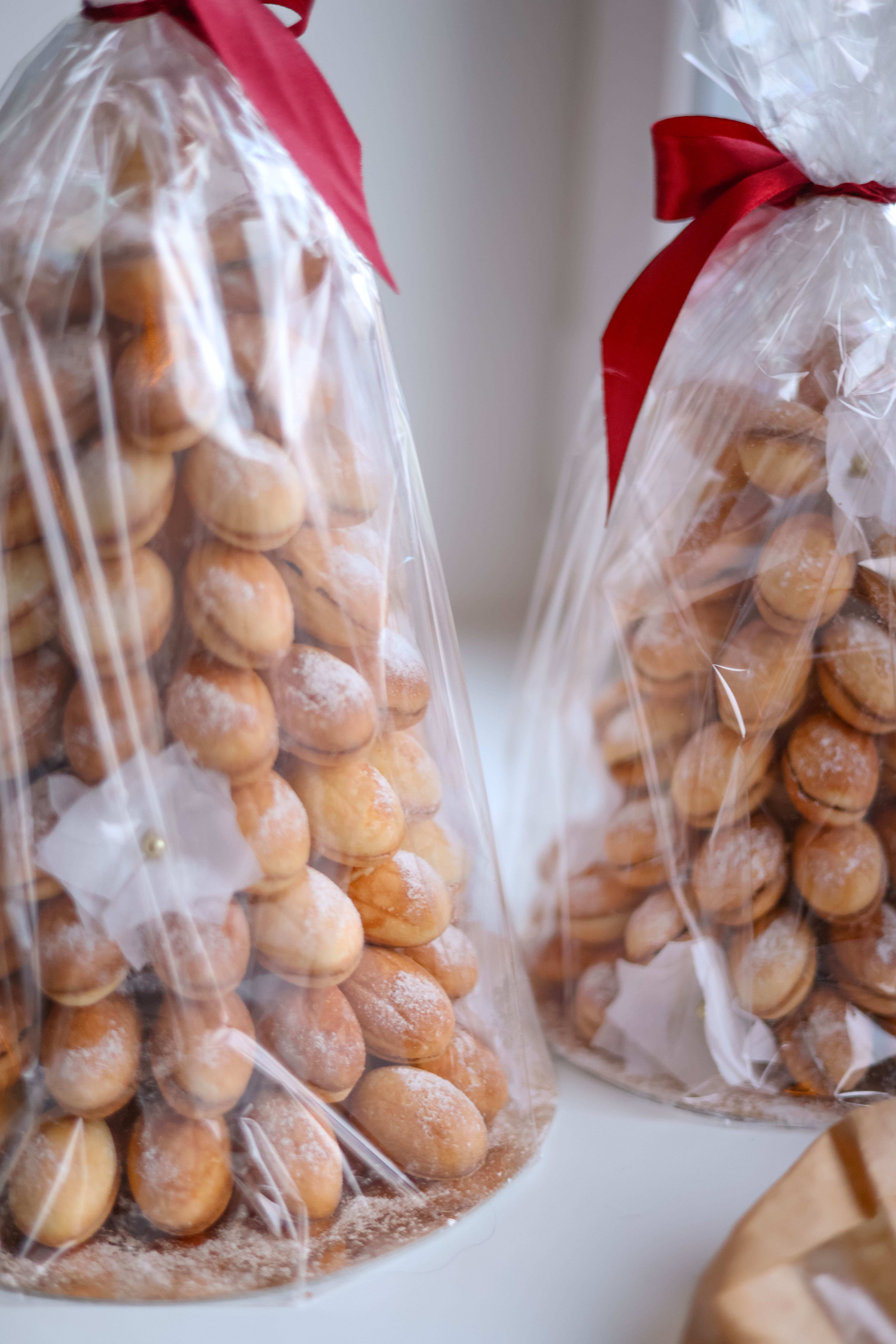
Photo: Valeria Boltneva / Pexels
French
Croquembouche
The diets react (see scores below)
Common Ingredients
- choux pastry
- pastry cream
- milk
- eggs
- butter
- flour
- sugar
- vanilla
- caramel
Specific recipes may vary.
Incompatible with 11 of 11 diets
Diet Ratings
Croquembouche is fundamentally incompatible with a ketogenic diet. It is built almost entirely from high-carbohydrate ingredients: wheat flour in the choux pastry, sugar throughout, caramel coating, and pastry cream made with milk, sugar, and flour. A single choux puff contains roughly 5-8g net carbs, and a standard serving of several puffs plus caramel could easily deliver 50-100g net carbs — exceeding an entire day's keto allowance in one snack. There are no meaningful low-carb redeeming qualities; even the eggs and butter are completely overwhelmed by the flour, sugar, and caramel. This is a celebratory French pastry tower and is not adaptable to keto in any traditional form.
Croquembouche contains multiple animal-derived ingredients that are incompatible with a vegan diet. The choux pastry requires eggs and butter; the pastry cream is made with milk, eggs, and butter; and the caramel is typically made with butter and sometimes cream. These are not incidental trace ingredients but foundational, structural components of the dish — removing them would fundamentally change what croquembouche is. There is no ambiguity here: this classic French dessert tower is thoroughly non-vegan as traditionally prepared.
Croquembouche is a French celebration dessert made of cream-filled choux pastry puffs bound with caramel. It is fundamentally incompatible with the paleo diet. Choux pastry is made from wheat flour — a grain explicitly excluded from paleo. Pastry cream contains milk (dairy) and refined sugar. The caramel binding is refined sugar. Butter, while a dairy product, is debated, but it is a minor concern here compared to the multiple hard-excluded ingredients. This dish is essentially a tower of grains, dairy, and refined sugar — three of the core paleo exclusion categories stacked together. There is no version of a traditional croquembouche that can be considered paleo without completely reconstructing the recipe from scratch.
Croquembouche is a French celebration pastry made from choux puffs filled with pastry cream and bound with caramel. It fundamentally contradicts Mediterranean diet principles on multiple levels: it is built on refined white flour with no whole grain component, contains substantial added sugar in both the pastry cream and caramel coating, relies on butter as the primary fat rather than olive oil, and offers no meaningful plant-based nutrition. The combination of refined carbohydrates, high saturated fat from butter, and significant added sugar places it firmly in the 'avoid' category. As a special-occasion French confection, it has no real analog in traditional Mediterranean eating patterns.
Croquembouche is a French pastry tower made almost entirely of plant-based and processed ingredients. Choux pastry is primarily flour-based, pastry cream is thickened with flour and sugar, and the entire structure is held together with caramel (pure sugar). While it does contain small amounts of animal-derived ingredients — eggs, butter, and milk — these are incidental and subordinate to the dominant plant-based components (flour, sugar, vanilla). The dish is fundamentally a grain-and-sugar confection with no meaningful animal protein source. Even the most liberal carnivore practitioners who allow dairy would not approve of a food whose primary structure is wheat flour and sugar.
Croquembouche contains multiple excluded ingredients that make it clearly incompatible with Whole30. Flour (a grain product) is excluded, sugar (added sugar) is excluded, butter (dairy, not ghee) is excluded, milk (dairy) is excluded, and pastry cream is dairy-based and sugar-laden. Additionally, choux pastry is explicitly the type of baked good/junk food recreation that Whole30 prohibits by rule. Even if individual compliant substitutions were attempted, this is fundamentally a pastry — a category of food the program explicitly forbids recreating even with compliant ingredients.
Croquembouche is a French celebration dessert made of choux pastry puffs filled with pastry cream, bound with caramel. It contains multiple high-FODMAP ingredients that make it unsuitable during the elimination phase. Choux pastry is made with wheat flour, which is high in fructans — a primary FODMAP concern. Pastry cream is made with milk, which is high in lactose, and additional milk further compounds this issue. A standard serving of croquembouche (several choux puffs) would deliver significant quantities of both wheat-based fructans and lactose, making this dish clearly high-FODMAP at any realistic portion. Sugar and caramel (sucrose-based) are generally low-FODMAP, and eggs and butter are also low-FODMAP, but the wheat flour and milk are unavoidable core structural ingredients that cannot be reduced to safe thresholds in a standard serving.
Croquembouche is a French celebration dessert made of choux pastry puffs filled with pastry cream and bound together with caramel. It is fundamentally incompatible with the DASH diet. The dish is high in added sugar (pastry cream, caramel, choux pastry), saturated fat (butter, eggs, whole milk), and refined flour with no fiber value. It provides none of the DASH-emphasized nutrients — potassium, magnesium, calcium from healthy sources, or dietary fiber. DASH guidelines explicitly limit sweets and added sugars to 5 or fewer servings per week as an occasional treat, and a portion of croquembouche would likely exceed a full day's discretionary sugar and saturated fat allowance in a single serving. There are no redeeming DASH-compatible ingredients in meaningful quantities.
Croquembouche is a French celebration dessert consisting of choux pastry puffs filled with pastry cream and bound together with caramel. From a Zone Diet perspective, this dish is extremely difficult to incorporate. The macronutrient profile is dominated by high-glycemic, refined carbohydrates (white flour, sugar, caramel) and saturated fat (butter), with virtually no lean protein, no fiber, and no monounsaturated fats. The glycemic load is very high due to the combination of refined flour, pastry cream (milk + sugar + eggs cooked into a custard), and the caramel coating — all of which spike insulin rapidly. There is no meaningful low-glycemic carbohydrate component, no lean protein block to speak of (egg and milk proteins are diluted and overwhelmed by sugar and fat), and the fat profile is saturated rather than monounsaturated. Even with aggressive portion control, a single choux puff delivers a sugar-and-refined-carb hit with no Zone-favorable counterbalance. This is one of the clearest cases in French cuisine where the dish is built almost entirely from ingredients Dr. Sears explicitly classifies as unfavorable or to be avoided — refined flour, sugar, and caramel. It functions essentially as a pure sugar-and-refined-carb delivery vehicle with saturated fat, which is the antithesis of Zone meal construction.
Croquembouche is a French celebration dessert consisting of cream puffs (choux pastry) stacked into a cone and bound with caramel. Its ingredient profile is almost entirely pro-inflammatory from an anti-inflammatory nutrition standpoint. The choux pastry is made from refined white flour — a refined carbohydrate that drives glycemic spikes and promotes inflammatory signaling. It is loaded with butter, a saturated fat source that anti-inflammatory frameworks consistently recommend limiting. The pastry cream filling is rich in whole milk and eggs combined with sugar and more butter, adding further saturated fat and significant added sugar. The caramel binding is pure refined sugar cooked to high temperatures, which is both glycemically extreme and devoid of any redeeming nutritional value. There are no anti-inflammatory components present — no omega-3 sources, no colorful vegetables or fruits, no polyphenols, no fiber, no herbs or spices with bioactive compounds. The dish is essentially a confection of refined carbohydrates, saturated fats, and added sugars — three of the primary drivers of inflammatory response according to mainstream anti-inflammatory nutrition research (elevated CRP, IL-6, and NF-κB activation). As an occasional celebratory indulgence it is not dangerous, but it offers nothing anti-inflammatory and checks nearly every 'avoid' box in the framework.
Croquembouche is a French celebration pastry tower made of choux puffs filled with pastry cream and bound with caramel. It is essentially a refined sugar and refined-flour dessert with no meaningful protein, negligible fiber, moderate-to-high fat from butter and egg-rich pastry cream, and dense caloric load per small serving. Every ingredient — choux pastry (butter, flour, eggs), pastry cream (milk, sugar, eggs, butter), and caramel (pure sugar) — either contributes empty refined carbohydrates, saturated fat, or added sugar, with no compensating nutritional value per calorie. For GLP-1 patients, this food fails on nearly every priority: protein is virtually absent, fiber is zero, fat is moderate-to-high and primarily saturated, sugar content is high, and the rich buttery composition is likely to worsen nausea, reflux, or bloating given slowed gastric emptying. The caramel coating adds a large bolus of simple sugar with no nutritional benefit. Even a small 1-2 piece serving delivers predominantly empty calories at a time when every calorie must carry nutritional weight. This is a clear avoid regardless of portion size.
*See how scores were generated at our methodology page.
Nutritional profile
Six traits that cut across every diet.
Fiber & Plants
How much whole-plant food and fiber it delivers.
Healthy Fats
The quality of its fats (unsaturated, omega-3).
Whole / Unprocessed
How close it is to its natural, unprocessed form.
Gut Gentle
How easy it is on digestion (low FODMAP, few irritants).
Low Glycemic
How little it spikes your blood sugar.
Protein Density
How much protein it packs per calorie.
Controversy Index
Higher controversy = more disagreement between diets.