Photo: Willians Huerta / Pexels
The diets react (see scores below)
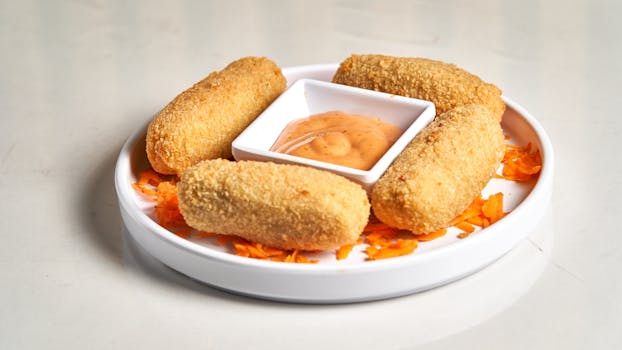
Common Ingredients
- ham
- flour
- butter
- milk
- onion
- nutmeg
- breadcrumbs
- eggs
Specific recipes may vary.
Incompatible with 11 of 11 diets
Diet Ratings
Cuban croquetas are fundamentally incompatible with ketogenic eating. The dish is built around a béchamel base made from flour and milk, then coated in breadcrumbs before frying — meaning every structural element is a high-carb ingredient. Flour alone in the béchamel contributes significant net carbs, milk adds lactose-based carbs, and breadcrumbs form a dense carbohydrate crust. A standard serving of 3-4 croquetas could easily deliver 20-30g of net carbs, potentially consuming an entire day's keto carb budget in a single snack. The ham filling is keto-friendly, but it is a minor component relative to the carb-heavy shell and base.
Cuban croquetas are loaded with multiple animal products. Ham is the primary protein (pork-derived meat), butter and milk form the béchamel base (dairy), and eggs are used in the breading process. There is no plant-based component that could redeem this dish — it is fundamentally incompatible with a vegan diet at the ingredient level.
Cuban Croquetas are fundamentally incompatible with the Paleo diet. The dish's base is a classic béchamel sauce made from wheat flour, butter, and milk — all non-paleo ingredients. Flour is a grain product (strictly excluded), milk is dairy (excluded), and butter is dairy (excluded or debated). The croquetas are then coated in breadcrumbs, another grain-based ingredient that is firmly off-limits. While ham and eggs are animal-based proteins, ham is typically a processed meat with added salt and preservatives, and the remaining non-paleo ingredients dominate the dish structurally. There is no realistic paleo substitution that would preserve the identity of this dish — it is built around its non-paleo components.
Cuban croquetas are highly processed snacks that conflict with Mediterranean diet principles on multiple fronts. The primary protein is ham (processed pork/red meat), which is already limited to a few times per month. The dish is deep-fried in oil other than olive oil, coated in refined breadcrumbs, and built on a béchamel base of butter, refined white flour, and milk — combining refined grains, saturated fat from butter, and processed meat into a single preparation. There are virtually no redeeming plant-based components; onion and nutmeg are negligible. The cooking method (deep frying) and the processed nature of the main ingredient make this a clear avoid under Mediterranean diet guidelines.
Cuban croquetas are fundamentally incompatible with the carnivore diet. While the ham and eggs are animal-derived, the dish is primarily a vehicle for plant-based processed carbohydrates. Flour and breadcrumbs form the structural backbone of the croqueta — these are grain-derived and strictly excluded. Onion is a plant food, and nutmeg is a plant-derived spice. The béchamel base (flour + butter + milk) is disqualified by its flour content. Milk and butter are debated dairy items, but even if accepted under a lenient carnivore framework, the flour, breadcrumbs, and onion make this dish wholly incompatible. This is essentially a breaded, fried carbohydrate snack with some ham inside — the opposite of a carnivore food.
Croquetas contain multiple excluded ingredients that make them incompatible with Whole30. Flour and breadcrumbs are grain-based ingredients (grains are excluded), butter is excluded dairy (only ghee/clarified butter is allowed), and milk is excluded dairy. Additionally, even if all ingredients were compliant, croquetas are a fried, breaded snack that falls into the 'recreating junk food' category the program prohibits. This dish fails on multiple fronts simultaneously.
Cuban croquetas contain multiple high-FODMAP ingredients that make them unsuitable during the elimination phase. Wheat flour and breadcrumbs are high in fructans, milk contributes significant lactose, and onion is one of the highest-FODMAP foods tested by Monash University. Even small amounts of onion are problematic. Butter is low-FODMAP, eggs are low-FODMAP, ham is low-FODMAP, and nutmeg is low-FODMAP at culinary amounts — but the combination of wheat flour, breadcrumbs, milk, and onion creates multiple simultaneous FODMAP hits (fructans from wheat and onion, lactose from milk) that virtually guarantee a high-FODMAP load in any standard serving of croquetas.
Cuban croquetas are deep-fried snacks that conflict with DASH diet principles on multiple fronts. Ham is a processed, cured meat with very high sodium content (often 700-1,000mg per serving), which alone can approach or exceed half the daily DASH sodium limit. The béchamel base uses butter (saturated fat) and whole milk (full-fat dairy), neither of which aligns with DASH's emphasis on low-fat dairy and limiting saturated fat. Deep-frying in oil adds significant total fat and calories. The refined white flour and breadcrumbs offer little fiber or micronutrient value compared to whole grain alternatives. Ham also falls under the 'red meat/processed meat' category that DASH recommends limiting. This dish provides negligible potassium, calcium, magnesium, or fiber relative to its sodium and saturated fat load.
Cuban croquetas are a deep-fried, flour-and-breadcrumb-heavy snack built around a béchamel base (butter, flour, milk) with ham. The macronutrient profile is fundamentally misaligned with Zone principles: the majority of calories come from refined, high-glycemic carbohydrates (white flour in the béchamel, breadcrumb coating) and saturated fats (butter, frying oil), with relatively little lean protein per serving. The carb blocks are almost entirely unfavorable (refined flour, breadcrumbs), the fat is predominantly saturated rather than monounsaturated, and the protein source (ham) is processed and fatty. There is no meaningful low-glycemic vegetable component. Even with careful portioning, the 40/30/30 ratio cannot be approached without the refined carb and saturated fat load overwhelming the meal. This is not a case where portioning saves the food — the structure of the dish itself is the problem. It is essentially a fried starch ball, which Zone classifies firmly in the unfavorable column.
Cuban croquetas are a deep-fried snack built around a béchamel base (butter, flour, milk) and processed ham, then coated in breadcrumbs and fried. From an anti-inflammatory perspective, this dish concentrates several problematic elements simultaneously. The butter-and-flour roux delivers saturated fat and refined carbohydrates. Processed/cured ham is a red-and-processed meat high in sodium, saturated fat, and often nitrates — all associated with elevated inflammatory markers. The breadcrumb coating is refined white carbohydrate. Deep-frying (the standard preparation) typically uses high-omega-6 seed oils at high heat, generating oxidized lipids and advanced glycation end-products (AGEs), both of which are potently pro-inflammatory. There are virtually no anti-inflammatory positives here: no meaningful omega-3s, antioxidants, polyphenols, or fiber. The onion and nutmeg are present in negligible amounts that do not meaningfully offset the inflammatory load. This dish represents a convergence of processed meat, refined carbs, saturated fat, and fried food — the core pillars of a pro-inflammatory dietary pattern.
Cuban croquetas are a textbook poor fit for GLP-1 patients. The base is a butter-and-flour béchamel (bechamel) with ham, then breaded and deep-fried — combining three of the primary avoid categories simultaneously: high saturated fat from butter and processed pork, refined carbohydrates from flour and breadcrumbs with essentially no fiber, and a fried cooking method that worsens nausea, bloating, and reflux. Protein contribution from ham is modest relative to the calorie and fat load. The small physical size is deceptive — each piece is calorie-dense with very low nutrient density per calorie. Gastric emptying is already slowed by GLP-1 medication; a fried, fatty, refined-carb snack significantly amplifies GI side effect risk. There is no meaningful fiber. The saturated fat content from butter plus processed pork fat is high. This snack offers almost nothing that GLP-1 patients need and several things that directly worsen their experience and outcomes.
*See how scores were generated at our methodology page.
Nutritional profile
Six traits that cut across every diet.
Fiber & Plants
How much whole-plant food and fiber it delivers.
Healthy Fats
The quality of its fats (unsaturated, omega-3).
Whole / Unprocessed
How close it is to its natural, unprocessed form.
Gut Gentle
How easy it is on digestion (low FODMAP, few irritants).
Low Glycemic
How little it spikes your blood sugar.
Protein Density
How much protein it packs per calorie.
Controversy Index
Higher controversy = more disagreement between diets.