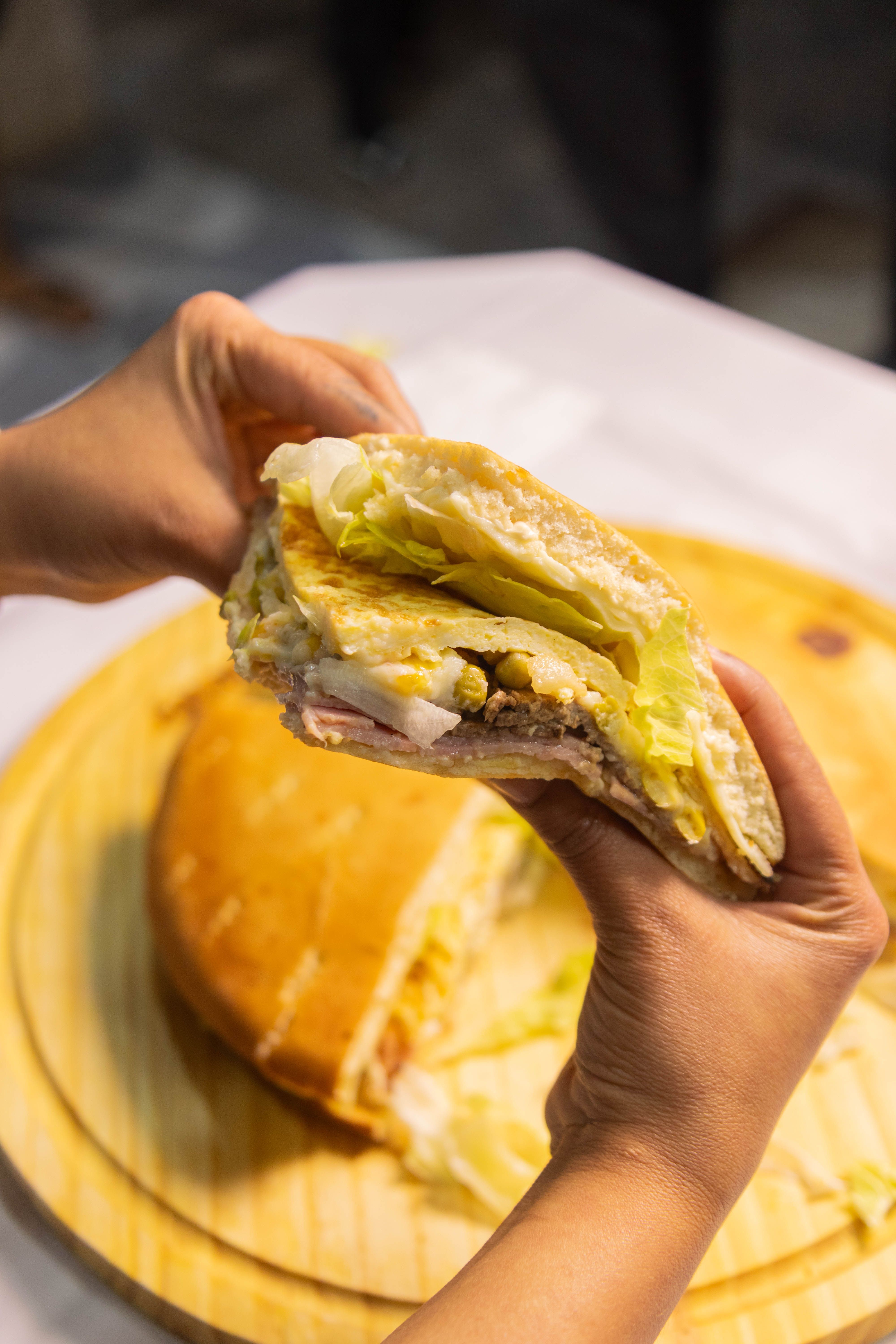
Photo: Laura oliveira / Pexels
Cuban
Cubano Sandwich
The diets react (see scores below)
Common Ingredients
- cuban bread
- roast pork
- ham
- swiss cheese
- pickles
- mustard
- butter
Specific recipes may vary.
Incompatible with 10 of 11 diets
Diet Ratings
The Cubano Sandwich is fundamentally incompatible with a ketogenic diet. The primary disqualifier is Cuban bread, a white wheat bread that delivers roughly 30-40g of net carbs per serving on its own — immediately exceeding or consuming the entire daily keto carb budget. The remaining ingredients (roast pork, ham, Swiss cheese, pickles, mustard, butter) are largely keto-friendly, but they cannot salvage a dish built around a high-carb grain-based bread. There is no meaningful way to consume a traditional Cubano and maintain ketosis.
The Cubano Sandwich contains multiple animal products that make it entirely incompatible with a vegan diet. Roast pork and ham are direct animal flesh, Swiss cheese is a dairy product, and butter is an animal-derived fat. There is no ambiguity here — this sandwich is built around animal products at every layer. Even the Cuban bread is traditionally made with lard in some recipes. This is as clear-cut an 'avoid' as possible.
The Cubano Sandwich is fundamentally incompatible with the Paleo diet. The foundation is Cuban bread, a grain-based product that is strictly excluded under all paleo frameworks. Beyond the bread, the sandwich contains multiple additional non-paleo ingredients: Swiss cheese is dairy, ham is a processed meat typically containing added salt, nitrates, and preservatives, mustard often contains added salt and vinegar additives, and butter is a dairy product. Pickles, while derived from cucumbers, are typically brined with added salt and vinegar. The roast pork is the only ingredient that could be paleo-compliant in its unprocessed form. With at least five of seven ingredients clearly violating paleo principles — most critically the grain-based bread which is the structural foundation of the dish — this sandwich cannot be adapted into a paleo meal without being deconstructed entirely.
The Cubano sandwich conflicts with Mediterranean diet principles on multiple fronts. It features two forms of pork (roast pork and ham), both of which fall into the red/processed meat category that should be limited to a few times per month. Ham is a processed meat, which Mediterranean guidelines specifically discourage. The bread is Cuban bread, a refined white bread made with lard or butter — neither a whole grain nor prepared with olive oil. Butter is used for pressing the sandwich, replacing olive oil as the fat source, which is contrary to core Mediterranean principles. Swiss cheese adds saturated fat from dairy in a non-trivial amount. The combination of processed meat, refined bread, butter, and multiple pork products makes this sandwich a poor fit for the Mediterranean dietary pattern.
The Cubano Sandwich is fundamentally incompatible with the carnivore diet. The dish is built around Cuban bread, a grain-based plant food that is explicitly excluded from all tiers of carnivore eating. Beyond the bread, pickles and mustard are plant-derived condiments also excluded. While roast pork, ham, and butter are animal-derived and would be acceptable, and Swiss cheese is debated but used by many practitioners, the non-negotiable disqualifiers — bread, pickles, and mustard — make this a clear 'avoid' with high confidence. No version of carnivore, from the most liberal to the strictest Lion Diet, permits grain-based bread or plant condiments.
The Cubano Sandwich contains multiple Whole30-excluded ingredients, making it entirely incompatible with the program. Cuban bread is a wheat-based grain product, which is explicitly excluded. Swiss cheese is dairy (excluded). Butter is regular dairy butter (excluded — only ghee/clarified butter is permitted). Even if those ingredients were somehow addressed, the sandwich format itself violates Rule 4, which prohibits recreating bread-based constructs like sandwiches, wraps, and similar baked-good vehicles. There is no compliant version of this dish possible within the Whole30 framework.
The Cubano sandwich is high-FODMAP primarily due to Cuban bread, which is a traditional wheat-based bread high in fructans. Swiss cheese is also high in lactose at typical serving sizes used in this sandwich. Ham may contain added ingredients with FODMAPs, and the combination of multiple moderate-to-high FODMAP ingredients makes this sandwich unsuitable during the elimination phase. Cuban bread is essentially a white wheat bread, and wheat-based breads are consistently high-FODMAP due to fructan content. Swiss cheese is lower in lactose than soft cheeses but at the quantity used in a sandwich (typically 2+ slices), lactose load becomes significant. Roast pork, mustard, butter, and pickles (dill, in brine) are generally low-FODMAP. However, the bread alone is sufficient to classify this dish as high-FODMAP.
The Cubano sandwich is highly problematic for the DASH diet across multiple dimensions. It combines several high-sodium processed meats (ham and roast pork are typically cured/seasoned with significant salt), full-fat Swiss cheese (high in saturated fat and sodium), pickles (very high sodium), and mustard (moderate sodium), all on Cuban bread (refined white bread with added butter during pressing). The cumulative sodium load of a single Cubano easily exceeds 1,500–2,000mg, potentially consuming an entire day's sodium allowance in one snack. Ham alone typically contains 700–1,000mg sodium per serving. The sandwich also features two animal proteins simultaneously, full-fat dairy, refined grains, and saturated fat from both the cheese and butter — directly conflicting with DASH principles emphasizing whole grains, low-fat dairy, limited red/processed meat, and strict sodium control. This is not simply a food requiring portion control; its core composition is fundamentally misaligned with DASH guidelines.
The Cubano Sandwich presents significant Zone Diet challenges across all three macronutrient categories. The Cuban bread is a high-glycemic refined carbohydrate — exactly the type of 'unfavorable' carb Dr. Sears warns against, as it rapidly spikes blood sugar and insulin. The protein sources (roast pork, ham) are acceptable in principle but are processed and higher in saturated fat than ideal Zone proteins like skinless chicken or fish. Swiss cheese adds additional saturated fat. Butter used in pressing adds saturated fat rather than preferred monounsaturated fat (olive oil would be Zone-preferred). The overall macro ratio skews heavily toward carbohydrates and saturated fat, with the bread dominating the carb block count and the fat profile leaning saturated rather than monounsaturated. Pickles and mustard are Zone-friendly condiments, but they cannot offset the structural problems. As a snack category item, it's particularly problematic — a snack in Zone should be a mini-meal at 40/30/30, typically 1 block each, and this sandwich even in a small portion delivers an unfavorable carb-heavy, saturated-fat-heavy profile. While Zone is ratio-based and not fully exclusionary, this sandwich's composition makes achieving Zone ratios within it nearly impossible without fundamentally reconstructing it (e.g., using lettuce wrap instead of bread, substituting turkey for ham, using olive oil instead of butter).
The Cubano Sandwich is a heavily processed, high-saturated-fat meal that conflicts with nearly every principle of anti-inflammatory eating. Cuban bread is a refined white flour product with minimal fiber and a high glycemic load, which promotes inflammatory signaling. Roast pork is a moderate concern on its own, but the addition of ham — a processed, nitrate-cured meat — introduces preservatives and additives that are consistently linked to pro-inflammatory outcomes and increased CRP levels. Swiss cheese and butter both contribute significant saturated fat, which anti-inflammatory frameworks consistently recommend limiting. The dish is dense in sodium from multiple sources (ham, cheese, pickles, mustard) and offers essentially no anti-inflammatory positives: no omega-3s, no meaningful antioxidants, no polyphenols, no colorful produce, no whole grains, no legumes, and no beneficial herbs or spices beyond a small amount of mustard. Pickles offer minimal benefit. While mustard seed has trace anti-inflammatory properties, it is negligible in this context. The overall pattern — refined carbs, processed cured meat, saturated fat from multiple sources, no protective nutrients — makes this a clearly pro-inflammatory dish with no meaningful redeeming nutritional profile under the anti-inflammatory framework.
The Cubano sandwich is a poor fit for GLP-1 patients across nearly every rating criterion. Cuban bread is a refined white bread with minimal fiber and low nutrient density. Roast pork and ham are moderate-to-high fat processed meats, with ham being sodium-heavy. Swiss cheese adds saturated fat. Butter is used to press and grill the sandwich, adding additional saturated fat. The overall fat load — from multiple sources simultaneously — is high enough to significantly worsen GLP-1 side effects including nausea, bloating, reflux, and gastric discomfort, as the slowed gastric emptying caused by GLP-1 medications means a high-fat meal lingers in the stomach much longer than usual. While the combination of pork, ham, and cheese does provide meaningful protein, it comes packaged with too much saturated fat, refined carbohydrate, and sodium to be considered a quality protein source for this population. As a snack-category item, the portion is presumably smaller than a full meal, but even a half Cubano carries a fat and calorie profile that is counterproductive. Pickles and mustard are benign. The butter and multi-fat-source structure of this sandwich are the primary disqualifying factors.
*See how scores were generated at our methodology page.
Nutritional profile
Six traits that cut across every diet.
Fiber & Plants
How much whole-plant food and fiber it delivers.
Healthy Fats
The quality of its fats (unsaturated, omega-3).
Whole / Unprocessed
How close it is to its natural, unprocessed form.
Gut Gentle
How easy it is on digestion (low FODMAP, few irritants).
Low Glycemic
How little it spikes your blood sugar.
Protein Density
How much protein it packs per calorie.
Controversy Index
Higher controversy = more disagreement between diets.
Diet-Specific Tips
 Zone — 5/10
View tips
- Cuban bread is a high-glycemic refined carbohydrate — classified as 'unfavorable' in Zone terminology
- Carbohydrate load from bread dominates the macro ratio, making 40/30/30 balance extremely difficult
- Ham and roast pork are higher in saturated fat than preferred Zone lean proteins
- Swiss cheese adds additional saturated fat, compounding the unfavorable fat profile
- Butter used in pressing is saturated fat; Zone prefers monounsaturated fats like olive oil
- Pickles and mustard are Zone-friendly condiments but are insufficient to offset structural macro imbalances
- As a snack, the portion size needed for Zone balance (1 block) is impractical given the sandwich format
- Processed meat (ham) runs counter to Zone's emphasis on minimally processed, anti-inflammatory protein sources