Cuban
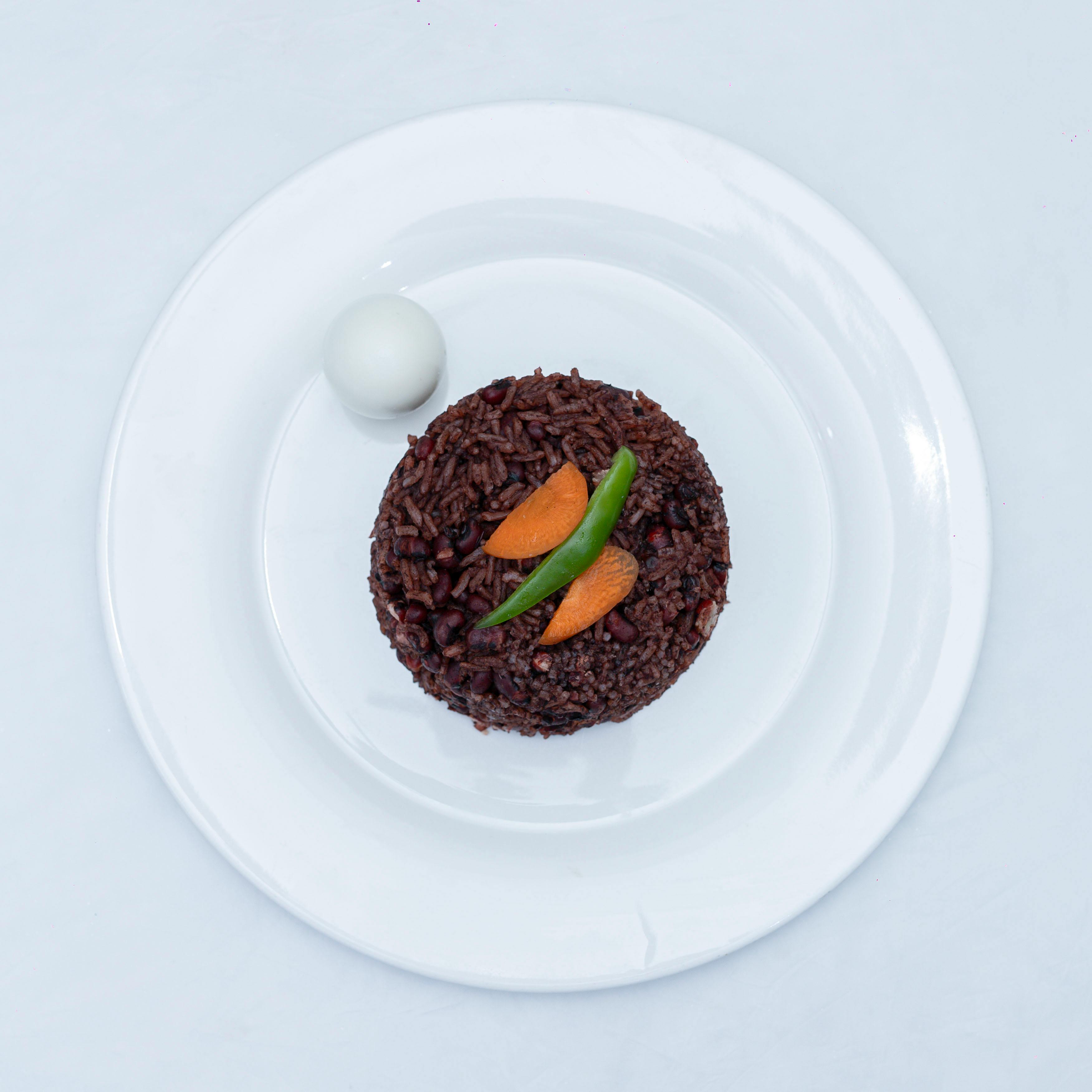
Moros y Cristianos
The diets react (see scores below)
Common Ingredients
- rice
- black beans
- onion
- green bell pepper
- garlic
- cumin
- bay leaf
- olive oil
Specific recipes may vary.
Incompatible with 5 of 11 diets
Diet Ratings
Moros y Cristianos is a Cuban rice and black bean dish that is fundamentally incompatible with a ketogenic diet. Rice alone contains approximately 45g of net carbs per cooked cup, which already exceeds the entire daily keto carb budget. Black beans add another 20-30g of net carbs per half-cup serving. Together, these two primary ingredients make this dish a carbohydrate bomb that would instantly and decisively break ketosis. The aromatics (onion, garlic, bell pepper) and spices are relatively minor contributors, but they are irrelevant given how dramatically rice and beans exceed keto limits. This dish has no realistic portion size that would make it keto-compatible.
Moros y Cristianos is a traditional Cuban rice and black beans dish. Every ingredient listed — rice, black beans, onion, green bell pepper, garlic, cumin, bay leaf, and olive oil — is fully plant-based with no animal products or animal-derived ingredients. This is a whole-food, minimally processed dish built around legumes and grains, making it an excellent fit for a vegan diet. It is naturally vegan as traditionally prepared in this ingredient configuration, though some Cuban home cooks add lard or pork; that is not the case here.
Moros y Cristianos contains two core non-paleo ingredients: rice (a grain) and black beans (a legume). Both are explicitly excluded from the paleo diet. Rice is a grain that was unavailable to Paleolithic hunter-gatherers in any meaningful dietary role, and legumes like black beans contain lectins, phytates, and other antinutrients that paleo authorities consistently flag as problematic. The remaining ingredients — onion, green bell pepper, garlic, cumin, bay leaf, and olive oil — are all paleo-compliant, but the foundational components of this dish are two of the most clearly excluded food categories in paleo. There is no version of this dish that can be considered paleo-compatible without fundamentally changing its identity.
Moros y Cristianos is a wholesome Cuban dish built on black beans and rice with aromatic vegetables and olive oil — ingredients that align well with Mediterranean principles. Black beans are an excellent legume source, onion, bell pepper, and garlic are celebrated Mediterranean vegetables, and olive oil is the canonical Mediterranean fat. The dish is minimally processed and free of added sugars or unhealthy fats. The primary concern is the use of white rice rather than a whole grain, which lowers its standing under modern Mediterranean diet guidelines that favor whole grains for fiber and glycemic benefits. The bean-to-rice ratio matters: a higher proportion of beans elevates its nutritional profile considerably. Overall this is a nutritious, plant-forward dish that earns a cautious approval, held back mainly by the refined grain component.
Some Mediterranean diet interpretations, particularly those rooted in traditional Southern European and Middle Eastern practices, accept white rice as a culturally normal grain (e.g., Spanish arroz con legumbres, Greek rice dishes) and would score this dish higher, viewing the legume base as the dominant nutritional feature that offsets the refined grain.
Moros y Cristianos is entirely plant-based and contains no animal products whatsoever. Every single ingredient — rice, black beans, onion, green bell pepper, garlic, cumin, bay leaf, and olive oil — is explicitly excluded on the carnivore diet. Black beans and rice are high-carbohydrate plant foods that are fundamentally incompatible with carnivore principles. Plant oils like olive oil are also excluded in favor of animal fats. This dish represents the opposite of carnivore eating.
Moros y Cristianos contains two excluded ingredients: rice (a grain) and black beans (a legume). Both are explicitly prohibited on the Whole30 program. Rice is a grain and falls squarely on the excluded list, and black beans are legumes — unlike the specific exceptions granted to green beans, sugar snap peas, and snow peas. There is no version of this dish that can be made compliant while still being Moros y Cristianos, as rice and black beans are the two defining, foundational ingredients of the dish. The remaining ingredients (onion, green bell pepper, garlic, cumin, bay leaf, olive oil) are all Whole30-compliant, but they cannot rescue the dish from its two core non-compliant components.
Moros y Cristianos contains multiple high-FODMAP ingredients that make it unsuitable during the elimination phase. Black beans are high in GOS (galacto-oligosaccharides) and are high-FODMAP at any standard serving size — a typical side dish portion would far exceed the Monash-tested safe threshold of approximately 40g canned and rinsed. Garlic is one of the highest-FODMAP foods tested by Monash, containing significant fructans even in tiny amounts. Onion is similarly high in fructans and is a major FODMAP trigger. While rice, green bell pepper (low-FODMAP at standard serves), cumin, bay leaf, and olive oil are all individually low-FODMAP, the combination of black beans, garlic, and onion makes this dish clearly high-FODMAP at any realistic serving. There is no practical way to modify the traditional recipe to make it low-FODMAP — removing onion, garlic, and beans would fundamentally change the dish.
Moros y Cristianos as prepared here aligns well with DASH principles. Black beans are a DASH-encouraged legume providing substantial fiber, potassium, magnesium, and plant-based protein. Rice (assuming white rice, most common in Cuban cooking) is a moderate-glycemic grain that DASH accommodates, though whole-grain alternatives like brown rice would score higher. The aromatics — onion, green bell pepper, garlic — are DASH-friendly vegetables adding micronutrients with negligible sodium. Olive oil is explicitly endorsed in DASH as a healthy unsaturated fat. Cumin and bay leaf are sodium-free flavor enhancers, a positive DASH strategy for reducing salt dependency. The dish contains no high-sodium processed ingredients, no saturated fat sources, no added sugars, and no red meat. The main DASH consideration is that white rice is a refined grain, and DASH recommends the majority of grains be whole grains. Portion control is also relevant given the caloric density of beans and rice combined. As commonly prepared at home from these ingredients, sodium is naturally low.
NIH DASH guidelines recommend that most grain servings come from whole grains, so frequent reliance on white rice rather than brown rice would represent a minor deviation. Some DASH-focused dietitians would note that the refined starch in white rice may modestly blunt the glycemic benefits of the otherwise excellent bean content, and would recommend substituting or blending with brown rice.
Moros y Cristianos is a rice-and-bean combination that presents significant Zone Diet challenges. White rice is a high-glycemic 'unfavorable' carbohydrate in Zone terminology — Dr. Sears explicitly categorizes it as a food to minimize or avoid. Black beans, while nutritious and fiber-rich, are a protein-carbohydrate hybrid that counts primarily as a carb block in Zone (with modest protein contribution), and combining them with white rice doubles the glycemic load. The dish as traditionally prepared is essentially two carbohydrate sources stacked together with very little protein and minimal fat, creating a macro ratio that is the inverse of Zone targets — heavily carb-dominant with insufficient protein and fat. Olive oil is the one Zone-positive ingredient here, providing favorable monounsaturated fat. The vegetables (onion, green bell pepper, garlic) are also Zone-favorable. However, the dish cannot realistically achieve 40/30/30 without significant modification: reducing or eliminating the rice, adding a lean protein source, and increasing olive oil. As a side dish paired with a lean protein (grilled chicken or fish) and additional vegetables, it becomes more manageable in a Zone meal — but the rice component specifically drags the score down. Portion control is critical: a very small serving of the rice-bean mixture alongside lean protein and vegetables is the only Zone-compatible approach.
Moros y Cristianos is a Cuban staple combining black beans and white rice cooked with onion, green bell pepper, garlic, cumin, bay leaf, and olive oil. The anti-inflammatory profile is genuinely mixed. Black beans are a strong positive: rich in fiber, plant-based protein, anthocyanins (the pigments that give them their dark color are potent antioxidants), folate, and magnesium — all associated with reduced inflammatory markers. Garlic, cumin, bay leaf, and olive oil further support an anti-inflammatory profile; garlic contains allicin and organosulfur compounds with documented anti-inflammatory effects, and olive oil provides oleocanthal and monounsaturated fats. Green bell pepper and onion add quercetin and vitamin C. The limiting factor is white rice, a refined carbohydrate with a high glycemic index that can spike blood glucose and transiently elevate inflammatory markers like IL-6 and CRP. The dish's overall score depends heavily on rice-to-bean ratio — versions with a higher bean proportion are closer to an 'approve,' while rice-heavy versions lean toward the lower end of 'caution.' Substituting brown rice would substantially improve the anti-inflammatory profile.
Some anti-inflammatory practitioners and researchers (including those aligned with Mediterranean and MIND diet frameworks) would rate this higher, arguing that legume-forward traditional dishes like this one — with whole-food aromatics and olive oil — are net anti-inflammatory regardless of the white rice, especially when consumed as a side portion. They cite epidemiological data showing that populations eating white rice as a staple do not consistently show elevated inflammatory markers when the rest of the diet is whole-food-based. Conversely, stricter glycemic-focused anti-inflammatory protocols (such as those advocated by Dr. Barry Sears of the Zone Diet) would score this lower, emphasizing that white rice's glycemic load is a meaningful driver of eicosanoid imbalance.
Moros y Cristianos is a traditional Cuban dish of black beans and white rice cooked together with aromatics (onion, bell pepper, garlic, cumin, bay leaf) and a modest amount of olive oil. It has genuine nutritional strengths for GLP-1 patients: black beans contribute meaningful fiber (roughly 7-8g per half-cup) and plant-based protein (roughly 7-8g per half-cup), the olive oil is a healthy unsaturated fat, and the dish is easy to digest, low in fat overall, and stomach-friendly. However, as a side dish, the combined rice-and-beans format is carbohydrate-dominant — white rice is a refined grain with low fiber and low protein density per calorie, and it dilutes the nutritional value of the beans. The protein-per-calorie ratio of the dish as a whole is modest, making it a poor standalone protein source for GLP-1 patients who need 15-30g per meal. Portion sensitivity is high: a small serving captures the fiber and micronutrient benefits without excessive carbohydrate load, but larger servings can crowd out higher-priority protein foods given reduced GLP-1 appetite. Rated caution rather than approve primarily because of the refined grain component and limited protein density relative to calorie cost.
Some GLP-1-focused dietitians view the beans-and-rice combination favorably because the bean fiber slows digestion of the rice starch, moderating the glycemic response — making this dish more blood-sugar-friendly than white rice alone. Others caution that for patients with significantly reduced calorie budgets, even moderate-glycemic carbohydrate dishes should be minimized in favor of higher protein-density options, and recommend treating this as an occasional side rather than a staple.
*See how scores were generated at our methodology page.
Nutritional profile
Six traits that cut across every diet.
Fiber & Plants
How much whole-plant food and fiber it delivers.
Healthy Fats
The quality of its fats (unsaturated, omega-3).
Whole / Unprocessed
How close it is to its natural, unprocessed form.
Gut Gentle
How easy it is on digestion (low FODMAP, few irritants).
Low Glycemic
How little it spikes your blood sugar.
Protein Density
How much protein it packs per calorie.
Controversy Index
Higher controversy = more disagreement between diets.
Diet-Specific Tips
 Vegan — 9/10
View tips
- All ingredients are 100% plant-based
- Whole-food legume and grain base (black beans + rice) provides complementary amino acids
- Olive oil is plant-derived and vegan
- Aromatics (onion, garlic, bell pepper) and spices (cumin, bay leaf) are fully vegan
- No processed or animal-derived additives present
- Traditional versions sometimes include lard or pork, but this recipe does not
 Mediterranean — 6/10
View tips
- Black beans are an excellent Mediterranean-compatible legume
- Olive oil is the primary fat — fully aligned with Mediterranean principles
- White rice is a refined grain, not preferred under modern Mediterranean guidelines
- Aromatic vegetables (onion, bell pepper, garlic) are strongly encouraged
- No processed ingredients, added sugars, or unhealthy fats
- Higher bean-to-rice ratio would improve the dish's Mediterranean compatibility
 DASH — 8/10
View tips
- Black beans are a core DASH legume: high in fiber, potassium, and magnesium
- Olive oil is a DASH-approved unsaturated fat
- Aromatics (onion, bell pepper, garlic) contribute DASH-friendly vegetables
- No processed or high-sodium ingredients in this ingredient list
- White rice is a refined grain — brown rice would better align with DASH whole-grain targets
- Naturally low sodium when prepared from these whole ingredients
- Cumin and bay leaf replace salt as flavor, consistent with DASH sodium-reduction strategy
 Zone — 4/10
View tips
- White rice is a high-glycemic 'unfavorable' carbohydrate explicitly discouraged by Dr. Sears
- Black beans count primarily as carbohydrate blocks in Zone, not protein blocks, despite containing some protein
- Rice + beans combined creates a heavily carb-dominant dish — the opposite of Zone macro targets
- Olive oil is Zone-favorable (monounsaturated fat) and partially redeems the dish
- Onion, bell pepper, and garlic are Zone-favorable low-glycemic vegetables
- As a side dish to lean protein and extra vegetables, small portions can fit within a Zone meal
- No lean protein source present — must be paired externally to approach Zone balance
- Traditional Cuban portion sizes of this dish would far exceed Zone carbohydrate block limits
 Anti-Inflammatory — 6/10
View tips
- Black beans: high in fiber, anthocyanins, and antioxidants — strong anti-inflammatory contributors
- White rice: refined carbohydrate with high glycemic index — the primary pro-inflammatory concern
- Olive oil: oleocanthal and monounsaturated fats support anti-inflammatory response
- Garlic and cumin: organosulfur compounds and polyphenols with documented anti-inflammatory effects
- Onion and green bell pepper: quercetin, vitamin C, and flavonoids add antioxidant value
- No processed ingredients, trans fats, added sugars, or seed oils — whole-food preparation
- Rice-to-bean ratio significantly affects overall inflammatory profile
 GLP-1 Friendly — 5/10
View tips
- Black beans provide meaningful fiber (~7-8g per half-cup) supporting GLP-1 digestion and regularity
- Black beans contribute plant protein (~7-8g per half-cup) but the overall dish protein density is low
- White rice is a refined grain — low fiber, low protein, moderate glycemic load — diluting the nutritional profile
- Olive oil is an appropriate unsaturated fat in small quantity
- Dish is easy to digest and stomach-friendly, no high-fat or fried components
- Carbohydrate-dominant profile limits its value when GLP-1 patients have reduced caloric capacity
- Best served in small portions alongside a high-protein main (e.g., grilled chicken or fish) rather than as a standalone
- Bean fiber partially moderates the glycemic impact of white rice when cooked together