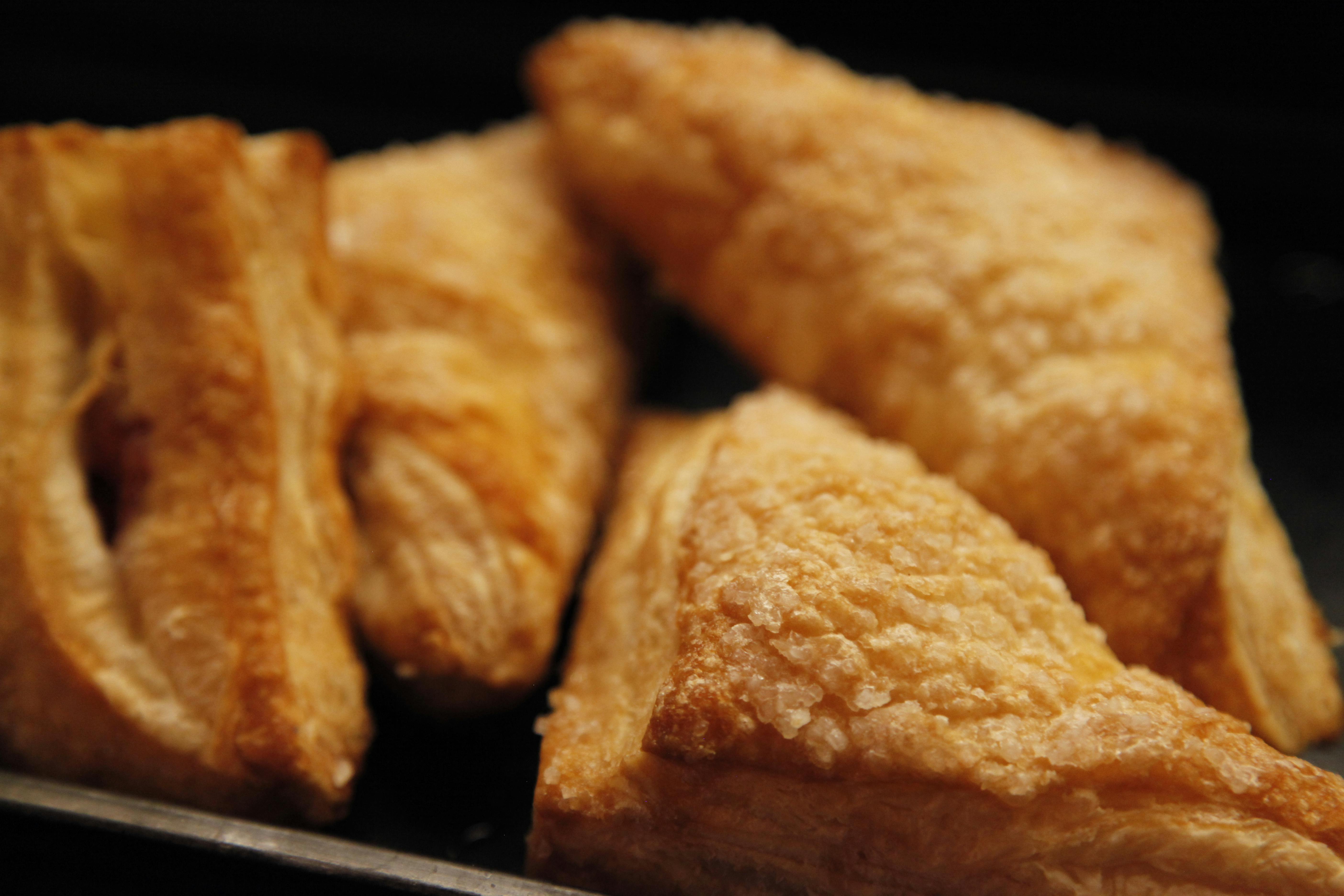
Cuban
Pastelitos de Guayaba
The diets react (see scores below)
Common Ingredients
- puff pastry
- guava paste
- cream cheese
- egg wash
- sugar
Specific recipes may vary.
Incompatible with 11 of 11 diets
Diet Ratings
Pastelitos de Guayaba are fundamentally incompatible with a ketogenic diet. Every primary component violates keto principles: puff pastry is made from wheat flour and butter in layered dough, contributing a massive carbohydrate load from grains; guava paste is essentially concentrated fruit sugar (guava cooked down with sugar), delivering extremely high net carbs per small serving; and additional sugar is sprinkled on top. A single pastelito can easily contain 30-45g of net carbs, which alone meets or exceeds the entire daily keto carb budget. The cream cheese and egg wash are the only keto-friendly elements, but they are incidental to the overall carb density of this pastry. There is no reasonable portion size that makes this snack compatible with maintaining ketosis.
Pastelitos de Guayaba as listed contain multiple animal-derived ingredients that disqualify them from a vegan diet. Cream cheese is a dairy product, egg wash is derived from eggs, and traditional puff pastry is typically made with butter (dairy). All three are direct animal products, not trace contaminants. The guava paste and sugar are plant-based, but the majority of ingredients are non-vegan. A fully vegan version could theoretically be made using vegan puff pastry (all-butter versions substituted with plant-based fat), vegan cream cheese, and a plant-based egg wash alternative, but the dish as described is not vegan.
Pastelitos de Guayaba is fundamentally incompatible with the paleo diet. Puff pastry is made from wheat flour and butter — wheat is a grain (explicitly excluded) and butter is dairy. Cream cheese is a processed dairy product, also excluded. Sugar is refined and excluded. The egg wash is the only paleo-compliant ingredient. Even the guava paste, while fruit-derived, is a heavily processed, sugar-laden product rather than whole fruit. This dish is essentially a processed grain-and-dairy pastry with refined sugar — hitting multiple hard exclusions simultaneously.
Pastelitos de Guayaba are a Cuban pastry that fundamentally conflicts with Mediterranean diet principles on multiple fronts. Puff pastry is a refined, highly processed dough made with large amounts of butter or shortening, representing exactly the type of refined grain and saturated fat the Mediterranean diet discourages. Added sugar appears both in the guava paste and as a topping. Cream cheese adds saturated dairy fat beyond what is recommended. While guava fruit itself would be perfectly acceptable, here it is processed into a sugar-dense paste. The combination of refined flour, high saturated fat, and added sugars in a single snack places this firmly in the 'avoid' category.
Pastelitos de Guayaba are completely incompatible with the carnivore diet. The dish is composed almost entirely of plant-derived and processed ingredients: puff pastry (wheat flour, plant oils), guava paste (fruit and sugar), and added sugar. While egg wash and cream cheese have animal origins, they are minor components of an otherwise plant-heavy, heavily processed pastry dessert. This is a sugary, grain-based snack with no meaningful animal protein or fat as a primary component. There is no version of the carnivore diet — not even the most liberal 'animal-based' approach — that would accommodate wheat pastry, fruit paste, and refined sugar together.
Pastelitos de Guayaba contain multiple Whole30-excluded ingredients. Puff pastry is a grain-based product (wheat flour) and is explicitly excluded. Cream cheese is dairy, which is excluded (ghee and clarified butter are the only dairy exceptions). Sugar is an added sugar, which is excluded. Even setting aside those violations, puff pastry-based pastries fall squarely into the 'no recreating baked goods/junk food' rule — pastelitos are essentially a pastry/cookie analog that Whole30 explicitly prohibits regardless of ingredient compliance. This dish is incompatible with Whole30 on multiple independent grounds.
Pastelitos de Guayaba contain multiple high-FODMAP ingredients that make this snack problematic during the elimination phase. Puff pastry is typically made with wheat flour, which is high in fructans — a primary FODMAP trigger. Guava paste (guayaba) is made from concentrated guava, which at the quantities used in this pastry exceeds low-FODMAP thresholds; guava is high in polyols (sorbitol) at larger servings. Cream cheese, while lower in lactose than milk or soft cheeses, is used in meaningful quantities here and adds lactose risk. The combination of wheat-based pastry and high-FODMAP filling makes this dish essentially unavoidable during elimination. There is no realistic way to consume a standard serving of this pastry while staying within FODMAP limits.
Monash University rates cream cheese as low-FODMAP at approximately 2 tablespoons (40g), so some clinical FODMAP practitioners may consider the cream cheese component acceptable in small amounts. However, the wheat puff pastry and concentrated guava paste remain high-FODMAP concerns that most dietitians would flag regardless of cream cheese quantity. A gluten-free puff pastry alternative could partially mitigate the fructan issue, but guava paste concentration remains a concern.
Pastelitos de Guayaba are a poor fit for the DASH diet across multiple dimensions. Puff pastry is made with large quantities of butter, delivering high saturated fat and trans fat from commercial shortenings — both explicitly limited by DASH/NIH guidelines. Cream cheese is a full-fat dairy product, the opposite of the low-fat or fat-free dairy DASH emphasizes. Guava paste is a concentrated sugar product with very high added sugar content. The egg wash contributes minimal concern on its own, but the overall profile — high saturated fat, high added sugar, refined white flour pastry with negligible fiber, potassium, magnesium, or calcium benefit — conflicts with nearly every core DASH principle. This is a calorie-dense, nutrient-poor snack that would be classified similarly to pastries, sweets, and full-fat dairy items that DASH specifically instructs to limit or avoid.
Pastelitos de Guayaba are a Cuban pastry that presents a nearly impossible challenge for Zone Diet compliance. The dish is built on puff pastry, which is made from refined white flour and large quantities of butter or shortening — delivering high-glycemic carbohydrates alongside saturated and potentially trans fats. Guava paste is an extremely concentrated sugar source with a high glycemic load. Additional sugar is sprinkled on top. Cream cheese contributes saturated fat with minimal protein benefit. There is no lean protein component whatsoever. The macronutrient profile is dominated by high-GI carbohydrates and saturated fat, with virtually no Zone-favorable protein or monounsaturated fat. Even with aggressive portioning, this food cannot be meaningfully balanced into a Zone block structure — it would spike insulin dramatically and deliver no protein block value. This is one of the relatively rare cases where a food is genuinely difficult to incorporate into any Zone meal without fundamentally undermining the diet's core 40/30/30 ratio and anti-inflammatory principles.
Pastelitos de Guayaba are a classic Cuban pastry with a profile that conflicts with nearly every anti-inflammatory principle. Puff pastry is made with refined white flour and substantial amounts of butter, delivering both refined carbohydrates and saturated fat — both of which are flagged as pro-inflammatory. Commercial puff pastry frequently contains partially hydrogenated oils or trans fats, which are strictly avoided on anti-inflammatory diets. Guava paste, while made from a fruit with some polyphenol content, is a concentrated sugar product with very high added sugar content — refined sugar is a well-established driver of inflammatory markers like CRP and IL-6. Cream cheese adds full-fat dairy, a category to limit on anti-inflammatory frameworks. The egg wash is negligible in impact. There are no meaningful anti-inflammatory redeeming ingredients — no omega-3s, no significant antioxidants, no fiber, no beneficial spices. As an occasional indulgence, the harm is limited, but as a snack category item it represents a concentrated dose of refined carbs, saturated fat, and added sugar with minimal offsetting benefit.
Pastelitos de Guayaba are a poor fit for GLP-1 patients on virtually every key metric. The foundation is puff pastry, which is high in refined carbohydrates, saturated fat (from butter lamination), and offers negligible fiber or protein. Guava paste is heavily concentrated sugar with minimal nutritional value. Cream cheese adds saturated fat with little protein payoff. The egg wash contributes trivially. The result is a snack that is calorie-dense, fat-heavy, sugar-spiking, and nutritionally empty — the opposite of what GLP-1 patients need from limited appetite windows. The high fat and buttery pastry layers are likely to worsen nausea, bloating, and reflux, which are common GLP-1 side effects. There is no meaningful protein, no fiber, and no micronutrient density to justify the caloric cost. This is a textbook example of the empty-calorie foods that are especially counterproductive for GLP-1 patients.
*See how scores were generated at our methodology page.
Nutritional profile
Six traits that cut across every diet.
Fiber & Plants
How much whole-plant food and fiber it delivers.
Healthy Fats
The quality of its fats (unsaturated, omega-3).
Whole / Unprocessed
How close it is to its natural, unprocessed form.
Gut Gentle
How easy it is on digestion (low FODMAP, few irritants).
Low Glycemic
How little it spikes your blood sugar.
Protein Density
How much protein it packs per calorie.
Controversy Index
Higher controversy = more disagreement between diets.