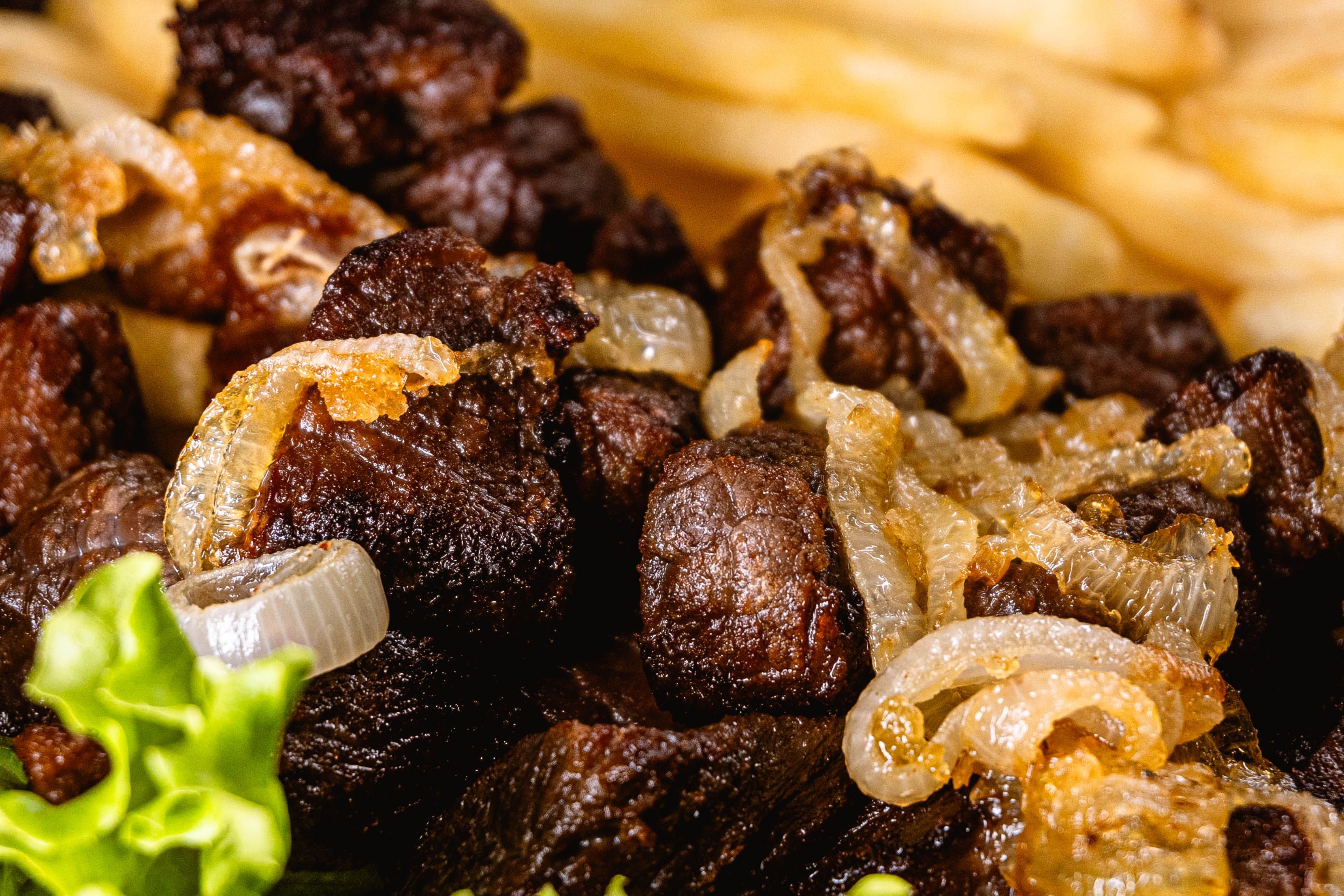
Photo: pedro furtado / Pexels
The diets react (see scores below)
Common Ingredients
- flank steak
- onion
- garlic
- lime juice
- cumin
- bell pepper
- olive oil
Specific recipes may vary.
Incompatible with 4 of 11 diets
Diet Ratings
Vaca Frita is a Cuban crispy shredded beef dish that is highly compatible with ketogenic eating. Flank steak is an excellent protein source with moderate fat, and it's cooked in olive oil, adding healthy fat. The marinade ingredients — lime juice, garlic, cumin — contribute negligible carbs. Onions and bell peppers are the primary carb contributors: a standard serving might include a modest portion of each, keeping net carbs in the 4–7g range per serving, well within keto limits. The dish is whole, unprocessed, and free of grains, added sugars, or starchy ingredients. The crispy, pan-fried preparation method is keto-friendly and increases fat content via olive oil.
Some stricter keto practitioners flag bell peppers and onions as carb-dense enough to warrant caution, particularly for those sensitive to insulin response or following clinical/therapeutic keto protocols where even moderate vegetable carbs must be tightly controlled. They may recommend reducing or omitting these vegetables entirely.
Vaca Frita is a traditional Cuban dish centered on flank steak, a beef cut that is a clear animal product. Beef is unambiguously excluded from a vegan diet under all vegan frameworks. While several of the accompanying ingredients — onion, garlic, lime juice, cumin, bell pepper, and olive oil — are fully plant-based, the primary protein and defining ingredient of this dish is beef, making it incompatible with veganism.
Vaca Frita is an excellent fit for the Paleo diet. Every ingredient — flank steak, onion, garlic, lime juice, cumin, bell pepper, and olive oil — is either a whole animal protein, a vegetable, a fruit-derived acid, or a spice, all of which would have been available to Paleolithic humans. Flank steak is an unprocessed cut of beef providing quality protein and fat. Olive oil is a paleo-approved fat. Lime juice, garlic, onion, bell pepper, and cumin are all whole, unprocessed plant foods free of grains, legumes, dairy, or refined additives. There are no seed oils, no added salt listed, no grains, and no processed ingredients. This dish is essentially a clean, whole-food preparation that aligns strongly with paleo principles.
Vaca Frita is centered on flank steak, a red meat, which the Mediterranean diet limits to a few times per month. While several ingredients are Mediterranean-friendly — olive oil as the cooking fat, onion, garlic, bell pepper, and lime juice are all plant-based and encouraged — the primary protein fundamentally conflicts with Mediterranean principles, which emphasize fish, legumes, and plant proteins as daily staples. The dish's overall nutritional profile is dominated by red meat, pushing it into the 'avoid' category despite its otherwise clean ingredient list.
Some Mediterranean diet practitioners argue that a lean cut like flank steak, prepared with abundant vegetables, garlic, and olive oil rather than saturated fats, can fit within an occasional red meat allowance (a few times per month). The cooking method — pan-searing with olive oil rather than frying in saturated fats — and the absence of processed ingredients or added sugars are positive factors that a more flexible interpretation might credit.
Vaca Frita is built on flank steak — an excellent carnivore-approved cut — but the dish is heavily reliant on plant-based ingredients that are all excluded from the carnivore diet. Onion, garlic, lime juice, cumin, bell pepper, and olive oil are all plant-derived. While the beef itself is ideal, the dish as prepared cannot be considered carnivore-compatible. Even the most lenient carnivore practitioners who tolerate trace spices would object to the volume and centrality of plant ingredients here: bell pepper and onion are major structural components, lime juice adds significant plant acids, and olive oil is a plant-derived fat when animal fats (tallow, lard) are preferred. This dish is fundamentally a plant-seasoned beef preparation, not a carnivore meal.
Vaca Frita is a classic Cuban dish made by braising and then pan-frying flank steak with onion, garlic, lime juice, cumin, bell pepper, and olive oil. Every single ingredient is explicitly compliant with Whole30 guidelines: flank steak is an unprocessed meat, onion and bell pepper are vegetables, garlic and cumin are approved spices/seasonings, lime juice is a natural citrus juice, and olive oil is a compliant natural fat. There are no excluded ingredients — no grains, legumes, dairy, added sugars, or any other disqualifying substance. This is a whole-food, minimally processed dish that fully aligns with the spirit and letter of the Whole30 program.
Vaca Frita contains two major high-FODMAP ingredients that make this dish unsafe during the elimination phase: onion and garlic. Both are among the highest-fructan foods in the Monash system and are problematic even in small amounts. Garlic is essentially a 'avoid at any dose' food during elimination, and onion is similarly high in fructans at any realistic serving size. The remaining ingredients are low-FODMAP: flank steak (plain beef, no FODMAPs), lime juice (low-FODMAP at standard amounts), cumin (low-FODMAP as a spice in culinary quantities), bell pepper (low-FODMAP up to ~52g per Monash), and olive oil (fat, no FODMAPs). However, the presence of both onion and garlic — which are typically foundational to Vaca Frita's flavor profile and used in significant quantities — makes this dish a clear avoid during the elimination phase. A modified version using garlic-infused oil and omitting onion (or substituting green onion tops only) could make this dish low-FODMAP.
Vaca Frita is a Cuban dish of marinated and pan-fried shredded flank steak. Its ingredient profile is a mixed picture from a DASH perspective. On the positive side, flank steak is a relatively lean cut of beef compared to ribeye or brisket, and the dish incorporates DASH-friendly components — onion, garlic, bell pepper, lime juice, cumin, and olive oil — that contribute potassium, antioxidants, and heart-healthy monounsaturated fat. However, DASH guidelines limit red meat consumption, recommending no more than a few servings per week due to saturated fat content. Flank steak contains moderate saturated fat (~3-4g per 3oz serving). The preparation involves pan-frying to crisp the meat, which typically requires a meaningful amount of olive oil, increasing total fat intake. Sodium content depends heavily on preparation — the listed ingredients are naturally low in sodium, but restaurant or home versions often add salt during marinating and cooking, which can push sodium intake higher. As a lean red meat with DASH-friendly accompaniments and no processed ingredients, this dish is acceptable in moderate portions (3-4oz) a few times per week, but it is not a DASH-emphasized protein like fish, poultry, beans, or legumes.
NIH DASH guidelines categorize red meat as a limited food regardless of leanness, recommending it be used sparingly in favor of poultry, fish, and plant proteins. However, some updated clinical DASH interpretations note that lean cuts like flank steak, when not cured or heavily salted, are nutritionally closer to lean poultry in saturated fat content and may be incorporated more readily into a DASH-compatible eating pattern, particularly when balanced with abundant vegetables.
Vaca Frita is a solid Zone-compatible main dish with several favorable characteristics. Flank steak is a relatively lean cut of beef that provides good-quality protein, though it carries more saturated fat than ideal Zone proteins like skinless chicken or fish. The dish's other components are largely Zone-friendly: olive oil is a preferred monounsaturated fat source, onion, garlic, and bell pepper are low-glycemic vegetables that contribute polyphenols and fiber, and lime juice adds flavor with negligible glycemic impact. Cumin is a Zone-neutral spice. The primary concern is that flank steak, while leaner than many beef cuts, still contains more saturated fat than Sears' preferred protein sources, meaning portion control is important — roughly 3 oz cooked (about 21g protein) keeps it within a reasonable Zone block. To complete a Zone meal, this protein-and-fat core would need to be paired with additional low-glycemic carbohydrate sides (e.g., a salad or steamed vegetables) since the dish itself is relatively carb-light. With appropriate portioning and complementary sides, Vaca Frita fits comfortably within Zone methodology.
Early Zone writings (Enter the Zone) placed lean beef lower on the preferred protein list due to saturated fat concerns, suggesting chicken or fish instead. However, Sears' later anti-inflammatory work acknowledges that lean beef in controlled portions is acceptable, and flank steak's relatively lower fat content compared to ribeye or brisket makes it more Zone-adaptable. Some strict Zone practitioners would rate this as 'caution' due to the beef-based protein, while others consider the olive oil and vegetable components sufficient to offset the saturated fat concern.
Vaca Frita presents a mixed anti-inflammatory profile. The dish's foundation is flank steak — a lean cut of red meat — which the anti-inflammatory framework places in the 'limit' category rather than 'avoid.' It is lower in saturated fat than fattier cuts like ribeye or brisket, which somewhat mitigates its pro-inflammatory potential. The supporting ingredients are genuinely anti-inflammatory: garlic and cumin are well-supported anti-inflammatory spices, lime juice provides antioxidant vitamin C and flavonoids, onion contributes quercetin (a potent anti-inflammatory flavonoid), and bell pepper is rich in carotenoids and vitamin C. Olive oil — especially if extra virgin — is a cornerstone of anti-inflammatory eating due to its oleocanthal content. The preparation method matters here: traditional vaca frita involves pan-frying the shredded beef until crispy, which requires adequate but not excessive oil. If extra virgin olive oil is used at moderate heat, this is acceptable. The dish is whole-food-based with no refined carbohydrates, added sugars, or processed additives. Overall, the lean beef is the limiting factor, keeping this out of 'approve' territory, but the strong lineup of anti-inflammatory aromatics, spices, and EVOO partially offset that concern.
A stricter anti-inflammatory camp (including some functional medicine practitioners and those following the Autoimmune Protocol) would rate this lower, arguing that even lean red meat contributes arachidonic acid and heme iron, both associated with elevated inflammatory markers like CRP and IL-6 with regular consumption. On the other hand, some researchers note that grass-fed flank steak has a meaningfully better omega-6 to omega-3 ratio and may be less inflammatory than conventional grain-fed beef, which could push the score higher if grass-fed sourcing is assumed.
Vaca Frita is a Cuban dish of shredded flank steak pan-fried in olive oil with onions, garlic, lime juice, cumin, and bell pepper. Flank steak is a relatively lean cut of beef and a solid protein source — a standard serving delivers roughly 25-30g protein, which aligns well with GLP-1 protein-per-meal targets. The use of olive oil rather than lard or butter is a point in its favor, and lime juice, garlic, and cumin pose no GLP-1 concerns. However, the preparation method is the core issue: vaca frita is crisped in a hot pan with oil, producing a fried or pan-seared texture that increases fat per serving and can worsen nausea, bloating, and reflux in GLP-1 patients. The dish is also typically served in generous portions. Flank steak itself carries moderate saturated fat compared to chicken breast or fish, and red meat in general sits in a contested zone for GLP-1 dietary guidance. The fiber content is negligible unless served with vegetables or beans. It is not an avoid — the protein value and lean cut prevent that — but the frying method and red meat base make it a conditional choice rather than an ideal one.
Some GLP-1-focused dietitians accept lean red meat like flank steak as a quality protein source and would score this higher if prepared with minimal oil and served in a small portion, arguing the saturated fat load is manageable at typical serving sizes. Others flag that the pan-frying method and red meat combination frequently triggers GI discomfort — particularly nausea and reflux — in GLP-1 patients more than the macronutrient profile alone would suggest, and recommend substituting chicken or fish in this preparation.
*See how scores were generated at our methodology page.
Nutritional profile
Six traits that cut across every diet.
Fiber & Plants
How much whole-plant food and fiber it delivers.
Healthy Fats
The quality of its fats (unsaturated, omega-3).
Whole / Unprocessed
How close it is to its natural, unprocessed form.
Gut Gentle
How easy it is on digestion (low FODMAP, few irritants).
Low Glycemic
How little it spikes your blood sugar.
Protein Density
How much protein it packs per calorie.
Controversy Index
Higher controversy = more disagreement between diets.
Diet-Specific Tips
 Keto — 8/10
View tips
- Flank steak is a clean, high-quality protein with no carbs
- Olive oil adds healthy fat and increases caloric fat ratio
- Lime juice and spices contribute minimal net carbs
- Onions and bell peppers add 4–7g net carbs per serving — manageable but notable
- No grains, sugars, or starchy ingredients
- Whole, unprocessed ingredients throughout
- Portion size of onion and bell pepper should be monitored for carb-sensitive individuals
 Paleo — 9/10
View tips
- Flank steak is an unprocessed whole cut of beef — fully paleo approved
- Olive oil is a paleo-approved cooking fat
- Lime juice, garlic, onion, and bell pepper are all whole unprocessed plant foods
- Cumin is a natural spice with no paleo objections
- No grains, legumes, dairy, seed oils, or refined sugar present
- No added salt listed, avoiding a common paleo concern with restaurant-style dishes
 Whole30 — 9/10
View tips
- Flank steak is a compliant, unprocessed protein
- Lime juice is a natural citrus juice — fully approved
- Olive oil is an explicitly allowed natural fat
- Cumin, garlic, and onion are all compliant seasonings/aromatics
- Bell pepper is a compliant vegetable
- No excluded ingredients present
- Dish reflects whole-food cooking philosophy consistent with Whole30 spirit
 DASH — 5/10
View tips
- Flank steak is a lean red meat — moderate saturated fat, acceptable in limited portions under DASH
- Red meat is a limited food category in DASH guidelines; prefer poultry, fish, or plant proteins
- No processed ingredients, no added sodium in listed ingredients — sodium outcome depends on cooking habits
- Olive oil is a DASH-approved fat; pan-frying may increase total fat intake
- Bell pepper, onion, garlic contribute potassium and antioxidants — DASH-positive
- Lime juice and cumin add flavor without sodium — DASH-friendly seasoning strategy
- Portion size is critical: 3-4oz flank steak fits DASH; larger servings increase saturated fat load
 Zone — 7/10
View tips
- Flank steak is a leaner beef cut, compatible with Zone protein blocks at ~3 oz portions
- Olive oil provides preferred monounsaturated fat, aligning with Zone fat guidelines
- Bell pepper, onion, and garlic are low-glycemic Zone-favorable vegetables rich in polyphenols
- Lime juice adds flavor without glycemic impact
- Dish is carb-light and requires pairing with additional low-GI vegetables to achieve 40/30/30 ratio
- Saturated fat from beef, though moderate, is higher than ideal Zone protein sources like fish or poultry
- No high-glycemic ingredients, processed components, or seed oils present
 Anti-Inflammatory — 5/10
View tips
- Flank steak is lean red meat — lower in saturated fat than fatty cuts but still in the 'limit' category for anti-inflammatory diets
- Garlic is a well-established anti-inflammatory ingredient (allicin, organosulfur compounds)
- Onion provides quercetin, a potent anti-inflammatory and antioxidant flavonoid
- Bell pepper is rich in vitamin C and carotenoids with strong antioxidant activity
- Cumin has demonstrated anti-inflammatory properties in research
- Lime juice adds antioxidant vitamin C and flavonoids
- Olive oil (especially EVOO) contains oleocanthal and monounsaturated fats — a cornerstone anti-inflammatory fat
- No refined carbohydrates, added sugars, or processed additives
- Preparation involves pan-frying — oil quality and quantity are key; EVOO at moderate heat is acceptable
- Grass-fed sourcing of flank steak would improve the omega-6:omega-3 ratio and overall profile
 GLP-1 Friendly — 5/10
View tips
- Flank steak is a relatively lean beef cut with strong protein density (~25-30g per serving)
- Pan-frying method increases fat content and may worsen GLP-1 GI side effects (nausea, reflux, bloating)
- Olive oil is a preferred fat source but adds calories in a reduced-appetite context
- Red meat carries moderate saturated fat — a debated category for GLP-1 patients
- Lime juice, garlic, cumin, onion, and bell pepper are all GLP-1-neutral or beneficial
- Near-zero fiber — should be paired with a high-fiber side (beans, vegetables) to meet daily targets
- Portion sensitivity: a small serving is more compatible than a full restaurant portion