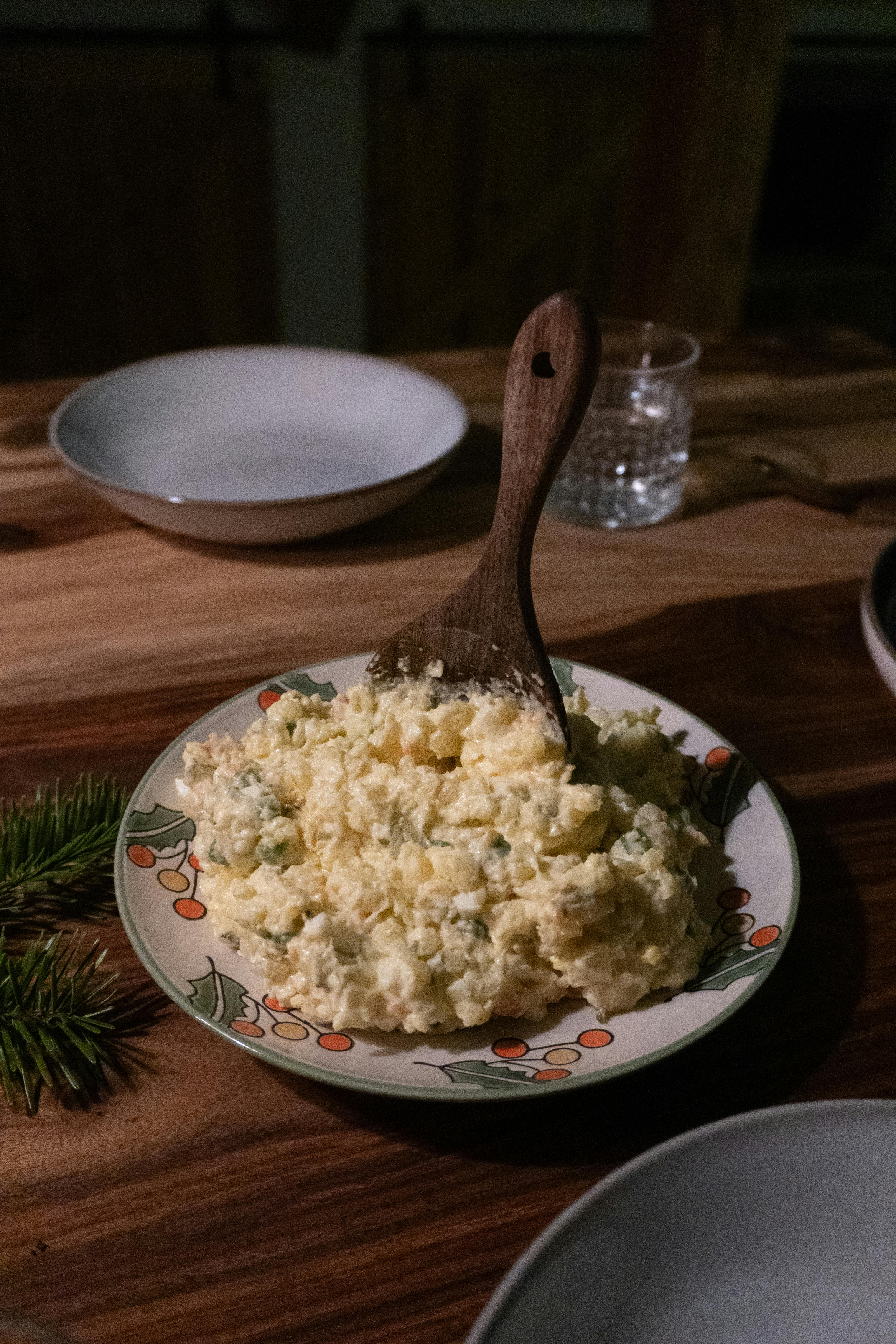
Photo: Raymond Petrik / Pexels
Czech
Bramborovy Salat
The diets react (see scores below)
Common Ingredients
- potatoes
- carrots
- peas
- pickles
- onion
- mayonnaise
- mustard
- eggs
Specific recipes may vary.
Incompatible with 6 of 11 diets
Diet Ratings
Bramborovy Salat (Czech potato salad) is fundamentally incompatible with ketogenic diet principles. Potatoes are the primary ingredient and one of the highest net-carb vegetables available, containing approximately 15-17g net carbs per 100g. A standard serving of this salad easily contains 200-300g of potatoes alone, delivering 30-50g net carbs — potentially exceeding the entire daily keto carb budget in a single dish. Peas and carrots compound the problem significantly, adding additional sugars and starches. While some ingredients like mayonnaise, eggs, mustard, and pickles are individually keto-friendly, they cannot offset the massive carbohydrate load from the starchy base ingredients. There is no realistic portion size that makes this dish compatible with maintaining ketosis.
Bramborovy Salat (Czech potato salad) contains two clear animal-derived ingredients: eggs and mayonnaise. Eggs are an animal product excluded under all vegan definitions. Traditional mayonnaise is made from eggs and is likewise non-vegan. The remaining ingredients — potatoes, carrots, peas, pickles, onion, and mustard — are all plant-based, but the presence of eggs and egg-based mayo makes the dish non-vegan as traditionally prepared. A vegan version is achievable by substituting eggs with no direct replacement and using commercially available egg-free vegan mayonnaise (e.g., Hellmann's Vegan, Just Mayo).
Bramborový salát contains several non-paleo ingredients. Peas are legumes and are excluded from paleo. Pickles typically contain added salt, vinegar, and preservatives. Mayonnaise is almost universally made with seed oils (canola or soybean oil), which are excluded. Mustard often contains added salt and sometimes vinegar with additives. White potatoes are debated in the paleo community — originally excluded by Cordain, though some modern practitioners accept them. The combination of legumes (peas), seed-oil-based mayonnaise, and processed pickles makes this dish non-compliant overall. Even if individual debated ingredients like potatoes were accepted, the peas and commercial mayonnaise alone are enough to place this firmly in the avoid category.
If homemade avocado-oil or olive-oil mayonnaise were substituted, peas omitted, and potatoes accepted under Mark Sisson's or Whole30's more permissive stance on white potatoes, a heavily modified version of this salad could edge into caution territory — but the traditional recipe as prepared is not paleo-compliant.
Bramborovy Salat is a traditional Czech potato salad that contains several Mediterranean-compatible ingredients (potatoes, carrots, peas, onion, mustard, eggs) but is anchored by mayonnaise as its primary fat source, which directly conflicts with the Mediterranean principle of extra virgin olive oil as the dominant fat. Potatoes are a starchy vegetable acceptable in moderation, and the vegetables (carrots, peas, onion, pickles) are positive contributors. Eggs are permitted in moderation. However, commercial mayonnaise is typically made from refined vegetable oils and is not a Mediterranean staple fat. The dish is not processed in the industrial sense, and it contains no red meat or added sugars, keeping it out of the 'avoid' category. It lands in caution territory as a vegetable-forward dish compromised by a non-Mediterranean fat source.
Some Mediterranean diet practitioners argue that homemade mayonnaise prepared with olive oil aligns reasonably well with Mediterranean principles, as olive oil-based emulsified dressings have precedent in Spanish and Southern European cuisines (e.g., alioli). Under this interpretation, the dish's vegetable content could push it toward a low 'approve' rating if the mayo is olive-oil based.
Bramborovy Salat is a traditional Czech potato salad that is almost entirely plant-based. The dominant ingredients — potatoes, carrots, peas, pickles, onion, and mustard — are all plant-derived and strictly excluded from the carnivore diet. Potatoes are a high-carbohydrate starchy vegetable, peas are legumes, and the remaining vegetables and condiments are all plant foods. The only carnivore-compatible ingredient is eggs, which appear as a minor component. Even the mayonnaise, while containing eggs, typically includes plant-based oils (e.g., soybean or canola oil), making it non-compliant. This dish fundamentally contradicts the core principle of eating exclusively animal products.
Bramborovy Salat (Czech potato salad) contains mostly compliant ingredients — potatoes, carrots, eggs, onion, and mustard are all Whole30-approved. However, two ingredients require careful scrutiny: (1) Peas are a legume and are NOT among the explicitly excepted legumes (only green beans, sugar snap peas, and snow peas are allowed). Standard garden peas must be avoided, making a traditional version of this dish non-compliant. (2) Mayonnaise as commonly purchased almost always contains soy oil, soy lecithin, sugar, or other excluded ingredients — a compliant homemade or specifically Whole30-approved mayo (e.g., Primal Kitchen avocado oil mayo) would be required. Pickles can also contain added sugar or sulfites (now allowed per 2024 rules), so label-reading is necessary. If peas are omitted and compliant mayo is used, the dish could be made compliant.
Some community members argue that a small amount of peas in a salad is negligible and that the spirit of Whole30 is not undermined by their inclusion, but official Whole30 guidelines are clear that only green beans, sugar snap peas, and snow peas are excepted from the legume exclusion — regular peas remain off-limits per Melissa Urban's program rules.
Bramborovy Salat contains two significant high-FODMAP ingredients that make it unsuitable during the elimination phase. Onion is one of the highest-fructan foods tested by Monash University and is high-FODMAP at any meaningful quantity — even small amounts used in a mixed salad are typically problematic. Green peas are high in GOS and are rated high-FODMAP at standard serving sizes (Monash rates them as high-FODMAP above ~75g, and a salad portion would typically exceed this). The remaining ingredients are generally low-FODMAP: potatoes are low-FODMAP at a standard serve, carrots are low-FODMAP, pickles (cucumber-based) are low-FODMAP in moderate amounts, mayonnaise (if made without high-FODMAP additives) is low-FODMAP, mustard is low-FODMAP, and eggs are low-FODMAP. However, the combination of onion and peas makes this dish a clear avoid during the strict elimination phase without modification.
Bramborovy Salat (Czech potato salad) contains several DASH-friendly ingredients — potatoes, carrots, peas, and onion are all vegetables that align well with DASH principles, providing potassium, fiber, and magnesium. However, the dish is heavily dressed with full-fat mayonnaise, which is high in saturated fat and contributes significant calories. Pickles introduce a notable sodium load (a single medium pickle can contain 500-800mg sodium), which conflicts with DASH sodium targets (<2,300mg/day standard, <1,500mg/day low-sodium). Mustard also adds sodium. Eggs are moderately acceptable under current DASH-aligned interpretations. The overall dish as traditionally prepared is calorie-dense and sodium-elevated due to mayo and pickles, making it a 'caution' food that can fit DASH only in small portions with modifications (low-fat mayo, reduced or low-sodium pickles, portion control). The vegetable base is genuinely nutritious, preventing a full 'avoid' rating.
NIH DASH guidelines emphasize limiting saturated fat and sodium, which traditional mayo and pickles violate; however, some updated DASH-aligned dietitians note that swapping to light or avocado-oil mayonnaise and low-sodium pickles can meaningfully rehabilitate this dish, and the vegetable-forward base makes it more compatible than a typical mayo-heavy salad.
Bramborovy Salat (Czech potato salad) is fundamentally problematic for the Zone Diet for several reasons. Potatoes are explicitly listed in Dr. Sears' unfavorable carbohydrate list and are high-glycemic, spiking insulin and disrupting the hormonal balance the Zone targets. Potatoes are the dominant ingredient here, making the dish's carbohydrate profile essentially non-negotiable as high-GI. Mayonnaise contributes heavily to the fat load with predominantly omega-6 polyunsaturated and saturated fats — exactly the type of fat Sears discourages in favor of monounsaturated sources like olive oil. The dish also lacks lean protein (eggs provide some, but they're likely a minor component relative to the starchy base), making the 40/30/30 ratio extremely difficult to achieve. The carbohydrate block would be dominated by a high-glycemic starch with minimal fiber to offset it, the fat blocks come from an unfavorable source, and there is no meaningful lean protein anchor. While peas, carrots, and pickles offer some Zone-friendly elements, they are overwhelmed by the potato and mayo base. This is one of the rare cases where the dish's core structure actively works against Zone principles rather than merely requiring careful portioning.
Bramborový salát is a traditional Czech potato salad with a mixed anti-inflammatory profile. On the positive side, it contains several beneficial ingredients: carrots and peas provide carotenoids, fiber, and plant-based nutrients; onion contains quercetin, a well-documented anti-inflammatory flavonoid; mustard adds anti-inflammatory compounds including turmeric-adjacent isothiocyanates; eggs contribute selenium and choline. Pickles are generally neutral (fermented versions may offer mild probiotic benefit). However, the dish is anchored by mayonnaise — typically made with refined soybean or canola oil, which is high in omega-6 fatty acids and is flagged by most anti-inflammatory protocols as a food to limit or avoid. Potatoes are starchy, moderate-glycemic carbohydrates; they are not inherently pro-inflammatory but lack significant anti-inflammatory properties and can spike blood sugar depending on preparation and portion. The dish contains no omega-3 sources, no fatty fish, no olive oil, and no prominent anti-inflammatory spices. In its traditional form, this salad would likely be calorie-dense and omega-6-heavy due to the mayo volume. A modified version using olive oil-based or avocado-oil mayo, adding herbs like dill or parsley, and increasing vegetable ratio could push this toward a more favorable rating.
Some anti-inflammatory practitioners, particularly those following AIP or strict anti-inflammatory protocols, would flag potatoes as nightshades (containing solanine) and rate this dish lower, while others note that eggs and the vegetable content provide meaningful nutrition. Dr. Weil's framework would rate mayonnaise as a significant concern due to omega-6-heavy refined oils, whereas mainstream dietitians might consider the overall dish acceptable in moderation as part of a varied diet.
Bramborový salát is a traditional Czech potato salad made primarily from starchy vegetables (potatoes, carrots, peas) bound with mayonnaise, with eggs providing modest protein. The mayonnaise base is the primary concern for GLP-1 patients: a typical serving delivers significant saturated fat and calories from a low-nutrient source, which can worsen nausea, bloating, and reflux due to slowed gastric emptying. Protein content is low — eggs contribute some, but the dish is categorized with no primary protein and the egg quantity per serving is modest. Fiber is moderate from peas, carrots, and onion, which is a mild positive. Potatoes are a refined-starch-adjacent food with a high glycemic load that offers limited nutrient density per calorie. Pickles and mustard are GLP-1-friendly condiments in small amounts. The dish is not fried or extremely spicy, and it is easy to digest in small portions, which prevents a lower score. However, the mayo-heavy binding, low protein density, and starchy carbohydrate base make this a poor fit as a primary dish for GLP-1 patients. It is acceptable as a very small side portion if prepared with reduced-fat or light mayonnaise, ideally alongside a high-protein main.
Some GLP-1-focused dietitians note that homemade versions with light or avocado-oil mayonnaise and extra eggs can meaningfully improve the protein and fat profile, making this a borderline acceptable small side — individual fat tolerance on GLP-1s varies widely, and patients who are not experiencing active GI side effects may tolerate a small portion without issue. Others maintain that starchy, mayo-bound salads occupy caloric space that should be reserved for protein-dense foods given the reduced appetite window.
*See how scores were generated at our methodology page.
Nutritional profile
Six traits that cut across every diet.
Fiber & Plants
How much whole-plant food and fiber it delivers.
Healthy Fats
The quality of its fats (unsaturated, omega-3).
Whole / Unprocessed
How close it is to its natural, unprocessed form.
Gut Gentle
How easy it is on digestion (low FODMAP, few irritants).
Low Glycemic
How little it spikes your blood sugar.
Protein Density
How much protein it packs per calorie.
Controversy Index
Higher controversy = more disagreement between diets.
Diet-Specific Tips
 Mediterranean — 4/10
View tips
- Mayonnaise is the primary fat, replacing Mediterranean-preferred extra virgin olive oil
- Potatoes are starchy but acceptable in moderation within Mediterranean eating
- Vegetables (carrots, peas, onion) are positive Mediterranean components
- Eggs are a moderate-consumption food compatible with Mediterranean guidelines
- No red meat, processed meats, or added sugars present
- Non-Mediterranean cuisine origin with no traditional Mediterranean analog
- Dish could be improved significantly by substituting olive oil-based dressing
 Whole30 — 5/10
View tips
- Peas are a legume and NOT among the Whole30 legume exceptions (green beans, sugar snap peas, snow peas) — makes traditional recipe non-compliant
- Mayonnaise as commonly sold contains excluded ingredients (soy lecithin, added sugar); a compliant homemade or Whole30-approved mayo is required
- Pickles should be checked for added sugar — many commercial brands include it
- Potatoes, carrots, eggs, onion, and mustard are all Whole30-compliant
- Dish can be made compliant by omitting peas and using approved mayo
 DASH — 4/10
View tips
- High sodium from pickles (500-800mg per pickle) conflicts with DASH sodium limits
- Full-fat mayonnaise adds saturated fat and calories, not emphasized in DASH
- Potatoes, carrots, peas, and onion are DASH-approved vegetables providing potassium and fiber
- Eggs are acceptable in moderation under current DASH-aligned clinical guidance
- Dish can be modified (light mayo, low-sodium pickles) to improve DASH compatibility
- Portion control is essential given caloric density of mayo dressing
 Anti-Inflammatory — 4/10
View tips
- Mayonnaise (typically high omega-6 refined oil) is the primary anti-inflammatory concern
- Carrots and peas contribute carotenoids and fiber
- Onion provides quercetin, an anti-inflammatory flavonoid
- Potatoes are starchy with moderate glycemic impact and limited anti-inflammatory value
- No omega-3 sources present in the dish
- Eggs are a moderate, mixed-profile ingredient
- Mustard adds mild anti-inflammatory benefit
- No olive oil, herbs, or prominent anti-inflammatory spices used
 GLP-1 Friendly — 4/10
View tips
- High mayonnaise content adds significant saturated fat and empty calories, worsening GLP-1 GI side effects
- Low protein density — eggs provide some protein but insufficient for a primary dish
- Starchy base (potatoes) offers limited nutrient density per calorie
- Moderate fiber from peas, carrots, and onion is a mild positive
- Soft texture is easy to digest, suitable for GI-sensitive patients in small portions
- Not fried or spicy, avoiding the worst GLP-1 triggers
- Portion-sensitive: a very small serving as a side is more acceptable than a full serving as a main