Photo: Demian Grygorchuk / Pexels
The diets react (see scores below)
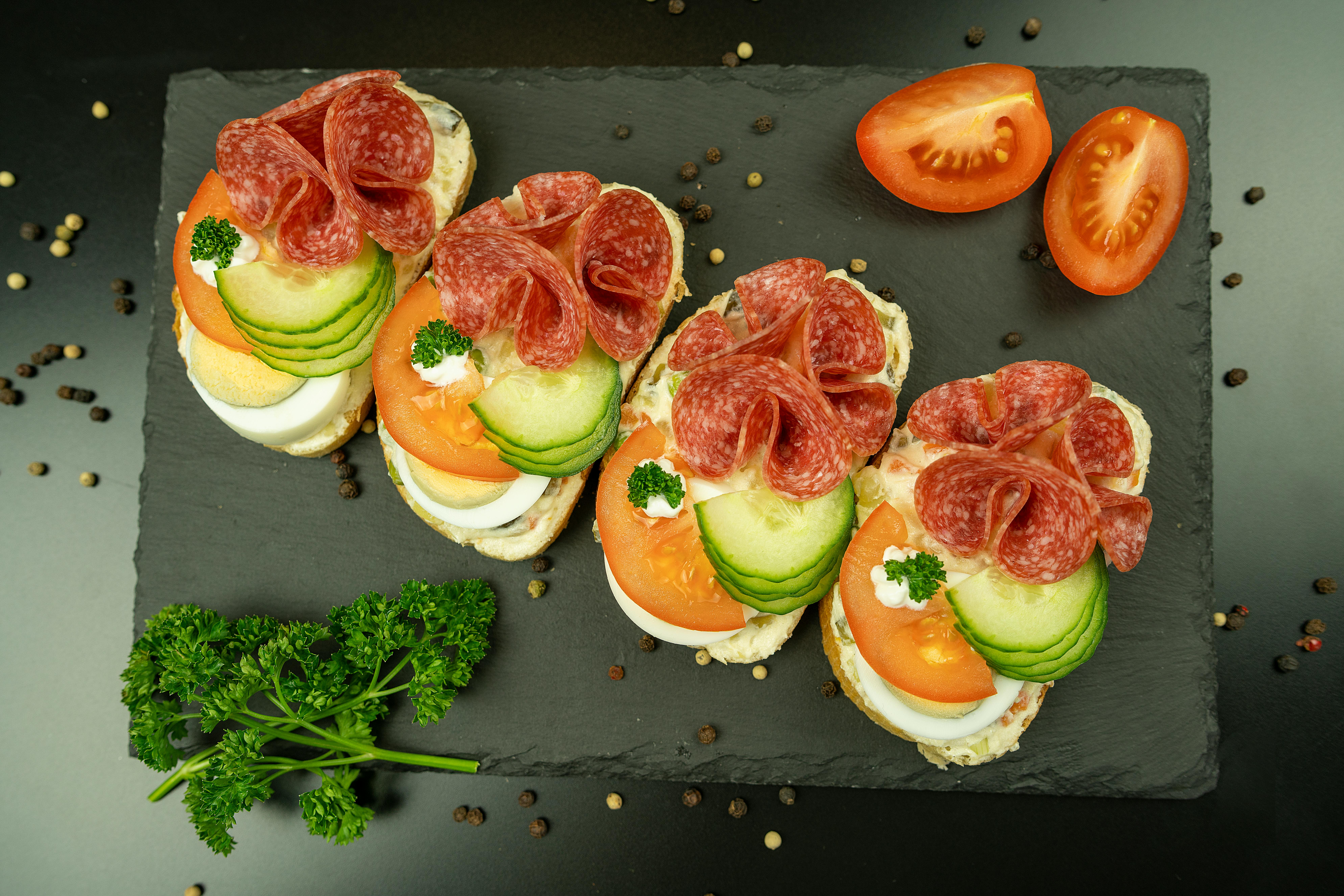
Common Ingredients
- bread
- potato salad
- ham
- eggs
- pickles
- mayonnaise
- salami
- cheese
Specific recipes may vary.
Incompatible with 10 of 11 diets
Diet Ratings
Chlebicky (Czech open-faced sandwiches) are fundamentally incompatible with ketogenic diets. The dish is built on a bread base, which alone is a high-carb grain product that would likely exceed or approach the entire daily net carb allowance in just one or two pieces. Additionally, potato salad contains potatoes — a starchy vegetable with very high net carbs — compounding the problem severely. These two ingredients alone make the dish a hard disqualifier for keto. The remaining ingredients (ham, eggs, pickles, mayonnaise, salami, cheese) are individually keto-friendly, but they cannot offset the foundational carb load from bread and potatoes. There is no realistic portion size of Chlebicky that would keep net carbs within keto limits while preserving the dish's identity.
Chlebicky (Czech open-faced sandwiches) contain multiple animal products that are strictly excluded from a vegan diet. Ham and salami are cured meat products, eggs are a direct animal product, cheese is a dairy product, and mayonnaise is typically egg-based. The potato salad likely also contains mayonnaise and possibly eggs. Every core component of this dish beyond the bread and pickles is animal-derived, making it entirely incompatible with a vegan diet.
Chlebicky is a Czech open-faced sandwich that is fundamentally incompatible with paleo principles. The dish is built on bread (a grain-based product), which is one of the clearest 'avoid' foods in paleo. Beyond the bread, the dish contains multiple additional non-paleo ingredients: cheese (dairy), mayonnaise (typically made with seed oils and often contains additives), salami and ham (processed meats with added salt, preservatives, and nitrates), and potato salad (which typically contains mayonnaise and added salt). While eggs and pickles can be paleo-friendly in isolation, they cannot redeem a dish so thoroughly dominated by excluded ingredients. This is a heavily processed, grain-and-dairy-centered dish with virtually no paleo-compliant structural components.
Chlebicky is a Czech open-faced sandwich that significantly contradicts Mediterranean diet principles on multiple fronts. The base is refined white bread (a refined grain), topped with mayonnaise-heavy potato salad, processed meats (ham and salami — both cured/processed red and pork products), and cheese. The primary fat source is mayonnaise rather than olive oil, and processed meats like salami are explicitly discouraged due to their high saturated fat, sodium, and preservative content. Eggs and cheese alone could be acceptable in moderation, but they are overwhelmed by the problematic components. Pickles are the only Mediterranean-friendly element. This dish is essentially the antithesis of the plant-forward, olive-oil-based, minimally-processed Mediterranean dietary pattern.
Chlebicky is a Czech open-faced sandwich that is fundamentally incompatible with the carnivore diet. The dish is built on bread (grain-based), topped with potato salad (plant-based starch), and garnished with pickles (plant-derived). While some ingredients — ham, eggs, salami, and cheese — are animal-derived and acceptable on carnivore, they are minor components of a dish that is structurally and predominantly plant-based and grain-based. Mayonnaise may also contain plant oils (soybean, canola) which are excluded. The bread alone disqualifies this dish entirely under all carnivore frameworks.
Chlebicky (Czech open-faced sandwiches) contain multiple Whole30-excluded ingredients. Bread is a grain product and is explicitly excluded. Cheese is dairy and excluded. The potato salad likely contains additional non-compliant ingredients. Ham and salami are processed meats that typically contain added sugar, nitrates, and other non-compliant additives. Even if individual components could be sourced in compliant versions, bread is a foundational ingredient that cannot be made compliant, and recreating bread-based dishes violates both the letter and spirit of the Whole30 program.
Chlebicky (Czech open-faced sandwiches) contains multiple high-FODMAP ingredients that make it unsuitable during the elimination phase. The bread base is the primary concern — traditional Czech bread is wheat-based, which is high in fructans and clearly high-FODMAP at a standard serving. Potato salad typically contains onion and/or garlic (both high-FODMAP fructan sources), which are nearly universal in Czech recipes. Cheese is ambiguous depending on type — hard aged cheeses like Edam are low-FODMAP, but softer cheeses may contain lactose. Mayonnaise is generally low-FODMAP in standard amounts. Ham, eggs, pickles, and salami are low-FODMAP in typical servings. However, the wheat bread alone is sufficient to classify this dish as high-FODMAP, and the potato salad with onion/garlic compounds the problem significantly. Even with gluten-free bread substitution, the traditional potato salad preparation would likely still trigger symptoms.
Chlebicky (Czech open-faced sandwiches) are problematic for the DASH diet on multiple fronts. The combination of processed meats (ham, salami), full-fat cheese, and mayonnaise creates a high-sodium, high-saturated-fat profile that directly conflicts with core DASH principles. Salami and ham are cured processed meats — among the highest-sodium foods available, often contributing 400–800mg sodium per serving each. Full-fat cheese adds significant saturated fat and additional sodium. Mayonnaise contributes saturated fat and calories. White bread (the traditional base) lacks the fiber of whole grains. While eggs, pickles (high sodium), and potato salad with mayo add further sodium and fat burdens, even the few DASH-friendly elements (eggs in moderation, vegetables if present) cannot offset the heavily processed meat and high-sodium core of this dish. This dish is emblematic of the food categories DASH explicitly limits: processed/cured meats, full-fat dairy, and high-sodium preparations.
Chlebicky (Czech open-faced sandwiches) present multiple Zone Diet challenges simultaneously. The base is white bread — a high-glycemic, unfavorable carbohydrate that spikes insulin. The potato salad adds more high-glycemic carbohydrate (potatoes are explicitly discouraged in Zone). Mayonnaise contributes primarily omega-6-heavy fat rather than the preferred monounsaturated fats like olive oil. Salami and processed ham are fatty, high-sodium processed meats with significant saturated fat — not lean Zone-approved proteins. Cheese adds more saturated fat. The macro ratio is likely to be carbohydrate-heavy (from bread and potato salad) and fat-heavy (from mayo, salami, and cheese) with inadequate lean protein, and the fat profile skews toward saturated and omega-6 rather than monounsaturated. Pickles and eggs are Zone-neutral to favorable, but they cannot rescue this dish. While technically some protein and fat blocks are present, the combination of high-GI carbs, processed proteins, and unfavorable fats makes this extremely difficult to fit into Zone balance. It scores at the low end of 'caution' rather than 'avoid' only because it is not a nutritionally empty food — it contains real protein and some micronutrients — but in practice it is a poor Zone choice.
Chlebicky (Czech open-faced sandwiches) present a nearly comprehensive anti-inflammatory problem profile. The base is refined white bread, a refined carbohydrate with a high glycemic index that drives blood sugar spikes and promotes inflammatory cytokine release. Mayonnaise is typically made from refined seed oils (soybean or canola) high in omega-6 fatty acids, and the potato salad is also bound in mayonnaise, compounding this issue. Processed meats — ham and salami — are strongly associated with elevated inflammatory markers (CRP, IL-6) in epidemiological research; they contain nitrates, sodium, and saturated fat, all of which promote inflammation. Full-fat cheese adds saturated fat. The only redeeming elements are eggs (mixed but not strongly pro-inflammatory) and pickles (fermented, potentially mildly beneficial for gut health). There are no omega-3 sources, no colorful vegetables or antioxidant-rich ingredients, no herbs or spices with anti-inflammatory properties, and no whole grains. This dish is essentially a combination of refined carbohydrates, processed meats, and high omega-6 seed oil — three of the primary drivers of dietary inflammation.
Chlebicky (Czech open-faced sandwiches) are fundamentally incompatible with GLP-1 dietary priorities in their traditional form. The dish is built on a foundation of refined white bread (low fiber, low nutrient density), heavily mayonnaise-dressed potato salad (high fat, high calorie, low protein density), and processed meats — salami and ham — which are high in saturated fat, sodium, and preservatives. The mayonnaise appears twice effectively (in the potato salad and likely as a spread), compounding the saturated and processed fat load significantly. Cheese adds some protein but also saturated fat. While eggs are listed as the primary protein, the overall protein density per calorie of the assembled dish is low relative to its fat and refined carbohydrate content. The high fat content from mayo, salami, and cheese is likely to worsen GLP-1 side effects including nausea, bloating, and reflux. Processed meats like salami are on the avoid list. The refined bread base offers minimal fiber. This dish fails on multiple GLP-1 criteria simultaneously: high saturated fat, processed meats, refined grains, low fiber, low protein density per calorie, and high likelihood of triggering GI side effects.
*See how scores were generated at our methodology page.
Nutritional profile
Six traits that cut across every diet.
Fiber & Plants
How much whole-plant food and fiber it delivers.
Healthy Fats
The quality of its fats (unsaturated, omega-3).
Whole / Unprocessed
How close it is to its natural, unprocessed form.
Gut Gentle
How easy it is on digestion (low FODMAP, few irritants).
Low Glycemic
How little it spikes your blood sugar.
Protein Density
How much protein it packs per calorie.
Controversy Index
Higher controversy = more disagreement between diets.
Diet-Specific Tips
 Zone — 5/10
View tips
- White bread base is a high-glycemic, unfavorable Zone carbohydrate
- Potato salad adds additional high-glycemic carbohydrate (potatoes are explicitly discouraged in Zone)
- Mayonnaise is omega-6-dominant fat, not the preferred monounsaturated fat
- Salami and processed ham are fatty processed meats, not lean Zone-approved proteins
- Cheese contributes additional saturated fat, worsening the fat profile
- Overall macro ratio skews high-carb and high-fat with unfavorable fat composition
- Eggs and pickles are favorable Zone ingredients but insufficient to balance the dish