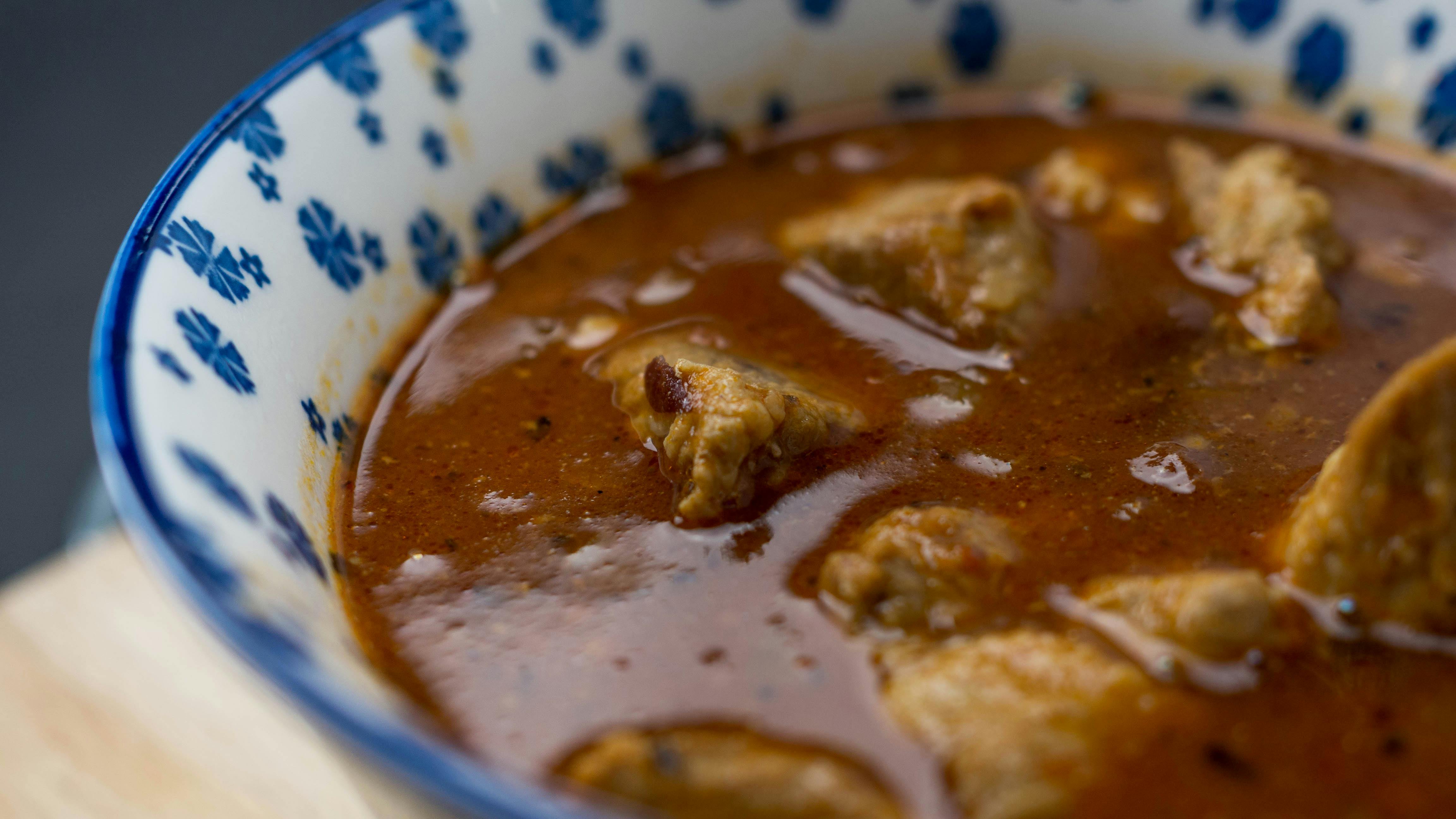
Photo: Mateusz Feliksik / Pexels
The diets react (see scores below)
Common Ingredients
- beef
- onion
- paprika
- garlic
- caraway seeds
- marjoram
- flour
- stock
Specific recipes may vary.
Incompatible with 6 of 11 diets
Diet Ratings
Czech Guláš is fundamentally keto-friendly in its core components — beef, onion, garlic, paprika, and spices are all acceptable. However, the traditional recipe includes flour as a thickening agent, which introduces wheat-based carbs and is a direct keto violation. The flour thickener is a defining characteristic of the dish and not merely incidental. Without flour modification, the base is reasonable, but as classically prepared it presents a meaningful carb load from flour plus moderate carbs from onions. Paprika in large quantities also adds minor carbs. A keto adaptation would replace flour with xanthan gum or simply reduce the sauce, making it approvable — but the standard version warrants caution.
Some lazy keto practitioners would argue that the flour amount used per serving (typically 1-2 tbsp across multiple portions) is small enough that net carbs per bowl remain under 10g, making it conditionally acceptable within a daily budget. Strict keto adherents counter that any grain-based thickener should be entirely eliminated regardless of quantity.
Czech Guláš contains beef as its primary protein, which is unambiguously an animal product. This dish is fundamentally incompatible with a vegan diet. All other ingredients (onion, paprika, garlic, caraway seeds, marjoram, flour) are plant-based, but the beef alone disqualifies the dish entirely. The stock listed is also almost certainly beef-based given the context, adding a second animal-derived ingredient.
Czech Guláš is disqualified from a paleo perspective primarily due to flour, which is a grain-based thickener central to the dish's texture and preparation. Flour (wheat) is one of the clearest 'avoid' items in all paleo frameworks — excluded by Cordain, Sisson, Wolf, and virtually every paleo authority. The remaining ingredients are largely paleo-compliant: beef is an excellent paleo protein, onion, garlic, paprika, caraway seeds, and marjoram are all approved herbs, spices, and vegetables, and stock (assuming homemade or additive-free bone broth) is paleo-friendly. However, the flour cannot be omitted without fundamentally changing the dish — it is the structural thickening agent that defines Guláš as a stew rather than a broth. Without flour, this would no longer be authentic Guláš. The dish as traditionally prepared must be rated 'avoid.'
Czech Guláš is a red meat-heavy stew that fundamentally conflicts with Mediterranean diet principles. Beef is the primary protein and the dish is built around it, whereas the Mediterranean diet limits red meat to only a few times per month. The dish also uses flour as a thickener (refined grain) and relies on no olive oil or plant-based fats. While it does contain beneficial aromatics like onion, garlic, caraway seeds, and marjoram, these are minor components that do not offset the core issues. The dish is not plant-forward, contains no fish or legumes, and is not part of any Mediterranean culinary tradition.
Czech Guláš is fundamentally incompatible with the carnivore diet. While beef is the primary protein and an excellent carnivore food, the dish contains numerous plant-derived ingredients that are strictly excluded: onion, paprika, garlic, caraway seeds, marjoram, and flour. Flour (a grain product) is particularly problematic as a thickening agent and is one of the most clearly excluded foods on carnivore. The spice blend (paprika, caraway, marjoram) and aromatics (onion, garlic) are all plant-derived. Even practitioners following a lenient carnivore approach that tolerates some spices would still reject the onion, garlic, and especially the flour. The dish as traditionally prepared cannot be made carnivore-compliant without removing the majority of its defining ingredients, at which point it would simply be braised beef in stock.
Czech Guláš as listed contains flour, which is a grain-based ingredient explicitly excluded on the Whole30. Flour is typically used in this dish as a thickener for the stew/sauce, making the recipe non-compliant. All other ingredients — beef, onion, paprika, garlic, caraway seeds, marjoram, and stock — are Whole30-compatible. To make this dish compliant, the flour would need to be omitted or replaced with a compliant thickener such as arrowroot powder or tapioca starch (used sparingly), or the stew thickened naturally by reducing the liquid or adding more onions.
Czech Guláš contains multiple high-FODMAP ingredients that make it unsuitable during the elimination phase. Onion is one of the highest-FODMAP foods tested by Monash University, being extremely high in fructans even in small quantities. Garlic is similarly high in fructans and is a major FODMAP offender. Wheat flour is used as a thickener and is high in fructans. The combination of onion, garlic, and wheat flour makes this dish clearly high-FODMAP regardless of serving size. The beef, paprika, caraway seeds, marjoram, and stock (if homemade and onion/garlic-free) are generally low-FODMAP, but the core aromatics and thickener dominate the FODMAP profile. There is no practical way to consume traditional Guláš during the elimination phase.
Czech Guláš is a beef stew/soup built on onions, paprika, garlic, and aromatic spices — several elements align with DASH principles (onions, garlic, spices are encouraged; no added salt in the base recipe as listed). However, the primary protein is red meat (beef), which DASH limits due to saturated fat and cholesterol concerns. The fat content depends heavily on the cut used: fattier cuts like chuck or shank are traditional and raise saturated fat intake significantly. Flour thickening adds refined carbohydrate with minimal nutritional benefit. Stock is a key variable — commercial beef stock is typically high in sodium (500–900mg per cup), which could push a single serving well toward or beyond the DASH sodium threshold. The dish lacks vegetables beyond onion and contains no fiber-rich legumes, whole grains, or leafy greens. On the positive side, the spice profile (paprika, caraway, marjoram, garlic) is DASH-friendly, and if made with a lean beef cut (e.g., round) and low-sodium homemade stock, the dish improves considerably. As traditionally prepared, it sits in caution territory — acceptable occasionally in controlled portions but not a DASH staple.
NIH DASH guidelines explicitly limit red meat due to saturated fat content, placing beef-based dishes in a cautious category by default. However, some updated clinical interpretations note that lean cuts of beef (e.g., 95% lean) can fit within DASH's protein targets, and if low-sodium stock is used, this dish's sodium burden can be managed — making it more acceptable in a flexible, whole-diet DASH approach.
Czech Guláš is a hearty beef stew/soup with a generally workable macro profile for the Zone, but it presents several portioning challenges. The beef provides adequate protein but is typically a fattier cut (chuck, shank) rather than lean protein preferred in Zone methodology — adding saturated fat beyond ideal levels. The flour used as a thickener introduces refined carbohydrates that raise the glycemic load, and the ratio of carbs-to-protein-to-fat in a traditional serving likely skews toward fat and away from the ideal 40/30/30 split. On the positive side, the dominant carbohydrate sources (onion, garlic, paprika spice and pepper-based paprika) are low-glycemic and anti-inflammatory, caraway and marjoram add polyphenol value, and the dish is minimally processed. With portion control — a modest serving of the guláš (focusing on protein-dense pieces of beef) paired with additional low-GI vegetables rather than the traditional bread dumpling accompaniment — it can be worked into a Zone meal. The flour thickener and fatty beef are the primary concerns keeping this from a higher score.
Some Zone practitioners following Sears' later anti-inflammatory writings (The Anti-Inflammation Zone, 2005) might rate this slightly higher, noting that the spice base — paprika, garlic, caraway, marjoram — is rich in polyphenols, and that a modest amount of saturated fat from beef is acceptable within a broader anti-inflammatory diet context. Others might note that if lean beef is substituted and flour is minimized or replaced with a starch thickener like arrowroot in small quantities, this dish moves closer to a Zone-favorable protein and vegetable combination.
Czech guláš is a mixed bag from an anti-inflammatory perspective. On the positive side, the dish features several genuinely anti-inflammatory ingredients: garlic and onion provide quercetin and allicin; paprika is rich in carotenoids (capsanthin, beta-carotene) and vitamin C; caraway seeds and marjoram offer polyphenols and antimicrobial compounds; and a good stock provides collagen and minerals. These spices collectively represent a meaningful anti-inflammatory contribution. However, the primary protein — beef — is a red meat high in saturated fat and arachidonic acid, both associated with pro-inflammatory signaling and elevated CRP in research. The flour used for thickening is a refined carbohydrate, a category the anti-inflammatory framework recommends limiting. The dish lacks omega-3 sources, fiber-rich legumes, or colorful antioxidant-dense vegetables beyond the paprika spice. For the general population, occasional consumption is acceptable given the spice profile, but the red meat base and refined thickener prevent an approval. Those with autoimmune conditions or cardiovascular concerns should be more cautious given the saturated fat load.
Some anti-inflammatory advocates, including proponents of ancestral or nose-to-tail eating, argue that minimally processed grass-fed beef contains anti-inflammatory CLA and a better omega-6 to omega-3 ratio than conventional beef, making it a reasonable protein choice. Others in the mainstream nutrition camp (e.g., Harvard T.H. Chan School of Public Health) would flag all red meat for regular caution regardless of preparation.
Czech guláš is a beef stew-soup built on a paprika-onion-stock base, thickened with flour. It delivers a meaningful protein contribution from beef, along with some fiber from onion and spices, but the cut of beef used in traditional guláš is typically a fatty braising cut (chuck, shin, or cheek) that adds saturated fat — a notable concern for GLP-1 patients prone to nausea, bloating, and reflux. The flour thickening adds refined carbohydrate with little nutritional payoff. The paprika, caraway, and marjoram are GI-neutral for most people, though the relatively high spice load combined with fat may trigger reflux in sensitive patients. Portion-dependent: a small bowl provides decent protein and is reasonably easy to eat, but a large serving of fatty braised beef in a rich gravy amplifies the fat-related side effect risk. Lean beef substitution (e.g., top round or sirloin) and reduced-fat preparation would improve the score meaningfully.
Some GLP-1-focused dietitians accept traditional braised beef dishes like guláš in moderate portions, noting that slow-cooked cuts are easy to chew and digest and that the overall protein content supports the #1 dietary priority; others flag the saturated fat load and refined flour thickening as counterproductive given reduced caloric intake and heightened GI sensitivity, and recommend lean-protein adaptations instead.
*See how scores were generated at our methodology page.
Nutritional profile
Six traits that cut across every diet.
Fiber & Plants
How much whole-plant food and fiber it delivers.
Healthy Fats
The quality of its fats (unsaturated, omega-3).
Whole / Unprocessed
How close it is to its natural, unprocessed form.
Gut Gentle
How easy it is on digestion (low FODMAP, few irritants).
Low Glycemic
How little it spikes your blood sugar.
Protein Density
How much protein it packs per calorie.
Controversy Index
Higher controversy = more disagreement between diets.
Diet-Specific Tips
 Keto — 4/10
View tips
- Flour thickener is a traditional ingredient and direct source of grain-based carbs
- Beef and spices (paprika, caraway, marjoram, garlic) are keto-compatible
- Onions contribute moderate net carbs and are used in significant quantity in this dish
- Per-serving carb impact depends heavily on flour quantity and serving size
- Easy to adapt by omitting flour or substituting xanthan gum
- Stock may contain hidden sugars depending on commercial vs. homemade preparation
 DASH — 4/10
View tips
- Red meat (beef) is limited on DASH due to saturated fat; cut selection is critical
- Commercial stock likely high in sodium, potentially exceeding DASH limits per serving
- No significant vegetables beyond onion; lacks DASH-emphasized produce diversity
- Flour thickening adds refined carbohydrate with little nutritional value
- Spices (paprika, garlic, marjoram, caraway) are DASH-friendly and sodium-free
- Low-sodium homemade stock and lean beef cuts would meaningfully improve DASH compatibility
- No added sugar or tropical oils; base recipe is otherwise relatively clean
 Zone — 5/10
View tips
- Beef is typically a fatty cut (chuck/shank), adding saturated fat beyond Zone-ideal levels
- Flour thickener introduces refined carbohydrates with moderate glycemic impact
- Onion, garlic, and paprika (pepper) are Zone-favorable low-GI carbohydrates
- Spice base (caraway, marjoram, paprika, garlic) provides strong polyphenol and anti-inflammatory value
- Traditional serving with bread dumplings would make Zone balance very difficult — pairing matters
- Protein content is meaningful but fat-to-protein ratio in fatty beef cuts is unfavorable
- Can be Zone-adapted by using leaner beef, reducing flour, and controlling portion size
 Anti-Inflammatory — 4/10
View tips
- Beef is red meat — high in saturated fat and arachidonic acid, associated with elevated inflammatory markers
- Paprika provides anti-inflammatory carotenoids (capsanthin, beta-carotene) and vitamin C
- Garlic and onion contribute quercetin, allicin, and organosulfur compounds with established anti-inflammatory effects
- Caraway seeds and marjoram offer polyphenols and secondary anti-inflammatory plant compounds
- Flour thickener adds refined carbohydrates, a category the anti-inflammatory framework recommends limiting
- No omega-3 sources, legumes, or high-fiber vegetables present
- Overall spice profile partially offsets the pro-inflammatory potential of the red meat base
 GLP-1 Friendly — 5/10
View tips
- Protein present but from a typically fatty beef cut — saturated fat is a GLP-1 side effect risk
- Flour thickening adds refined carbs with low nutritional density
- Spice load (paprika, caraway, marjoram) is moderate — generally tolerated but may worsen reflux in sensitive individuals
- No meaningful fiber sources in the ingredient list
- Small portions are more tolerable; large servings amplify fat-related nausea and bloating risk
- Lean beef substitution would significantly improve suitability