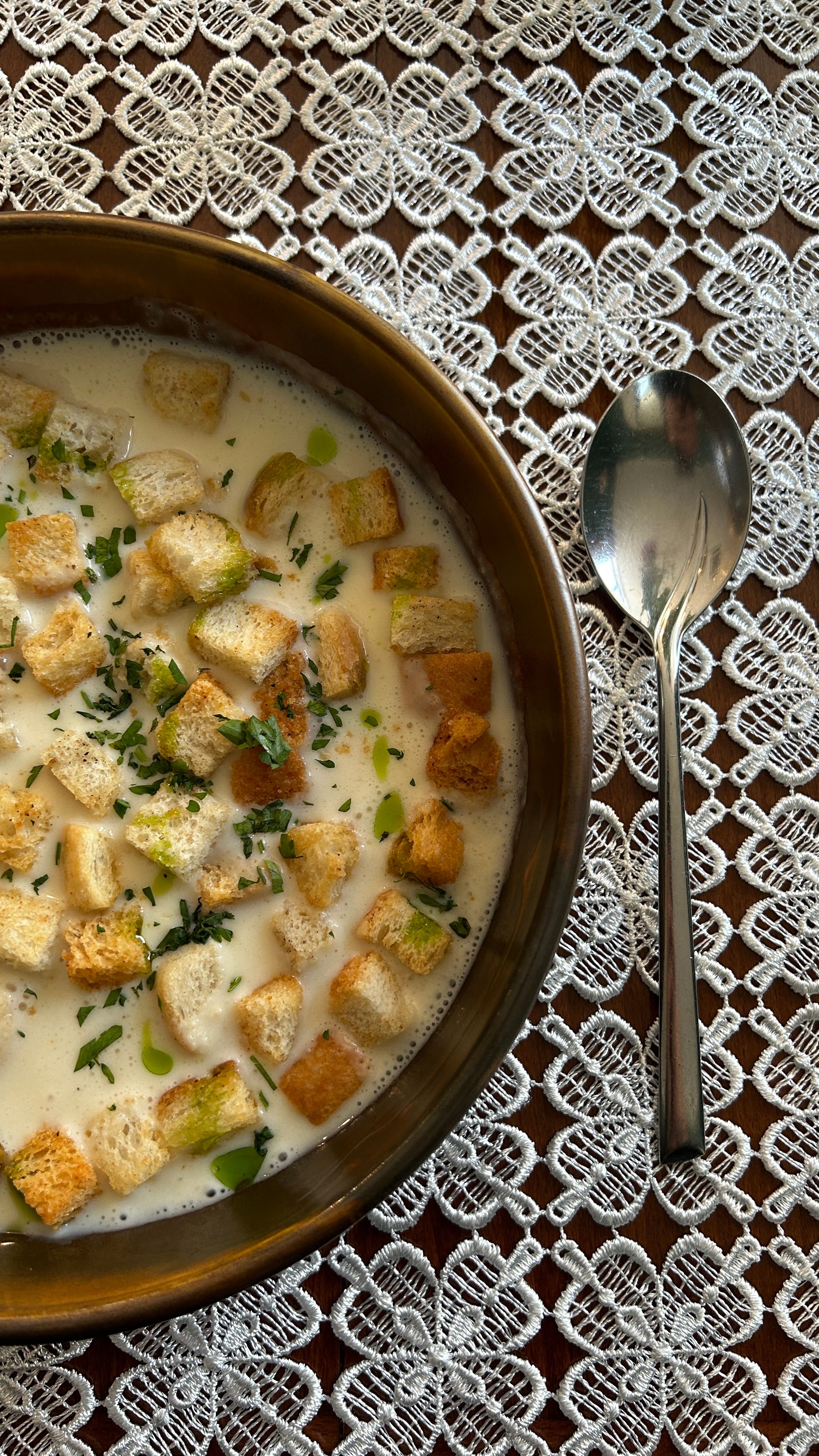
Photo: Karography / Pexels
The diets react (see scores below)
Common Ingredients
- mushrooms
- dill
- potatoes
- cream
- eggs
- vinegar
- caraway seeds
- stock
Specific recipes may vary.
Incompatible with 6 of 11 diets
Diet Ratings
Kulajda is a traditional Czech cream soup that is fundamentally incompatible with ketogenic dietary requirements due to the inclusion of potatoes. Potatoes are a high-starch vegetable with approximately 15-17g net carbs per 100g, and even a modest serving in soup would likely push a single bowl well over the 20-50g daily net carb budget. The remaining ingredients — mushrooms, cream, eggs, dill, vinegar, caraway seeds, and stock — are largely keto-friendly, but the potatoes are a non-negotiable disqualifier. The cream and eggs provide desirable fat and protein macros, but these positives are entirely offset by the potato content. A keto-adapted version replacing potatoes with cauliflower or celeriac would be viable, but the traditional dish as served is not compatible with ketosis.
Kulajda is a traditional Czech creamy mushroom soup that contains multiple animal-derived ingredients, making it clearly incompatible with a vegan diet. Eggs are listed as the primary protein and are a direct animal product. Cream is a dairy derivative, also excluded from vegan diets. The stock is likely meat- or bone-based in its traditional preparation, adding a third animal-derived component. While mushrooms, dill, potatoes, vinegar, and caraway seeds are all plant-based, the foundational character of the dish depends on eggs and dairy. A vegan adaptation could substitute plant-based cream (oat or cashew) and omit or replace the egg with silken tofu, using vegetable stock, but the dish as described is not vegan.
Kulajda is a traditional Czech cream soup that contains multiple non-paleo ingredients. Cream is a dairy product excluded from strict paleo. Potatoes are debated (white potatoes are discouraged by The Paleo Diet's original framework, though accepted by some modern practitioners). The combination of cream and potatoes together makes this dish incompatible with paleo principles even in more lenient interpretations. Mushrooms, dill, eggs, vinegar, caraway seeds, and stock are all paleo-friendly, but the dairy cream is a clear violation and pushes this firmly into avoid territory.
Some modern paleo practitioners following Mark Sisson's Primal Blueprint or Whole30 guidelines accept white potatoes and even small amounts of full-fat dairy, which could push this dish toward 'caution' territory. If cream were substituted with coconut cream and potatoes were accepted, the dish could be made paleo-compatible.
Kulajda is a traditional Czech cream-based mushroom soup featuring several Mediterranean-compatible ingredients (mushrooms, eggs, potatoes, dill, vinegar) alongside some that are less aligned. Mushrooms, dill, and vinegar are plant-based and perfectly compatible. Eggs are an acceptable moderate-consumption food. However, cream is a high-saturated-fat dairy product not typical of Mediterranean cooking, where olive oil rather than cream would be the primary fat. Potatoes are starchy but whole and unprocessed. The absence of olive oil and the reliance on cream as the fat base are the main concerns. Overall, this is an occasional dish — the plant ingredients are positive, but the cream-heavy base and non-Mediterranean culinary tradition push it into the moderation category.
Some modern Mediterranean diet interpretations allow dairy, including cream, in small quantities as part of a varied diet, and traditional practices in Greece and Turkey do include yogurt- or dairy-enriched soups. From this perspective, Kulajda's vegetable and egg content could be seen as largely compatible if cream is used sparingly.
Kulajda is a traditional Czech soup that is fundamentally incompatible with the carnivore diet. The dish is dominated by plant-based ingredients: mushrooms, potatoes, dill, caraway seeds, and vinegar. Mushrooms and potatoes are the primary bulk ingredients, both entirely plant-derived and explicitly excluded from carnivore. Dill and caraway seeds are plant-based spices/herbs, also excluded. Vinegar is plant-derived. While eggs and cream are animal-derived and would otherwise be acceptable (with some debate around dairy), they are minor components in a soup that is structurally a plant-based dish. The stock, depending on its origin, could be animal-derived (bone broth), but even a perfect animal stock cannot redeem a dish whose core identity and caloric majority come from plant foods. This is essentially a vegetable soup with eggs and cream added — there is no meaningful way to reconcile this with carnivore principles.
Kulajda contains cream, which is a dairy product explicitly excluded from the Whole30 program. Dairy (milk, cheese, sour cream, yogurt, cream) is not allowed, with the sole exception being ghee and clarified butter. All other ingredients — mushrooms, dill, potatoes, eggs, vinegar, caraway seeds, and stock — are Whole30 compliant. However, cream is a core, defining ingredient of this traditional Czech soup, not an incidental or easily substituted component, making the dish as traditionally prepared non-compliant.
Kulajda is a traditional Czech cream soup whose FODMAP status hinges on two key variables: mushroom type/quantity and cream volume. Potatoes are low-FODMAP at standard servings (1 medium potato). Eggs are low-FODMAP. Dill, vinegar, and caraway seeds are low-FODMAP at culinary amounts. Stock is low-FODMAP if made without onion or garlic (many commercial stocks contain these, which is a hidden FODMAP risk). The main concerns are: (1) Mushrooms — FODMAP status varies widely by type. Common button/cremini mushrooms are high-FODMAP at standard servings (>75g triggers polyol mannitol issues), while oyster mushrooms are low-FODMAP. Traditional Kulajda often uses dried or fresh forest mushrooms (porcini, etc.) which are high in mannitol. (2) Cream — heavy/thickened cream is low-FODMAP at ≤2 tablespoons (low lactose), but a cream-based soup may contain significantly more per serving, pushing lactose into problematic territory. Given that most traditional recipes use standard mushrooms in meaningful quantities and generous cream, a typical bowl is likely to present moderate-to-high FODMAP load.
Monash University rates oyster mushrooms as low-FODMAP and canned champignon mushrooms as low-FODMAP at 75g, meaning a carefully prepared Kulajda using low-FODMAP mushroom varieties and lactose-free cream could theoretically be safe during elimination. However, most clinical FODMAP practitioners would advise caution or avoidance given that standard recipes use forest mushrooms (high mannitol) and cream in quantities exceeding the Monash low-FODMAP threshold of ~2 tablespoons.
Kulajda is a traditional Czech cream-based mushroom soup that contains several DASH-friendly ingredients (mushrooms, potatoes, dill, eggs, vinegar, caraway seeds) alongside a significant concern: heavy cream. DASH guidelines specify low-fat or fat-free dairy, and cream is a high-saturated-fat dairy product that conflicts with this principle. Mushrooms and potatoes contribute beneficial potassium, fiber, and micronutrients. Eggs are a lean protein source acceptable in moderation under most current DASH interpretations. Stock may contribute meaningful sodium depending on preparation — commercial stocks can add 400–900mg sodium per cup, which is a concern under both standard and low-sodium DASH targets. The dish is not heavily processed and contains no added sugars or red meat, but the cream content and potential sodium from stock prevent approval. A modified version using low-fat or fat-free sour cream or Greek yogurt in place of heavy cream, and using low-sodium stock, would score meaningfully higher (potentially 6–7).
NIH DASH guidelines explicitly restrict saturated fat and specify low-fat dairy, placing cream-based soups in the caution-to-avoid range. However, some updated clinical interpretations note that recent meta-analyses (e.g., Mozaffarian et al.) have not consistently linked full-fat dairy consumption to adverse cardiovascular outcomes, leading some DASH-oriented clinicians to allow moderate amounts of full-fat dairy in an otherwise compliant dietary pattern.
Kulajda is a traditional Czech cream soup that presents multiple Zone Diet challenges. The primary carbohydrate source is potatoes, which are explicitly listed as 'unfavorable' high-glycemic carbohydrates in Dr. Sears' Zone methodology — they spike blood sugar and are difficult to incorporate without disrupting the 40/30/30 ratio. The cream contributes significant saturated fat rather than the preferred monounsaturated fats (olive oil, avocado, almonds), pushing the fat profile in an unfavorable direction. On the positive side, eggs provide a reasonable lean protein source (though whole eggs include saturated fat from yolks), mushrooms are excellent low-glycemic Zone-favorable vegetables, and the vinegar may actually help blunt glycemic response. Dill and caraway seeds add polyphenols. The overall macro balance of this dish as traditionally prepared is problematic: heavy cream dominates fat calories with saturated fat, potatoes dominate carbohydrates with a high glycemic load, and the protein from eggs may be insufficient relative to the carb/fat load. With significant recipe modifications — replacing cream with a small amount of low-fat dairy or olive oil, reducing or eliminating potatoes in favor of more mushrooms, and adding more egg whites — this could approach Zone compatibility. As traditionally prepared, it falls into caution territory rather than avoid because the ingredients are whole foods and not nutritionally empty.
Some Zone practitioners note that Sears' later anti-inflammatory writings (e.g., 'Toxic Fat,' 'The Mediterranean Zone') place greater emphasis on overall dietary pattern and polyphenol content rather than strict block-by-block optimization. From this perspective, the mushrooms and dill in Kulajda contribute meaningful polyphenols and micronutrients, and a small serving alongside additional lean protein could be made to approximate Zone ratios. The vinegar's glycemic-blunting effect on potatoes is also acknowledged in later Zone research. Strict early-Zone practitioners would rate this lower due to the unfavorable carb (potato) and saturated fat (cream) combination.
Kulajda is a traditional Czech cream soup with a mixed anti-inflammatory profile. On the positive side, mushrooms (especially if varieties like shiitake or forest mushrooms are used) are emphasized in anti-inflammatory frameworks for their beta-glucans and immune-modulating properties. Eggs provide selenium and choline. Dill and caraway seeds are herbs with modest anti-inflammatory compounds. Vinegar (particularly if apple cider) may support gut health. Potatoes, while starchy, are a whole food with antioxidants including vitamin C and quercetin. However, the cream is a significant concern — full-fat dairy cream is categorized as a food to limit in anti-inflammatory eating due to its saturated fat content, which can promote inflammatory markers at high intake. The stock is generally neutral to mildly beneficial. Overall, the dish has several anti-inflammatory ingredients but is undermined by the cream base, which is central to the dish's character and not easily minimized. It is acceptable as an occasional meal rather than a dietary staple.
Some anti-inflammatory practitioners following Dr. Weil's more flexible framework would consider full-fat dairy in moderate, whole-food forms (like cream in a homemade soup) less concerning than industrial processed dairy products, and would weigh the strong beneficial ingredients (mushrooms, eggs, dill) more favorably. Conversely, stricter anti-inflammatory protocols and those managing autoimmune conditions would flag the cream more aggressively and recommend a caution or even avoid rating.
Kulajda is a traditional Czech cream-based mushroom soup with eggs, potatoes, dill, and a characteristic sour note from vinegar. Its profile is mixed for GLP-1 patients. On the positive side, eggs provide a modest protein contribution (one egg per serving delivers ~6g protein), mushrooms add fiber and micronutrients with very low calories, vinegar may mildly support blood sugar regulation, dill and caraway seeds are gentle digestive herbs that may ease GLP-1-related GI discomfort, and the broth base supports hydration. However, the cream is the main liability — traditional Kulajda uses a significant amount of heavy cream or sour cream, pushing saturated fat content high per serving, which can worsen GLP-1 side effects including nausea, bloating, and reflux due to slowed gastric emptying. Potatoes add starchy carbohydrates with moderate glycemic impact. Protein per serving is relatively low for a GLP-1 patient's needs (likely 8–12g per bowl), making it a poor standalone protein source. The dish is not fried and is easy to digest in small amounts, earning it points for tolerability. Verdict depends heavily on preparation: a lightened version using low-fat dairy or a cream substitute improves the rating meaningfully. As traditionally prepared, it sits firmly in the caution range.
Some GLP-1-focused dietitians would view Kulajda as too fat-heavy and protein-poor to recommend even in moderation, preferring patients prioritize soups with legumes or lean protein as the base. Others may find the egg and mushroom combination acceptable given the small portion sizes typical on GLP-1 medications, arguing that the digestibility and hydration value of a broth-forward soup outweigh the cream concern if the serving is modest.
*See how scores were generated at our methodology page.
Nutritional profile
Six traits that cut across every diet.
Fiber & Plants
How much whole-plant food and fiber it delivers.
Healthy Fats
The quality of its fats (unsaturated, omega-3).
Whole / Unprocessed
How close it is to its natural, unprocessed form.
Gut Gentle
How easy it is on digestion (low FODMAP, few irritants).
Low Glycemic
How little it spikes your blood sugar.
Protein Density
How much protein it packs per calorie.
Controversy Index
Higher controversy = more disagreement between diets.
Diet-Specific Tips
 Mediterranean — 5/10
View tips
- Cream is the primary fat, replacing Mediterranean-preferred olive oil
- Mushrooms, dill, and vinegar are plant-based and diet-compatible
- Eggs are acceptable in moderation per Mediterranean guidelines
- Potatoes are whole and unprocessed, an acceptable starch
- No red meat or highly processed ingredients
- Non-Mediterranean culinary origin reduces traditional alignment
 DASH — 4/10
View tips
- Heavy cream is high in saturated fat, conflicting with DASH low-fat dairy requirement
- Stock may contribute high sodium — low-sodium stock strongly preferred
- Mushrooms, potatoes, and dill are DASH-friendly vegetables contributing potassium and fiber
- Eggs are acceptable in moderation under most current DASH interpretations
- No red meat, added sugars, or heavily processed ingredients
- Vinegar and caraway seeds are DASH-neutral flavorings that do not add sodium
- Dish can be DASH-adapted by substituting cream with low-fat sour cream or yogurt and using low-sodium stock
 Zone — 4/10
View tips
- Potatoes are explicitly 'unfavorable' high-glycemic carbohydrates in Zone methodology
- Heavy cream provides predominantly saturated fat rather than preferred monounsaturated fats
- Eggs offer moderate lean protein but whole eggs add saturated fat from yolks
- Mushrooms are Zone-favorable low-glycemic vegetables and a positive element
- Vinegar may modestly blunt glycemic response of potatoes
- Dill and caraway seeds contribute polyphenols consistent with anti-inflammatory Zone goals
- As prepared, the dish skews toward high-GI carbs and saturated fat, making 40/30/30 ratio difficult to achieve
- Portion control and recipe modification (less cream, fewer potatoes, more mushrooms) could improve Zone compatibility
 Anti-Inflammatory — 5/10
View tips
- Mushrooms are positively emphasized in anti-inflammatory frameworks for beta-glucans and immune support
- Full-fat cream is a significant source of saturated fat — a food to limit in anti-inflammatory eating
- Eggs provide beneficial selenium and choline but are debated in some anti-inflammatory contexts
- Dill and caraway seeds contribute modest anti-inflammatory phytocompounds
- Potatoes are a whole-food carbohydrate with antioxidants but raise glycemic considerations
- Vinegar may offer mild gut-health and glycemic benefits
- No trans fats, refined sugars, or processed additives — a positive baseline
 GLP-1 Friendly — 5/10
View tips
- Cream base significantly raises saturated fat content, risking nausea and reflux on GLP-1s
- Eggs provide some protein but total per-serving protein is low (est. 8–12g), inadequate as a standalone meal
- Mushrooms contribute fiber, micronutrients, and low-calorie bulk — a positive
- Potatoes add starchy carbohydrates with moderate glycemic impact
- Vinegar may offer mild blood sugar benefit; caraway and dill are GI-friendly spices
- High water content supports hydration, a GLP-1 priority
- Easily modifiable: substituting cream with low-fat dairy or Greek yogurt improves rating
- Not fried and generally easy to digest in small servings