Photo: Jonathan Borba / Pexels
The diets react (see scores below)
Common Ingredients
- pork roast
- salt
- cloves
- bay leaves
- potatoes
- red cabbage
- gravy
Specific recipes may vary.
Incompatible with 7 of 11 diets
Diet Ratings
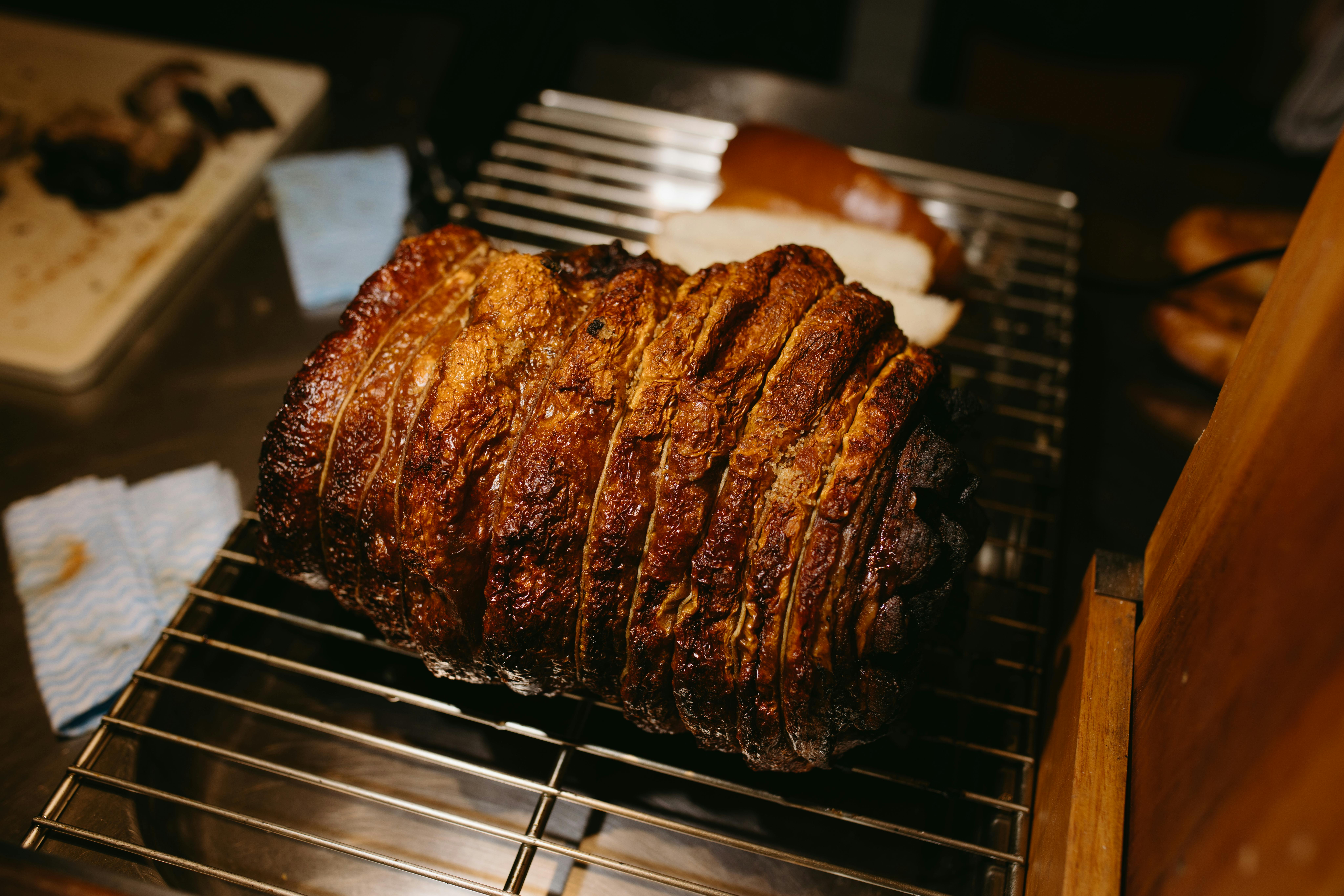
Flaeskesteg (Danish pork roast) is a traditional dish that, as typically served, is incompatible with ketogenic eating. While the pork roast itself is excellent for keto — high in fat and protein with zero carbs — the classic accompaniments make it a problem. Potatoes are a high-starch vegetable (~17g net carbs per 100g) and a staple side that alone can blow a full day's carb budget. Red cabbage as traditionally prepared is cooked with apple and sugar, adding further carbs. The gravy is typically thickened with flour or starch, adding additional net carbs. The dish as a whole, in its standard form, is dominated by high-carb components that make ketosis maintenance essentially impossible for a normal serving.
Flaeskesteg is a traditional Danish pork roast, with pork as its primary and defining ingredient. Pork is unambiguously an animal product (mammal flesh), making this dish entirely incompatible with a vegan diet. The gravy is also typically made from the pork drippings, adding a second animal-derived component. While side elements like potatoes and red cabbage are plant-based, the dish as a whole is centered on and defined by animal flesh and cannot be considered vegan in any interpretation.
Flaeskesteg (Danish pork roast) has a paleo-friendly protein base — pork roast is an approved meat — but the dish as traditionally prepared contains several non-paleo elements. Salt is explicitly excluded from strict paleo. The potatoes served alongside are white potatoes, which are debated but leaning toward exclusion in stricter paleo frameworks. Most critically, the gravy is almost certainly made with flour or cornstarch as a thickener (grains/starches), and may contain butter or cream (dairy), making it non-compliant. Red cabbage is paleo-approved, and cloves and bay leaves are fine as spices. The combination of added salt, white potatoes, and a grain-thickened dairy-based gravy pushes this dish firmly into avoid territory as traditionally served.
A paleo-adapted version of this dish could be approved: the pork roast itself is compliant, white potatoes are accepted by Mark Sisson and modern Whole30 protocols, and the gravy could be made with arrowroot flour and animal drippings instead of wheat flour and dairy. In that modified form, only the salt remains a sticking point, and many practical paleo followers accept small amounts of natural salt.
Flaeskesteg is a traditional Danish pork roast, centered on red meat (pork) as the primary protein. The Mediterranean diet strictly limits red meat to a few times per month, making a pork roast the centerpiece of a meal a poor fit. While some accompanying ingredients — potatoes, red cabbage, bay leaves, cloves — are acceptable or even positive (red cabbage is a nutritious vegetable), they do not offset the core issue. The gravy is likely made from pork drippings, adding saturated fat without olive oil as the fat base. The dish lacks olive oil, fish, legumes, or whole grains, and is built around a protein source explicitly discouraged by Mediterranean principles.
Flaeskesteg as traditionally prepared is fundamentally incompatible with the carnivore diet. While the pork roast itself is a perfectly acceptable carnivore food, the dish is served with potatoes (a starchy plant tuber), red cabbage (a plant vegetable), and the gravy likely contains plant-based thickeners or flour. The spices (cloves, bay leaves) are plant-derived, adding further violations. The core animal protein is surrounded by multiple plant foods that together disqualify this dish entirely. A carnivore adaptation would strip it down to the pork roast with salt only.
Flaeskesteg (Danish pork roast) is largely Whole30-friendly in its core components: pork roast, salt, cloves, bay leaves, and potatoes are all compliant. However, 'gravy' is the critical wildcard — traditional Danish gravy (brun sovs) typically includes flour as a thickener, which would make it non-compliant. The red cabbage (rødkål) is also a concern, as the traditional Danish preparation almost universally includes added sugar, vinegar, and sometimes currant jelly or apple, making store-bought or restaurant versions non-compliant. If both the gravy and red cabbage are prepared in compliant ways (gravy thickened with arrowroot or tapioca, red cabbage made without added sugar), the dish becomes approvable. As commonly served, this dish likely contains excluded ingredients in two of its components.
Some Whole30 practitioners would approve this dish outright, noting that the primary protein and vegetables are fully compliant and that the program allows home cooks to substitute compliant thickeners in gravies. However, as commonly prepared and served — especially in restaurants or from traditional recipes — the gravy and sweet-and-sour red cabbage almost certainly contain flour and added sugar respectively, which the official Whole30 guidelines exclude.
Flaeskesteg (Danish pork roast) is built on a low-FODMAP protein base — plain pork roast is safe — and most of its traditional accompaniments are individually manageable, but the dish as a whole contains several components that require scrutiny. Salt, bay leaves, and cloves are low-FODMAP at culinary quantities. Potatoes are low-FODMAP at a standard serving (~1 medium potato, ~75–100g). Red cabbage is low-FODMAP at up to 75g per serve per Monash, but is often eaten in larger portions or prepared with apple or onion (classic additions in Danish red cabbage recipes), which would push it high-FODMAP. The biggest concern is the gravy: traditional Danish flaeskesteg gravy is almost always made with pan drippings thickened with wheat flour and often flavored with onion, garlic, or cooking juices from aromatics — all high-FODMAP. If the gravy is wheat-based and contains onion/garlic, it is a clear trigger. Cloves also deserve attention: at small pinches they are fine, but at higher quantities they have not been fully characterized by Monash. The dish is conditionally safe only with careful modifications — gluten-free thickener in the gravy, no onion or garlic in any component, and portion-controlled red cabbage.
Monash University rates plain pork, potatoes, and small servings of red cabbage as low-FODMAP, which would suggest the core dish is manageable. However, many clinical FODMAP dietitians advise caution with restaurant or traditional versions of this dish because gravy ingredients and red cabbage preparation methods are highly variable and frequently include high-FODMAP items (wheat flour, onion, apple); during elimination phase, the safest approach is to prepare it at home with verified substitutions.
Flaeskesteg (Danish pork roast) is a poor fit for the DASH diet for several reasons. The dish centers on pork roast, which is a red meat high in saturated fat — particularly problematic because the traditional preparation uses the fatty skin (crackling), dramatically increasing saturated fat content. Salt is applied generously to the skin to produce the characteristic crispy rind, contributing very high sodium levels that directly conflict with DASH sodium limits (<2,300mg/day standard, <1,500mg/day low-sodium). The gravy is typically made from pan drippings, adding further saturated fat, sodium, and cholesterol. While the accompaniments — potatoes and red cabbage — are DASH-friendly vegetables, they do not offset the core issues with the protein and preparation method. Red meat with high saturated fat is explicitly limited in DASH guidelines, and the sodium-heavy preparation technique is incompatible with the diet's core sodium restriction principles.
Flaeskesteg (Danish roast pork with crackling) presents several Zone Diet challenges. The pork roast itself, particularly with its crackling skin, carries significant saturated fat and is considerably fattier than the lean proteins Zone favors (skinless chicken, fish). Potatoes are a high-glycemic carbohydrate that Dr. Sears explicitly classifies as unfavorable in Zone terminology, making them difficult to incorporate without spiking insulin. The gravy, typically made from pan drippings and often thickened with flour or starch, adds more saturated fat and high-glycemic carbs. The one redemptive element is the red cabbage, which is a favorable Zone carbohydrate — low-glycemic, high in polyphenols, and anti-inflammatory. However, the overall dish as traditionally served is dominated by problematic Zone elements: high saturated fat from pork crackling, high-glycemic potatoes, and starchy gravy. The 40/30/30 ratio would be very difficult to achieve without dramatically restructuring the dish — replacing potatoes with more vegetables, trimming the pork of skin/fat, and omitting or modifying the gravy. As traditionally served, this is a classic high-fat, high-glycemic meal that pushes well outside Zone balance.
Flaeskesteg (Danish pork roast) is a traditional dish with a mixed anti-inflammatory profile. The primary concern is the pork roast itself — particularly as a high-fat, skin-on roast with crispy crackling (flæskesvær), which is high in saturated fat. Pork falls into the 'limit' category in anti-inflammatory frameworks, especially fatty cuts. The gravy is typically made from pan drippings, adding more saturated fat. On the positive side, the dish includes some genuinely anti-inflammatory components: red cabbage is rich in anthocyanins and antioxidants, making it one of the better side vegetables in this context. Cloves and bay leaves provide modest anti-inflammatory phytochemicals. Potatoes are neutral to mildly beneficial (resistant starch, vitamin C, potassium) though not a standout anti-inflammatory food. The overall dish is a classic comfort meal heavy on saturated animal fat, which is the dominant concern. It is not in the 'avoid' category because it lacks trans fats, refined sugars, or processed additives, and it contains meaningful vegetable components — but it cannot be approved due to the high saturated fat load from pork crackling and dripping-based gravy.
Some anti-inflammatory researchers, including those focused on traditional whole-food diets, argue that unprocessed pork from pasture-raised animals contains a more balanced fatty acid profile and meaningful amounts of B vitamins and selenium, making it more acceptable than industrially processed meats. However, mainstream anti-inflammatory guidance (including Dr. Weil's framework) consistently places fatty red/pink meats like pork roast in the 'limit' category, especially when prepared with skin and drippings.
Flaeskesteg is a traditional Danish pork roast defined by its thick, crispy crackling skin — which is essentially pure rendered pork fat. The cut used is typically pork belly or pork shoulder with skin on, making this an inherently high-fat, high-saturated-fat dish. The crackling alone can contain 20–30g of fat per serving, and the overall meal is rich and heavy. High fat content is one of the most significant triggers for GLP-1 side effects including nausea, bloating, reflux, and prolonged gastric discomfort, given that GLP-1 medications already slow gastric emptying considerably. The accompanying gravy is typically made from pan drippings, adding further saturated fat. Potatoes and red cabbage are nutritionally acceptable sides — red cabbage in particular provides fiber and micronutrients — but they cannot offset the problematic protein vehicle. While pork does provide protein, the fat-to-protein ratio in this dish is unfavorable for GLP-1 patients. The portion size of a traditional serving is also large relative to GLP-1-reduced appetite, meaning patients may consume a disproportionate hit of fat before feeling full. This dish is not suitable for regular consumption on a GLP-1 medication.
*See how scores were generated at our methodology page.
Nutritional profile
Six traits that cut across every diet.
Fiber & Plants
How much whole-plant food and fiber it delivers.
Healthy Fats
The quality of its fats (unsaturated, omega-3).
Whole / Unprocessed
How close it is to its natural, unprocessed form.
Gut Gentle
How easy it is on digestion (low FODMAP, few irritants).
Low Glycemic
How little it spikes your blood sugar.
Protein Density
How much protein it packs per calorie.
Controversy Index
Higher controversy = more disagreement between diets.
Diet-Specific Tips
 Whole30 — 5/10
View tips
- Pork roast, salt, cloves, and bay leaves are fully Whole30 compliant
- Potatoes are compliant on Whole30
- Traditional Danish gravy typically contains flour (a grain) as a thickener — non-compliant
- Traditional Danish red cabbage (rødkål) almost always contains added sugar — non-compliant
- Compliant versions possible: arrowroot-thickened gravy and unsweetened or fruit-juice-sweetened red cabbage
- As commonly prepared, two components are likely non-compliant
 Low-FODMAP — 5/10
View tips
- Plain pork roast is low-FODMAP and safe as the protein base
- Traditional Danish gravy typically contains wheat flour (fructans) and often onion/garlic — high-FODMAP as usually prepared
- Red cabbage is low-FODMAP at ≤75g but traditional Danish rødkål is often made with apple and onion, making it high-FODMAP
- Potatoes are low-FODMAP at standard servings (~75–100g)
- Cloves and bay leaves are low-FODMAP at culinary amounts
- Dish is potentially safe with home preparation using GF thickeners and no onion/garlic, but risky as served traditionally
 Zone — 4/10
View tips
- Pork roast is a valid Zone protein source but the fatty crackling significantly elevates saturated fat beyond Zone guidelines
- Potatoes are explicitly classified as 'unfavorable' high-glycemic carbohydrates in Zone methodology and should be avoided
- Red cabbage is a favorable Zone carbohydrate — polyphenol-rich and low-glycemic, a positive element
- Traditional gravy adds saturated fat and likely starch-thickened carbohydrates, compounding the glycemic and fat issues
- The 40/30/30 macro ratio is achievable only with significant modification: remove crackling, eliminate potatoes, replace with more vegetables, use lean pork loin
- As traditionally served, the dish skews high in both saturated fat and glycemic load, disrupting Zone hormonal balance
 Anti-Inflammatory — 4/10
View tips
- Pork roast is a fatty cut high in saturated fat — falls in the 'limit' category
- Crispy pork crackling (skin) significantly elevates saturated fat content
- Pan dripping-based gravy adds additional saturated fat load
- Red cabbage is a strong anti-inflammatory ingredient (anthocyanins, antioxidants)
- Cloves are a potent anti-inflammatory spice (eugenol)
- Potatoes are neutral — not harmful but not anti-inflammatory standouts
- No trans fats, refined sugars, or artificial additives — a meaningful positive
- Traditional whole-food preparation avoids many processed food concerns