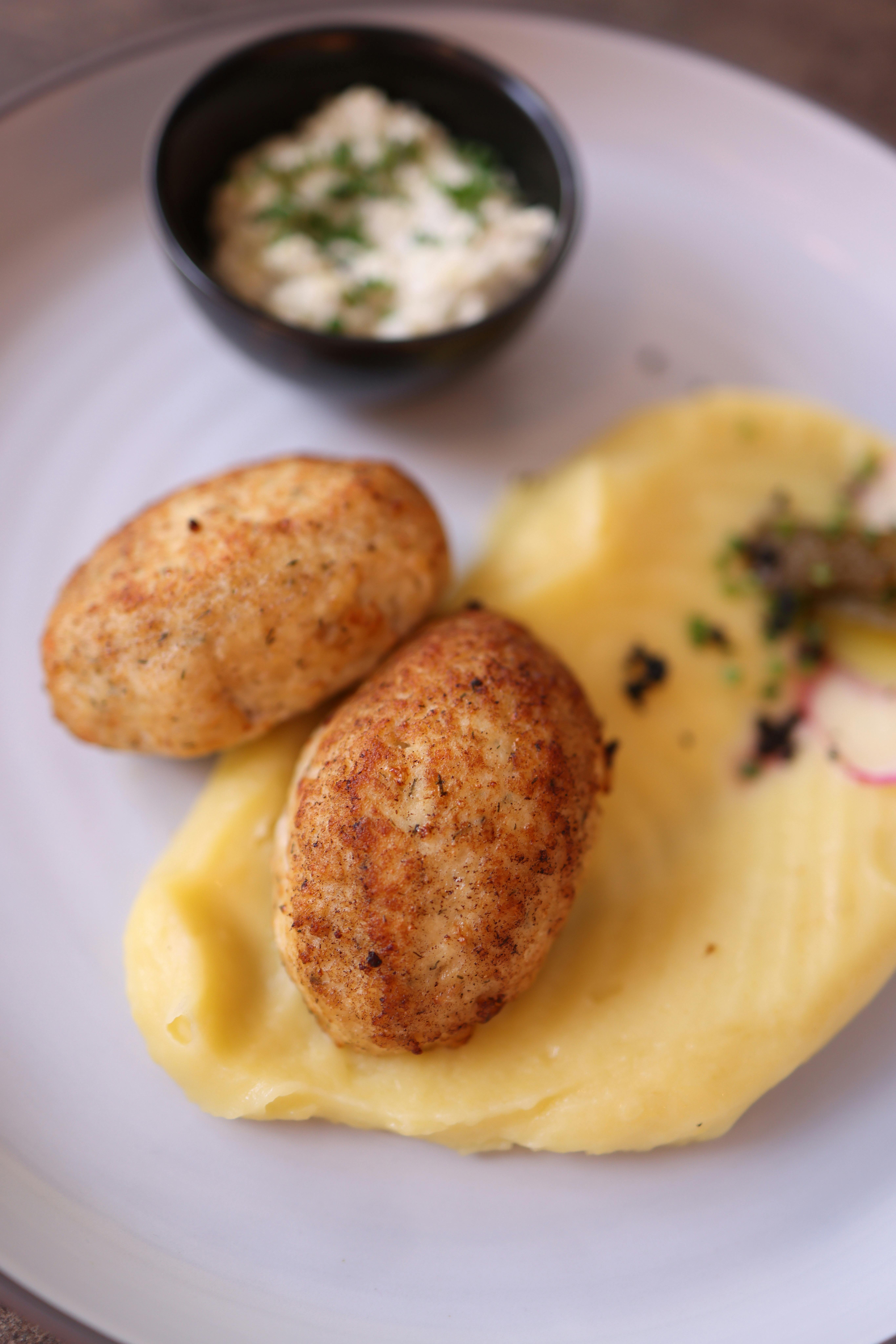
Photo: Valeria Boltneva / Pexels
The diets react (see scores below)
Common Ingredients
- ground pork
- onion
- eggs
- milk
- breadcrumbs
- nutmeg
- butter
- flour
Specific recipes may vary.
Incompatible with 6 of 11 diets
Diet Ratings
Frikadeller (Danish meatballs) are made from ground pork, which is keto-friendly, but the traditional recipe includes two significant keto-incompatible binders: breadcrumbs and flour. These are grain-based and add meaningful net carbs per serving. Milk also adds a small amount of lactose carbs. A standard serving of 3-4 meatballs could easily contribute 10-20g of net carbs from the breadcrumbs and flour alone, which is a substantial portion of the daily keto budget. The dish is not inherently incompatible — many keto practitioners make a modified version substituting almond flour or pork rinds for breadcrumbs and flour, and omitting or replacing milk — but in its traditional form it requires significant modification. The pork, eggs, butter, and even onion and nutmeg in small amounts are fine on keto.
Some lazy keto or moderate keto practitioners may approve small portions of traditional Frikadeller, arguing the carb count per meatball is manageable if portion-controlled strictly. Conversely, strict/clinical keto protocols would classify this as avoid due to the presence of both flour and breadcrumbs as explicit grain ingredients.
Frikadeller are traditional Danish meatballs made primarily from ground pork, which is a direct animal product. The recipe compounds the non-vegan status with multiple additional animal-derived ingredients: eggs (used as a binder), milk (adds moisture), and butter (used for frying). Every major protein and binding component is animal-derived, making this dish entirely incompatible with a vegan diet. There is no ambiguity here — this dish is built around animal products at its core.
Frikadeller contains multiple non-paleo ingredients that disqualify it clearly. Breadcrumbs (wheat/grain), flour (grain), and milk (dairy) are all explicitly excluded from the paleo diet. These are not trace or debated ingredients — they are core structural components of the dish. Butter is debated in paleo circles, but the presence of three separate avoid-category ingredients makes the overall verdict unambiguous. Ground pork, onion, eggs, and nutmeg are paleo-approved, but they cannot offset the fundamental incompatibility of the remaining ingredients.
Frikadeller are Danish pork meatballs that fundamentally conflict with Mediterranean diet principles on multiple levels. Ground pork is red/processed meat, which Mediterranean guidelines restrict to a few times per month. The dish is cooked in butter rather than olive oil, directly contradicting the core principle of olive oil as the primary fat. Refined breadcrumbs and flour add refined grains, while milk adds saturated fat. This is a Northern European dish with no alignment to Mediterranean culinary traditions or nutritional priorities.
Frikadeller is a traditional Danish meatball dish that, while anchored by ground pork, contains multiple plant-based and processed ingredients that disqualify it from the carnivore diet. Breadcrumbs and flour are grain-derived fillers — among the most strictly excluded foods on any tier of carnivore eating. Onion is a plant food, nutmeg is a plant-derived spice, and milk adds a dairy component that is itself debated. The eggs and butter are carnivore-compatible, and pork itself is acceptable, but the overall formulation is fundamentally incompatible with carnivore principles. The breadcrumbs and flour alone are hard disqualifiers, functioning as the primary binders and representing exactly the kind of grain-based filler carnivore practitioners avoid. This dish would need to be completely reformulated — removing all plant ingredients and replacing binders with egg and fat only — to approach carnivore compatibility.
Frikadeller contains multiple Whole30-excluded ingredients. Breadcrumbs are made from wheat (a grain), flour is also a grain product, milk is dairy, and butter is dairy (only ghee/clarified butter is permitted). Ground pork, onion, eggs, and nutmeg are all compliant, but the presence of breadcrumbs, flour, milk, and butter makes this dish clearly non-compliant in its traditional form.
Frikadeller contains multiple high-FODMAP ingredients that make it unsuitable during the elimination phase. Onion is one of the highest-FODMAP foods tested by Monash University, containing significant fructans even in small amounts. Regular wheat breadcrumbs are high in fructans, and wheat flour adds further fructan load. Milk contributes lactose, which is a disaccharide that must be restricted during elimination. Ground pork, eggs, butter, and nutmeg are all low-FODMAP and unproblematic, but the combination of onion, wheat-based breadcrumbs, wheat flour, and milk creates a dish that is high-FODMAP at any realistic serving size. There is no version of traditional Frikadeller that avoids all these triggers without significant recipe modification.
Frikadeller (Danish meatballs) are made primarily from ground pork, which is a red meat that DASH guidelines recommend limiting due to its saturated fat content. The dish also includes butter for frying, adding additional saturated fat. However, not all aspects are problematic: eggs, milk, onion, and moderate use of breadcrumbs and flour are acceptable DASH components. Ground pork is not as categorically excluded as processed meats like bacon or sausage, and lean ground pork exists as an option. The primary concerns are saturated fat from pork and butter, and the dish's potential sodium content depending on seasoning. If made with lean ground pork, minimal butter, and low-sodium preparation, it can fit into a DASH diet in moderation — but as typically prepared with regular ground pork and pan-fried in butter, it sits in the caution zone.
NIH DASH guidelines broadly limit red meat and full-fat preparations due to saturated fat concerns, placing standard Frikadeller in the caution-to-avoid range. However, updated clinical interpretations note that unprocessed pork (especially lean cuts) differs meaningfully from processed red meat in cardiovascular risk, and some DASH-oriented dietitians allow moderate portions of lean, unprocessed pork meatballs as part of a balanced DASH meal plan.
Frikadeller (Danish meatballs) present a moderate Zone challenge. Ground pork is a higher-fat protein compared to Zone-ideal lean proteins like skinless chicken or fish, bringing both saturated fat and excess calories from fat. The breadcrumbs and flour act as binders, adding refined, higher-glycemic carbohydrates that are 'unfavorable' in Zone terminology. Butter adds saturated fat on top of the pork fat. However, pork is not categorically excluded — it provides usable protein blocks, and the dish can be portioned appropriately. The key Zone problem is the fat profile: too much saturated fat and not enough monounsaturated fat, plus the refined carb binders displace more favorable low-glycemic carb choices. With careful portioning (2-3 small meatballs as the protein block), paired with a large serving of non-starchy vegetables and a drizzle of olive oil rather than butter, Frikadeller can fit into a Zone meal — but it requires significant adjustment. On its own it skews toward excess fat and unfavorable carbs, making it a 'caution' food that Zone practitioners should use sparingly.
Frikadeller are traditional Danish pan-fried meatballs made primarily from ground pork, cooked in butter. From an anti-inflammatory standpoint, this dish presents several concerns. Ground pork is a red meat high in saturated fat and arachidonic acid, both of which are associated with pro-inflammatory pathways when consumed regularly. Butter adds additional saturated fat. Refined breadcrumbs and flour contribute refined carbohydrates with minimal fiber or nutritional benefit. Milk adds modest saturated fat. On the positive side, onion contains quercetin and other anti-inflammatory flavonoids, and eggs provide some beneficial nutrients including selenium and choline. Nutmeg has minor anti-inflammatory properties at culinary doses. The dish is not as heavily processed as fast food and contains no trans fats, high-fructose corn syrup, or artificial additives, which keeps it out of the 'avoid' category. However, the combination of fatty pork, butter frying medium, and refined carbohydrate binders makes this a dish that should be consumed only occasionally within an anti-inflammatory dietary pattern. Modifications such as substituting lean turkey or chicken, using olive oil instead of butter, and replacing refined breadcrumbs with whole grain alternatives would improve its inflammatory profile significantly.
Frikadeller are traditional Danish pan-fried pork meatballs made with ground pork, bound with eggs, milk, flour, and breadcrumbs, then fried in butter. The primary protein source (ground pork) is typically a higher-fat cut, and the butter frying adds additional saturated fat per serving. While the dish does deliver meaningful protein (roughly 15-20g per standard 3-4 patty serving), the fat content — from the pork itself, the milk, and especially the butter used for frying — is problematic for GLP-1 patients, who are more susceptible to nausea, bloating, and reflux from high-fat meals due to slowed gastric emptying. The breadcrumb and flour binders add refined carbohydrates with minimal fiber value. The butter frying method is a meaningful concern, not just the pork fat content. This dish is not in the 'avoid' category because it does provide real protein and is not fried in industrial oil or heavily processed, but it requires meaningful modification — lean ground pork (93%+ lean), baking or air-frying instead of butter-frying, and reducing or substituting the milk — to become more GLP-1 compatible.
Some GLP-1-focused dietitians would accept a modified version of frikadeller (lean pork, baked preparation) as a reasonable protein source, particularly for patients who tolerate pork well and are managing cultural food preferences — individual GI tolerance to pork fat varies considerably among GLP-1 patients. Others would flag pork-based dishes categorically given the saturated fat load and the unpredictability of GI response early in treatment.
*See how scores were generated at our methodology page.
Nutritional profile
Six traits that cut across every diet.
Fiber & Plants
How much whole-plant food and fiber it delivers.
Healthy Fats
The quality of its fats (unsaturated, omega-3).
Whole / Unprocessed
How close it is to its natural, unprocessed form.
Gut Gentle
How easy it is on digestion (low FODMAP, few irritants).
Low Glycemic
How little it spikes your blood sugar.
Protein Density
How much protein it packs per calorie.
Controversy Index
Higher controversy = more disagreement between diets.
Diet-Specific Tips
 Keto — 4/10
View tips
- Breadcrumbs are a grain-based binder adding significant net carbs — primary disqualifier
- Flour is a second grain-based ingredient compounding the carb load
- Ground pork and eggs are highly keto-compatible protein and fat sources
- Butter adds healthy saturated fat, aligning with keto macros
- Milk contributes minor lactose carbs but is not the main concern
- Dish is easily keto-modified by substituting almond flour or crushed pork rinds for breadcrumbs and flour
- Onion in small amounts is borderline but acceptable in the quantities typical per meatball
 DASH — 4/10
View tips
- Ground pork is a red meat, limited under DASH guidelines
- Butter used for frying adds saturated fat
- Not a processed or cured meat, reducing sodium and additive concerns
- Onion provides beneficial nutrients consistent with DASH
- Lean ground pork alternative would improve DASH compatibility
- Portion control is essential — 1-2 meatballs as part of a vegetable-rich meal is more acceptable
- Milk and eggs are acceptable DASH ingredients in moderation
 Zone — 5/10
View tips
- Ground pork is higher in saturated fat than Zone-preferred lean proteins (chicken breast, fish, egg whites)
- Breadcrumbs and flour are refined, higher-glycemic carbohydrate binders — 'unfavorable' Zone carbs
- Butter adds additional saturated fat, conflicting with Zone's monounsaturated fat preference
- Eggs contribute usable protein but also add to fat load
- Onion is a Zone-favorable low-glycemic carbohydrate ingredient
- Portioning is critical — small servings can fill a protein block, but fat blocks will be consumed quickly
- Dish lacks omega-3s and polyphenols emphasized in Sears' anti-inflammatory Zone framework
 Anti-Inflammatory — 4/10
View tips
- Ground pork is a red meat high in saturated fat and arachidonic acid — pro-inflammatory when consumed regularly
- Butter as a cooking fat adds saturated fat load
- Refined breadcrumbs and flour contribute refined carbohydrates with low fiber
- No trans fats, artificial additives, or HFCS — not deeply processed
- Onion provides quercetin and flavonoids with anti-inflammatory properties
- Eggs contribute beneficial selenium and choline
- Occasional consumption acceptable; not suitable as a dietary staple in anti-inflammatory eating
 GLP-1 Friendly — 4/10
View tips
- Ground pork is typically moderate-to-high fat; saturated fat content worsens GLP-1 GI side effects
- Butter frying adds additional saturated fat load
- Breadcrumbs and flour are refined carbohydrates with negligible fiber
- Milk adds modest fat with minimal nutritional upside in this context
- Protein yield is adequate (~15-20g per serving) but undermined by the fat delivery vehicle
- Slowed gastric emptying on GLP-1s amplifies discomfort from high-fat, heavy meals
- Modifiable dish: baking and using lean ground pork would improve the score materially