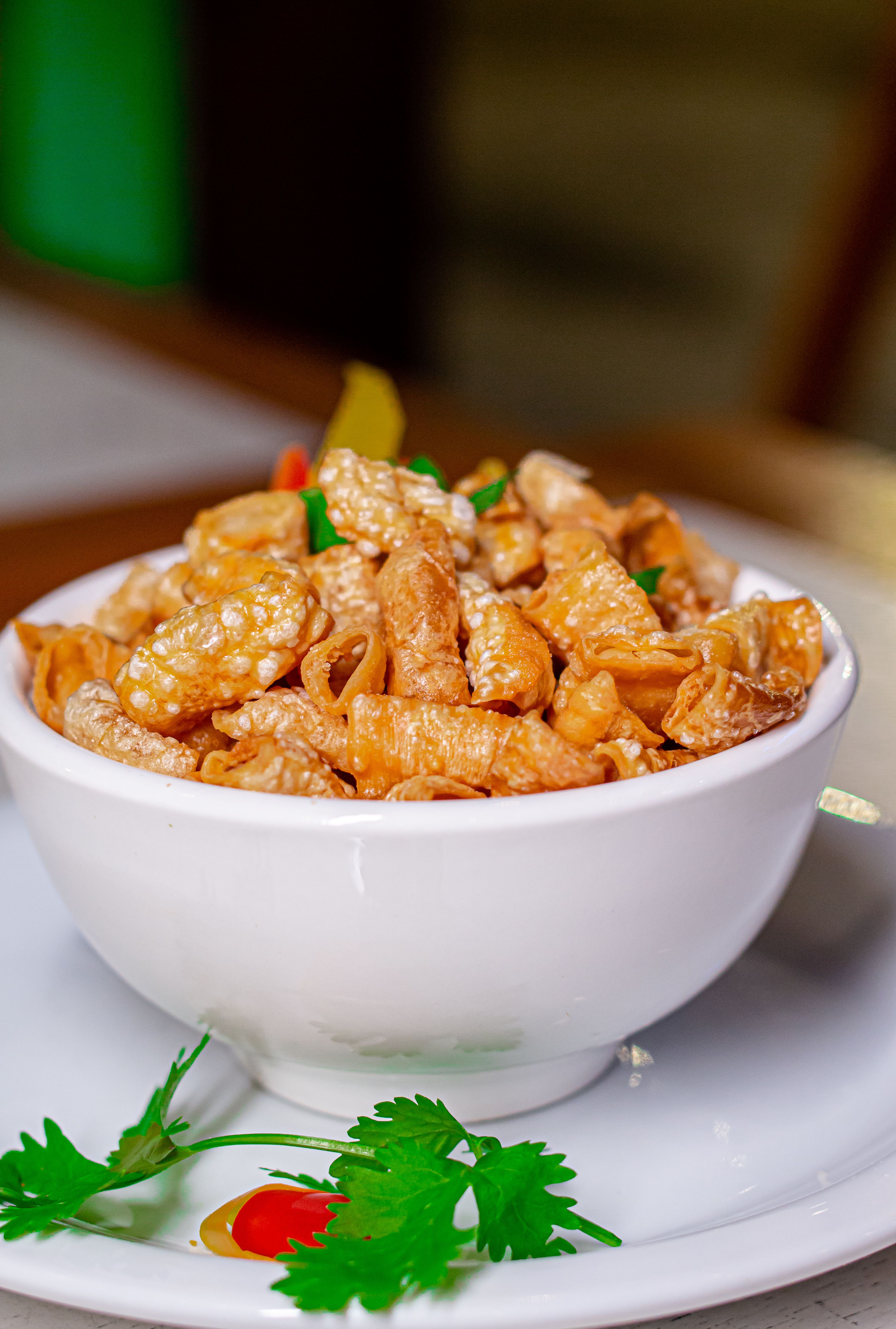
Photo: Matheus Andrade / Pexels
Dominican
Chicharron
The diets react (see scores below)
Common Ingredients
- pork belly
- garlic
- sour orange
- oregano
- salt
- oil
Specific recipes may vary.
Incompatible with 7 of 11 diets
Diet Ratings
Dominican chicharron is essentially fried pork belly — one of the most keto-friendly foods available. Pork belly is extremely high in fat with zero carbohydrates, and the marinade ingredients (garlic, sour orange, oregano, salt) contribute negligible net carbs in typical cooking quantities. The frying process renders out fat and creates a crispy, high-fat snack that fits perfectly within keto macros. The only minor concern is sour orange juice, which contains some natural sugars, but the amount used as a marinade per serving is minimal (likely under 1-2g net carbs). This is a naturally keto-aligned dish.
Some strict keto practitioners flag any citrus juice, including sour orange, as a source of sugar and fructose to avoid entirely, preferring apple cider vinegar as a substitute marinade acid. Additionally, those following carnivore-adjacent keto protocols may question the garlic and oregano, though this is a fringe position.
Chicharron is fried pork belly — a direct animal product and one of the clearest possible violations of vegan dietary principles. Pork is mammalian flesh, unambiguously excluded under all definitions of veganism. No vegan version of this dish exists under the traditional Dominican preparation, as pork belly is the foundational and irreplaceable ingredient.
Dominican chicharron (fried pork belly) features several paleo-incompatible elements. Pork belly itself is paleo-approved, as are garlic, sour orange, and oregano. However, the dish is disqualified by two clear violations: added salt and the frying oil. Salt is explicitly excluded from strict paleo (no added salt rule), and the generic 'oil' used for frying in this recipe almost certainly refers to a seed or vegetable oil (canola, soybean, corn, or vegetable oil are standard in Dominican cooking), all of which are explicitly banned under paleo guidelines. These are not gray-area ingredients — both added salt and seed oils represent clear, high-consensus exclusions in the paleo framework. While the core protein (pork belly) and aromatics are sound, the preparation method as traditionally executed renders this dish non-compliant.
Chicharron is deep-fried pork belly, which directly contradicts core Mediterranean diet principles. Pork belly is a high-saturated-fat red/processed meat, and deep-frying in oil (likely not extra virgin olive oil) compounds the issue. Red meat is limited to a few times per month in the Mediterranean diet, and fried pork belly is among the least compatible preparations. While garlic, sour orange, and oregano are Mediterranean-friendly aromatics, they do not offset the primary protein and cooking method. This dish is a clear 'avoid' regardless of its flavorful Dominican preparation.
While the base of this dish — pork belly — is an excellent carnivore food (fatty, animal-derived, minimally processed), Dominican chicharron as prepared here contains multiple plant-based ingredients that disqualify it under carnivore rules. Sour orange (citrus juice) is a fruit, oregano is a plant spice, and garlic is a plant. The marinade is fundamentally plant-based. Additionally, 'oil' in this context almost certainly refers to a plant oil (vegetable or canola oil) used for frying, which is explicitly excluded. The pork belly itself would score a 9-10 on its own, but the preparation method renders this dish non-compliant. A carnivore version would require frying the pork belly in lard or tallow with salt only.
Dominican chicharron is fried pork belly seasoned with garlic, sour orange (a natural citrus fruit), oregano, and salt — all of which are explicitly compliant on Whole30. Pork belly is an unprocessed whole cut of meat, sour orange juice functions as a natural citrus marinade, garlic and oregano are whole spices/herbs, salt is allowed, and cooking oil (such as lard or a compliant vegetable oil) is a natural fat permitted on the program. There are no excluded ingredients present: no grains, dairy, legumes, added sugar, soy, or other disqualifying additives.
Dominican chicharron is deep-fried pork belly, which is inherently low-FODMAP as a protein and fat source. The primary FODMAP concern here is garlic, which is high in fructans and should be avoided during the elimination phase. However, the preparation method matters significantly: if garlic is used as a marinade and then removed before cooking (or only garlic-infused oil contacts the pork), the fructan load may be negligible since FODMAPs are water-soluble and do not transfer into fat. Sour orange (bitter orange) is used in small amounts as a marinade acid and is considered low-FODMAP at typical culinary quantities. Oregano and salt are FODMAP-free. Oil used for frying is FODMAP-free. The core issue is how garlic is incorporated — if garlic cloves are marinated with the pork and the juices are absorbed or if garlic solids remain on the meat, there is a meaningful fructan risk. In traditional Dominican preparation, garlic is typically blended into a marinade (mojo), which means garlic solids and water-soluble fructans likely permeate the meat. This makes the dish problematic during strict elimination without modification.
Monash University confirms garlic is high-FODMAP at any culinary dose due to fructans, and clinical FODMAP practitioners would flag any dish where garlic is marinated into the protein rather than used only as an infused oil. If the recipe is modified to use garlic-infused oil instead of whole/minced garlic, the dish would likely be approvable at a standard serving size.
Dominican chicharron is deep-fried pork belly, a food that directly conflicts with core DASH diet principles. Pork belly is one of the fattiest cuts of pork, extremely high in saturated fat and total fat. Deep-frying in oil further increases the fat load. The preparation also involves added salt, contributing significant sodium. DASH guidelines explicitly limit red meat, high saturated fat foods, and excess sodium — pork belly fried in oil hits all three prohibited categories simultaneously. This is not a borderline case; fried fatty pork is categorically discouraged under NIH/NHLBI DASH guidance. While the marinade includes heart-neutral ingredients like sour orange, garlic, and oregano, these do not offset the fundamental nutritional profile of the dish.
Dominican chicharron (fried pork belly) presents significant challenges for Zone compliance primarily due to its macronutrient profile. Pork belly is inherently high in saturated fat, and deep frying in oil compounds the fat load substantially. A typical serving is heavily skewed toward fat calories rather than the 30/30/40 Zone ratio. The protein content is real and meaningful, but it comes packaged with far more saturated fat than Zone guidelines favor. On the positive side, the marinade ingredients (sour orange, garlic, oregano) are Zone-friendly and even polyphenol-rich, contributing anti-inflammatory value. As a snack, a very small portion (1-2 oz) could theoretically be incorporated into a Zone framework by pairing it with low-glycemic vegetables to balance the carb block and leaning on the dish's protein content, but the fat ratio would still run well over Zone targets. The Zone does not categorically ban saturated fat, but it strongly discourages fatty cuts of red meat and pork when leaner options exist. Pork belly specifically is one of the fattiest cuts available, making Zone-compliant portioning very difficult in practice.
Sears' later writings (The OmegaRx Zone, Zone Perfect Meals in Minutes) softened the strict anti-saturated-fat stance somewhat, acknowledging that dietary saturated fat is less harmful than omega-6-driven inflammation. Some Zone practitioners argue that a small portion of chicharron paired with a large vegetable salad and no added fat could serve as a one-block protein-fat combo snack, accepting the saturated fat load as manageable in an otherwise Zone-compliant diet. The sour orange marinade adds polyphenols, which Sears values highly in his later anti-inflammatory framework.
Dominican chicharron is deep-fried pork belly — one of the most pro-inflammatory combinations in the culinary world from an anti-inflammatory perspective. Pork belly is exceptionally high in saturated fat, and deep-frying it in oil dramatically compounds the inflammatory burden. The cooking method generates advanced glycation end-products (AGEs) and oxidized lipids, both of which are well-established drivers of systemic inflammation and elevated CRP. The high saturated fat content directly promotes production of pro-inflammatory cytokines (IL-6, TNF-α). While the dish does include genuinely anti-inflammatory supporting ingredients — garlic and oregano are beneficial, and sour orange provides vitamin C and flavonoids — these are present in trace culinary quantities that cannot meaningfully offset the dominant pro-inflammatory profile of the base ingredient and preparation method. Oil used for deep-frying, depending on type (commonly vegetable or corn oil in Dominican cooking), may also contribute excessive omega-6 fatty acids. Red meat and full-fat pork products are explicitly in the 'limit' category, and deep-fried preparations push this firmly into 'avoid' territory. The anti-inflammatory framework is consistent and unambiguous here: high saturated fat + deep frying = pro-inflammatory across all major authorities including Dr. Weil's pyramid, IF Rating system, and mainstream inflammation research.
Dominican chicharrón is deep-fried pork belly — one of the most problematic food categories for GLP-1 patients. Pork belly is extremely high in saturated fat, and deep-frying compounds the fat load significantly. GLP-1 medications slow gastric emptying, meaning this heavy, greasy food will sit in the stomach for an extended period, dramatically increasing the risk of nausea, bloating, reflux, and vomiting. The fat-to-protein ratio is poor: while pork belly does contain protein, the majority of its calories come from fat, making it low in protein density per calorie. It offers virtually no fiber and no meaningful micronutrient density. The frying oil adds additional fat and empty calories. The garlic, sour orange, and oregano marinade are nutritionally harmless, but they cannot offset the core problems of the dish. This is precisely the type of food — fried, fatty, heavy, and low in nutrient density — that GLP-1 clinical guidelines consistently flag as likely to worsen side effects and undermine treatment goals.
*See how scores were generated at our methodology page.
Nutritional profile
Six traits that cut across every diet.
Fiber & Plants
How much whole-plant food and fiber it delivers.
Healthy Fats
The quality of its fats (unsaturated, omega-3).
Whole / Unprocessed
How close it is to its natural, unprocessed form.
Gut Gentle
How easy it is on digestion (low FODMAP, few irritants).
Low Glycemic
How little it spikes your blood sugar.
Protein Density
How much protein it packs per calorie.
Controversy Index
Higher controversy = more disagreement between diets.
Diet-Specific Tips
 Keto — 9/10
View tips
- Pork belly is extremely high in fat and has zero net carbs — ideal keto protein/fat source
- Frying renders additional fat, increasing the fat-to-protein ratio favorably
- Sour orange juice in marinade contributes minimal net carbs per serving (estimated <2g)
- No grains, starches, added sugars, or high-carb fillers
- Whole, minimally processed ingredients align with keto food quality standards
- Garlic and oregano add negligible carbs at typical marinade quantities
 Whole30 — 7/10
View tips
- Pork belly is a whole, unprocessed cut of meat — fully compliant
- Sour orange is a whole citrus fruit; its juice is a natural, compliant marinade ingredient
- Garlic, oregano, and salt are all explicitly allowed herbs/seasonings
- Cooking oil (assuming lard, avocado, or other compliant oil) is a permitted natural fat
- No added sugars, grains, dairy, legumes, or other excluded ingredients
- Dish is a whole-food preparation, not a recreation of a baked good or junk food
 Low-FODMAP — 5/10
View tips
- Pork belly (protein and fat) is low-FODMAP
- Garlic is high-FODMAP due to fructans — traditional Dominican preparation uses garlic in a wet marinade, transferring fructans to the meat
- Garlic-infused oil would be safe, but blended garlic marinade is not
- Sour orange used in small marinade quantities is low-FODMAP
- Oregano and salt are FODMAP-free
- Oil used for frying is FODMAP-free
- FODMAP risk is preparation-dependent; home cooks can modify by substituting garlic-infused oil
 Zone — 4/10
View tips
- Pork belly is extremely high in saturated fat, well above Zone fat block targets
- Deep frying adds additional oil, further inflating fat calories and disrupting 30/30/40 ratio
- No carbohydrate component — must be paired with low-glycemic carbs to approach Zone balance
- Protein content is genuine and useful as a Zone protein source despite the fat
- Sour orange and garlic contribute polyphenols, aligning with Sears' anti-inflammatory emphasis
- Very small portions only (1 oz or less) could fit a Zone snack block, limiting practical appeal
- Zone classifies fatty pork cuts as 'unfavorable' protein sources due to saturated fat content