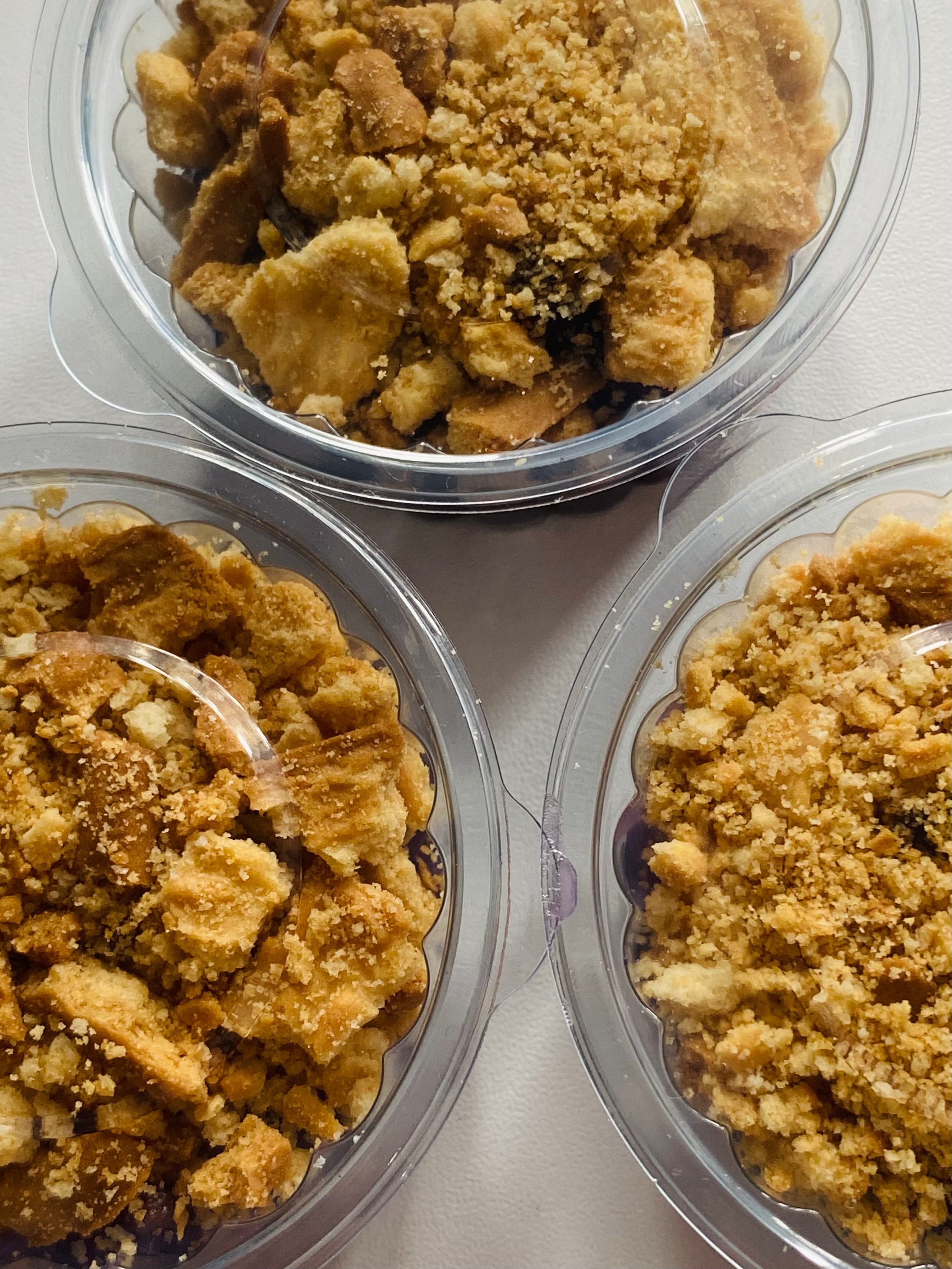
Photo: Alisa Salsa / Pexels
Dominican
Dulce de Leche Cortada
The diets react (see scores below)
Common Ingredients
- milk
- sugar
- lime juice
- cinnamon
- cloves
- vanilla
Specific recipes may vary.
Incompatible with 10 of 11 diets
Diet Ratings
Dulce de Leche Cortada is a Dominican sweet confection made by curdling milk with lime juice and cooking it down with large amounts of sugar. Sugar is the second ingredient and a primary component of this dish, making it fundamentally incompatible with ketosis. A standard serving would contain an extremely high amount of net carbs from both the added sugar and the milk's natural lactose, far exceeding the entire daily keto carb allowance in a single snack. There are no compensating fats or other keto-friendly elements that would make any portion of this dish workable.
Dulce de Leche Cortada is built on dairy milk as its primary and essential ingredient — the dish is literally a curdled milk sweet, where lime juice is used to intentionally curdle the milk before cooking it down with sugar and spices. Dairy milk is an animal product and is unambiguously excluded from a vegan diet. There is no plant-based version of this dish that could still be called Dulce de Leche Cortada in its traditional sense; the curdling reaction between milk proteins and acid is fundamental to its texture and character. The remaining ingredients (sugar, lime juice, cinnamon, cloves, vanilla) are all plant-derived, but the foundational ingredient disqualifies the dish entirely.
Dulce de Leche Cortada is fundamentally incompatible with the Paleo diet. It contains two core non-Paleo ingredients: milk (dairy, excluded under all mainstream Paleo frameworks) and sugar (refined sugar, strictly avoided). While the cinnamon, cloves, vanilla, and lime juice are Paleo-approved spices and flavorings, they are minor components that cannot redeem a dish whose entire identity is built on curdled sweetened milk. This is a dessert/snack with no Paleo pathway.
Dulce de Leche Cortada is a sweetened curdled milk dessert whose primary ingredients are milk and sugar in substantial quantities. The high added sugar content is the principal concern — it directly contradicts Mediterranean diet principles that call for minimal added sugars. While dairy (milk) is acceptable in moderation within the Mediterranean framework, this dish is fundamentally a sugar-forward confection rather than a moderate dairy serving. The spices (cinnamon, cloves, vanilla) and lime juice are benign or even beneficial, but they cannot offset the core issue of concentrated added sugar. There is no olive oil, no whole grains, no legumes, no vegetables — none of the pillars of the Mediterranean diet are present. This is an occasional indulgence at best, contradicting the diet's strong stance against added sugars and sweets.
Dulce de Leche Cortada is fundamentally incompatible with the carnivore diet. While milk is an animal product, it is heavily processed here with multiple plant-derived and non-animal ingredients: sugar (a refined plant-derived sweetener), lime juice (plant-derived acid used to curdle the milk), cinnamon (plant spice), cloves (plant spice), and vanilla (plant extract). The dish is essentially a sweetened, spiced dairy confection — a dessert/snack with no meaningful animal protein and dominated by sugar and plant compounds. Even the most lenient 'animal-based' carnivore practitioners who allow full-fat dairy would reject this due to the added sugar and plant spices. There is clear consensus across all carnivore camps that sugar and plant additives are excluded.
Dulce de Leche Cortada contains two excluded ingredients: milk (dairy) and sugar (added sugar). Both are explicitly prohibited on the Whole30 program. Milk is a dairy product, and added sugar in any form is excluded. While lime juice, cinnamon, cloves, and vanilla are all compliant ingredients, the foundational components of this dish make it incompatible with Whole30.
Dulce de Leche Cortada is a Dominican cooked milk dessert/snack where milk is curdled with lime juice and then concentrated with sugar, cinnamon, and cloves. The primary FODMAP concern is lactose from the milk. This dish uses a significant quantity of whole milk as its base, and while acidification (from lime juice) and cooking can slightly reduce lactose, the concentration process does not meaningfully reduce lactose content — in fact, as water evaporates, lactose becomes more concentrated per serving. Monash University rates regular cow's milk as high-FODMAP at standard servings (1/2 cup or more contains problematic lactose levels), and a typical serving of this rich dessert would involve milk-derived solids in quantities well above the low-FODMAP threshold (~30ml lactose-free milk equivalents). Sugar is low-FODMAP; cinnamon (1 tsp) and ground cloves are low-FODMAP at typical culinary amounts; vanilla extract is low-FODMAP; lime juice is low-FODMAP. However, the lactose burden from the milk base makes this dish inappropriate during the elimination phase.
Some FODMAP practitioners note that the acidification and prolonged cooking of milk can partially break down lactose, and if portion sizes are very small (a few tablespoons), the lactose load may be tolerable for some individuals. However, Monash University does not endorse this exception for standard cooked-milk sweets during elimination, and most clinicians would advise avoiding this dish unless made with lactose-free milk.
Dulce de Leche Cortada is a Dominican sweet dessert/snack made by curdling whole milk with lime juice and cooking it down with significant amounts of sugar, producing a high-sugar, high-saturated-fat confection. The primary concerns for DASH are: (1) substantial added sugar content — DASH limits sweets and added sugars to ≤5 servings per week, and this dish is essentially a sugar-concentrated sweet; (2) whole milk contributes saturated fat, which DASH explicitly limits, recommending fat-free or low-fat dairy instead; (3) the dish provides negligible potassium, magnesium, or fiber relative to its caloric and sugar load. The spices (cinnamon, cloves, vanilla) and lime juice are DASH-neutral or mildly beneficial but do not offset the core nutritional concerns. Sodium is low, which is the one point in its favor, but the high added sugar and saturated fat content firmly place this in the 'avoid' category under DASH guidelines.
Dulce de Leche Cortada is essentially a sugar-concentrated curdled milk dessert/candy. Sugar is the second primary ingredient and is the driving force behind the dish's character — it is a high-glycemic, nutritionally empty carbohydrate source with no meaningful protein or favorable fat to balance it. There is no lean protein component, no monounsaturated fat, and the carbohydrates come almost entirely from refined sugar and lactose. This makes achieving any semblance of a 40/30/30 Zone ratio impossible without transforming the dish into something unrecognizable. The cinnamon and cloves offer minor polyphenol benefits, and the milk provides trace protein and fat, but these are negligible relative to the dominant sugar load. As a snack category item, it would spike blood sugar and insulin — the exact hormonal response the Zone Diet is designed to prevent. Dr. Sears explicitly identifies sugar and high-glycemic refined carbohydrates as the primary dietary enemies in his framework.
Dulce de Leche Cortada is a Dominican curdled milk sweet made by combining milk with lime juice (an acid to curdle it), then cooking it down with sugar, cinnamon, cloves, and vanilla. The anti-inflammatory profile is decidedly mixed. On the positive side, cinnamon, cloves, and vanilla are potent anti-inflammatory spices — cloves in particular have among the highest antioxidant values of any spice (eugenol), and cinnamon has well-documented anti-inflammatory and blood sugar-modulating properties. Lime juice provides vitamin C and flavonoids. However, the dish is fundamentally a sugar-forward confection: added sugar is the primary structural ingredient alongside milk, and high added sugar intake is one of the most clearly pro-inflammatory dietary patterns, raising CRP and promoting AGE (advanced glycation end-product) formation. Milk (dairy) is in the 'moderate' category — low-fat dairy is acceptable, but curdled whole milk preparations tend toward full-fat territory. As a traditional snack, portion sizes are typically small, which partially mitigates the sugar load. The anti-inflammatory spices earn it a step above 'avoid,' but the high added sugar content prevents approval. Best treated as an occasional indulgence rather than a regular snack.
Dulce de Leche Cortada is a Dominican curdled-milk sweet made by combining whole milk with sugar and lime juice (to curdle it), then simmering with cinnamon, cloves, and vanilla. The result is a high-sugar, moderate-fat dessert with virtually no meaningful protein or fiber. Sugar is the dominant caloric driver, providing empty calories with no nutritional payoff — precisely what GLP-1 patients must avoid given their dramatically reduced caloric budget. The lime-induced curdling creates a dense, heavy texture that may be slow to digest given GLP-1-slowed gastric emptying. The high sugar content risks blood sugar spikes, counteracting one of the key metabolic benefits of GLP-1 therapy. The spices (cinnamon, cloves, vanilla) are benign and even mildly beneficial, but they do not offset the fundamental nutritional profile. This dish offers essentially nothing GLP-1 patients need — no protein to protect muscle mass, no fiber to support digestion or satiety, high sugar, and moderate fat — while carrying real risk of worsening nausea and undermining glycemic goals.
*See how scores were generated at our methodology page.
Nutritional profile
Six traits that cut across every diet.
Fiber & Plants
How much whole-plant food and fiber it delivers.
Healthy Fats
The quality of its fats (unsaturated, omega-3).
Whole / Unprocessed
How close it is to its natural, unprocessed form.
Gut Gentle
How easy it is on digestion (low FODMAP, few irritants).
Low Glycemic
How little it spikes your blood sugar.
Protein Density
How much protein it packs per calorie.
Controversy Index
Higher controversy = more disagreement between diets.
Diet-Specific Tips
 Anti-Inflammatory — 4/10
View tips
- High added sugar content — strongly pro-inflammatory at regular consumption
- Cinnamon and cloves are potent anti-inflammatory spices with polyphenols and antioxidants
- Lime juice provides vitamin C and flavonoids
- Vanilla contains small amounts of vanillin with antioxidant properties
- Dairy is in the 'moderate' category — acceptable in limited amounts
- Small traditional portion size partially mitigates sugar impact
- No omega-3s, fiber, or other primary anti-inflammatory nutrients present