Chinese
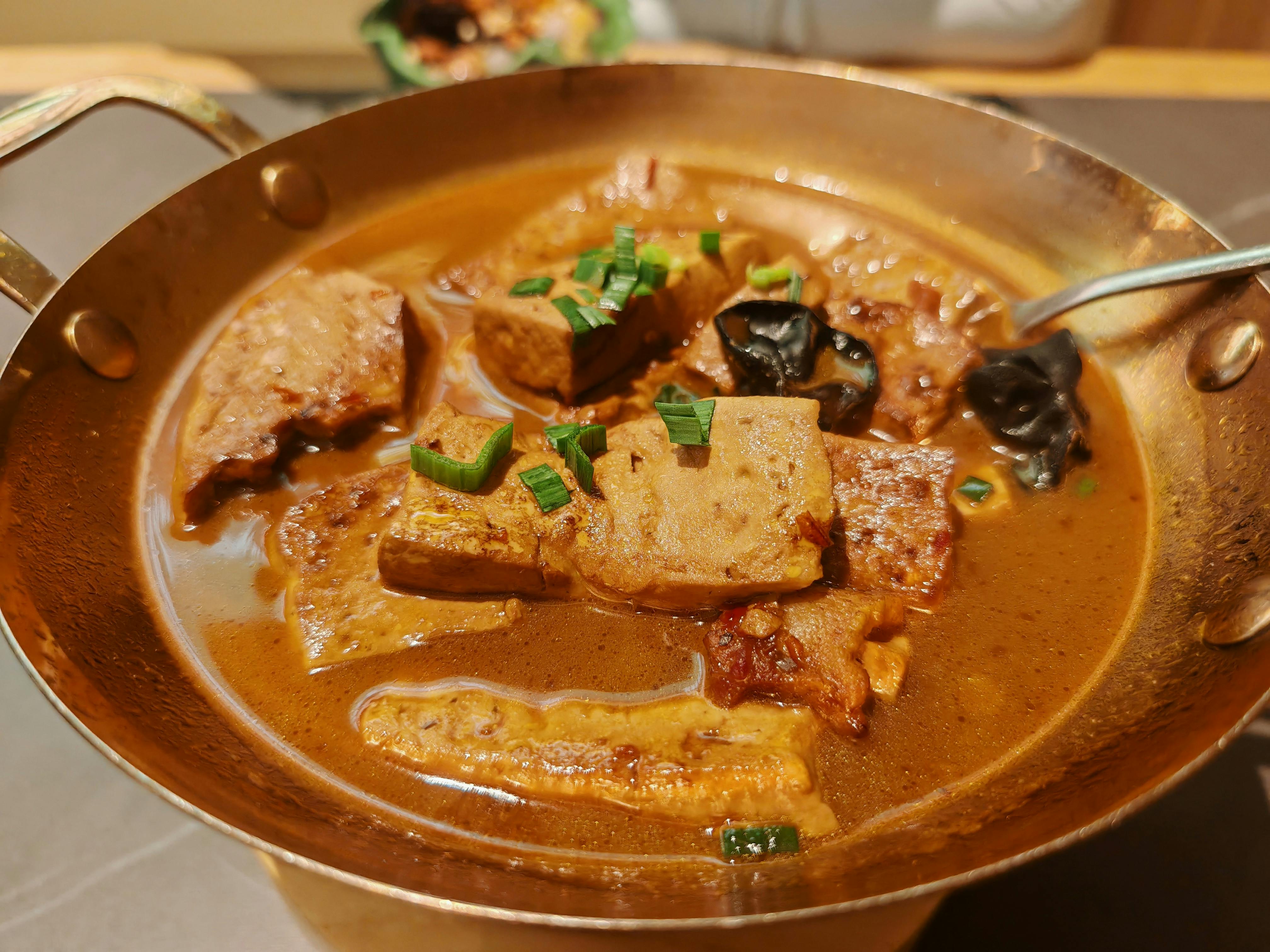
Xiao Ji Dun Mogu
The diets react (see scores below)
Common Ingredients
- chicken
- hazel mushrooms
- glass noodles
- ginger
- scallions
- soy sauce
- star anise
- cooking wine
Specific recipes may vary.
Incompatible with 6 of 11 diets
Diet Ratings
Xiao Ji Dun Mogu (小鸡炖蘑菇) is a traditional Chinese braised chicken and mushroom stew. The primary keto concern is glass noodles (fen si/粉丝), which are made from mung bean or sweet potato starch and are extremely high in net carbs — a single serving (about 50g dry) can contain 40-45g net carbs, nearly or exceeding the entire daily keto limit on their own. Cooking wine also adds a small but non-trivial amount of carbs and sugars. Star anise and scallions contribute minor carbs. The chicken and hazel mushrooms are keto-friendly, and the braising method preserves fats well, but the glass noodles make this dish fundamentally incompatible with ketosis as traditionally prepared.
Xiao Ji Dun Mogu (小鸡炖蘑菇) is a classic Chinese braised chicken and mushroom dish. The primary protein is chicken, an animal product, making this dish categorically non-vegan. There is no ambiguity here — chicken is animal flesh and is excluded under all definitions of veganism. The remaining ingredients (hazel mushrooms, glass noodles, ginger, scallions, soy sauce, star anise, cooking wine) are plant-based, but the presence of chicken as the central ingredient disqualifies the dish entirely.
Xiao Ji Dun Mogu (小鸡炖蘑菇) is a classic Northeast Chinese braised chicken and mushroom dish. While the chicken, hazel mushrooms, ginger, scallions, and star anise are all paleo-approved ingredients, the dish contains three significant non-paleo components. Glass noodles (粉条) are made from starch — typically mung bean or sweet potato starch — and represent a processed grain/legume-derived product excluded from paleo. Soy sauce is a fermented soy (legume) product and a core paleo exclusion. Cooking wine (料酒) is a processed, typically grain-fermented rice wine containing additives and added salt. The combination of legume-derived soy sauce, grain/legume-based glass noodles, and processed cooking wine makes this dish incompatible with paleo in its traditional form.
Xiao Ji Dun Mogu (小鸡炖蘑菇) is a Chinese braised chicken and mushroom stew. The core ingredients align reasonably well with Mediterranean principles: chicken is an acceptable moderate-frequency protein, hazel mushrooms are excellent plant-based additions, ginger and scallions are healthful aromatics. However, several factors place it in caution territory. The dish uses no olive oil (likely relies on neutral cooking oil or chicken fat), glass noodles are made from refined starch (mung bean or potato starch) offering little fiber or nutrients, soy sauce adds significant sodium, and star anise and cooking wine are non-Mediterranean flavor profiles that don't disqualify the dish but signal it's outside the dietary tradition. Overall, the dish is wholesome and relatively unprocessed but diverges from Mediterranean patterns in fat source and grain quality.
Some Mediterranean diet interpreters would view this dish more favorably, noting that the emphasis on vegetables (mushrooms), lean poultry, and minimal processing aligns with core principles regardless of culinary tradition. The absence of red meat, added sugars, or heavily refined ingredients could push some practitioners toward a mild approval, especially if olive oil were substituted for the cooking fat.
Xiao Ji Dun Mogu (小鸡炖蘑菇) is a traditional Chinese braised chicken and mushroom dish that is fundamentally incompatible with the carnivore diet. While the chicken itself is an acceptable animal protein, the dish contains numerous plant-derived and processed ingredients that disqualify it entirely. Hazel mushrooms are fungi (plant kingdom), glass noodles are starch-based (typically made from mung bean or sweet potato starch), ginger and scallions are plant vegetables, soy sauce is a fermented soy (legume) product, star anise is a plant spice, and cooking wine typically contains plant-derived ingredients and sugars. The only carnivore-compatible element is the chicken itself. The overall dish profile is predominantly plant-based in its flavoring, thickening, and supplementary components, making it a clear 'avoid' with high confidence.
This dish contains multiple Whole30-excluded ingredients. Soy sauce is a soy-based product and soy is explicitly excluded from Whole30. Cooking wine (料酒) is alcohol, which is also excluded. Glass noodles are typically made from mung bean starch or sweet potato starch — if mung bean-based, they derive from a legume (excluded); even sweet potato glass noodles fall into a noodle/pasta category that violates the 'no recreating noodle dishes' spirit of the program. The remaining ingredients — chicken, hazel mushrooms, ginger, scallions, and star anise — are all compliant, but the multiple excluded ingredients make this dish clearly non-compliant.
This dish contains multiple high-FODMAP ingredients that make it problematic during the elimination phase. Hazel mushrooms (Armillaria mellea) are high in polyols (mannitol), as mushrooms are generally high-FODMAP — Monash rates most mushrooms as high-FODMAP at standard servings. Scallions (green onions) are a nuanced case: the green tops are low-FODMAP, but if the white bulb portions are included (common in Chinese braising dishes), they contribute fructans. Star anise is used in small quantities as a spice and is generally considered low-FODMAP at culinary doses, but it lacks robust Monash testing. Glass noodles made from mung bean starch are typically low-FODMAP. Chicken, ginger, soy sauce (in small amounts), and cooking wine are generally low-FODMAP. However, the mushrooms alone are sufficient to push this dish into avoid territory — standard servings of hazel mushrooms in a braise would far exceed any safe FODMAP threshold. The combination of mushrooms plus potential white scallion use makes this dish high-risk during elimination.
Monash University has not specifically tested hazel mushrooms (Armillaria mellea), so the rating is extrapolated from broader mushroom FODMAP data; some clinical FODMAP practitioners may consider very small mushroom quantities acceptable, but at braising-dish portion sizes this is unlikely to be safe. Additionally, if only scallion greens are used and mushrooms are omitted or replaced, the dish could potentially be modified to be low-FODMAP.
Xiao Ji Dun Mogu (Small Chicken Braised with Mushrooms) contains several DASH-friendly elements — chicken is a lean protein explicitly endorsed by NIH/NHLBI DASH guidelines, hazel mushrooms are nutrient-dense and rich in potassium and fiber, and ginger/scallions add flavor without sodium. However, soy sauce is the primary concern: a typical braised dish of this type uses 2-4 tablespoons of soy sauce, contributing 1,000–2,000mg of sodium per serving, which alone can exceed the low-sodium DASH target (1,500mg/day) and approach the standard DASH ceiling (2,300mg/day). Cooking wine adds modest sodium as well. Star anise and ginger are neutral aromatics. Glass noodles are refined starch with little fiber, making them a less preferred carbohydrate compared to whole grains. The dish is not inherently high in saturated fat, which is a positive. Overall, the dish's core components are sound but its sodium load from soy sauce pushes it into caution territory as typically prepared.
NIH DASH guidelines flag high-sodium condiments like soy sauce as problematic; however, updated clinical interpretations note that substituting low-sodium soy sauce (reducing sodium by ~40%) and moderating the quantity used can bring this dish within DASH-acceptable sodium limits, and some DASH-oriented dietitians consider such modified preparations approvable given the otherwise strong nutritional profile of the ingredients.
Xiao Ji Dun Mogu (小鸡炖蘑菇, Braised Chicken with Mushrooms) is a traditional Northeast Chinese stew with several Zone-friendly elements but one notable concern. The chicken provides lean protein that fits well within Zone guidelines. Hazel mushrooms are an excellent low-glycemic vegetable source with polyphenols and anti-inflammatory properties — strongly Zone-favorable. Ginger, scallions, soy sauce, star anise, and cooking wine are flavor components used in small amounts and don't meaningfully disrupt macronutrient ratios. The main Zone challenge is the glass noodles (starch-based, typically made from mung bean or sweet potato starch), which are a moderate-to-high glycemic carbohydrate source that can spike the carb block count significantly. However, glass noodles have a lower glycemic index than wheat noodles or white rice, making them more manageable in controlled portions. With careful portioning — keeping glass noodles to a small amount and loading up on mushrooms — this dish can be Zone-balanced. The fat content depends on whether chicken skin is included; skinless chicken makes it much more Zone-appropriate. Soy sauce adds sodium but is not a Zone concern. The braising method also keeps fat low. This dish scores as a moderate caution: flavorful, largely Zone-compatible, but requires glass noodle portioning discipline.
Some Zone practitioners would rate this higher (approve range) if glass noodles are minimized or omitted, as the remaining dish — chicken, mushrooms, aromatics — is nearly ideal for Zone ratios. Sears' later anti-inflammatory writings (Zone Diet, Mastering the Zone) would highlight the mushrooms and ginger as polyphenol-rich Zone superstars. Conversely, traditional recipes may use a larger proportion of glass noodles and skin-on chicken, which would push the score lower toward a 4-5 due to elevated saturated fat and glycemic load.
Xiao Ji Dun Mogu (小鸡炖蘑菇) is a classic Northeast Chinese braised chicken and mushroom dish with a broadly favorable anti-inflammatory profile. Chicken is a lean protein — acceptable under anti-inflammatory guidelines, classified as 'moderate.' Hazel mushrooms (榛蘑, Armillaria mellea) are wild mushrooms widely used in Chinese cooking; while not on the canonical anti-inflammatory Asian mushroom list (shiitake, maitake, etc.), mushrooms as a category are generally considered anti-inflammatory due to beta-glucans, ergothioneine, and polyphenols. Ginger is a well-established anti-inflammatory spice (gingerols, shogaols). Scallions provide quercetin and other flavonoids. Star anise contains anethole, which has demonstrated anti-inflammatory activity in research. Glass noodles (made from mung bean starch) are relatively low-glycemic compared to wheat noodles and are gluten-free, making them a neutral-to-mild positive element. Soy sauce in cooking quantities is acceptable — a fermented soy product, though high in sodium, which warrants moderation. Cooking wine (Shaoxing wine) introduces a small amount of alcohol, which is a mild negative per anti-inflammatory principles, though the quantity used in cooking is low and much alcohol cooks off. The dish is braised rather than fried, avoiding inflammatory cooking oils. The overall ingredient list is whole-food, herb-forward, and low in saturated fat, refined carbohydrates, or processed additives. The main limitations are the use of chicken (not as anti-inflammatory as fatty fish), glass noodles as a refined starch, and the presence of cooking wine and sodium-rich soy sauce.
Some anti-inflammatory practitioners might flag the sodium content of soy sauce as contributing to systemic inflammation at higher intake levels, and AIP (Autoimmune Protocol) eliminates soy-based products entirely. Additionally, hazel mushrooms are a less-studied species compared to shiitake or maitake, so their specific beta-glucan and immune-modulating benefits are less well-documented, leaving minor uncertainty in their contribution.
Xiao Ji Dun Mogu (小鸡炖蘑菇) is a traditional Chinese braised chicken and mushroom stew — a strong fit for GLP-1 patients overall. The dish is braised/stewed rather than fried, making it easy to digest and low in added fat. Chicken provides a solid lean protein base (assuming bone-in pieces with skin removed, or breast/thigh without skin). Hazel mushrooms contribute fiber, micronutrients, and umami depth with minimal calories. Ginger actively supports GI comfort and may help with GLP-1-related nausea. Glass noodles are the main caution: they are made from starch (typically mung bean or sweet potato) and are low in protein and fiber while adding refined carbohydrate calories — though they are easy to digest and gentle on the stomach. Soy sauce adds sodium, which warrants attention given reduced food intake may already affect electrolyte balance. Star anise and cooking wine are used in small amounts and are generally well tolerated. Overall, this is a nutrient-dense, broth-based, protein-forward dish that aligns well with GLP-1 dietary priorities, with the glass noodles being a minor detractor.
Some GLP-1-focused dietitians would caution that bone-in chicken with skin (the traditional preparation) adds saturated fat that can worsen nausea or reflux; they would recommend requesting or preparing the dish with skinless chicken. A minority would also flag glass noodles as an unnecessary refined starch that displaces protein or fiber-rich ingredients in an already small-portion meal.
*See how scores were generated at our methodology page.
Nutritional profile
Six traits that cut across every diet.
Fiber & Plants
How much whole-plant food and fiber it delivers.
Healthy Fats
The quality of its fats (unsaturated, omega-3).
Whole / Unprocessed
How close it is to its natural, unprocessed form.
Gut Gentle
How easy it is on digestion (low FODMAP, few irritants).
Low Glycemic
How little it spikes your blood sugar.
Protein Density
How much protein it packs per calorie.
Controversy Index
Higher controversy = more disagreement between diets.
Diet-Specific Tips
 Mediterranean — 5/10
View tips
- Chicken is an acceptable moderate-frequency protein under Mediterranean guidelines
- Hazel mushrooms are a beneficial plant-based ingredient, high in nutrients
- Glass noodles are refined-starch noodles with low fiber, not equivalent to whole grains
- No olive oil used — primary fat source diverges from Mediterranean canon
- Soy sauce contributes high sodium, a concern in Mediterranean dietary practice
- Dish is minimally processed with whole-food ingredients overall
- Non-Mediterranean cuisine but not inherently incompatible with its principles
 DASH — 5/10
View tips
- Soy sauce contributes high sodium — likely 1,000–2,000mg per serving as typically prepared
- Chicken is a DASH-endorsed lean protein
- Hazel mushrooms are rich in potassium, fiber, and micronutrients — strongly DASH-compatible
- Glass noodles are refined starch with low fiber — less preferred than whole grains
- Cooking wine adds minor additional sodium
- No significant saturated fat or added sugars
- Low-sodium soy sauce substitution would substantially improve DASH compatibility
 Zone — 6/10
View tips
- Glass noodles are a moderate-glycemic carb that must be portion-controlled to stay within Zone carb blocks
- Chicken is a lean Zone-approved protein source — remove skin for best results
- Hazel mushrooms are an excellent low-glycemic, polyphenol-rich vegetable — very Zone-favorable
- Braising method keeps added fat minimal, supporting the 30% fat target
- Ginger is anti-inflammatory and polyphenol-rich, aligning with Sears' later Zone emphasis
- Soy sauce and cooking wine add flavor without significant macronutrient impact
- Dish could be Zone-approved if glass noodles are reduced and replaced with more mushrooms or low-GI vegetables
 Anti-Inflammatory — 7/10
View tips
- Chicken (lean protein) — moderate/acceptable per anti-inflammatory guidelines
- Hazel mushrooms — general mushroom anti-inflammatory benefits (beta-glucans, ergothioneine); less studied than shiitake/maitake
- Ginger — strong anti-inflammatory spice (gingerols, shogaols)
- Star anise — anethole has demonstrated anti-inflammatory properties
- Scallions — flavonoids including quercetin
- Glass noodles (mung bean) — lower glycemic than wheat noodles; neutral starch
- Soy sauce — fermented soy positive, but high sodium is a mild concern
- Cooking wine — minimal alcohol in cooked dish; slight negative
- Braised preparation — no pro-inflammatory frying oils used
 GLP-1 Friendly — 8/10
View tips
- Braised/stewed preparation — no frying, easy to digest
- Chicken provides lean protein (preparation-dependent: skin-on vs. skin-off matters)
- Hazel mushrooms add fiber, micronutrients, and volume with minimal calories
- Ginger actively supports GI comfort and may ease GLP-1-related nausea
- Glass noodles are low in protein and fiber — a minor negative in a small-portion context
- Broth base supports hydration, which is a GLP-1 priority
- Soy sauce adds sodium — worth noting for patients monitoring electrolytes
- No fried, spicy, carbonated, or high-sugar components