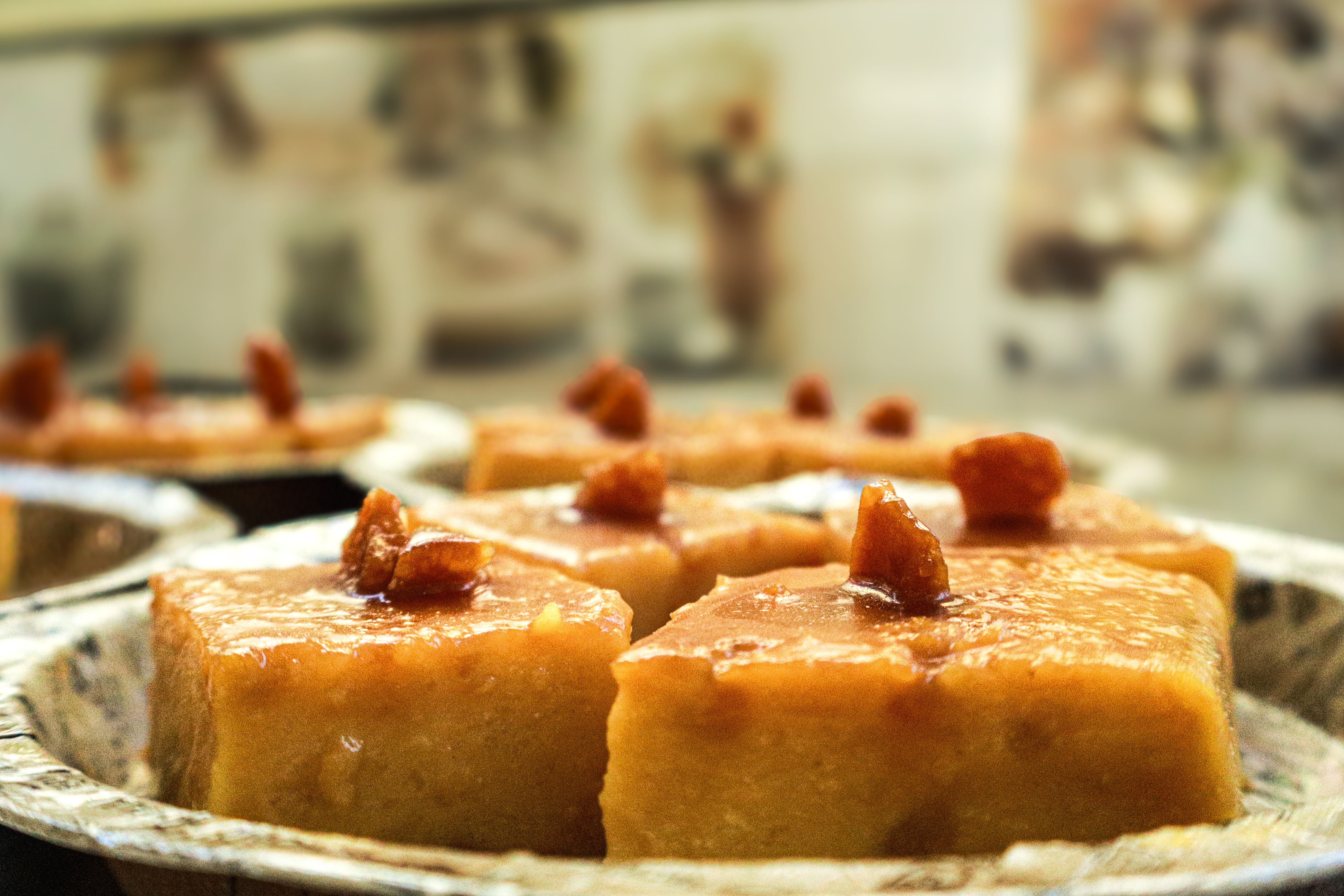
Photo: Rishav Raj / Pexels
Uruguayan
Dulce de Batata
The diets react (see scores below)
Common Ingredients
- sweet potatoes
- sugar
- water
- cinnamon
Specific recipes may vary.
Incompatible with 8 of 11 diets
Diet Ratings
Dulce de Batata is a traditional Uruguayan sweet made from sweet potatoes and added sugar — two of the most keto-incompatible ingredients possible. Sweet potatoes are high-starch vegetables with roughly 17-20g of net carbs per 100g, and the addition of substantial amounts of sugar during cooking compounds the carbohydrate load dramatically. A single small serving could easily exceed an entire day's keto carbohydrate budget. There is no fat content and no protein to offset this. This dish is fundamentally incompatible with ketosis.
Dulce de Batata is a traditional Uruguayan sweet potato preserve made by cooking sweet potatoes with sugar, water, and cinnamon until thick and jam-like. All four ingredients are entirely plant-derived with no animal products or animal-derived additives. Sweet potatoes are a whole food, and the minimal processing involved (boiling and reducing) keeps this close to whole-food standards, though the high sugar content prevents a perfect 10. This is a straightforwardly vegan-compliant dish with no meaningful debate within the vegan community.
Dulce de Batata is a traditional Uruguayan sweet preserve made by cooking sweet potatoes with large amounts of refined sugar. While sweet potatoes themselves are paleo-approved tubers, refined sugar is explicitly excluded from the paleo diet as a processed, non-ancestral food with no nutritional value beyond empty calories. The dish is essentially a sugar-saturated confection — refined sugar is not merely a minor ingredient but the defining element of the recipe, making the overall dish non-compliant. Cinnamon and water are fine, but they cannot offset the central role of refined sugar.
Dulce de Batata is a sweet confection made primarily of sweet potatoes cooked with significant added sugar, placing it firmly in the 'added sugar/sweets' category that the Mediterranean diet minimizes. While sweet potatoes themselves are a nutritious, plant-based food encouraged on the Mediterranean diet, the large quantity of added sugar used to make this preserve transforms it into a high-sugar treat. The Mediterranean diet allows desserts and sweets only occasionally and sparingly, typically favoring fruit-based sweets or small amounts of honey. This dish, as a concentrated sugar preserve, contradicts the dietary principle of minimizing added sugars.
Some Mediterranean diet interpretations permit small amounts of traditional fruit and vegetable preserves as occasional treats, noting that sweet potato is a whole food base and cinnamon adds beneficial spices. If consumed in very small portions infrequently, a minority of practitioners might classify it as an occasional indulgence rather than a strict avoid.
Dulce de Batata is a Uruguayan sweet potato confection made entirely from plant-derived ingredients — sweet potatoes, sugar, water, and cinnamon. It contains zero animal products. Sweet potatoes are a starchy plant tuber, sugar is a processed plant-derived carbohydrate, and cinnamon is a plant spice. All four ingredients are explicitly excluded from the carnivore diet. This dish is also high in carbohydrates and sugar, which directly contradicts the zero-carb, animal-only foundation of carnivore eating.
Dulce de Batata is a traditional Uruguayan sweet potato confection made by cooking sweet potatoes with sugar until thick and jam-like. The inclusion of added sugar is a clear violation of Whole30 rules, which explicitly exclude all added sugars — real or artificial. Sweet potatoes, water, and cinnamon are all Whole30-compliant ingredients, but sugar disqualifies the dish entirely. There is no compliant workaround that would preserve the character of this dish, as sugar is fundamental to its structure and sweetness.
Dulce de Batata is a traditional Uruguayan sweet made by cooking sweet potatoes with sugar, water, and cinnamon until thick and jammy. The individual ingredients are generally low-FODMAP: sugar (sucrose) is low-FODMAP, water is neutral, and cinnamon is low-FODMAP at culinary amounts. Sweet potatoes are the key concern — Monash rates sweet potato as low-FODMAP at 70g (about ½ cup) but high-FODMAP at larger servings due to excess fructose and mannitol (a polyol). In a concentrated sweet preparation like dulce de batata, a typical serving likely represents a significant amount of sweet potato in concentrated form, potentially exceeding the safe threshold. Since the sweet potato is cooked down into a dense confection, even a small spoonful could contain a higher FODMAP load than eating plain sweet potato in equivalent weight. Portion control is critical, and a modest tasting portion (roughly equivalent to ≤70g of the original sweet potato content) may be tolerable, but standard serving sizes of this dessert are likely to exceed safe thresholds.
Monash University rates sweet potato as low-FODMAP at 70g, which might suggest small servings of dulce de batata are safe. However, many clinical FODMAP practitioners advise caution with concentrated sweet potato preparations because the reduction process concentrates mannitol and fructose, making it difficult to gauge FODMAP content per serving by weight alone.
Dulce de Batata is a traditional Uruguayan sweet made by cooking sweet potatoes with a significant amount of sugar until a jam or paste-like consistency is achieved. The base ingredient — sweet potato — is genuinely DASH-friendly: rich in potassium, magnesium, fiber, and vitamins, and explicitly consistent with DASH vegetable recommendations. Cinnamon is a non-issue and may offer modest metabolic benefits. Water is neutral. However, the defining characteristic of this dish is its high added sugar content. Sugar is cooked into the sweet potato in substantial quantities (often a near 1:1 ratio by weight), making this effectively a confection rather than a vegetable dish. DASH guidelines explicitly limit added sugars and sweets, recommending no more than 5 servings per week of sweets, and in modest portions. The glycemic load of this preparation is considerably higher than plain sweet potato. It is also low in sodium and saturated fat, which works in its favor. Overall, this is a borderline food — the nutrient-rich base ingredient pulls it toward approval, but the high added sugar content places it firmly in the 'caution' category. Small portions as an occasional treat are acceptable within DASH, but it should not be consumed regularly or in large amounts.
NIH DASH guidelines limit sweets and added sugars as a category, which would place this dish under scrutiny regardless of its vegetable base. However, some DASH-aligned nutritionists note that when a dish retains meaningful amounts of potassium and fiber from whole-food ingredients like sweet potato, it occupies a different tier than refined candy or sugary beverages — small servings as an infrequent treat may be compatible with an otherwise well-managed DASH pattern.
Dulce de Batata is a concentrated sweet paste made primarily from sweet potatoes cooked down with large amounts of added sugar — it is essentially a confection, not a vegetable dish. While sweet potatoes alone are moderately glycemic and have some Zone-friendly fiber, the cooking process and heavy sugar addition dramatically concentrate the carbohydrates, strip fiber, and spike the glycemic load far beyond what the Zone framework can accommodate. There is no protein component, no fat, and no fiber buffer to balance the glycemic impact. As a snack, it cannot form any meaningful Zone block ratio — it is nearly pure high-glycemic carbohydrate with zero protein or monounsaturated fat. Cinnamon is a minor positive (it has some polyphenol and glycemic-moderating properties Sears endorses), but it is nutritionally inconsequential in this context. This dish falls into the same category as candy or jam — technically derived from a real food, but processed into a form that is incompatible with Zone principles.
Dulce de Batata is a traditional Uruguayan sweet made by slow-cooking sweet potatoes with sugar and water until it reaches a thick, jam-like consistency, finished with cinnamon. The ingredient profile tells a mixed story. Sweet potatoes themselves are genuinely anti-inflammatory: rich in beta-carotene (a carotenoid antioxidant), vitamin C, fiber, and polyphenols. Cinnamon is a recognized anti-inflammatory spice with documented effects on blood glucose and inflammatory markers. However, the defining issue is the substantial added sugar required to make this confection — Dulce de Batata is essentially a candied preserve, and added sugar is a direct driver of inflammation through glycation end-products, elevated triglycerides, and upregulation of pro-inflammatory cytokines (IL-6, CRP). The high-sugar cooking process also partially degrades the heat-sensitive antioxidants in the sweet potato. The dish occupies the classic 'caution' zone: the base ingredient and spice are anti-inflammatory positives, but the concentrated added sugar load makes this a treat to consume occasionally in small portions rather than regularly. It is not as aggressively pro-inflammatory as refined pastry (no refined flour, no trans fats, no seed oils), but the sugar content prevents an approval.
Dulce de Batata is a traditional Uruguayan sweet confection made by cooking sweet potatoes down with large amounts of sugar into a dense, jam-like or paste-like candy. While sweet potatoes themselves have nutritional merit (fiber, vitamins, moderate carbs), the preparation transforms them into a high-sugar, calorie-dense product with negligible protein and very little remaining fiber per typical serving. The concentrated sugar content makes this essentially a confection — exactly the category of high-sugar, empty-calorie food that is counterproductive for GLP-1 patients. It provides rapid blood sugar spikes with no protein to slow absorption, minimal satiety value per calorie eaten, and offers nothing that supports the core GLP-1 dietary priorities. As a snack specifically, it fails on every key criterion: no protein, low fiber (sugar concentration dilutes the original vegetable fiber), high glycemic load, and no meaningful micronutrient density relative to its calorie cost.
*See how scores were generated at our methodology page.
Nutritional profile
Six traits that cut across every diet.
Fiber & Plants
How much whole-plant food and fiber it delivers.
Healthy Fats
The quality of its fats (unsaturated, omega-3).
Whole / Unprocessed
How close it is to its natural, unprocessed form.
Gut Gentle
How easy it is on digestion (low FODMAP, few irritants).
Low Glycemic
How little it spikes your blood sugar.
Protein Density
How much protein it packs per calorie.
Controversy Index
Higher controversy = more disagreement between diets.
Diet-Specific Tips
 Vegan — 7/10
View tips
- Sweet potatoes are a whole plant food — fully vegan
- Sugar, water, and cinnamon are all plant-derived ingredients
- No animal products, dairy, eggs, gelatin, or animal-derived additives present
- Minimal processing — essentially a cooked fruit/vegetable preserve
- High sugar content is the only nutritional concern, slightly limiting the score
- No cross-contamination or ethical controversy typical of this dish
 DASH — 4/10
View tips
- High added sugar content — primary concern for DASH compatibility
- Sweet potato base provides potassium, fiber, and magnesium — genuine DASH positives
- No sodium, saturated fat, or trans fat — favorable on those DASH metrics
- Cinnamon is benign and may offer modest metabolic benefits
- Effectively a confection in practice despite whole-food origins
- Portion size is critical — small, infrequent servings are more defensible within DASH
 Anti-Inflammatory — 4/10
View tips
- Sweet potato base provides beta-carotene, fiber, and polyphenols — genuinely anti-inflammatory
- Cinnamon adds modest anti-inflammatory and blood-glucose-modulating benefit
- High added sugar content is the primary concern — pro-inflammatory at regular or large-portion consumption
- No refined flour, trans fats, or seed oils — cleaner than most confections
- Cooking process reduces some heat-sensitive antioxidants in the sweet potato
- Small portions on an occasional basis align with the anti-inflammatory diet's allowance for some sweets