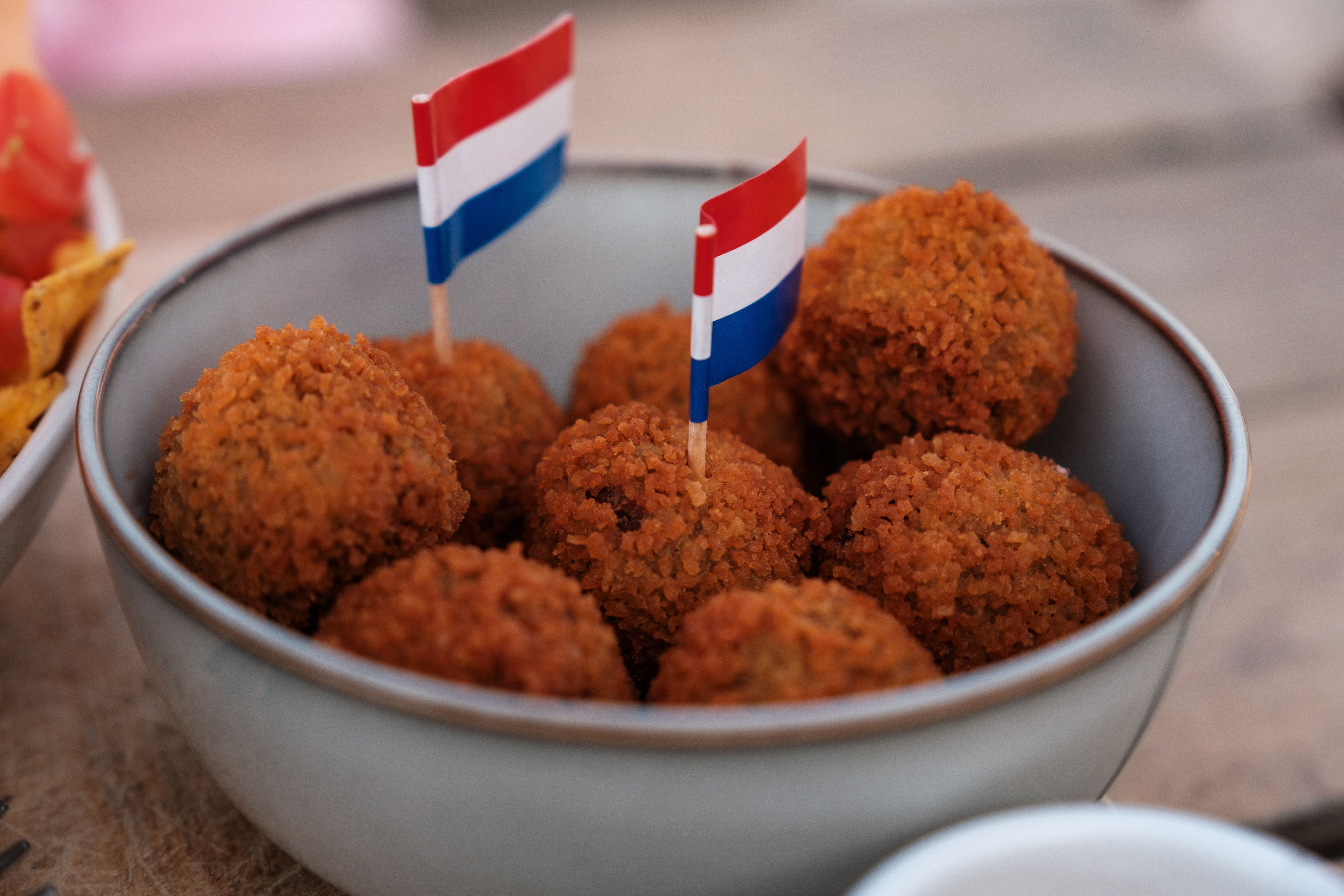
Photo: Haberdoedas Photography / Pexels
The diets react (see scores below)
Common Ingredients
- beef
- butter
- flour
- beef broth
- breadcrumbs
- eggs
- onion
- nutmeg
Specific recipes may vary.
Incompatible with 10 of 11 diets
Diet Ratings
Bitterballen are fundamentally incompatible with a ketogenic diet. The dish is built around a roux made from flour and butter, which forms the base of the ragout filling, and the balls are coated in breadcrumbs before frying. Both flour and breadcrumbs are wheat-based, high-carb ingredients that significantly spike net carbs per serving. A typical serving of 4-6 bitterballen can easily contain 20-30g of net carbs, which could consume or exceed an entire day's carb allowance. While the beef protein and butter fat are keto-friendly components, the structural carbohydrates from flour and breadcrumbs cannot be avoided or meaningfully reduced without fundamentally changing the dish.
Bitterballen contain multiple animal-derived ingredients that are categorically incompatible with a vegan diet. Beef (meat) and beef broth are direct animal flesh/derivatives, butter is a dairy product, and eggs are used in the coating — any one of these alone would disqualify the dish, let alone all four together. There is no ambiguity here.
Bitterballen are a Dutch deep-fried snack that contains multiple non-paleo ingredients. The roux base requires wheat flour, and the breading uses breadcrumbs — both are grain-derived and strictly excluded from the paleo diet. Butter is a dairy product, also excluded. The beef, eggs, onion, nutmeg, and beef broth are paleo-compatible, but the dish is fundamentally defined by its flour-thickened ragout and breadcrumb coating, making it impossible to consider paleo-friendly in its traditional form.
Bitterballen are a quintessentially Dutch deep-fried snack that conflicts with Mediterranean diet principles on multiple levels. The dish centers on beef as its primary protein, which the Mediterranean diet restricts to only a few times per month. It is made with a butter-based roux (not olive oil), uses refined white flour, and is deep-fried in breadcrumbs — combining saturated fat from butter with refined grains and a high-heat frying method. There is no significant plant-based component, no whole grains, and no olive oil. This is a highly processed, calorie-dense snack with little nutritional alignment to Mediterranean principles.
Bitterballen are fundamentally incompatible with the carnivore diet. While the dish contains carnivore-approved ingredients (beef, butter, eggs, beef broth), it is structurally defined by multiple plant-based components that cannot be removed without destroying the dish entirely. Flour forms the roux base of the ragout filling, breadcrumbs create the essential crispy coating, onion is cooked into the filling, and nutmeg is added as a spice. These are not trace additives — flour and breadcrumbs are load-bearing ingredients representing a significant portion of the dish by volume and caloric contribution. The result is a heavily grain-coated, plant-additive-laden processed snack that violates core carnivore principles across multiple categories simultaneously.
Bitterballen contains multiple excluded ingredients that make it incompatible with Whole30. Flour (a grain product) is used to make the roux base, and breadcrumbs (also grain-based) coat the exterior. Regular butter is also excluded from Whole30 (only ghee/clarified butter is permitted). Even setting aside the butter issue, the flour and breadcrumbs alone disqualify this dish. Additionally, bitterballen is essentially a breaded, fried snack ball — even if one attempted to reconstruct it with compliant ingredients, it would likely fall under the 'no recreating junk food/comfort food snacks' rule.
Bitterballen contain multiple high-FODMAP ingredients that make them unsuitable during the elimination phase. The most significant offenders are: (1) wheat flour used in the roux base — wheat is high in fructans at any standard cooking quantity; (2) breadcrumbs (typically wheat-based) used for the coating — again a substantial source of fructans; and (3) onion, which is one of the highest-FODMAP foods tested by Monash University, containing high levels of fructans even in small amounts. Butter in small quantities is generally low-FODMAP (it's a fat with negligible lactose), beef is low-FODMAP, eggs are low-FODMAP, nutmeg in typical spice quantities is low-FODMAP, and beef broth can be low-FODMAP if it does not contain onion or garlic. However, the combination of wheat flour, wheat breadcrumbs, and onion creates a dish that is firmly high-FODMAP. There is no realistic way to consume a standard serving of bitterballen without a significant fructan load from at least two independent sources.
Bitterballen are deep-fried Dutch snacks made from a thick beef-and-butter roux (ragout), coated in breadcrumbs and eggs, then fried. This preparation conflicts with DASH diet principles on multiple fronts. The dish is high in saturated fat from butter and the deep-frying process, uses refined white flour and breadcrumbs (not whole grain), and beef broth typically contributes substantial sodium. Deep-frying adds significant total fat and calories. The cooking method (deep-frying in oil) further undermines DASH's emphasis on limiting total and saturated fat. Red meat (beef) is already a limited item in DASH, and combining it with butter, frying, and high-sodium broth compounds the incompatibility. This is a heavily processed, high-fat, high-sodium snack with no meaningful contribution of potassium, magnesium, calcium, or dietary fiber relative to its nutritional downsides.
Bitterballen are a classic Dutch deep-fried snack consisting of a thick roux-based beef ragout (made with butter and flour) coated in breadcrumbs and fried. From a Zone perspective, this dish presents multiple significant challenges. The macronutrient ratio is heavily skewed: the fat content is high and predominantly saturated (butter, deep-frying), the carbohydrates come from high-glycemic refined flour and breadcrumbs rather than low-glycemic vegetables, and while beef provides protein, it is typically a fattier cut used in this preparation. The roux (butter + flour) base is essentially a Zone-unfavorable combination — refined starch plus saturated fat with no fiber. The breading adds more high-glycemic refined carbs. Deep frying adds substantial fat, likely from seed oils (high omega-6), which Sears specifically discourages due to pro-inflammatory effects. There is virtually no fiber, no polyphenols, and no monounsaturated fat profile to speak of. While small portions of beef could theoretically contribute a protein block, the overall dish cannot be meaningfully balanced into a Zone-compliant meal without essentially deconstructing it entirely. As a snack, it delivers calories almost entirely from unfavorable sources. It scores a 3 rather than 1-2 only because the beef protein content provides some redeeming nutritional value and small quantities could theoretically be incorporated into a larger Zone-balanced meal context.
Bitterballen are a classic Dutch deep-fried snack with a strongly pro-inflammatory nutritional profile. The dish is built around a roux base of butter and white flour — both flagged in anti-inflammatory frameworks (saturated fat from butter, refined carbohydrates from white flour). The filling is red meat (beef), which anti-inflammatory guidelines recommend limiting due to its saturated fat content and association with elevated inflammatory markers like CRP and IL-6. The breading adds refined carbohydrates and the deep-frying process (typically in vegetable or seed oils) introduces oxidized fats and potentially high omega-6 fatty acids. There are virtually no anti-inflammatory positives here: no omega-3 sources, no colorful antioxidant-rich vegetables, no polyphenols, and no healthy fats like olive oil. The onion and nutmeg provide negligible anti-inflammatory benefit at the quantities typically used. As an occasional indulgence this may be tolerable, but as a snack choice it represents almost everything anti-inflammatory eating advises against: red meat, saturated fat, refined carbs, and deep-frying combined in a single item.
Bitterballen are deep-fried Dutch snacks made from a butter-and-flour roux-based beef ragout, coated in breadcrumbs and fried. They are a poor fit for GLP-1 patients on virtually every key criterion. The deep-frying process introduces high fat content that significantly worsens GLP-1 side effects including nausea, bloating, and reflux. The roux base (butter plus flour) adds saturated fat and refined carbohydrates with minimal nutritional payoff. Despite containing beef, the protein density per calorie is low relative to the fat load and the refined carbohydrate coating. The breadcrumb coating is a refined grain with little fiber value. Nutmeg is fine in small amounts but does not offset the dish's core problems. Slowed gastric emptying caused by GLP-1 medications makes high-fat fried foods particularly problematic — they sit in the stomach longer and are more likely to trigger nausea and reflux. As a snack, bitterballen also fail the nutrient density requirement: calories come primarily from fat and refined starch rather than protein or fiber. There is no meaningful fiber contribution. This dish scores near the bottom of the avoid range.
*See how scores were generated at our methodology page.
Nutritional profile
Six traits that cut across every diet.
Fiber & Plants
How much whole-plant food and fiber it delivers.
Healthy Fats
The quality of its fats (unsaturated, omega-3).
Whole / Unprocessed
How close it is to its natural, unprocessed form.
Gut Gentle
How easy it is on digestion (low FODMAP, few irritants).
Low Glycemic
How little it spikes your blood sugar.
Protein Density
How much protein it packs per calorie.
Controversy Index
Higher controversy = more disagreement between diets.
Diet-Specific Tips
 Zone — 5/10
View tips
- Deep-fried in likely omega-6 seed oils — pro-inflammatory, directly contrary to Zone anti-inflammatory principles
- Roux base (butter + refined flour) combines saturated fat with high-glycemic carbohydrates
- Breadcrumb coating adds additional refined, high-glycemic carbohydrates with no fiber
- Macronutrient ratio heavily skewed toward fat and unfavorable carbs — far from 40/30/30
- No low-glycemic vegetables, no polyphenols, no monounsaturated fats present
- Beef protein is the only partially Zone-favorable component, but is embedded in an unfavorable delivery system
- As a snack format, impossible to portion-balance into Zone blocks without discarding the dish concept entirely