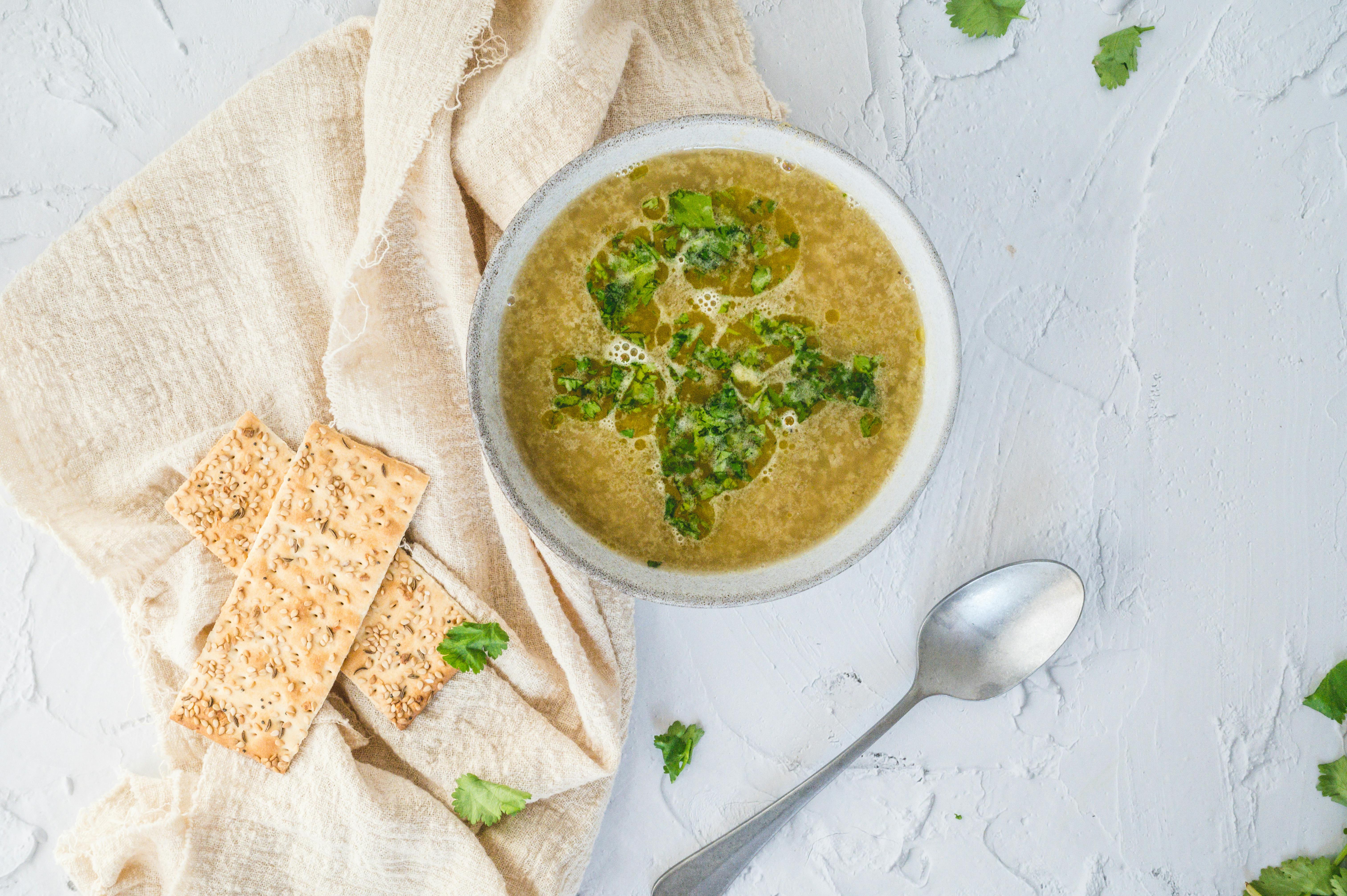
The diets react (see scores below)
Common Ingredients
- split peas
- pork
- smoked sausage
- celeriac
- leek
- carrot
- onion
- potatoes
Specific recipes may vary.
Incompatible with 7 of 11 diets
Diet Ratings
Erwtensoep (Dutch split pea soup) is fundamentally incompatible with a ketogenic diet. Split peas alone contain approximately 25g of net carbs per 100g dry weight, and a typical serving of this thick soup contains a substantial portion of them. Compounding this, the recipe also includes potatoes, carrots, and onion — all significant sources of net carbs. Together, a single bowl of Erwtensoep could easily deliver 40-60g of net carbs, blowing the entire daily keto budget in one meal. While the pork and smoked sausage components are keto-friendly, they cannot offset the overwhelming carbohydrate load from the legumes and starchy vegetables. This dish is structurally a high-carb food and cannot be made keto-compatible without replacing its defining ingredients.
Erwtensoep (Dutch split pea soup) contains pork and smoked sausage, both of which are animal flesh and strictly prohibited on a vegan diet. There is no ambiguity here — this dish is fundamentally built around animal protein. While the base vegetables (split peas, celeriac, leek, carrot, onion, potatoes) are all plant-based, the primary protein sources are non-negotiable animal products. A vegan adaptation could be made by omitting the pork and smoked sausage and using smoked paprika or liquid smoke for depth, but the traditional dish as described is not vegan-compatible.
Erwtensoep is a traditional Dutch split pea soup that is fundamentally incompatible with the paleo diet. The dish's base ingredient — split peas — is a legume, which is explicitly excluded from paleo due to its lectin and phytate content. Smoked sausage is a processed meat that typically contains added salt, preservatives, nitrates, and fillers, making it non-compliant. While pork, celeriac, leek, carrot, and onion are paleo-friendly, these approachable ingredients cannot offset the core violations. Potatoes are debated but secondary to the more fundamental disqualifiers. This dish cannot be made paleo without removing its defining ingredients.
Erwtensoep is a hearty Dutch split pea soup that combines Mediterranean-friendly vegetables (split peas, celeriac, leek, carrot, onion, potatoes) with pork and smoked sausage as its primary proteins. The plant-based components — especially split peas, a legume — are genuinely aligned with Mediterranean principles. However, pork and particularly smoked sausage (a processed meat) are significant red flags. Smoked sausage is a processed meat product high in saturated fat and sodium, which directly contradicts Mediterranean diet guidelines that minimize processed meats and limit red meat to a few times per month. The dual presence of both pork and processed smoked sausage pushes this dish firmly into 'avoid' territory despite its vegetable-rich base.
Some Mediterranean diet interpreters might score this as 'caution' rather than 'avoid,' arguing that the substantial legume and vegetable content partially offsets the meat components, and that the dish could be adapted by reducing meat portions significantly. Traditional Mediterranean bean soups with small amounts of cured meat for flavoring exist in Italian and Spanish regional cuisines (e.g., Italian pasta e fagioli with pancetta).
Erwtensoep (Dutch split pea soup) is fundamentally incompatible with the carnivore diet. The dish is dominated by plant-based ingredients: split peas (a legume) form the base, accompanied by celeriac, leek, carrot, onion, and potatoes — all strictly excluded plant foods. While pork and smoked sausage are present as animal proteins, they are minor components of an otherwise entirely plant-based soup. No amount of pork inclusion rescues a dish whose foundation is legumes and vegetables. This is a classic plant-heavy stew with trace animal protein, earning the lowest possible rating.
Erwtensoep (Dutch split pea soup) is built on split peas as its primary base ingredient. Split peas are legumes, which are explicitly excluded on the Whole30 program. There is no exception for split peas (unlike green beans, sugar snap peas, or snow peas). Additionally, smoked sausage commonly contains added sugar, nitrites, and other non-compliant additives, making it a further concern. The remaining ingredients — pork, celeriac, leek, carrot, onion, and potatoes — are all Whole30-compliant, but the split peas alone disqualify this dish entirely.
Erwtensoep (Dutch split pea soup) contains multiple high-FODMAP ingredients that make it unsuitable during the elimination phase. Split peas are high in GOS (galacto-oligosaccharides) and are high-FODMAP at any standard serving size. Onion is one of the highest-FODMAP foods due to fructans and should be completely avoided during elimination. Leek (the green tops are low-FODMAP but the white/light green parts, typically used in this dish, are high-FODMAP at standard portions). Celeriac contains mannitol and is high-FODMAP at the quantities typically used in this soup. The pork itself and plain smoked sausage (if free of onion/garlic) may be acceptable, as is carrot and potato at moderate servings, but the cumulative FODMAP load from split peas, onion, leek, and celeriac makes this dish clearly high-FODMAP as traditionally prepared.
Erwtensoep (Dutch split pea soup) presents a mixed DASH profile. On the positive side, split peas are an excellent DASH food — rich in fiber, potassium, and plant protein — and the vegetables (celeriac, leek, carrot, onion, potatoes) align well with DASH's emphasis on vegetable intake and potassium/magnesium content. However, the dish is traditionally made with pork and smoked sausage (rookworst), which are high in sodium and saturated fat. Smoked sausage alone can contribute 600-900mg sodium per serving, and combined with pork and the natural saltiness of the broth, a single bowl can easily approach or exceed 1,500-2,000mg sodium — potentially the entire daily DASH sodium budget in one meal. The saturated fat from pork and smoked sausage also conflicts with DASH's limits on this macronutrient. The dish is not categorically avoidable due to its strong plant-based base, but as traditionally prepared it requires significant modification (reducing or eliminating smoked sausage, using lean pork loin sparingly, using no-added-salt broth) to be DASH-compatible.
NIH DASH guidelines would flag the high sodium from smoked sausage and processed pork as a primary concern. However, some DASH-oriented clinicians note that the split pea and vegetable base is nutritionally strong, and that a modified version with reduced or eliminated smoked sausage, lean pork, and low-sodium broth could qualify as an approved DASH meal — the verdict depends heavily on preparation choices.
Erwtensoep (Dutch split pea soup) is a hearty, dense dish that presents a mixed Zone profile. Split peas are a moderate-glycemic legume with significant fiber, making them a usable but 'unfavorable' Zone carbohydrate — they carry a meaningful carb load but the fiber partially offsets the glycemic impact. The vegetables (celeriac, leek, carrot, onion) are Zone-favorable low-glycemic carbs that contribute positively. Potatoes, however, are a Zone 'avoid' carbohydrate — high glycemic, dense starch, and explicitly flagged by Sears as unfavorable. The protein sources are the dish's main challenge: pork and smoked sausage are fatty, processed meats with significant saturated fat content, not the lean proteins Zone prioritizes. Smoked sausage in particular is processed, high in sodium, and carries substantial saturated fat — a poor fit for Zone's anti-inflammatory goals. The dish has no meaningful monounsaturated fat component. As traditionally prepared, the macros skew carb-heavy (split peas + potatoes) and the fat profile is saturated-dominant. With significant modification — eliminating potatoes, reducing sausage, increasing lean pork or substituting chicken, and controlling portion size — this could be made Zone-compatible. As traditionally prepared, it requires careful portioning and ingredient substitution.
Some Zone practitioners would argue that split peas, despite being moderate-glycemic, are a complete protein source that counts toward both protein and carb blocks, improving Zone balance. Sears' later works on anti-inflammatory eating acknowledge that traditional whole-food dishes with fiber-rich legumes, even if imperfect, are preferable to processed foods. A small serving of Erwtensoep could technically be block-balanced, and the smoked sausage component, while unfavorable, is not disqualifying if portioned minimally.
Erwtensoep (Dutch split pea soup) presents a mixed anti-inflammatory profile. On the positive side, split peas are a legume — emphasized in anti-inflammatory frameworks for their fiber, plant protein, and anti-inflammatory polyphenols. The vegetable base (celeriac, leek, carrot, onion) provides meaningful antioxidants and phytonutrients. Potatoes are a whole food starch with reasonable nutrient density. Onion contains quercetin, a notable anti-inflammatory flavonoid. However, the dish is anchored by two pork products: unspecified pork cuts (often fatty, higher in saturated fat) and smoked sausage, which is a processed meat. Processed meats contain nitrates, sodium, and saturated fats, and are broadly flagged as pro-inflammatory in anti-inflammatory nutrition frameworks. The smoked sausage in particular is a concern — it's arguably the defining characteristic of traditional erwtensoep. The dish is not deeply inflammatory overall due to the strong legume and vegetable base, but the processed meat component meaningfully drags the score down. A modified version using less or no sausage, or substituting with a leaner protein, would rate more favorably.
Some anti-inflammatory practitioners take a more lenient view of traditional whole-food meat preparations in context of an otherwise nutrient-dense dish, noting that the overall dietary pattern matters more than individual ingredients. However, mainstream anti-inflammatory authorities including Dr. Weil and the IF Rating system consistently flag processed meats like smoked sausage as pro-inflammatory regardless of the surrounding ingredients, so the caution verdict reflects broad consensus on that component.
Erwtensoep (Dutch split pea soup) has a genuinely mixed nutritional profile for GLP-1 patients. On the positive side, split peas provide substantial fiber (roughly 8g per cup cooked) and plant-based protein, while the vegetable base (celeriac, leek, carrot, onion) adds micronutrients and water content that support hydration. The soup format is easy to digest and small-portion friendly, aligning well with slowed gastric emptying. However, the pork and especially the smoked sausage introduce meaningful saturated fat and sodium — traditional smoked sausage (rookworst) is a processed, high-fat meat that GLP-1 guidelines flag as problematic. The fatty pork cuts typically used also push saturated fat above preferred levels. Potatoes add starchy carbohydrates with moderate glycemic impact but limited protein contribution. The net result is a dish that partially serves GLP-1 needs (fiber, hydration, digestibility, vegetable density) but is compromised by its processed and fatty meat components. A modified version using lean pork loin and reduced-fat sausage, or omitting sausage entirely, would score considerably higher. As prepared traditionally, it lands in caution territory — acceptable occasionally in a moderate portion, with awareness of the fat and sodium load.
Some GLP-1-focused dietitians would argue the split pea base is protein- and fiber-rich enough to recommend this dish with simple modifications, noting that the overall meal is far preferable to many processed alternatives patients reach for. Others maintain that smoked processed meats should be consistently avoided on GLP-1 protocols due to their saturated fat content worsening nausea and their high sodium potentially masking fluid retention, and would rate this dish lower as a result.
*See how scores were generated at our methodology page.
Nutritional profile
Six traits that cut across every diet.
Fiber & Plants
How much whole-plant food and fiber it delivers.
Healthy Fats
The quality of its fats (unsaturated, omega-3).
Whole / Unprocessed
How close it is to its natural, unprocessed form.
Gut Gentle
How easy it is on digestion (low FODMAP, few irritants).
Low Glycemic
How little it spikes your blood sugar.
Protein Density
How much protein it packs per calorie.
Controversy Index
Higher controversy = more disagreement between diets.
Diet-Specific Tips
 DASH — 4/10
View tips
- Split peas are DASH-approved: high fiber, potassium, plant protein
- Smoked sausage (rookworst) is high in sodium (600-900mg/serving) and saturated fat — conflicts with DASH
- Traditional pork addition adds further saturated fat and sodium
- Vegetables (celeriac, leek, carrot, onion, potatoes) support DASH nutrient goals (potassium, magnesium, fiber)
- A single bowl as traditionally prepared likely exceeds 1,500mg sodium
- Modification (omit/reduce sausage, use lean pork, low-sodium broth) would significantly improve DASH compatibility
 Zone — 5/10
View tips
- Potatoes are a Zone 'avoid' carbohydrate — high glycemic index explicitly flagged by Sears
- Smoked sausage is processed, high in saturated fat and sodium — contrary to Zone's anti-inflammatory and lean protein principles
- Split peas are fiber-rich but moderate-glycemic; they count as 'unfavorable' Zone carbs yet carry protein value
- Favorable vegetables (celeriac, leek, carrot, onion) partially offset carb quality concerns
- No monounsaturated fat component — fat profile is saturated-dominant from pork and sausage
- Dish is carb-heavy as traditionally prepared, making 40/30/30 ratio difficult to achieve without significant modification
- Can be partially rehabilitated by omitting potatoes, reducing sausage, and controlling portion size
 Anti-Inflammatory — 5/10
View tips
- Split peas are an anti-inflammatory legume with fiber and plant protein
- Vegetable base (celeriac, leek, carrot, onion) provides antioxidants and quercetin
- Smoked sausage is a processed meat — flagged across anti-inflammatory frameworks for nitrates, sodium, and saturated fat
- Pork as primary protein is in the 'limit' category due to saturated fat content
- Potatoes are a neutral whole-food starch
- No omega-3-rich ingredients or key anti-inflammatory spices present
- Overall pattern is mixed: strong plant base undermined by processed meat component
 GLP-1 Friendly — 5/10
View tips
- Split peas provide good fiber (~8g per serving) supporting the #2 priority and helping prevent constipation
- Smoked sausage (rookworst) is a processed high-fat meat — conflicts with low-fat and avoid-processed-meat guidance
- Pork base adds saturated fat, potentially worsening nausea and GI side effects
- Soup format is easy to digest and GLP-1 friendly — slow gastric emptying is less problematic with liquid meals
- High vegetable content (celeriac, leek, carrot, onion) adds micronutrients and water content
- Potatoes contribute starchy carbohydrates with modest protein; net protein per serving may fall short of 15-30g meal target depending on portion
- High sodium from smoked sausage is a concern for fluid balance and cardiovascular health
- Easily modified to score higher by substituting lean pork loin and reducing or omitting smoked sausage