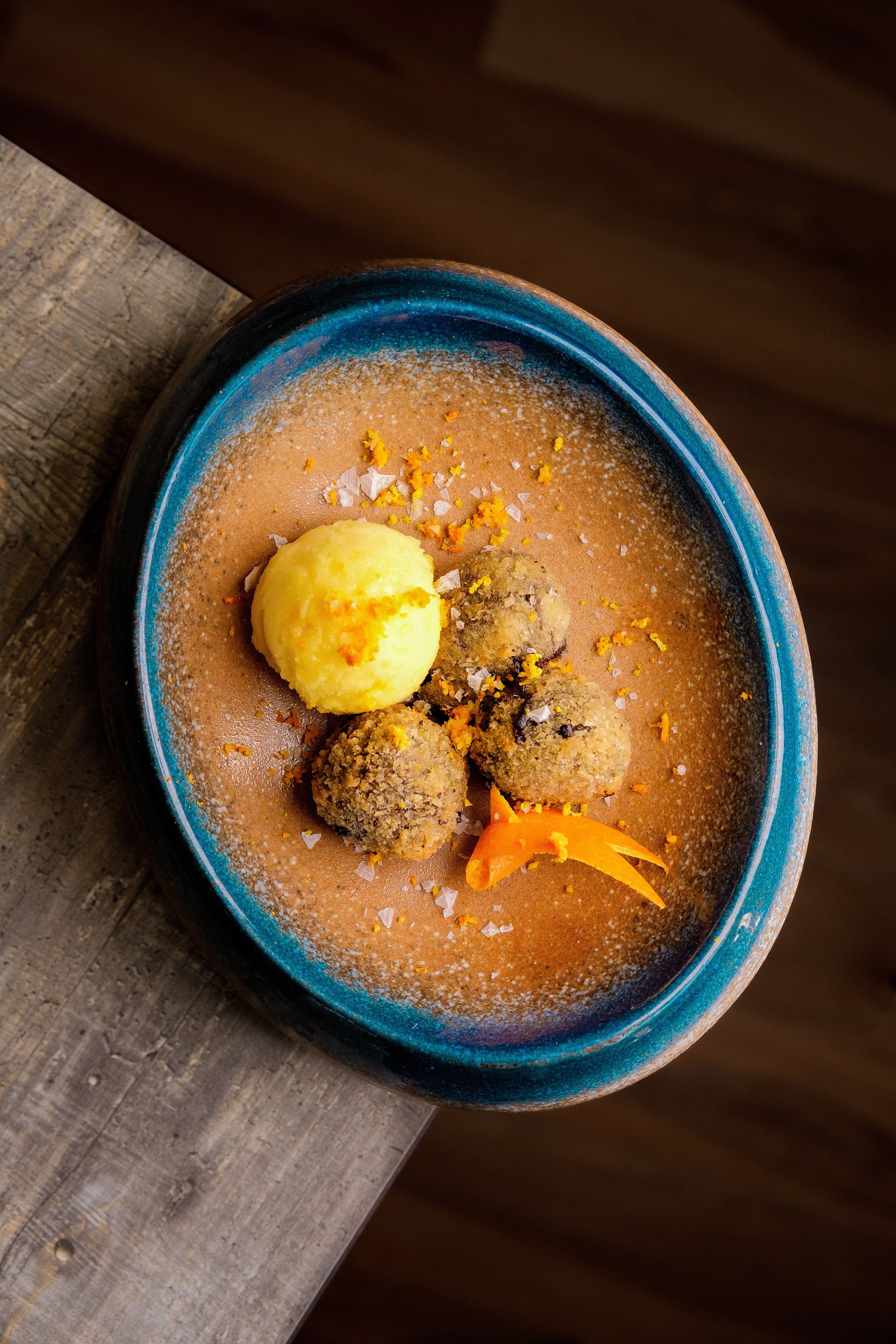
Photo: Jose Prada / Pexels
The diets react (see scores below)
Common Ingredients
- potatoes
- carrots
- onion
- butter
- milk
- salt
- pepper
Specific recipes may vary.
Incompatible with 7 of 11 diets
Diet Ratings
Hutspot is a traditional Dutch mashed dish combining potatoes, carrots, and onions — all high net-carb ingredients that make it fundamentally incompatible with ketosis. Potatoes alone contain roughly 15-17g net carbs per 100g and are one of the most explicitly excluded foods in ketogenic eating. Carrots add additional sugars (~6g net carbs per 100g), and onions contribute more carbs on top. A standard serving of hutspot would easily deliver 40-60g net carbs, potentially exceeding the entire daily keto carb allowance in a single dish. While butter and milk are included, the fat content does nothing to offset the massive carbohydrate load. There is no meaningful portion size at which this dish becomes keto-compatible.
Hutspot is a traditional Dutch mashed vegetable dish that is otherwise fully plant-based — potatoes, carrots, and onion are all vegan-friendly whole foods. However, this recipe explicitly includes butter and milk, both of which are dairy products and therefore animal-derived. This disqualifies the dish from vegan compliance. Vegan versions of hutspot are easily achievable by substituting plant-based butter (e.g., vegan margarine or olive oil) and unsweetened plant milk (e.g., oat or soy milk), which would elevate the score to the approve range.
Hutspot contains multiple non-paleo ingredients that make it incompatible with the diet. Butter and milk are dairy products, which are excluded under paleo rules. Salt is an added ingredient not permitted in strict paleo. White potatoes are themselves a debated ingredient. Even if potatoes were accepted, the dairy components (butter and milk) are clear violations — dairy is excluded across virtually all paleo frameworks. The combination of dairy, added salt, and debated white potatoes pushes this dish firmly into avoid territory.
Some modern paleo practitioners following Mark Sisson's Primal Blueprint or Whole30 accept white potatoes and ghee (clarified butter), and a minority tolerate small amounts of high-fat dairy. If butter were replaced with ghee or a paleo-approved fat, potatoes accepted, and milk and salt removed, a modified version could edge into caution territory — but traditional Hutspot as prepared does not qualify.
Hutspot is a simple Dutch mashed vegetable dish built primarily on whole vegetables — potatoes, carrots, and onion — which are all Mediterranean-compatible plant foods. However, the dish uses butter and milk as the fat and liquid base rather than extra virgin olive oil, which is a significant departure from Mediterranean principles. Butter is a saturated animal fat that the Mediterranean diet discourages in favor of olive oil. The dish has no added sugars, no refined grains, and no red meat, and the vegetable base is genuinely wholesome. If prepared with olive oil instead of butter, this would score much higher. As written, the butter content keeps it in the 'caution' zone — acceptable occasionally but not a Mediterranean staple.
Some Mediterranean diet practitioners, particularly those emphasizing the traditional whole-food spirit of the diet over strict regional authenticity, would argue this dish is essentially a vegetable mash and could be adapted easily by swapping butter for olive oil — and that the underlying structure is sound. Conversely, strict Mediterranean adherents note that butter is not a traditional Mediterranean fat and its regular use contradicts core dietary principles, regardless of the vegetable-forward base.
Hutspot is a traditional Dutch mashed vegetable dish consisting almost entirely of plant foods: potatoes, carrots, and onion form the base, with butter and milk as the only animal-derived components. The dish is fundamentally incompatible with the carnivore diet — it contains no animal protein, is dominated by starchy and fibrous plant foods, and would be excluded under every tier of carnivore eating including the most lenient 'animal-based' approaches. While butter and milk are debated dairy items within carnivore, their presence here is incidental to an otherwise entirely plant-based dish.
Hutspot is a traditional Dutch mashed potato, carrot, and onion dish. Most ingredients are Whole30-compliant (potatoes, carrots, onion, salt, pepper), but the recipe calls for both butter and milk. Regular butter is explicitly excluded on Whole30 (only ghee/clarified butter is permitted as a dairy exception), and milk is dairy and therefore excluded. Both violations are clear-cut per official Whole30 rules. The dish could be made compliant by substituting ghee for butter and omitting or replacing milk with a compliant fat (e.g., coconut milk or olive oil), but as written it is not compliant.
Hutspot is a traditional Dutch mash of potatoes, carrots, onion, butter, milk, salt, and pepper. The critical problem is onion, which is one of the highest-FODMAP foods tested by Monash University due to its very high fructan content. Onion is a 'avoid' ingredient at any realistic serving size — even small amounts cooked into a dish can trigger symptoms because fructans are water-soluble and leach into the food. Potatoes and carrots are low-FODMAP and safe. Butter is low-FODMAP (fat-based, no lactose concern). Regular cow's milk is moderate-to-high in lactose and should be swapped for lactose-free milk during elimination; at typical mash quantities (a splash to a few tablespoons per serve), it adds a secondary FODMAP concern but is less critical than the onion. The onion alone makes this dish unsuitable during the elimination phase at any standard serving.
Hutspot is a traditional Dutch mashed dish of potatoes, carrots, and onions — three DASH-friendly vegetables rich in potassium, fiber, and magnesium. However, the standard preparation calls for butter and whole milk, which introduce saturated fat and calories that DASH discourages. Potatoes are a starchy vegetable (DASH counts them differently from non-starchy vegetables), and the added salt raises sodium concerns depending on quantity. The dish has a solid nutritional foundation but the butter and full-fat dairy components prevent a full approval. Made with low-fat milk and minimal butter, this dish could score 7-8 and approach DASH-approved status.
NIH DASH guidelines specify low-fat or fat-free dairy and limited saturated fat, which standard Hutspot with butter and whole milk does not meet. However, updated clinical interpretations note that moderate amounts of butter in an otherwise vegetable-rich dish may not meaningfully impact cardiovascular outcomes, and some DASH-oriented dietitians now allow small amounts of full-fat dairy given emerging evidence questioning the dairy fat–heart disease link.
Hutspot is a traditional Dutch mash of potatoes, carrots, onion, butter, and milk. From a Zone Diet perspective, this dish is highly problematic. Potatoes are explicitly listed as an 'unfavorable' carbohydrate in Dr. Sears' Zone methodology — they are high-glycemic, rapidly spiking blood sugar and promoting an eicosanoid imbalance that the Zone seeks to avoid. Potatoes are the dominant ingredient here, making the dish fundamentally carbohydrate-heavy and high-glycemic. Carrots add modest nutritional value but also contribute to the glycemic load. The fat profile comes primarily from butter (saturated fat), which the Zone discourages in favor of monounsaturated fats. Most critically, the dish contains no protein source at all, making it essentially impossible to construct a Zone-balanced meal from hutspot alone — the 40/30/30 ratio cannot be achieved when the primary macronutrient is high-glycemic carbohydrate with no lean protein. While carrots and onion are relatively favorable Zone vegetables, they are overwhelmed by the potato base. Even with careful portioning, the structural composition of this dish conflicts with core Zone principles.
Hutspot is a traditional Dutch mashed dish of potatoes, carrots, and onions — a straightforward combination of whole foods with a mixed anti-inflammatory profile. Carrots are a strong positive: rich in beta-carotene and other carotenoids with well-established anti-inflammatory properties. Onions contribute quercetin and other polyphenols that reduce inflammatory markers. Potatoes are nutritionally neutral to mildly positive — they provide potassium and vitamin C, but their high glycemic index can promote inflammatory signaling if consumed in large portions, particularly without fiber-rich accompaniments. The problematic elements are butter and full-fat milk, both of which are sources of saturated fat. Anti-inflammatory guidelines place butter firmly in the 'limit' category, and full-fat dairy is similarly restricted. These ingredients are not present in large enough quantities to tip the dish into 'avoid' territory, but they do undercut the otherwise respectable vegetable base. The dish contains no omega-3s, no significant polyphenol-rich herbs or spices beyond pepper, and no legumes or whole grains. As a side dish or moderate portion main, it is an acceptable but unoptimized choice. Substituting butter with extra virgin olive oil and using low-fat milk would meaningfully improve the anti-inflammatory profile.
Hutspot is a traditional Dutch mashed dish of potatoes, carrots, and onion finished with butter and milk. It is easy to digest, warm, and well-tolerated from a GI perspective — a genuine positive for GLP-1 patients dealing with nausea or slow gastric emptying. Carrots and onion contribute modest fiber and micronutrients. However, the dish has a critical structural problem for GLP-1 patients: it contains virtually no protein. With a primary protein listed as none, hutspot as traditionally prepared cannot anchor a meal for someone needing 15–30g of protein per sitting. The butter adds saturated fat and empty calories, and the potatoes are a high-glycemic refined-starch base. Nutrient density per calorie is moderate at best. The dish is not inherently harmful and scores above avoid because it is digestible, vegetable-forward, and not fried or high in sugar — but it cannot be rated approve given the near-zero protein content and low fiber relative to calorie load. It should be treated as a side dish or carbohydrate base paired with a lean protein source such as poached cod, chicken breast, or a boiled egg, which would align it with GLP-1 dietary priorities.
*See how scores were generated at our methodology page.
Nutritional profile
Six traits that cut across every diet.
Fiber & Plants
How much whole-plant food and fiber it delivers.
Healthy Fats
The quality of its fats (unsaturated, omega-3).
Whole / Unprocessed
How close it is to its natural, unprocessed form.
Gut Gentle
How easy it is on digestion (low FODMAP, few irritants).
Low Glycemic
How little it spikes your blood sugar.
Protein Density
How much protein it packs per calorie.
Controversy Index
Higher controversy = more disagreement between diets.
Diet-Specific Tips
 Mediterranean — 5/10
View tips
- Potatoes, carrots, and onion are all whole plant foods consistent with Mediterranean principles
- Butter is a saturated animal fat inconsistent with Mediterranean dietary guidance — olive oil is the preferred fat
- Milk adds moderate dairy, acceptable in small amounts but not ideal as a primary ingredient
- No added sugars, refined grains, or processed ingredients — a positive
- No protein source; dish lacks the legume, fish, or plant protein typically encouraged in Mediterranean meals
- Easy to adapt: substituting olive oil for butter would significantly improve Mediterranean compatibility
 DASH — 5/10
View tips
- Potatoes, carrots, and onions are potassium- and fiber-rich DASH-compatible vegetables
- Butter adds saturated fat, which DASH limits
- Whole milk rather than low-fat or fat-free milk conflicts with DASH dairy guidelines
- Added salt is a sodium concern — amount depends on preparation
- No lean protein source, limiting overall nutritional balance
- Substituting low-fat milk and reducing butter would significantly improve DASH compatibility
- Potatoes are starchy and should be portion-controlled within the DASH grain/starch allowance
 Anti-Inflammatory — 5/10
View tips
- Carrots are rich in beta-carotene and anti-inflammatory carotenoids
- Onions contribute quercetin and polyphenols
- Butter is a saturated fat in the 'limit' category under anti-inflammatory guidelines
- Full-fat milk adds additional saturated fat
- Potatoes have a high glycemic index which may promote inflammation at high portions
- No omega-3 sources, significant herbs/spices, or legumes present
- EVOO substitution for butter would substantially improve the dish's rating
 GLP-1 Friendly — 4/10
View tips
- No meaningful protein content — fails the #1 GLP-1 dietary priority
- Cannot deliver 15–30g protein per meal without a paired protein source
- Potatoes are a high-glycemic starch; moderate blood sugar impact
- Butter adds saturated fat and calorie density without nutritional return
- Carrots and onion provide modest fiber and micronutrients
- Soft, mashed texture is easy to digest — positive for GI side effect management
- Works well as a side dish base if paired with a lean protein