Photo: Valeria Boltneva / Pexels
The diets react (see scores below)
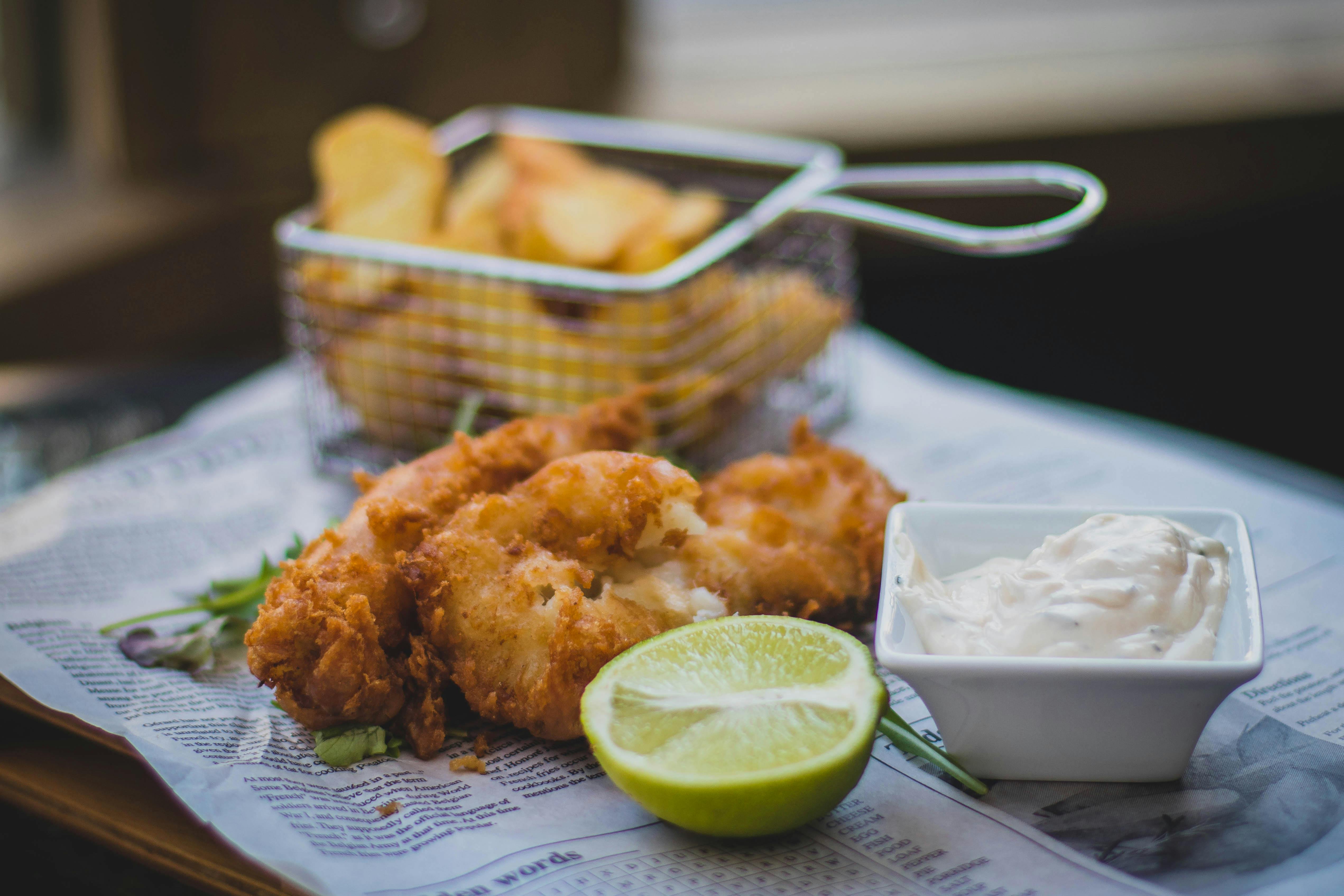
Common Ingredients
- cod
- flour
- eggs
- breadcrumbs
- paprika
- oil
- garlic sauce
- lemon
Specific recipes may vary.
Incompatible with 7 of 11 diets
Diet Ratings
Kibbeling is a classic Dutch battered and fried fish snack that is fundamentally incompatible with ketogenic eating. While cod itself is an excellent keto-friendly protein source, the dish is coated in a batter made from flour and breadcrumbs before frying. This coating adds substantial net carbs per serving — easily 20-30g or more — which alone could consume an entire day's carb allowance. The garlic sauce typically served alongside is often mayonnaise-based (which could be keto) but frequently contains added sugars or starchy thickeners. The lemon is negligible. The core problem is the grain-based batter: flour and breadcrumbs are strictly off-limits on keto. There is no portion size at which the standard preparation of kibbeling becomes keto-compatible without fundamentally altering the recipe.
Kibbeling contains multiple animal-derived ingredients that are strictly excluded from a vegan diet. Cod is a fish — an animal product — making this dish fundamentally incompatible with veganism. Additionally, eggs are used in the batter, and garlic sauce typically contains mayonnaise (made with eggs) or dairy. There is no ambiguity here: this dish is built around animal products at every level.
Kibbeling is a Dutch battered and deep-fried fish snack that is fundamentally incompatible with the paleo diet. While cod itself is an excellent paleo protein, the dish is coated in wheat flour and breadcrumbs — both grain-based ingredients that are clearly excluded from paleo. It is also deep-fried in unspecified oil, which is almost certainly a seed oil (such as sunflower or canola), another paleo exclusion. The garlic sauce typically contains dairy or mayonnaise made with seed oils, adding further non-paleo elements. Only the cod, eggs, paprika, garlic, and lemon are paleo-compliant; the core preparation method disqualifies the dish entirely.
Kibbeling features cod, which is an excellent Mediterranean-approved fish and the dish's main redeeming quality. However, the preparation method undermines its compatibility: the cod is deep-fried in a refined batter (flour, breadcrumbs, eggs), which introduces refined grains, excess oil (likely not extra virgin olive oil), and high-temperature frying — all contrary to Mediterranean principles. The garlic sauce is likely a mayonnaise-based condiment, adding processed fats and calories. Lemon and garlic are positive Mediterranean elements. Overall, this is a heavily processed fish snack rather than a clean, Mediterranean-style fish preparation like grilled or baked fish with olive oil and herbs.
Some Mediterranean diet interpretations allow occasional fried fish dishes, noting that fish and seafood consumption itself is the priority, and that traditional coastal Mediterranean cuisines (e.g., southern Italian fritto misto) do include lightly fried seafood as an acceptable variation when fish intake is otherwise regular.
Kibbeling is a Dutch fried fish snack that, while based on cod (an acceptable carnivore protein), is heavily processed with multiple plant-derived and non-carnivore ingredients. The batter contains flour and breadcrumbs (grain-based), paprika (a plant spice), and is fried in plant-based oil. It is served with garlic sauce (typically mayonnaise-based with garlic and plant additives) and lemon (a fruit). The cod itself would be carnivore-approved, but the preparation method renders this dish entirely incompatible with the carnivore diet. The grain-based coating alone is a hard disqualifier, and the plant oil frying medium compounds the violation.
Kibbeling is a Dutch fried fish snack that is breaded with flour and breadcrumbs — both grain-based ingredients that are explicitly excluded on the Whole30. The dish is essentially a battered/breaded fried fish, which contains wheat flour and breadcrumbs (grains). Additionally, the garlic sauce typically contains dairy, mayonnaise with non-compliant ingredients, or other excluded components. Even if the sauce were compliant, the flour and breadcrumbs alone make this dish incompatible with Whole30. There is no compliant version of kibbeling in its traditional form, as the breading is fundamental to the dish.
Kibbeling is a Dutch fried fish snack that contains several high-FODMAP ingredients. The primary concerns are: (1) wheat flour and breadcrumbs, which are high in fructans — even moderate amounts used in batter and coating are problematic during elimination; (2) garlic sauce, which almost certainly contains garlic (a very high-FODMAP food due to fructans) and potentially onion, making it a significant FODMAP trigger. Cod itself is naturally FODMAP-free, eggs are low-FODMAP, paprika in small amounts is low-FODMAP, lemon juice is low-FODMAP, and oil is safe. However, the combination of wheat-based coating AND garlic sauce makes this dish unsuitable during the elimination phase. Even if gluten-free flour and breadcrumbs were substituted, the garlic sauce alone would make this high-FODMAP. The dish could theoretically be modified (GF coating, garlic-infused oil-based sauce instead of garlic), but as traditionally prepared it should be avoided.
Monash University rates wheat flour and breadcrumbs as high-FODMAP at standard serving sizes due to fructans, and most clinical FODMAP practitioners would flag garlic sauce as a clear elimination-phase trigger. However, if garlic sauce is replaced with a garlic-infused oil dip (FODMAPs are water-soluble, not fat-soluble) and GF flour/breadcrumbs are used, a modified version could be made low-FODMAP — but this is a significant deviation from the traditional dish.
Kibbeling is a Dutch deep-fried battered fish snack made with cod, which is itself an excellent lean protein fully endorsed by DASH guidelines. However, the preparation method significantly undermines its DASH compatibility. Deep-frying in oil substantially increases total fat content and caloric density. The breading (flour, breadcrumbs) adds refined carbohydrates with little fiber value. The garlic sauce (typically a mayonnaise-based aioli) introduces saturated fat, and commercially prepared versions often carry high sodium from seasoning blends. The combination of deep-frying, refined breading, and a fatty dipping sauce transforms a DASH-friendly fish into a calorie-dense, high-fat snack. The lemon is a positive DASH element, and the cod itself is ideal. If prepared with minimal oil (baked or air-fried) and a low-fat dipping sauce, this dish would rate considerably higher. As commonly consumed from street vendors or snack bars, it falls into the 'caution' category due to frying method and sauce.
NIH DASH guidelines strongly endorse fish as a lean protein and cod is explicitly compatible; some DASH-oriented clinicians would argue that occasional consumption of lightly fried fish still delivers meaningful omega-3s and lean protein benefits, particularly if portion-controlled. However, traditional DASH interpretation limits fried foods and high-fat preparations, keeping this in the caution zone for regular consumption.
Kibbeling is a Dutch deep-fried fish snack made from cod pieces coated in batter (flour, eggs, breadcrumbs) and typically served with garlic sauce. The cod itself is an excellent Zone protein — lean, white fish that maps cleanly to Zone protein blocks. However, the deep-frying process and batter coating significantly compromise Zone compatibility. The flour and breadcrumb coating adds high-glycemic carbohydrates with little fiber, making the carb block 'unfavorable' in Zone terminology. Deep-frying in oil (likely seed/vegetable oil) adds omega-6 heavy fat rather than the preferred monounsaturated fats, and the quantity of fat absorbed during frying is difficult to control or measure for block balancing. The garlic sauce (likely mayonnaise-based) adds additional saturated or omega-6 fat with minimal Zone value. The dish lacks any vegetable component to provide low-glycemic carbs. To fit into the Zone, one would need to consume very small portions of the kibbeling itself, discard the garlic sauce, and pair with a large vegetable salad — but as typically served, the macronutrient ratio skews heavily toward fat and refined carbs with insufficient lean protein proportion relative to the caloric load.
Some Zone practitioners note that cod's high protein density means even a battered portion can anchor a reasonable protein block, and lemon juice provides polyphenols. If baked rather than fried and paired with vegetables, the dish could approach Zone-favorable territory. Sears' later anti-inflammatory work acknowledges that omega-3-rich fish like cod partially offsets some dietary imbalances, making an occasional small serving more acceptable than a strict early-Zone reading would suggest.
Kibbeling is a Dutch deep-fried battered fish snack made from cod, which is an inherently lean, white fish with modest anti-inflammatory properties. The core ingredient — cod — is a good lean protein source with some omega-3s, though far less than fatty fish like salmon or mackerel. Lemon and garlic (in the garlic sauce) contribute minor anti-inflammatory benefits via antioxidants and allicin. Paprika adds a small polyphenol contribution. However, the dish is significantly compromised by its preparation method and accompanying ingredients: deep-frying in unspecified oil (likely refined seed or vegetable oil high in omega-6), a refined flour-and-breadcrumb coating that adds refined carbohydrates with minimal nutritional value, and a typical garlic sauce (aioli-style) that usually contains refined oil, eggs, and sometimes added sugar or additives. Deep-frying also oxidizes the fats and can generate pro-inflammatory compounds (acrylamide, oxidized lipids). The frying oil is the critical concern — if it's a high omega-6 refined seed oil (common in commercial settings), it significantly increases the inflammatory load. Overall, this is a 'treat' food where the beneficial base ingredient (cod) is outweighed by the pro-inflammatory preparation method and refined coatings.
Some anti-inflammatory practitioners might rate cod-based fried fish slightly more favorably, noting that cod still provides lean protein and some omega-3s, and that occasional fried fish is not the same as a regular dietary pattern. The IF Rating system tends to assess foods in isolation rather than penalizing preparation context as heavily as whole-diet frameworks do. Conversely, stricter anti-inflammatory protocols would lean closer to 'avoid' given that deep-frying in refined seed oils is explicitly discouraged due to omega-6 loading and lipid oxidation.
Kibbeling is deep-fried battered cod chunks, a classic Dutch street snack. While the base fish (cod) is an excellent lean protein source, the preparation method — deep-frying in a flour-and-breadcrumb batter — fundamentally disqualifies it for GLP-1 patients. The frying process dramatically increases fat content and makes the dish heavy and greasy, which directly worsens the core GLP-1 side effects: nausea, bloating, reflux, and delayed gastric emptying. The thick batter adds refined carbohydrates with minimal nutritional value, diluting the protein density per calorie. The accompanying garlic sauce (typically mayonnaise-based) adds a further saturated fat load. This is precisely the category of food — fried, high-fat, low nutrient density per calorie, portion-heavy — that GLP-1 dietary guidance consistently flags as most problematic. The underlying cod protein is completely undermined by the preparation.
*See how scores were generated at our methodology page.
Nutritional profile
Six traits that cut across every diet.
Fiber & Plants
How much whole-plant food and fiber it delivers.
Healthy Fats
The quality of its fats (unsaturated, omega-3).
Whole / Unprocessed
How close it is to its natural, unprocessed form.
Gut Gentle
How easy it is on digestion (low FODMAP, few irritants).
Low Glycemic
How little it spikes your blood sugar.
Protein Density
How much protein it packs per calorie.
Controversy Index
Higher controversy = more disagreement between diets.
Diet-Specific Tips
 Mediterranean — 5/10
View tips
- Cod is a healthy, Mediterranean-approved fish protein
- Deep-frying in refined oil contradicts Mediterranean fat principles
- Refined flour and breadcrumbs are not whole grain
- Garlic sauce is likely mayonnaise-based — a processed condiment
- Lemon and garlic are positive Mediterranean flavors
- Overall preparation style is far from traditional Mediterranean fish dishes
 DASH — 4/10
View tips
- Cod is an excellent DASH-approved lean fish — positive
- Deep-frying significantly increases fat content and caloric density — negative
- Refined flour and breadcrumbs offer minimal fiber — mild negative
- Garlic/aioli sauce likely high in saturated fat and sodium — negative
- No vegetables or whole grains in the dish — missed DASH opportunity
- Lemon adds flavor without sodium — minor positive
- As a snack, portion size is typically small which partially mitigates concerns
 Zone — 4/10
View tips
- Cod is a lean, Zone-favorable protein source
- Deep-frying adds uncontrolled amounts of omega-6 seed oils — anti-inflammatory concern
- Flour and breadcrumb batter adds high-glycemic, low-fiber refined carbohydrates
- Garlic sauce (likely mayo-based) adds saturated or omega-6 fat with poor Zone value
- No vegetable component to balance the carb blocks with low-glycemic options
- Difficult to portion accurately for block system due to variable batter and oil absorption
- Lemon is a minor positive for polyphenols
 Anti-Inflammatory — 4/10
View tips
- Cod is a lean white fish with modest omega-3s — anti-inflammatory base, but not as potent as fatty fish
- Deep-frying method introduces oxidized fats and pro-inflammatory compounds regardless of oil type
- Likely use of refined seed or vegetable oil (high omega-6) is a significant inflammatory concern
- Refined flour and breadcrumb coating adds refined carbohydrates with no anti-inflammatory value
- Garlic sauce contributes allicin (anti-inflammatory) but typically contains refined oils and additives
- Lemon and paprika provide minor antioxidant contributions
- Preparation method largely negates the benefits of the underlying fish